• Bringing Home Your Inner Child
    Jan 13 2026

    In this solo episode of Dysfunctional, I walk through the six chapters of the Inner You process and share why this work has been so important in my own healing.

    We talk about intention, self-compassion, meeting the different versions of yourself, healing relationships, and what inner child work actually looks like in real life.

    This is an honest, grounded conversation about integration, emotional safety, and learning to come home to yourself.

    If you’ve ever felt disconnected, reactive, or unsure why certain things hit you so hard, this episode is for you.

    Hosted on Acast. See acast.com/privacy for more information.

    Mehr anzeigen Weniger anzeigen
    20 Min.
  • Ditching the Spiritual Costume to Find Authenticity with Elaine Baxter
    Jan 6 2026

    In this episode, I’m joined by Elaine Baxter, a breathwork facilitator who’s been through the full arc of modern wellness, from fixing and performing, to actually holding space in a way that’s real.


    We talk about ditching the “spiritual costume” and why so much of the healing industry rewards masks over authenticity. Elaine shares how breathwork helped her reconnect with feeling after years of numbness, grief, people-pleasing, and trying to hold everything together.


    We explore what trauma-informed actually looks like in practice, the difference between fixing and holding, and why safety, honesty, and grounded language matter more than aesthetics, labels, or vibes.

    This conversation is for anyone who wants deep work without the performance, and real healing without having to become someone they’re not.


    Elaine is a Breathwork Facilitator who has supported people in processing emotions through the breath since 2020 and is a qualified Inner You Breathwork Facilitator. At the heart of Elaine’s practice is a commitment to creating a safe, compassionate, and non-judgemental space, where people are met without pressure to change and genuine healing can naturally unfold.


    https://www.instagram.com/rebalance_with_elaine


    https://misneachcentre.ie/allied-health-professionals/

    Hosted on Acast. See acast.com/privacy for more information.

    Mehr anzeigen Weniger anzeigen
    1 Std. und 17 Min.
  • Post-Separation Abuse: When Leaving Doesn’t End the Control with Miranda Allen
    Dec 30 2025

    Leaving an abusive relationship doesn’t always mean the abuse stops.

    In this episode, Josh speaks with Miranda Allen, an ambassador for Mums in Need, about post-separation abuse and how control continues through courts, finances, smear campaigns, and children. Miranda shares her lived experience and why believing survivors matters more than ever.

    Learn more or support the work of Mums in Need:

    👉 https://mumsinneed.com

    Hosted on Acast. See acast.com/privacy for more information.

    Mehr anzeigen Weniger anzeigen
    38 Min.
  • Toxic Relationship Recovery with Jo Westwood
    Dec 23 2025

    In this episode of Dysfunctional, I’m joined by relationship recovery coach Jo Westwood for a deep, honest conversation about toxic relationships, codependency, and what real self-worth actually sounds like in practice.


    We talk about love bombing and how to spot it early, the moment “the switch” happens after commitment, and why being nice, polite, or endlessly understanding can quietly turn into self-abandonment.


    We also unpack why so many people rush to defend power, fame, and parents at all costs, using the viral Anthony Hopkins estrangement clip as a real-world example of how society struggles with accountability, family loyalty myths, and reading the energy behind someone’s words.


    This is a conversation about slowing down, trusting your instincts, and learning to say:

    “You don’t know me well enough yet.”

    And meaning it.

    We explore:

    The difference between love bombing and genuine connection

    Why codependent people can be manipulative without meaning to be

    The “special one” fantasy and how it keeps people stuck

    Why healthy relationships can handle a slow start

    Estrangement, boundaries, and the myth of unconditional family loyalty

    Politeness vs kindness, and why people-pleasing pushes people away

    Why abusive people don’t cut you off, and why survivors often have to

    This episode isn’t about blame, cancel culture, or perfect healing.

    It’s about self-reflection, personal responsibility, and building relationships that don’t require you to disappear to keep the peace.


    If you’ve ever felt confused, drained, or like you keep ending up in the same painful dynamics, this one’s for you.


    Find Jo:


    Website: http://jowestwood.com

    IG: http://instagram.com/jowestwood


    The Anti People Pleasing Podcast link:

    Apple: https://podcasts.apple.com/gb/podcast/the-anti-people-pleasing-podcast/id1576679526

    Spotify: https://open.spotify.com/show/4av63LLVwYNt8MNMu8Ygar

    Audible: https://www.audible.co.uk/podcast/The-Anti-People-Pleasing-Podcast/B08K61YDSF


    Hosted on Acast. See acast.com/privacy for more information.

    Mehr anzeigen Weniger anzeigen
    1 Std. und 31 Min.
  • When Your Parent Is Murdered | Alex Williams on Childhood Trauma
    Dec 16 2025

    Alex Williams was eight years old when his mum was murdered by his stepfather.


    In this episode, Alex shares what it’s really like to grow up after extreme trauma, how it shaped his nervous system, identity, and relationships, and why “healing” is often misunderstood.


    Alex is an NHS mental health practitioner with over 20 years of experience and a suicide and self-harm prevention trainer. He brings both lived experience and frontline insight into what actually helps people after childhood trauma, and what doesn’t.


    We talk about:


    Growing up after domestic abuse and parental homicide

    Why safety matters more than therapy in the early stages of trauma

    The long-term impact of unprocessed grief in childhood

    Compassion fatigue in mental health and helping professions

    Why forgiveness is not required for healing

    How the mental health system labels people instead of holding them

    Phone addiction, numbing, and modern forms of escape

    Meaning, survival, and choosing a life after trauma


    This is a raw, honest conversation about loss, resilience, and what it means to live a good life after something unimaginable.


    If you grew up in dysfunction, abuse, or emotional neglect, this episode will likely resonate.


    Find Alex here -


    https//instagram.com/thealexjwilliams


    https//tiktok.com/thealexjwilliams


    https//www.linkedin.com/thealexjwilliams


    Hosted on Acast. See acast.com/privacy for more information.

    Mehr anzeigen Weniger anzeigen
    1 Std. und 17 Min.
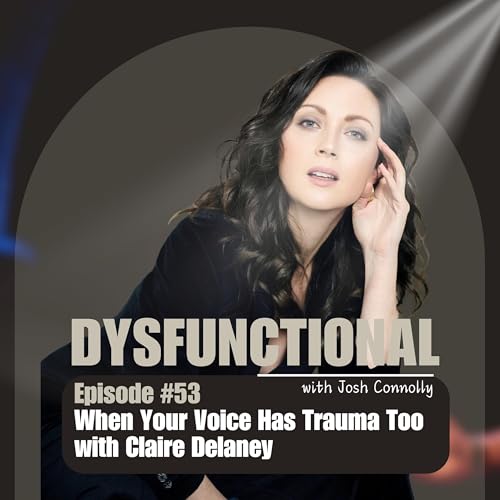
  • When Your Voice Has Trauma Too with Claire Delaney
    Dec 9 2025

    Trauma doesn’t just live in your head. It can shut down your voice too. Vocal coach Claire Delaney joins me to talk C-PTSD, nervous system survival, toxic industry culture, and finding your voice again.


    "Claire is a vocal coach who works with singers and actors whose voices have to hold up under real-world pressure. She’s coached performers across the West End, Broadway, and the National Theatre, and has worked for Italia Conti and ITV’s Mamma Mia: I Have a Dream.


    Her approach is trauma-aware and shaped by the belief that you can’t separate a voice from the person using it. Her work blends science, psychology, and practical technique, with a lens shaped by lived-experience. She helps performers rebuild the physical, emotional, and technical foundations of their voice, aiming for long-term reliability, confidence, and self-trust to make singing actually enjoyable again."


    Instagram: @clairedelaney.vocalcoach

    Hosted on Acast. See acast.com/privacy for more information.

    Mehr anzeigen Weniger anzeigen
    1 Std. und 15 Min.
  • How Do You Talk Someone Down From Extreme Violence? with Jared Shurin
    Dec 2 2025

    In this episode I’m joined by Jared Shurin, a strategic communications specialist who works in counter extremism, violent radicalisation, misinformation, and social cohesion. We dig into the psychology of people who reach the point of extreme violence, why it often starts with the loss of trust, hope and faith, and how communication can pull people back from the edge.


    We talk about:


    How people become vulnerable to radicalisation

    The link between extremism, suicidality, and hopelessness

    Why most people sit in the exhausted moderate middle

    The role of belonging, community, and agency in prevention

    How governments, NGOs and everyday people can reduce social harm

    What actually works when trying to talk someone down from violent thinking


    This episode explores the real human drivers behind extremism, how isolation fuels dangerous behaviour, and why rebuilding local community may be our best defence.


    Find Jared -


    https://extra-fox.com/

    newsletter - https://raptorvelocity.beehiiv.com/

    https://www.instagram.com/straycarnivore/

    Hosted on Acast. See acast.com/privacy for more information.

    Mehr anzeigen Weniger anzeigen
    1 Std. und 4 Min.
  • Inside a Shame Storm with Melinda Delisle
    Nov 25 2025

    What if those moments where you’re convinced you’re a horrible person who “shouldn’t even be here” aren’t proof that you’re broken… but that you’re in what my guest calls a shame storm?


    In this episode I’m joined by Melinda Delisle, MS LCCE – clinical nutritionist, former childbirth educator, and someone who has spent years navigating intense emotional dysregulation herself. We talk honestly about what it actually feels like inside a shame storm, why some of the most popular “healing tools” can make it worse, and how food, supplements and nervous system health quietly drive so much of our emotional world.


    We get into:

    - The difference between a shame swamp, a shame spiral and a full-blown shame storm

    - Why gratitude lists, mindfulness and “just be present” advice can feel like gaslighting when you’re in survival mode

    - How trauma, high sensitivity and people-pleasing set us up for chronic hypervigilance

    - The link between nutrition, B vitamins, SSRIs and emotional dysregulation

    -- Mistaking familiarity for safety – and why so many of us feel unsafe even with “nice” people

    - Self-parenting, accountability and facing the ways our own dysregulation can make us the “toxic” one at home


    Melinda also shares a free upcoming 4-week program she’s creating to help people build awareness, have better conversations around triggers and start finding their way out of constant dysregulation.


    Substack: https://melindadelisle.substack.com/

    Free 4-week program: https://melindadelisle.com/foundation/

    Instagram: @melindadelisle

    LinkedIn: https://www.linkedin.com/in/melinda-delisle/

    Hosted on Acast. See acast.com/privacy for more information.

    Mehr anzeigen Weniger anzeigen
    1 Std. und 17 Min.