Folgen

  • The Trap of Mammy, Jezebel, and Sapphire
    Sep 21 2026

    The fastest way to misunderstand a Black woman is to reach for a familiar label. We start with the one Michelle Obama names so plainly: how easily Black women get tagged as “angry,” then we pull the thread back through history and forward into research that shows what those snap judgments can do.

    I walk through three stereotypes that work together like a trap: Mammy, Jezebel, and Sapphire. Mammy isn’t just a costume from old films it’s a story that made slavery and domestic labor look like devotion, then got replayed through minstrelsy, advertising like Aunt Jemima, and Hollywood roles that rewarded self-sacrifice. From there, we connect Mammy to the modern “Strong Black Woman” expectation and the mental health toll of being praised for endurance while being denied care.

    Then we shift to Jezebel and Sapphire, two labels that police desire and punish resistance. We talk about how sexual violence gets excused through stereotype, how media representation trains audiences to see Black women’s bodies as public property, and what studies reveal about implicit bias that shows up in seconds. Finally, we bring Sapphire into the workplace, where words like “aggressive” or “difficult” can hide unequal standards, and we name the constant “shifting” Black women may do just to avoid being misread.

    If this resonates, listen to the full episode, share it with someone who needs the language for what they’ve seen, and leave a rating or review so the show can reach more people.

    Have something to share? Send me a message.

    • Follow us on Instagram for research graphics, photos, episode announcements and more.
    • Works Cited and Photo Attribution for each episode can be found on our website.
    • For collabs, sponsorship, and inquiries, contact us at info@wbspodcast.com
    • Music by Stephen Mexler
    • Buy Me a Coffee
    Mehr anzeigen Weniger anzeigen
    47 Min.
  • Who Wins When A Woman Becomes A Slur?
    Sep 14 2026

    Trailer for the podcast Witches, Bitches, and Sluts. A podcast that investigates when women are labeled and why.

    Have something to share? Send me a message.

    • Follow us on Instagram for research graphics, photos, episode announcements and more.
    • Works Cited and Photo Attribution for each episode can be found on our website.
    • For collabs, sponsorship, and inquiries, contact us at info@wbspodcast.com
    • Music by Stephen Mexler
    • Buy Me a Coffee
    Mehr anzeigen Weniger anzeigen
    3 Min.
  • Hattie McDaniel - Not Your Mammy
    Sep 14 2026

    Hattie McDaniel's Oscar Speech

    "Any Kind of Man Would be Better than You" by Hattie McDaniel

    Bob Corley as Beulah

    The world remembers Hattie McDaniel as a milestone, and too often as a stereotype. We’re telling the story that gets lost when one role becomes a person’s whole identity, and asking the uncomfortable question her career forces on us: what if the thing that makes you famous also makes it harder for people to see you?

    We follow Hattie from her Kansas beginnings and a childhood filled with music to the hard-earned skills of vaudeville, radio, and recording in the 1920s. When the Great Depression hits, we watch her take service work to survive, then turn a late-night “volunteer talent” moment into a springboard to Hollywood. Once she arrives in Los Angeles, the opportunity comes with a catch: again and again, the industry casts her as “the help,” even as she makes those limited parts vivid through timing, expression, and authority that can flip a scene on its head.

    Then comes Gone with the Wind, the “Mammy” role, and a publicity machine that pushes audiences to confuse the actress with the character. We dig into Black newspaper criticism, the conflict with NAACP leader Walter White, and why blaming individual performers can distract from the studio decision makers who control scripts, budgets, and what kinds of Black lives are allowed on screen. We also confront the cruel irony of history: Jim Crow exclusion at the Atlanta premiere, a whites-only Oscars venue, and Hattie seated apart after making Academy Awards history.

    We close with what people often miss: her work on Beulah, her Sugar Hill housing fight, her community support during wartime, and the strange legacy of her missing Oscar plaque and its later replacement at Howard University. If you care about film history, Black Hollywood, media representation, and how stereotypes shape real lives, listen now, then subscribe, share, and leave a rating or review so more people can find the full story.

    Have something to share? Send me a message.

    • Follow us on Instagram for research graphics, photos, episode announcements and more.
    • Works Cited and Photo Attribution for each episode can be found on our website.
    • For collabs, sponsorship, and inquiries, contact us at info@wbspodcast.com
    • Music by Stephen Mexler
    • Buy Me a Coffee
    Mehr anzeigen Weniger anzeigen
    48 Min.
  • Dragon Lady, Lotus Blossom, and Asian Women
    Aug 31 2026

    A character shouldn’t be able to haunt an actor on the sidewalk, yet Lucy Liu’s fear after playing Ling Wu points to something bigger than celebrity. We’re digging into the Dragon Lady and Lotus Blossom stereotypes and how they teach audiences to read Asian American women as either dangerous and hypersexualized or sweet, passive, and disposable. These labels didn’t start with one actress and they don’t end on a screen, they shape the way real people get approached, desired, dismissed, and feared.

    We trace the history from Sax Rohmer’s Fu Manchu and Yellow Peril panic to Madama Butterfly’s tragic devotion template, then connect it to the research that explains why “hostile” and “flattering” portrayals work together. Using ambivalent sexism theory, the stereotype content model, and the Bias Map, we link perception to harm, including what happens when conditions feel threatening and scapegoating rises. Then we get concrete with peer-reviewed work on media representation, the Gendered Racial Microaggression Scale for Asian American women, and findings on fetishization, submissiveness expectations, media invalidation, and the mental health toll.

    Finally, we test the hopeful claim that things naturally improve over time and show why it’s not about the calendar, it’s about control. From The Joy Luck Club and Crazy Rich Asians to Ally McBeal and Ghost in the Shell, representation changes when Asian American creators hold the pen. If this gave you a new lens, subscribe, share with a friend, and leave a review so more listeners can find the show.

    Have something to share? Send me a message.

    • Follow us on Instagram for research graphics, photos, episode announcements and more.
    • Works Cited and Photo Attribution for each episode can be found on our website.
    • For collabs, sponsorship, and inquiries, contact us at info@wbspodcast.com
    • Music by Stephen Mexler
    • Buy Me a Coffee
    Mehr anzeigen Weniger anzeigen
    54 Min.
  • Anna May Wong: A Thousand Deaths
    Aug 24 2026

    Hollywood didn’t just typecast Anna Mae Wong, it built a whole set of “acceptable” fates around her and then acted like those limits were natural. We pull apart how a third-generation Chinese American woman from Los Angeles became one of the first true movie stars of the 1920s and 30s, while the industry still insisted she could only be a threat, a sacrifice, or a lesson for somebody else’s story.

    We follow the real-world machinery behind the Dragon Lady stereotype and the Lotus Blossom archetype, from early breakout roles like The Toll of the Sea and The Thief of Baghdad to scene-stealing performances in Shanghai Express. Along the way, we connect her life to the wider context Hollywood rarely acknowledges: anti-Chinese racism, the Chinese Exclusion Act, and the studio system’s comfort with Yellowface. Then the trap snaps shut with the Hayes Code’s ban on interracial romance, a “rule” that becomes an excuse to deny her the one role everyone expected she’d finally get: Olan in MGM’s The Good Earth.

    We also trace what happens after the snub: Wong’s first trip to China and the pain of being rejected as “too American,” the smaller films where she finally gets more control, her World War II relief work, and the late-career recognition that arrives with sharp edges, including the dream part she never gets to play in Flower Drum Song. We end with how historians and modern culture are reclaiming her legacy, and why her story still explains so much about representation in film and television today.

    Subscribe, share this with a friend who cares about film history, and leave a review so more people can find the show.

    *Special Appearance by my golden Bao Bao (aka Dumpling)

    Have something to share? Send me a message.

    • Follow us on Instagram for research graphics, photos, episode announcements and more.
    • Works Cited and Photo Attribution for each episode can be found on our website.
    • For collabs, sponsorship, and inquiries, contact us at info@wbspodcast.com
    • Music by Stephen Mexler
    • Buy Me a Coffee
    Mehr anzeigen Weniger anzeigen
    45 Min.
  • Dumb or Deadly? Examining the Dumb Blonde and the Femme Fatale
    Aug 17 2026

    A single look can get a woman filed as sweet and harmless or cold and dangerous, and the switch can happen in seconds. We start with Dolly Parton’s iconic joke about the “dumb blonde” label (and the way Marilyn Monroe and Britney Spears echo the same pressure), then trace where these stereotypes came from and why they keep returning in new forms.

    We walk the long history of blonde hair as a Western beauty ideal, then set it beside the ancient lineage of the femme fatale, from mythic temptress to film noir’s calculating “fatal woman.” Next, we map both characters onto real psychology: the stereotype content model shows the dumb blonde as high warmth and low competence, while the femme fatale flips to low warmth and high competence. Ambivalent sexism ties the knot, revealing “benevolent” and “hostile” reactions as two sides of the same response to a beautiful woman.

    Then we get concrete with research. A large dataset analysis finds the dumb blonde’s central claim is simply false: blondes don’t score lower on intelligence tests. So what’s being measured? Studies show that directing attention to a woman’s appearance drops how competent, warm, and moral she seems. We also dig into experiments where attractiveness helps women in low-status roles but becomes a penalty for authority, plus courtroom and modern workplace findings that capture the “femme fatale effect,” including how insecurity in the audience can drive distrust.

    If you’ve ever watched a woman get praised as “cute” until she asks for power, pay, or credibility, this one will feel uncomfortably familiar. Subscribe, share this with a friend, and leave a review with the moment that hit you hardest.

    Have something to share? Send me a message.

    • Follow us on Instagram for research graphics, photos, episode announcements and more.
    • Works Cited and Photo Attribution for each episode can be found on our website.
    • For collabs, sponsorship, and inquiries, contact us at info@wbspodcast.com
    • Music by Stephen Mexler
    • Buy Me a Coffee
    Mehr anzeigen Weniger anzeigen
    33 Min.
  • BIO: Marilyn Monroe - "You have to be smart to play dumb"
    Aug 10 2026

    They called Marilyn Monroe a “dumb blonde,” and the world repeated it so often that the label started to sound like a fact. We’re not buying it. We trace how Norma Jean became “Marilyn,” how studios shaped her image, and how the public confused a paid performance with a real personality. Along the way, we look at the cost of turning a woman into a symbol: critics dismissing her as a phenomenon, people insisting she was “witty but not smart,” and an entire culture more comfortable with her being sexy and harmless than sexy and intelligent.

    We get specific about the mechanics: the early attempt to market her as a femme fatale, the pivot into comedic sex symbol, and the careful work behind the voice everyone imitates. We talk coaching, breath work, and the stories that show she could switch the persona on and off, treating “Marilyn” like an alter ego she controlled. We also dig into evidence of her intellect, including her reading life and the way lazy commentary still tries to flatten her into a joke.

    Then we follow the power move that should have defined her legacy: refusing another shallow role, founding Marilyn Monroe Productions, and forcing Fox into a renegotiation that raised her pay and gave her real creative approval. Finally, we name the darker through line: how denying her agency shows up in mental health treatment, conspiracy narratives, and even the way she’s exploited after death. If you care about Hollywood history, gender stereotypes, celebrity branding, and the true story behind Marilyn Monroe, hit play, then subscribe, share with a friend, and leave us a review.

    Have something to share? Send me a message.

    • Follow us on Instagram for research graphics, photos, episode announcements and more.
    • Works Cited and Photo Attribution for each episode can be found on our website.
    • For collabs, sponsorship, and inquiries, contact us at info@wbspodcast.com
    • Music by Stephen Mexler
    • Buy Me a Coffee
    Mehr anzeigen Weniger anzeigen
    51 Min.
  • INTRO: Are Women Human?
    Aug 10 2026

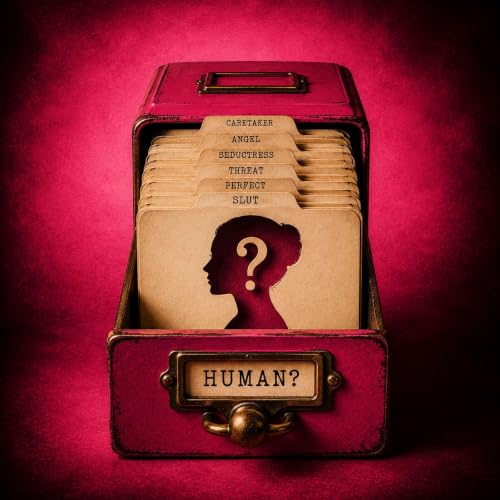
    “Are women human?” Dorothy Sayers asked that question in 1938, and it still lands because so many women are treated as roles, symbols, or warnings instead of full people. We’re Christina Rose, and this special Episode Zero lays the foundation for Witches, Bitches, and Sluts by tracing how gendered labels get assigned when women disrupt what society expects them to be.

    We start by naming the system we’re examining: patriarchy. That means we’re not doing a man-hating show. We’re looking at how a culture can reward and punish women through language that sounds like a joke, a compliment, or “just an opinion,” while still working as a tool of control. From there, we walk through ambivalent sexism theory, breaking down the difference between hostile sexism and benevolent sexism and why “she needs protecting” can be another way of saying “she can’t handle it.”

    Then we zoom out with the stereotype content model: warmth and competence. Those two snap judgments shape whether a group gets admiration, pity, envy, or contempt and they explain why some women get framed as harmless and unserious while others get treated as cold, threatening, or resented. We also bring in a classic workplace study that documents four familiar boxes women get pushed into: mother, pet, seductress, and Iron Maiden.

    Finally, we introduce a key idea we’ll keep testing throughout the series: attractiveness can change the exact label a woman receives even when she’s judged in the same category.

    If you care about gender stereotypes, sexism research, workplace bias, and how women get dehumanized by “easy” labels, start here, then jump to our first main story on Marilyn Monroe. Subscribe, share this with a friend, and leave a review so more listeners can find the show.


    Have something to share? Send me a message.

    • Follow us on Instagram for research graphics, photos, episode announcements and more.
    • Works Cited and Photo Attribution for each episode can be found on our website.
    • For collabs, sponsorship, and inquiries, contact us at info@wbspodcast.com
    • Music by Stephen Mexler
    • Buy Me a Coffee
    Mehr anzeigen Weniger anzeigen
    10 Min.