Folgen

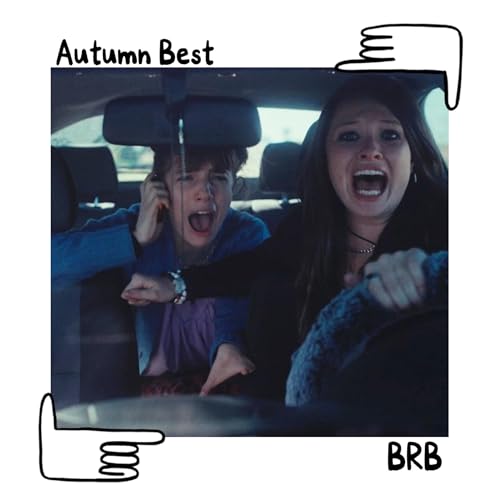
  • Autumn Best on what ‘Woman of the Hour’ unlocked and what ‘BRB’ called for
    Feb 21 2026

    Autumn Best made her feature film debut in Anna Kendrick’s ‘Woman of the Hour,’ and it announced her as someone worth watching. In this conversation, we start there, with what the experience of landing that role, shooting it, premiering at TIFF in 2023, and releasing it on Netflix did to her sense of what she was capable of and what she might expect from her career going forward.

    From there we get into ‘BRB,’ a Kate Cobb directed tender and chaotic coming of age road trip film premiering at this year’s Slamdance. Autumn plays Sam, a teenage girl in the early days of the internet who falls for a boy she met in a chatroom. She gets into the particular challenge of inhabiting a period she was alive for but far too young to actually remember, and what it took to place herself emotionally in that specific moment of early online connection and first love.

    The conversation also goes somewhere more personal: her relationship with co-star Zoe Colletti, whose chemistry with Autumn carries much of the film’s emotional weight, and how her own experience living with a limb difference shaped her approach to playing a character for whom being fully seen, disability and all, is at the very heart of the story.

    Mehr anzeigen Weniger anzeigen
    21 Min.
  • Revenge on Repeat: Kevin & Matthew McManus on grief, obsession, and working with family in ‘Redux Redux’
    Feb 19 2026

    Twin brothers Kevin and Matthew McManus have been making films together since they were kids, and Redux Redux is their third feature as a writing and directing duo. We open the conversation talking about what it means to put a film like this into the world and how you go about pitching a multiverse revenge thriller to festivals in the first place.

    From there, Kevin and Matt walk us through where the idea originally came from, what finally unlocked the story for them, and how they think about the multiverse and time travel as storytelling tools without letting the concept swallow the human drama underneath it. At the center of that drama is their sister Michaela, who plays Irene, a grieving mother who acquires technology that allows her to jump between parallel universes and kill her daughter’s murderer again and again. The brothers talk about what it means to build a film around a sibling and what that specific trust makes possible.

    We also dig into one of the film’s most interesting technical and narrative challenges: making the recurring kills feel distinct rather than repetitive. When your premise is built on a loop, every iteration has to earn its place, and Kevin and Matt get into how they thought about that problem from the writing stage all the way through production.

    (Photo: Courtesy of Stella Marcus)

    Mehr anzeigen Weniger anzeigen
    21 Min.
  • Patrick Jones on blurring the line between subject and object in 'By Design'
    Feb 17 2026

    Five features into their collaboration, cinematographer Patrick Jones and director Amanda Kramer have developed a creative shorthand that makes projects like 'By Design' come together with surprising speed. Patrick opens up about his first reaction to the concept and the foundation that makes their collaboration so instinctive and enduring.

    'By Design' presented a fascinating cinematographic challenge at its core: the similarities and differences in framing, lighting, and handling human beings versus inanimate objects in front of the camera. Patrick shares how the film demanded a fresh perspective on what it means to observe and capture a subject, blurring the line between the animate and the still.

    We explore choreography as a visual language, from dance to general movement, and how Patrick approaches the camera's relationship to bodies in motion. He also expands on the distinct experience of shooting Amanda Kramer's music videos compared to her feature films, and what each format demands from him as a cinematographer. We close our conversation with Patrick looking ahead, sharing where he sees both their creative partnership and his own craft evolving from here.

    (Photo credit: Terra Gutmann-Gonzalez)

    Mehr anzeigen Weniger anzeigen
    26 Min.
  • We Need to Talk About Emmy #29: Ashley Barron navigates tone and character in 'How to Get to Heaven from Belfast'
    Feb 13 2026

    Growing up across multiple continents gave cinematographer Ashley Barron a unique visual perspective that shapes her work today. In discussing 'How to Get to Heaven from Belfast,' Ashley reflects on how her childhood experiences of constant movement and cultural adaptation inform her approach to crafting images and telling stories through the camera.

    Our conversation explores Ashley's experience joining a tight-knit group of filmmakers who previously collaborated on the highly successful 'Derry Girls.' She shares insights into fitting into an established creative team and how that dynamic influenced the production process and collaborative spirit on set.

    Ashley delves into her lighting choices and their crucial role in balancing the film's comedy, drama, and mystery elements. She discusses developing distinct visual languages for the three main characters, using light, color, and composition to differentiate their perspectives while maintaining a cohesive aesthetic.

    (Photo: Courtesy of Netflix)

    Mehr anzeigen Weniger anzeigen
    27 Min.
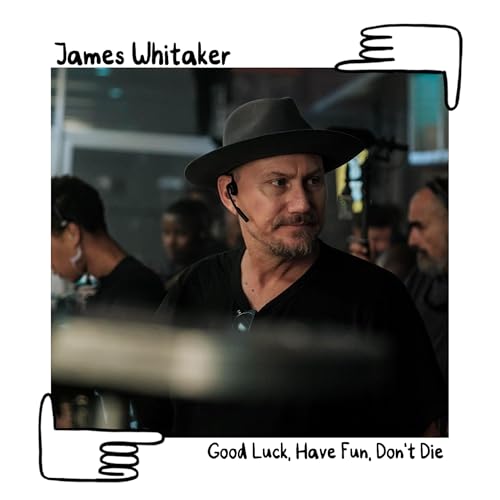
  • James Whitaker captures man versus machine in 'Good Luck, Have Fun, Don't Die'
    Feb 10 2026

    We sit down with cinematographer James Whitaker discuss 'Good Luck, Have Fun, Don't Die,' Gore Verbinski's sci-fi thriller. James opens up about the challenge of shooting science fiction on a relatively low budget, revealing how constraints pushed the team toward inventive visual solutions that serve the story's themes.

    Our conversation delves into how James and Gore merged their respective references to create the film's distinctive look. He discusses the collaborative process of finding a shared visual language that honors both their influences while creating something unique. James also tackles the technical and creative challenge of shooting the film's crucial expositional monologue in an engaging, visually interesting manner, turning what could be static into something dynamic.

    We examine how practical and digital effects work together in a film about humanity's fight against AI. James reflects on the irony and intention behind blending these approaches, discussing how the marriage of old-school techniques and modern technology mirrors the film's central conflict. His insights into resourceful filmmaking and thematic visual storytelling offer a compelling look at creating ambitious sci-fi within indie constraints.

    (Photo credit: Graham Bartholomew, SMPSP)

    Mehr anzeigen Weniger anzeigen
    26 Min.
  • Breathing new life into horror, with 'Whistle' director Corin Hardy
    Feb 6 2026

    Director Corin Hardy joins us to discuss ‘Whistle,’ now in theaters, exploring how he connected to the script and the differences between working with someone else’s screenplay versus directing his own material. Corin reveals how each approach shapes his creative process and the unique challenges and freedoms that come with interpreting another writer's vision.

    Our conversation delves into assembling the group of young talented actors for the film, including Dafne Keen, Sophie Nélisse, and Percy Hynes White. Corin discusses the casting process and what he looked for in performers who could carry the film's emotional weight while navigating its horror elements, creating authentic chemistry among the ensemble.

    We explore the death whistle as a symbol of bringing something new and fresh to the horror genre. Corin reflects on how this ancient Aztec artifact becomes both a narrative device and a metaphor for his approach to the film, honoring horror traditions while pushing the genre into unexpected territory.

    (Photo credit: Michael Gibson)

    Mehr anzeigen Weniger anzeigen
    16 Min.
  • Sook-Yin Lee revisits a shared past in ‘Paying for It’
    Jan 30 2026

    Director Sook-Yin Lee joins us to discuss ‘Paying for It,’ her adaptation of Chester Brown’s graphic novel about their former relationship. The film represents a unique creative challenge: adapting a graphic novel that was already based on their shared life together.

    Sook-Yin reflects on how she came to collaborate with Chester on the project and how the three layers (the lived experience, the graphic novel, and the film) compare and diverge from one another. She walks us through translating the source material into cinematic language and what that process revealed.

    We also talk about the many roles Sook-Yin has held throughout her career and how her varied experiences shape her approach to filmmaking and storytelling.​​​​​​​​​​​​​​​​

    (Photo credit: Dylan Gamble)

    Mehr anzeigen Weniger anzeigen
    27 Min.
  • We Need to Talk About Sundance #5: Georgia Bernstein on caregiving and obsession in 'Night Nurse'
    Jan 27 2026

    Writer-director Georgia Bernstein joins us to discuss 'Night Nurse,' her feature directorial debut that premiered in the NEXT section at this year's Sundance Film Festival. Georgia traces the birth of the film's idea and how she ventured into the realm of psycho-sexual thrillers while maintaining its foundation in elderly care and caregiving, creating an unsettling blend of intimacy and menace.

    Our conversation explores Georgia's long-spanning friendship and collaboration with actress Cemre Paksoy, revealing how their creative partnership shaped the film's central performance. We delve into the opening shot and its crucial role in setting the tone, discussing how those first moments establish the film's psychological terrain and prepare audiences for what's to come.

    Georgia also reflects on her relationship with intention and the audience, sharing her approach to balancing control and release as a filmmaker. She discusses the deliberate choices that guide viewers through the film's unsettling narrative while leaving room for their own interpretations and emotional responses.

    Mehr anzeigen Weniger anzeigen
    19 Min.