Folgen

  • The 1963 Iraqi Coup: Exploring tensions in Ba'thism
    Oct 16 2022

    Today's voicemail is taken from page 176 of "Pride and Power: A Modern History of Iraq" by Johan Franzén

    In 1963, 'Aref and the Ba'thists instigated the Ramadan Revolution which toppled Karim Qasim from power, a mere 5 years after the first revolution. What followed after was a brief period in which different factions across the Ba'athist and nationalist factions fought for control in Iraq. Eventually, the Ba'this secured their rise to power and would remain as Iraq's single party until Saddam Hussein's downfall in 2003. In this episode, I delve a bit deeper into the end of Qasim's rule by looking at competing Arab political groups and how eventually, the rise of the 'Aref brothers and then al-Bakr and Saddam Hussein, shifted Iraq's political history forever. I spend some time in the middle discussing tensions between defining Ba'thism and how it is different to earlier pan-Arab thinking.

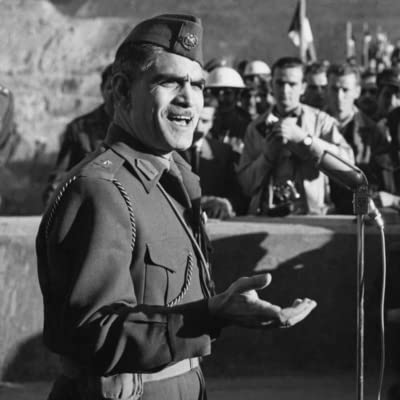
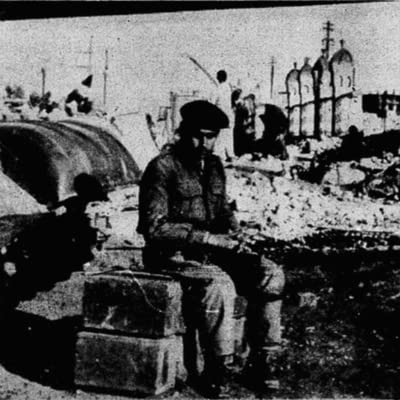
    Episode cover: Soldier in the ruins of the Ministry of Defence, where Qasim made his last stand

    References:
    Johan Franzén's book "Pride and Power: A Modern History of Iraq".

    Achim Rohde's "State-Society Relations in Ba'thist Iraq: Facing Dictatorship"

    Ofra Bengio's "Kurds of Iraq: Building a State within a State"

    Ralph Coury's article titled "The demonisation of pan-Arab nationalism"

    Isaac, Steven. "The Ba ‘th of Syria and Iraq." The International Encyclopedia of Protest and Revolution 2009

    Mehr anzeigen Weniger anzeigen
    30 Min.
  • Navigating the Kurdish-Iraqi Civil War: Barzani, Communists, Aghas & Qasim (1961-63)
    May 8 2022

    Today's voicemail is taken from p.225 of Claire Hollingworth's article in 'World Today'.

    The Iraqi and Kurdish saga continues! I begin with a quick recap of last episode's story and we get right into Barzani's return to Iraq, how the Kurdish Democratic Party and Iraqi Communist Party continued to affect Kurdish-Arab dynamics, and the different approaches Karim Qasim took to navigate the drama of Iraq's ever changing political scene.

    We end by talking about Qasim's depressing downfall, the tentative position the Kurds find themselves in when the 'Arif brothers carry out the Ramadan Revolution in 1963, ushering in a new phase of Iraqi politics. The Kurdish-Iraqi war continues...

    As ever, let me know what you think of the episode!


    References:

    Rubin, Avshalom H. "Abd al-Karim Qasim and the kurds of Iraq: Centralization, resistance and revolt, 1958–63." Middle Eastern Studies 43.3 (2007): 353-382.

    Hollingworth, Clare. "The Ba'athist revolution in Iraq." The World Today 19.5 (1963): 225-230.

    Degli Esposti, Nicola. "Land reform and Kurdish nationalism in postcolonial Iraq." Middle East Critique (2022): 1-17.

    Mehr anzeigen Weniger anzeigen
    40 Min.
  • The making of Iraq and the Kurdish Barzani rebellions: Hope & Discord 1920-1958
    Feb 22 2022

    Today's voicemail is taken from page 1-2 of Quil Lawrence's book, Invisible Nation: How the Kurds' quest for state-hood is shaping Iraq.

    In this episode, I turn to look at the Kurdish situation in Iraq, beginning in 1920 with its establishment under a British mandate and the new monarchy. I begin by recounting the Barzani rebellions from 1931-1945, which began primarily due to economic grievances and then evolved to take a more political outlook. There is also discussion on the broader political movements within the Kurds in Iraq as well as among the Arab Iraqis, who are getting to grips with ruling a new nation-state. A plethora of political parties and clubs emerged, aided by factors such as the printing press, communist ideas, anti-imperialism, the early Cold War and the rise of Gamal Abdel Nassir in Egypt, specifically his calls for pan-Arabism.

    This episode ended up a lot longer than I had planned when I started recording! So, I ended this one by looking at the 1958 Iraqi Revolution, a military coup against the Hashemite monarchy. The result was the rise of the military and the politics of Abd al-Karim Qasim, who would go on to shape Kurdish political life when Barzani returned from exile in Iran. We will continue the Kurdish saga in Iraq in the next few episodes!

    References:
    Lawrence, Quil. Invisible nation: how the Kurds' quest for statehood is shaping Iraq and the Middle East. Bloomsbury Publishing USA, 2009.

    Franzen, Johan. "The problem of Iraqi nationalism." National Identities 13.3 (2011): 217-234.

    Rubin, Avshalom H. "Abd al-Karim Qasim and the kurds of Iraq: Centralization, resistance and revolt, 1958–63." Middle Eastern Studies 43.3 (2007): 353-382.

    McDowall, David. A modern history of the Kurds. Bloomsbury Publishing, 2021.

    Mehr anzeigen Weniger anzeigen
    54 Min.
  • Iran: A splintered revolution, a tragic ending 'The Republic of Mahabad' 1946
    Feb 6 2022

    Today's voicemail is taken from the poem "2+2=1" penned by Qazi Muhammad, 1946.

    During the wartime occupation of Iran, the Kurds of Iran led by the revolutionary figure of Qazi Muhammad, set up the Republic of Kurdistan, with its centre as Mahabad. For the Kurds, this was the first implemented Kurdish nationalist aspiration - they set up an autonomous zone with the aim to bring in the Kurds of Iran under a regional Kurdish government.

    It is both a remarkable and tragic chapter of 20th century Kurdistan, one that is retold to Kurdish children by their parents and suppressed from official narratives from the Iranian regime. In this episode, I've aimed to outline how the Republic formed, the particular type of nationalism by the early 40s, what the Republic achieved in 10 months, how it came to a terrible end and the general political consequences for the Kurds of Iran up until the present day.

    Select audio at the beginning of episode: All credits go to the right owners, I own nothing. No copyright intended.

    References:

    https://kmmk-ge.org/wp-content/uploads/2021/02/Executions.pdf

    Jwaideh, Wadie. The Kurdish national movement: Its origins and development. Syracuse University Press, 2006.

    McDowall, David. A modern history of the Kurds. Bloomsbury Publishing, 2021.

    Vali, Abbas. Kurds and the state in Iran: The making of Kurdish identity. Bloomsbury Publishing, 2014.

    Abdulaziz, Dr Omar, The Republic of Kurdistan and the leader Qazi Muhammed, 2016. (Kurdish original copy)

    Mehr anzeigen Weniger anzeigen
    32 Min.
  • Iran: The Soviets, Reza Shah & Simko Agha (the Kurds)
    Dec 26 2021

    Today's voicemail is taken from the Kurdish epic, Mem û Zîn, written in 1692 by the Kurdish intellectual, author and poet, Ahmed Khani.

    Persia was (and is) at the crossroads of Asia. From the 1850s, Persia became everything on the spectrum from a chessboard to a battlefield, fought mainly between the Brits and the Russians, vying for control of its strategic location and its famed oil wells. Caught in the maelstrom of Persian and global politics between 1850-1939, the Kurds instigated one of the 20th century's earliest examples of Kurdish resistance.

    What do you think? How much did Simko Agha's actions show he was working for a Kurdish homeland, or to simply carve out a kingdom of his own?

    References:

    Frankopan, Peter. The silk roads: A new history of the world. Bloomsbury Publishing, 2015.

    McDowall, David. A modern history of the Kurds. Bloomsbury Publishing, 2021.

    Jwaideh, Wadie. The Kurdish national movement: its origins and development. Syracuse University Press, 2006.

    APAhttps://archive.org/details/kurdsconcisehan00izad/page/n1/mode/2up

    Leezenberg, M., 2015. "A People Forgotten by History": Soviet Studies of the Kurds. Iranian studies, 48(5), pp.747–767.

    Shareen Blair Brysac; A Very British Coup: How Reza Shah Won and Lost His Throne. World Policy Journal 1 June 2007; 24 (2): 90–103.

    Mehr anzeigen Weniger anzeigen
    36 Min.
  • An unholy trinity of treaties: Sykes-Picot, Sèvres & Lausanne
    Dec 11 2021

    Today's voicemail is taken from James Barr's book, A Line in the Sand, paraphrased from page 11-12.

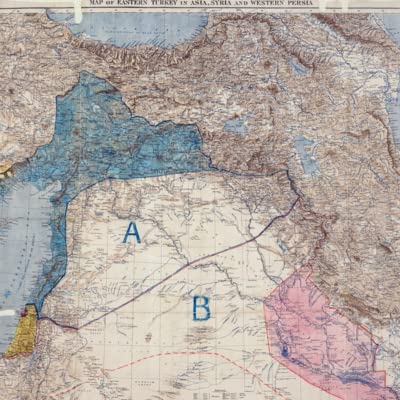
    The consequences of WWI were far-reaching, and the Middle East was no exception. Between 1916 to 1923, three major treaties were signed which carved up this region. These treaties went on to define the new borders, influence policies and as ever, impact the lives of millions.

    In this episode I hope to give you a summary of how significant each treaty was, who the winners and losers were. I present the treaties more in the context in which they were produced: Ottoman policies, WWI, alliance rivalry, the Paris Peace Conference, the Turkish War of Independence and Mustafa Kemal.

    References:

    Jwaideh, Wadie. The Kurdish national movement: its origins and development. Syracuse University Press, 2006.

    Barr, James. A line in the sand: Britain, France and the struggle that shaped the Middle East. Simon and Schuster, 2011.

    Mehr anzeigen Weniger anzeigen
    35 Min.
  • Tracing a Kurdish identity through the years
    Oct 27 2021

    Today's voicemail is taken from the following article on the YPJ Zeynab Serekaniye, written by Elizabeth Flock: https://foreignpolicy.com/2021/09/20/turkey-airstrikes-kurds-syria-ypj-ceasefire/

    Introducing Season 2! Hello and welcome back to Voicemails from History. In this season, I will be taking you on a tour of modern Kurdish history, each episode highlighting a significant event or moment for them in the 20th century. The Kurds have gained more and more attention in the last decade or so, but there are still gaps in knowledge about who they are and what they want. In this opening episode, I decided to take a more meandering approach and just chat about key moments in Kurdish history, reflecting on their identity development, and what this could mean for their future in the Middle East.

    I'd be delighted if you reach out and offer commentary, opinions or suggestions!

    Slip ups I made in the episode which I only noticed after recording! *Utilitarian clothing *Turkish Republic formally founded in 1923, not 1920. I hope that's all!

    References for this episode:
    https://foreignpolicy.com/2021/09/20/turkey-airstrikes-kurds-syria-ypj-ceasefire/

    McDowall, David. A modern history of the Kurds. Bloomsbury Publishing, 2021.

    Galip, Özlem Belçim. Imagining Kurdistan: Identity, culture and society. Bloomsbury Publishing, 2015.

    Jwaideh, Wadie. The Kurdish national movement: its origins and development. Syracuse University Press, 2006.

    http://kurdistanica.com/problems-in-kurdish-historiography/

    https://www.aljazeera.net/midan/intellect/history/2019/5/24/حاربوا-الصليبيين-وخرجوا-العلماء-دور

    Khaldun, Ibn. "Muqaddimah."

    Cover photo photographer: Saeed Hassan Rashedi

    Mehr anzeigen Weniger anzeigen
    34 Min.
  • Burma 1945-2018: money, legacies & the Rohingya (Part 2), with Thant Myint-U
    Sep 1 2021

    Today's voicemail is taken from page 188, The Hidden History of Burma, A Crisis of Race and Capitalism, by Thant Myint-U.

    Timestamps (as I know this episode is longer than usual!)

    Intro & background: until 10:30

    Burma's economy: 11:00

    Aung San Suu Kyi: 23:58

    Rohingya and the state of Arakan: 31:25

    In part 2 of this episode, I try to understand some of the main political and economic developments of the newly independent country in the 20th and 21st century. There's the military dictatorship and how it tried to rule, the growth of illicit drugs and insurgent groups, how Aung San Suu Kyi fits into Burma’s narrative, and the steady slow burn of the Rohingya crisis and contested genocide.

    Sidenotes: I use the word Arakan, as does the author, for historical purposes, but in the present the state is known as Rakhine. Same goes for Rangoon/Yangon. Also, I realised much later after recording that I lumped in Tony Blair as being a "celebrity" with the likes of McKellen and Clooney - slight error there on my part!

    Episode cover art: Deutsche Welle (DW)

    Mehr anzeigen Weniger anzeigen
    54 Min.