• Lou Holtz Has Entered Hospice. What He Taught Me.
    Feb 9 2026

    Send us a text

    Lou Holtz stood 5'10" on a generous day. He joked he had a face made for radio and a lisp made for silence. He didn't command a room by walking into it the way some leaders do.

    But he commanded a room nonetheless. And he did it by how he treated the people inside of it.

    Please take a moment and watch this speech: https://youtu.be/veSXqc4otKE?si=4dRrvD9PZ9mzACEX

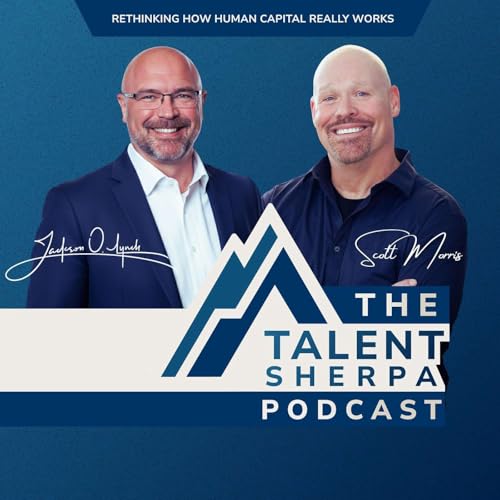
    Jackson Lynch recorded this the morning he learned Coach Holtz entered hospice. As a Notre Dame Class of 1996 graduate, Lynch watched Holtz treat groundskeepers the same way he treated boosters, remember names of people who had no business being remembered. Not because it was strategic, but because that was his operating system.

    What You'll Learn

    Why ability is table stakes:

    • Organizations obsess over credentials, then act surprised when capable people underdeliver
    • Motivation determines whether you engage the work; attitude determines whether it produces anything worth having
    • If strong hires keep underperforming, it's not selection. It's the operating environment.

    The architecture of attention:

    • Most people are managing their own constraints. They don't have bandwidth for yours.
    • The discipline is knowing who has both capacity and alignment to help before you spend capital asking

    The say-do gap:

    • Every organization has a gap between declared intent and executed reality. Coach named that in eleven words.
    • Talking feels like progress. You leave the meeting feeling like something happened.
    • Your job is to close the gap by making execution measured, visible, and consequential

    Designing how you carry the weight:

    • Two leaders can have identical pressures. One thrives. One fractures.
    • The difference isn't resilience as a personality trait. It's the architecture of how they've structured their response.
    • If you haven't built that architecture, you're relying on personal tolerance. And that's a depleting resource.

    Key Quotes

    "Ability is what you're capable of doing. Motivation determines what you do. And attitude determines how well you do it."

    "Don't tell your problems to people. Eighty percent don't care, and the other twenty percent are glad that you have them."

    "When all is said and done, more is said than done."

    "It is not the load that breaks you down, it's the way you carry it."

    The Diagnostic Questions

    • Are your systems selecting for capability while ignoring what shapes motivation and attitude?
    • Do you know who has both capacity and alignment to help before you ask?
    • What's the gap between what your organization says and what it does?
    • Have you designed how you carry the weight, or are you relying on resilience?

    Support the show

    Resources

    • My Talent Sherpa: mytalentsherpa.com
    • Talent Sherpa Substack: talentsherpa.substack.com
    • Scott Morris / Propulsion AI: getpropulsion.ai
    • Dripify: try.dripify.com/talentsherpa
    Mehr anzeigen Weniger anzeigen
    11 Min.
  • Why Your Talent Problem Isn't a Talent Problem
    Feb 5 2026

    Send us a text

    W. Edwards Deming said 94% of problems in organizations are system driven. Only 6% are people problems. We all nod when we hear that. We love the quote. We put it in our slide decks. And then we go right back to building performance improvement plans.

    The Work Institute found that 75% of voluntary turnover is preventable. Three out of four departures did not have to happen. And yet we're spending our energy on the 6% while ignoring the 94%.

    Imagine you're a surgeon and your patients keep dying on the table. You blame the patient. You get a new patient and they die too. At some point, do you start to wonder if maybe the problem isn't the patient, maybe it's the operating room?


    What You'll Learn

    The faulty assumptions that get leaders stuck:

    • "We need to hold people accountable for results" assumes performers control the variables that determine success. Research shows 70% of the variance in team engagement relates to managers.
    • "A good performer can succeed anywhere" assumes talent is portable. A role that burns through three leaders in 18 months is a role design problem, not a talent problem.
    • "PIPs help underperformers improve" assumes they're developmental tools. In reality, 67% of employees say performance evaluations are based on subjective observations, not clear metrics.
    • "High turnover means we need to hire better" ignores that 71% of voluntary turnover stems from poor management, not bad hires.
    • "Fixing individuals is faster than fixing systems" ignores the math. A PIP plus recruiting plus onboarding takes 15 months. Redesigning a broken system takes 6 weeks.

    The four questions to ask before any PIP or exit:

    1. The pattern question: Is this the first time the role has failed to deliver?
    2. The load question: Was this role designed for a human or for a superhero?
    3. The attribution question: Are we measuring people or the systems they're in?
    4. The capital question: Where is your time and money actually going?

    The plays for next week:

    • Run a failure audit on your last three exits
    • Build a system load assessment for critical roles
    • Change performance conversations to start with what the person was asked to do and what they had to do it with
    • Run stay interviews before exit interviews


    Key Quotes

    "A bad system will beat a good person every time. If your system makes failure likely, you will keep finding people to blame until you run out of people."

    "We're not saying individual accountability doesn't matter. We're saying most of what we call individual failure is actually a system failure wearing a name tag."

    "Fixing people is a low altitude mandate. Fixing systems is a high altitude mandate."

    "If replacing your top performers with average performers would break the system, you're relying on heroics. And heroics don't scale."

    "You can hear the problems while people are still on payroll, or you can hear them on the way out. That's a choice."


    The Diagnostic Questions

    • How many people have failed in the same role in the last 18 months?
    • If you replaced your top performers with average performers, would the system break?
    • When someone misses quota, how much was actually in their control?
    • What percentage of your energy goes to people problems vs. system problems?
    • Are you running stay interviews or just exit interviews?

    Resources

    • My Talent Sherpa: mytalentsherpa.com
    • Talent Sherpa Substack: talentsherpa.substack.com
    • Scott Morris / Propulsion AI: getpropulsion.ai
    • Dripify: try.dripify.com/talentsherpa
    Mehr anzeigen Weniger anzeigen
    29 Min.
  • Why Capable CHROs Hit an Invisible Ceiling
    Feb 2 2026

    Send us a text

    Watch this happen to exceptionally capable people. CHROs who transformed functions, built credibility, did everything right in the mandate conversation, and still hit a ceiling they cannot explain.

    We talk about the identity shift the CHRO must make. Functional leader to business leader. HR expert to enterprise problem solver.

    But here's what no one talks about. The CHRO cannot complete that shift alone. There's a corresponding shift the CEO must also make. If the CEO doesn't make it, the CHRO's transformation stalls.


    What You'll Learn

    The structural trap no one names:

    • Why the CHRO is the only executive whose job requires them to assess their boss
    • How capable CHROs become structurally trapped
    • The difference between being a trusted HR partner vs. someone the CEO lets see them clearly

    What the CEO identity shift looks like:

    • Moving from "I have a trusted HR partner" to "I have someone whose job includes seeing me clearly, and I have to let them"
    • Signs the CEO has made the shift: used as confidant, in the room when decisions are shaped
    • Signs the CEO hasn't: learning about decisions after they're made, execution without diagnosis

    The four-move playbook:

    1. Watch how the CEO manages struggling peers: Are you confidant, neutral observer, or excluded?
    2. Name the dynamic before the board does: Have a direct conversation about what happens when the board asks about their effectiveness.
    3. Test the relationship early: In the first 90 days, bring an uncomfortable but grounded observation.
    4. Accept the limitation: You cannot assess whether the CEO has made the identity shift until things get hard.


    Key Quotes

    "This is the only executive relationship where a subordinate is structurally required to assess their boss as part of the job."

    "I've always made one commitment to CEOs I work for: I will never tell the board anything I haven't shared with you first. No surprises."

    "Some CHRO failures blamed on the CHRO are actually dependency failures. The CEO never made the shift."


    The Diagnostic Questions

    • When you raise difficult observations, does the conversation continue or does nothing change?
    • Are you positioned as confidant, neutral observer, or excluded when the CEO manages struggling peers?
    • Have you discussed what happens when the board asks about their effectiveness?
    • Are you in the room when difficult decisions are shaped, or only when they're implementing the plan?


    Resources

    • My Talent Sherpa: mytalentsherpa.com
    • Talent Sherpa Substack: talentsherpa.substack.com
    • Scott Morris / Propulsion AI: getpropulsion.ai
    • Dripify: try.dripify.com/talentsherpa
    Mehr anzeigen Weniger anzeigen
    17 Min.
  • How to Close the Strategy Gap Before Month 7
    Jan 29 2026

    Send us a text

    You've diagnosed the problem. Now here's how to fix it.

    In Part 1, we unpacked why 31% of first-time CHROs are fired within 18 months and why doing a "good job" on HR metrics isn't enough. The issue? A strategy gap that starts as unclear language, becomes structure, and ends with a quiet exit.

    In Part 2, we're giving you the playbook.

    Scott Morris (former CHRO, founder of Propulsion AI) and Jackson Lynch break down the three concrete moves you can make starting Monday morning to close the gap before month 7, before the CEO's tone shifts, before the compliments land oddly, before the narrative moves against you.

    This isn't about working harder. It's about working differently.


    What You'll Learn

    The fundamental shift:

    • Why sounding like the CFO doesn't make you strategic (and what does)
    • The difference between presenting about your function vs. diagnosing the business
    • How to move from "here's what HR is doing" to "here's where the strategy will break"

    What co-authorship actually looks like:

    • Three things strategic CHROs do consistently that operational CHROs don't
    • How to articulate where strategy breaks before it shows up in results
    • The difference between being in the room vs. being inside the business model

    The three-move playbook:

    1. Contract altitude explicitly: Define "strategic" with your CEO in business terms, not air quotes
    2. Translate strategy into constraints: Identify where the business will break and move talent to fix it
    3. Redesign your operating model: Build systems that keep you upstream instead of reactive

    The execution traps to avoid:

    • Moving too fast without trust
    • Trying to change everything at once
    • Confusing strategic language with strategic contribution
    • Neglecting operational excellence while chasing relevance
    • Thinking this is a solo act (why CFO/COO partnerships matter)


    Key Quotes

    "A strategic CHRO doesn't deliver a section of the deck. They shape the story the deck is built around."

    "Access is earned by demonstrating that you see things others don't. Not by asking for a seat at the table."

    "The shift isn't do more. The shift is do fewer things that remove constraints."

    "If you think your role is building people up, you go one way. If you think your role is driving the business forward by building people up, you go a different direction."

    "Organizations where CFOs and CHROs co-lead initiatives are 2.4x more likely to achieve transformation outcomes."

    "You cannot neglect operational excellence while chasing strategic relevance. Operational excellence is the foundation. It's not the ceiling."


    The Diagnostic Questions

    • Is your people strategy inside the business model or sitting next to it?
    • Are you being rewarded for reliability over authorship?
    • Are you being evaluated on enterprise outcomes or how well HR runs?
    • Are you mistaking activity for leverage?

    About the Hosts

    Jackson Lynch is founder of Talent Sherpa and creator of the CHRO Ascent Academy.

    Scott Morris is a former CHRO and founder/CEO of Propulsion AI.


    Connect

    • Subscribe on Apple Podcasts, Spotify, or YouTube
    • Leave a review to help us reach more leaders
    • Tag @TalentSherpa with your takeaways

    Listen to Part 1 for the diagnosis: why 31

    Resources

    • My Talent Sherpa: mytalentsherpa.com
    • Talent Sherpa Substack: talentsherpa.substack.com
    • Scott Morris / Propulsion AI: getpropulsion.ai
    • Dripify: try.dripify.com/talentsherpa
    Mehr anzeigen Weniger anzeigen
    34 Min.
  • They Knew. They Didn't Tell You.
    Jan 26 2026

    Send us a text

    Every organization running a transformation has people who see exactly what's going to fail. Most of them stay silent. Not because they lack courage, but because they lack permission.

    In this episode, Jackson breaks down the red team pre-mortem: a structured way to surface uncomfortable truths before they become expensive failures.

    He shares a real example from his time at Nestlé Dryer's, explains why most pre-mortems produce nothing useful, and walks through five plays that actually work.

    What You'll Learn:

    • What a red team pre-mortem actually is and why it matters now more than ever
    • The five reasons most pre-mortems fail before they start
    • Why "staffing with believers" guarantees you'll miss the real risks
    • The difference between a leader explaining intent and defending a decision
    • How to use the People, Process, Technology frame to structure the conversation
    • Why your incentive structure might be rewarding the wrong behavior
    • Five actionable plays to build a red team that captures real intelligence

    Key Moments:

    [[02:15] Why most organizations never get the benefits

    [04:30] The Nestlé Dryer's story: "Is this going to go perfect?"

    [07:45] The five reasons pre-mortems fail

    [12:30] Psychological safety defined: belonging after dissent

    [15:00] The People, Process, Technology frame

    [17:20] Five plays to make your red team work

    [22:00] The flaw-finder problem: who gets celebrated?

    [24:30] Four takeaways to put into practice

    Quotable Moments:

    • "You're asking people to find the fatal flaws before they become fatal. That's the genius of this."
    • "The person who catches a problem before launch gets a polite thank you. The person who heroically fixes it afterward gets celebrated."
    • "One defensive reaction teaches everybody what's actually welcome."
    • "Psychological safety means you can put an uncomfortable truth on the table, argue about it, maybe even be wrong, and still belong to the team."
    • "You already have the diversity. The question is whether you've built a structure that lets it speak."

    Resources

    • My Talent Sherpa: mytalentsherpa.com
    • Talent Sherpa Substack: talentsherpa.substack.com
    • Scott Morris / Propulsion AI: getpropulsion.ai
    • Dripify: try.dripify.com/talentsherpa
    Mehr anzeigen Weniger anzeigen
    16 Min.
  • The Strategy Gap That Quietly Ends CHRO Tenures
    Jan 22 2026

    Send us a text

    The company hires a new CHRO. The CEO introduces them like they've found the missing gear in the leadership machine. The board nods in relief. The executive team exhales.

    And then, month by month, the narrative starts to shift.

    Around month nine, the CEO starts offering compliments that land a little oddly. Around month 12, the tone tightens. And by month 15, the question isn't coded anymore: Are we getting the strategic partnership that we need?

    This is part one of a two-part series naming the quiet pattern that ends CHRO tenures without a headline, without a blowup, and without a clean post-mortem. Today is the diagnosis. We unpack why this pattern exists and why it catches even experienced CHROs off guard.

    The data is stark: 31% of first-time CHROs are fired in their first 18 months. 52% are fired within a year of a new CEO being appointed. The CHRO thinks they're doing a good job. The system is grading them against a job description that was never spoken.


    What You'll Learn

    The enterprise context that's changed:

    • Strategy windows are shorter, margin pressure is higher
    • Execution speed has become a competitive advantage
    • Boards have less tolerance for slow-motion operating models
    • What CEOs need from CHROs has changed, even when the language hasn't

    Why the strategy gap exists:

    • CFO and COO roles are standardized, CHRO expectations are all over the map
    • "Strategic" means a dozen different things to different CEOs
    • CHROs get hired into undefined versions and gravity takes over
    • The CEO says strategic, the CHRO hears make HR better, but the CEO means see the business in systems

    The boardroom diagnostic:

    • The CEO opens with narrative, CFO sharpens with margin and cash, operators layer in execution risk
    • If the CHRO talks about engagement trends and time to fill, they're running a parallel narrative
    • Parallel narratives get trimmed first when the clock runs out

    Four faulty assumptions that keep this pattern alive:

    1. Delivering results automatically creates strategic credibility (early wins set the altitude of the role, you build credibility as an operator and get evaluated as an architect)
    2. Strategic is a shared word that will align over time (ambiguity never stays neutral, it becomes muscle memory)
    3. Experience protects you (it doesn't, prior success isn't portable unless you renegotiate the value equation)
    4. The CHRO role has the same enterprise ceiling as the CFO (it doesn't, CHRO expectations depend entirely on the CEO)

    Four diagnostic questions:

    1. Is our business strategy inside the business model or sitting next to it? (Being in the room isn't being inside the model)
    2. Are we rewarding operational reliability over strategic authorship? (Reliability becomes a ceiling)
    3. Are we evaluating the CHRO on enterprise outcomes or on how well HR runs? (CFOs are evaluated on enterprise metrics, CHROs on departmental metrics)
    4. Are we mistaking activity for leverage? (Finance had external forcing functions, HR didn't)

    Four execution traps:

    1. Confusing trust with influence (trust earns access, influence changes outcomes)
    2. Waiting for permission to operate at enterprise level (no one's going to give it to you)
    3. Over-delivering operationally to compensate for ambiguity (this cements the wrong identity)
    4. Letting the board define you

    Resources

    • My Talent Sherpa: mytalentsherpa.com
    • Talent Sherpa Substack: talentsherpa.substack.com
    • Scott Morris / Propulsion AI: getpropulsion.ai
    • Dripify: try.dripify.com/talentsherpa
    Mehr anzeigen Weniger anzeigen
    37 Min.
  • Why Smart CHROs Lose Credibility for Doing Good Work
    Jan 19 2026

    Send us a text

    Most CHROs lose credibility not because they fail, but because they succeed at the wrong things. They deliver what was asked, show up prepared, complete the work. And still, when critical conversations happen, the CEO routes elsewhere. This isn't a relationship problem. This is a forecast problem.

    Jackson Lynch breaks down three ways CHROs train CEOs to discount their judgment—and five plays that create predictable accuracy.


    What You'll Learn

    The forecast problem: CEO deciding whether to move CFO out? They talk to board chair, not CHRO. Product org missing dates? They pull in COO. CHRO gets sanitized version two weeks later. Why? CEO cannot predict what CHRO will see.

    Three ways CHROs lose credibility:

    1. Overpromising timelines (say 4 weeks, deliver in 6)
    2. Delaying hard truths (waiting to name underperformance)
    3. Confusing activity with impact (updates disconnected from decisions)

    What builds credibility: Being predictably accurate about what you can deliver, what you see as risk, what connects to business outcomes.

    Five Plays to Create Predictable Accuracy

    1. Optimize timelines for reliability, not speed Ask "how long when two people are on vacation?" not "how fast could this go?"

    2. Name risk before you're asked "I'm seeing a pattern. Decisions are delayed, team escalates around them. That's creating drag in three areas..."

    3. Connect every update to a CEO decision Ask "what decision does this inform?" If none, don't bring it.

    4. Build a talent risk dashboard CEO actually looks at Answer: Do I have talent to execute strategy? Capability gaps? Succession risk in pivotal roles? Decision velocity by function?

    5. Create standing "watching" agenda item Reserve 5 minutes weekly: "Three things I'm watching that might become decisions." Patterns forming, not problems yet.

    Key Quotes

    "Credibility is built on whether the CEO can predict your forecast. When they can, they pull you in earlier. When they can't, they route around you."

    "Every time you miss a deadline, you're teaching the CEO your estimate is unreliable on everything else."

    "The goal is to make it impossible for the CEO to make a critical decision without first asking what you see that they don't."

    "Precision beats speed. Conservative timelines you hit build more trust than aggressive timelines you don't."


    Four Takeaways

    1. Credibility is built on whether CEO can predict your forecast
    2. Most CHROs lose credibility by succeeding at wrong things
    3. Goal is to make it impossible for CEO to decide without you
    4. Precision beats speed—conservative timelines build trust

    Until next time: Keep raising the bar, keep building predictable accuracy, and keep climbing.

    Resources

    • My Talent Sherpa: mytalentsherpa.com
    • Talent Sherpa Substack: talentsherpa.substack.com
    • Scott Morris / Propulsion AI: getpropulsion.ai
    • Dripify: try.dripify.com/talentsherpa
    Mehr anzeigen Weniger anzeigen
    15 Min.
  • Why Performance Beats Pedigree with Lou Adler
    Jan 15 2026

    Send us a text

    Most companies say trust matters, but when they run interviews, they only evaluate skills and polish. They focus on what candidates have rather than how they operate. And when you hire that way, you get predictably unpredictable results.

    Lou Adler has spent over 50 years studying the difference between people who elevate an organization and the people leaders end up managing around. He's examined thousands of hires across roles, industries, and eras, and he keeps seeing the same 12 behavioral traits in every top performer. Those traits might also be the strongest predictors of trust on a team.

    This is episode 100, and we're giving you a practical roadmap for hiring people who make the company better the moment they walk in the door.


    What You'll Learn

    Why recruiting feels broken:

    • AI didn't break recruiting, it exposed it
    • The system is optimizing funnels while ignoring clarity
    • We're recruiting for static experience in a dynamic environment
    • The best candidates aren't in funnels at all

    The fundamental shift in how to hire:

    • Why a job description listing skills is stupid
    • How to define work as performance objectives, not person requirements
    • The difference between screening for credentials vs. outcomes
    • Why doing the wrong thing faster is still stupid

    Lou's performance-based hiring method:

    • Start with what a person needs to do, not who they need to be
    • Define 4-5 key performance objectives (KPOs) for every role
    • Test for excitement about the work, not excitement about getting the job
    • Solve for motivation (the N factor) alongside ability

    The 12 universal traits of top performers:

    • Being proactive, seeing the big picture, understanding and influencing people
    • Why ownership beyond boundaries predicts success
    • How to assess traits that matter more than technical skills
    • The importance of volunteering for things over your head

    The hiring formula for success:

    • Ability to do the work + Fit factors = Success
    • Fit drives motivation (raised to the power of N)
    • How to dig 5-6 layers deep into accomplishments
    • Why you need evidence, not opinions, before making an offer


    Key Quotes

    "A job is stuff that people do. What you've defined is a person doing a job. Let's forget the person and let's define the work."

    "Doing the wrong thing faster is stupid. If you're producing bad widgets, stop producing bad widgets. But in HR, we say, do you have any more bad candidates I can interview?"

    "HR should throw away the existing hiring process and build it from scratch. They wouldn't do anything they're doing now."

    "The ability to do the work is actually the easiest part to measure. Understanding performance objectives is pretty easy. But putting all that together takes time."

    "If your lawyer tells you not to do it, get another lawyer."

    "Never make an offer before asking: Why do you want this job? Forget the money, why do you want it? And if you can't describe it clearly, you're rolling the dice."

    "I don't care if someone's excited to come into the interview. They don't know the job. How can you be excited if you don't know the job? That's phony excitement."

    "When you know people, you do that intuitively. When you don't know people, you're dealing with strangers."

    "Volunteer for things that are over your head. If you screw i

    Resources

    • My Talent Sherpa: mytalentsherpa.com
    • Talent Sherpa Substack: talentsherpa.substack.com
    • Scott Morris / Propulsion AI: getpropulsion.ai
    • Dripify: try.dripify.com/talentsherpa
    Mehr anzeigen Weniger anzeigen
    52 Min.