• 33 — Exercise Evidence for Females with T1D: Mind the Gap | Associate Professor Jane Yardley
    Feb 11 2026

    Suggest guests or get in contact

    Exercise guidelines for type 1 diabetes are built on research dominated by male participants. Professor Jane Yardley, a leading exercise physiologist, bridges the research gap between male and female exercise physiology in type 1 diabetes.

    This conversation reveals why carbohydrate recommendations systematically overestimate female needs, how menstrual cycle phases alter insulin requirements during exercise, why peripheral hyperinsulinemia creates unique barriers to fat loss, and how fasted morning exercise offers a low-risk, high-reward strategy for improving insulin sensitivity and accessing fat stores.

    Full show notes: https://theglucoseneverlies.com/females-exercise-t1d/

    KEY TOPICS:
    • Why ~60-70% of females experience luteal phase insulin resistance (10-50% increased needs)
    • How AID systems struggle to keep up with rapid menstrual cycle changes
    • Why per-kilogram carb recommendations overestimate female athletes' needs
    • The peripheral hyperinsulinemia barrier: 4-8× higher insulin blocks fat release
    • Fasted exercise: zero planning, minimal hypo risk, maximum fat burning
    • Why muscle and bone health in your 20s-30s determines mobility in your 60s-80s
    • Menopause transitions and accelerated cardiovascular risk

    WHAT YOU'LL LEARN:
    ✓ Luteal phase exercise may require larger insulin adjustments
    ✓ Females use more fat as fuel — estrogen promotes fat oxidation
    ✓ Bolus insulin lasts 6 hours, not 2-4 (why "between meals" isn't truly fasted)
    ✓ Morning fasted exercise depletes glycogen and improves all-day insulin sensitivity
    ✓ How to overcome the fat loss barrier created by high peripheral insulin
    ✓ Why resistance training NOW prevents fractures and disability later
    ✓ Pregnancy exercise principles (sparse data, clear physiology)

    PRACTICAL STRATEGIES:
    → Fasted morning exercise: roll out of bed, black coffee, go — no adjustments needed
    → Luteal phase: consider 60-70% basal cuts (not 50%) for postprandial exercise
    → Start with LESS carbohydrate than guidelines suggest, adjust based on YOUR response
    → Build peak muscle/bone by age 30 — you can't make up for lost time at retirement
    → Post-meal walks in pregnancy: 15-20 min keeps glucose <7.8 mmol/L

    Disclaimer

    This podcast is for education and informational purposes only. It does not constitute medical advice and is not a substitute for individualised care.

    The Glucose Never Lies® is independent by design

    We do not accept sponsorships and advertising. We operate via education grants and donations from listeners who value independence. So, consider:
    Buying the GNL a Coffee:
    https://www.buymeacoffee.com/jspfree2

    Enquiries

    Collaboration: John Pemberton — john@theglucoseneverlies.com

    Creatives: Anjanee Kohli — anj@theglucoseneverlies.com

    Follow The Glucose Never Lies®

    Website: https://theglucoseneverlies.com/

    Instagram: https://www.instagram.com/theglucoseneverlies

    LinkedIn: https://www.linkedin.com/company/theglucoseneverlies

    LinkedIn: John Pemberton: https://www.linkedin.com/in/john-pemberton-587104361/

    X: https://twitter.com/GlucoseNLies

    Disclaimer
    This content is for informational purposes only and does not constitute medical advice.

    © The Glucose Never Lies Ltd. All rights reserved....

    Mehr anzeigen Weniger anzeigen
    1 Std. und 12 Min.
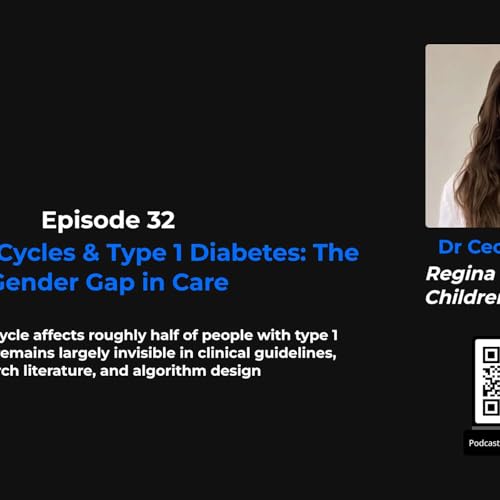
  • 32 — Menstrual Cycles & Type 1 Diabetes: The Gender Gap in Care | Dr. Cecilia Nobili
    Feb 9 2026

    Suggest guests or get in contact

    The menstrual cycle affects half of people with type 1 diabetes, yet it's nearly invisible in clinical guidelines, research, and technology design. Dr. Cecilia Nobili — a pediatric diabetology resident and researcher living with T1D — bridges the gap between lived experience and clinical evidence.

    In this episode, Dr. Nobili shares findings from her observational study of 170 women, revealing how different insulin delivery systems handle monthly hormonal shifts, which phases create the biggest burden, and why this represents a genuine gender gap in diabetes care.

    Full show notes: https://theglucoseneverlies.com/menstrual-cycle-t1d/

    KEY TOPICS:
    • Why 60% of women on MDI experience ≥5% drop in time in range during luteal phase
    • How AID systems cut glucose deterioration in half — but aren't perfect
    • Why hypoglycemia when bleeding starts is often more burdensome than luteal phase highs
    • Practical strategies for each AID system (780G, Omnipod 5, Control-IQ, CamAPS FX) and MDI
    • The progesterone effect: why insulin resistance peaks before your period
    • How to anticipate changes and adjust proactively rather than reactively
    • Why this should be built into algorithms (but isn't)

    WHAT YOU'LL LEARN:
    ✓ The five phases of the menstrual cycle and their glucose impact
    ✓ Which AID systems show the most stability across cycle phases
    ✓ Target adjustments, boost functions, and profile switches that actually work
    ✓ Why pre-bolusing matters more during the luteal phase
    ✓ How to prevent the hypoglycemia tsunami when bleeding starts
    ✓ Why one bad day per month is not catastrophic

    Dr. Nobili's research is funded by a grant and represents the first multi-center study specifically examining menstrual cycle glucose patterns across insulin delivery modalities.

    This episode provides the structured guidance that should exist in every diabetes clinic — but doesn't.

    GUEST: Dr. Cecilia Nobili
    Pediatric Diabetology Resident, Turin, Italy
    Living with T1D
    Multi-center researcher on menstrual cycles and glucose control


    Full show notes, practical checklists, and related episodes: https://theglucoseneverlies.com/menstrual-cycle-t1d/

    Disclaimer

    This podcast is for education and informational purposes only. It does not constitute medical advice and is not a substitute for individualised care.

    The Glucose Never Lies® is independent by design

    We do not accept sponsorships and advertising. We operate via education grants and donations from listeners who value independence. So, consider:
    Buying the GNL a Coffee:
    https://www.buymeacoffee.com/jspfree2

    Enquiries

    Collaboration: John Pemberton — john@theglucoseneverlies.com

    Creatives: Anjanee Kohli — anj@theglucoseneverlies.com

    Follow The Glucose Never Lies®

    Website: https://theglucoseneverlies.com/

    Instagram: https://www.instagram.com/theglucoseneverlies

    LinkedIn: https://www.linkedin.com/company/theglucoseneverlies

    LinkedIn: John Pemberton: https://www.linkedin.com/in/john-pemberton-587104361/

    X: https://twitter.com/GlucoseNLies

    Disclaimer
    This content is for informational purposes only and does not constitute medical advice.

    © The Glucose Never Lies Ltd. All rights reserved....

    Mehr anzeigen Weniger anzeigen
    55 Min.
  • 31 — Prof Scott on pregnancy with type 1 diabetes: from pre-conception planning to postpartum care
    Feb 9 2026

    Suggest guests or get in contact

    Professor Eleanor Scott, one of the UK's leading experts in pregnancy and diabetes, provides the evidence-based roadmap that cuts through the noise.

    Full Show notes: https://theglucoseneverlies.com/pregnancy-t1d/

    This episode covers the complete journey: pre-conception planning (why HbA1c <48 mmol/mol and 70% time in pregnancy range matters), the chaos of first trimester insulin sensitivity and hypos, the dramatic insulin resistance of trimesters two and three (where insulin needs can increase 3-5× baseline), and the instant drop in insulin requirements after delivery.

    Professor Scott explains why the pregnancy glucose target is tighter (3.5-7.8 mmol/L / 63-140 mg/dL) — babies are extremely sensitive to raised glucose, which increases risks of miscarriage, congenital malformations, preterm delivery, and large babies requiring neonatal intensive care. She also offers reassurance: if pregnancy is unplanned or glucose control isn't optimal at conception, early intervention still makes a substantial difference. Absolute risk of complications remains around 10% even with high HbA1c at conception — not inevitable.

    The technology discussion is critical: CGM is non-negotiable But not all hybrid closed-loop systems are equal. CamAPS FX is the only system with robust RCT evidence (ADAPT trial) showing improved time in range, reduced gestational weight gain, smaller babies, and less maternal burden. It was developed specifically for pregnancy with adaptive algorithms and a personal glucose target as low as 4.4 mmol/L. The Medtronic 780G has a CE mark for pregnancy but didn't improve time in range in trials. Other systems aren't studied or indicated for pregnancy.

    Practical strategies include pre-bolusing 15-20 minutes, choosing mixed meals over high-GI foods, walking after eating, moderate carbohydrate intake (30-40%), and building routine to help algorithms (and your brain) adapt to rapid changes.

    For show notes, resources, and full transcript: https://theglucoseneverlies.com/pregnancy-t1d/

    Disclaimer

    This podcast is for education and informational purposes only. It does not constitute medical advice and is not a substitute for individualised care.

    The Glucose Never Lies® is independent by design

    We do not accept sponsorships and advertising. We operate via education grants and donations from listeners who value independence. So, consider:
    Buying the GNL a Coffee:
    https://www.buymeacoffee.com/jspfree2

    Enquiries

    Collaboration: John Pemberton — john@theglucoseneverlies.com

    Creatives: Anjanee Kohli — anj@theglucoseneverlies.com

    Follow The Glucose Never Lies®

    Website: https://theglucoseneverlies.com/

    Instagram: https://www.instagram.com/theglucoseneverlies

    LinkedIn: https://www.linkedin.com/company/theglucoseneverlies

    LinkedIn: John Pemberton: https://www.linkedin.com/in/john-pemberton-587104361/

    X: https://twitter.com/GlucoseNLies

    Disclaimer
    This content is for informational purposes only and does not constitute medical advice.

    © The Glucose Never Lies Ltd. All rights reserved....

    Mehr anzeigen Weniger anzeigen
    1 Std. und 21 Min.
  • 30 — Educating on the algorithms behind diabetes devices
    Feb 4 2026

    Suggest guests or get in contact

    In this episode of Glucose Never Lies, John Pemberton welcomes Dr. Inge Van Boxelaer, endocrinologist and founder of Diabetotech, an independent education platform for diabetes technology. Together, they explore the critical role of education in maximizing the benefits of devices like continuous glucose monitors (CGMs), insulin pumps, and automated insulin delivery (AID) systems.

    Dr. Van Boxelaer shares her journey from clinical practice to creating Diabetotech, highlighting how access to technology isn’t enough—patients and healthcare professionals need structured, unbiased, and up-to-date training. The conversation covers how Diabetotech delivers short, modular courses, device comparisons, and CPD-accredited content, helping clinicians, educators, and people living with diabetes gain confidence and improve outcomes.

    Full Show notes: https://theglucoseneverlies.com/30-diabetotech-education/

    Key topics include:

    • Overcoming educational barriers to adopting new diabetes technologies
    • The evolution of AID systems and CGMs, and their impact on daily management
    • How flipped learning and modular education can save clinician time while improving patient competency
    • Independent, consistent, and regularly updated resources for clinicians, patients, and care teams

    Whether you’re a healthcare professional, a person living with diabetes, or part of a care team, this episode highlights why understanding the technology is as important as having it. Dr. Van Boxelaer also shares her vision for the future of diabetes education and how accessible learning can support better outcomes and fewer complications.

    Explore Diabetotech and its resources at https://www.diabetotech.com/

    Disclaimer

    This podcast is for education and informational purposes only. It does not constitute medical advice and is not a substitute for individualised care.

    The Glucose Never Lies® is independent by design

    We do not accept sponsorships and advertising. We operate via education grants and donations from listeners who value independence. So, consider:
    Buying the GNL a Coffee:
    https://www.buymeacoffee.com/jspfree2

    Enquiries

    Collaboration: John Pemberton — john@theglucoseneverlies.com

    Creatives: Anjanee Kohli — anj@theglucoseneverlies.com

    Follow The Glucose Never Lies®

    Website: https://theglucoseneverlies.com/

    Instagram: https://www.instagram.com/theglucoseneverlies

    LinkedIn: https://www.linkedin.com/company/theglucoseneverlies

    LinkedIn: John Pemberton: https://www.linkedin.com/in/john-pemberton-587104361/

    X: https://twitter.com/GlucoseNLies

    Disclaimer
    This content is for informational purposes only and does not constitute medical advice.

    © The Glucose Never Lies Ltd. All rights reserved....

    Mehr anzeigen Weniger anzeigen
    32 Min.
  • 29 — The Behaviour Change Playbook for Type 1 Diabetes
    Jan 12 2026

    Suggest guests or get in contact

    Five principles that make change more likely to stick

    John Pemberton is joined by Vanessa Haydock (The Diabetic Health Coach). Background in psychology and applied behaviour analysis, certified behaviour analyst, personal trainer, and coach supporting people with type 1 diabetes through sustainable behaviour change.

    Full notes: https://theglucoseneverlies.com/beahviour-change-t1d/

    This conversation lays out a practical behaviour change playbook grounded in psychology, lived experience, and the realities of diabetes physiology.

    00:00 — Why this conversation matters why willpower alone fails.

    02:45 — Vanessa’s story: diagnosis, denial, and turning point
    Growing up with type 1 diabetes, rebellion, burnout, retinopathy as an emotional trigger, and how behaviour change (not perfection) transformed Vanessa’s relationship with diabetes.

    16:45 — Principle 1: Design beats discipline
    Why willpower is finite in type 1 diabetes, and how reducing decision load through systems, defaults, and realistic goals makes change more sustainable.

    30:35 — Principle 2: Cues beat grit
    How environment and prompts outperform memory — from insulin timing to daily routines — and why piggybacking on existing habits works.

    39:20 — Principle 3: Reduce threat before effort
    How fear, pressure, and perceived failure drive avoidance behaviours — and why lowering the threat level is essential before increasing effort.

    45:10 — Principle 4: Hawk or Owl, Carrot or Stick
    Choosing the right style of accountability and feedback — frequent vs spaced, direct vs gentle — and why mismatch derails progress.

    51:15 — Principle 5: Community support, not shame
    Why small, safe communities outperform noisy online spaces, and how shared reality reduces isolation and burnout.

    59:40 — Pulling it together: a practical playbook for 2026
    How to apply the five principles deliberately, without perfectionism or guilt.

    Find Vanessa at:

    • Website: https://diabetichealthcoach.co.uk/
    • Instagram: https://www.

    Disclaimer

    This podcast is for education and informational purposes only. It does not constitute medical advice and is not a substitute for individualised care.

    The Glucose Never Lies® is independent by design

    We do not accept sponsorships and advertising. We operate via education grants and donations from listeners who value independence. So, consider:
    Buying the GNL a Coffee:
    https://www.buymeacoffee.com/jspfree2

    Enquiries

    Collaboration: John Pemberton — john@theglucoseneverlies.com

    Creatives: Anjanee Kohli — anj@theglucoseneverlies.com

    Follow The Glucose Never Lies®

    Website: https://theglucoseneverlies.com/

    Instagram: https://www.instagram.com/theglucoseneverlies

    LinkedIn: https://www.linkedin.com/company/theglucoseneverlies

    LinkedIn: John Pemberton: https://www.linkedin.com/in/john-pemberton-587104361/

    X: https://twitter.com/GlucoseNLies

    Disclaimer
    This content is for informational purposes only and does not constitute medical advice.

    © The Glucose Never Lies Ltd. All rights reserved....

    Mehr anzeigen Weniger anzeigen
    1 Std. und 6 Min.
  • 28 — Then Glucose Never Lies 2025 in Review: Chaos → Clarity
    Jan 3 2026

    Suggest guests or get in contact

    Host: John Pemberton, RD
    Guest: Anjanee Kohli, RD MNutr

    2025 was a formative year for The Glucose Never Lies Podcast. Not because everything went smoothly — but because repeated exposure to real-world problems forced clearer models, sharper questions, and fewer illusions.

    In this year-in-review episode, John Pemberton is joined by Anjanee Kohli — diabetes specialist dietitian, creative lead, and co-director at Glucose Never Lies — for an honest audit of what the podcast set out to do, what it actually delivered, where their thinking evolved, and where uncertainty remains.

    Together, they revisit the core themes that kept resurfacing across episodes in 2025: insulin timing and dose over tactics, the liver’s central role, exercise variability, device and algorithm trade-offs, accessibility, and the gap between theoretical optimisation and lived experience with type 1 diabetes.

    This conversation is not a highlights reel. It’s a reflective pause — stripping ideas back to what survived contact with reality, and clarifying what Glucose Never Lies is deliberately carrying forward into 2026.

    Read the full episode page, explore linked episodes, resources, and references:
    https://theglucoseneverlies.com/episode-28-2025-in-review/

    What this episode covers

    • Why 2025 required a shift from tactics to principles
    • What repeated real-world patterns taught us about insulin, exercise, and devices
    • Where technology helps — and where trade-offs remain unavoidable
    • Episodes and resources worth revisiting depending on your current challenge
    • What changed our minds, and what we’re still uncertain about
    • What Glucose Never Lies is committing to — and leaving behind — in 2026

    Disclaimer

    This podcast is for education and informational purposes only. It does not constitute medical advice and is not a substitute for individualised care.

    The Glucose Never Lies® is independent by design

    We do not accept sponsorships and advertising. We operate via education grants and donations from listeners who value independence. So, consider:
    Buying the GNL a Coffee:
    https://www.buymeacoffee.com/jspfree2

    Enquiries

    Collaboration: John Pemberton — john@theglucoseneverlies.com

    Creatives: Anjanee Kohli — anj@theglucoseneverlies.com

    Follow The Glucose Never Lies®

    Website: https://theglucoseneverlies.com/

    Instagram: https://www.instagram.com/theglucoseneverlies

    LinkedIn: https://www.linkedin.com/company/theglucoseneverlies

    LinkedIn: John Pemberton: https://www.linkedin.com/in/john-pemberton-587104361/

    X: https://twitter.com/GlucoseNLies

    Disclaimer
    This content is for informational purposes only and does not constitute medical advice.

    © The Glucose Never Lies Ltd. All rights reserved....

    Mehr anzeigen Weniger anzeigen
    1 Std. und 4 Min.
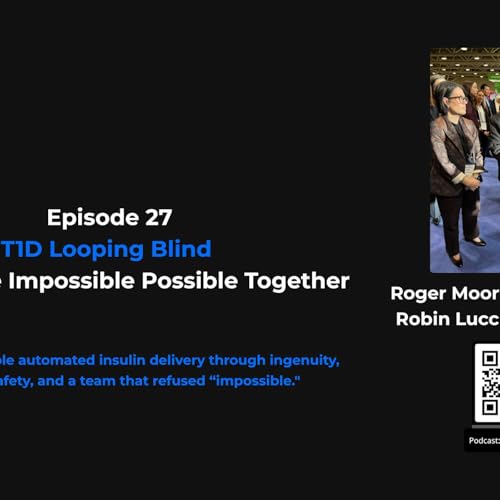
  • 27 — T1D Looping Blind: Making the Impossible Possible Together
    Dec 28 2025

    Suggest guests or get in contact

    Host: John Pemberton, RD
    Guests: Roger Moore & Robin Lucciantonio

    Roger has lived with type 1 diabetes since age two and has been totally blind for more than 35 years. While automated insulin delivery (AID) has transformed safety and glucose stability for many people with type 1 diabetes, most systems remain inaccessible without sight.

    In this Inspiring Stories episode of The Glucose Never Lies Podcast, John Pemberton speaks with Roger Moore and diabetes educator Robin Lucciantonio about how they refused to accept that limitation. Using the open-source Loop system with iPhone VoiceOver, a careful stepwise rollout (simulator → saline → insulin), and a handcrafted tactile pod-filling station, Roger achieved full autonomy with AID.

    This conversation isn’t about technology alone. It’s about accessibility as a safety requirement, not a convenience feature — and what becomes possible when clinicians stay open-minded and systems are built around real people rather than default users.

    Read the full episode page and see the setup:
    https://theglucoseneverlies.com/looping-blind/

    What this episode covers

    • Living with type 1 diabetes without visual feedback
    • Why most commercial AID systems are inaccessible without sight
    • Using Loop and VoiceOver for non-visual insulin delivery
    • Simulator and saline trials to reduce risk before going live
    • Designing a tactile pod-filling station for safe, repeatable insulin delivery
    • Outcomes that matter: reduced hypoglycaemia, autonomy, and dignity

    Disclaimer
    This content is for informational purposes only and does not constitute medical advice. It does not create a therapeutic relationship. DIY automated insulin delivery systems carry real risks and require appropriate training, oversight, and contingency planning.

    Disclaimer

    This podcast is for education and informational purposes only. It does not constitute medical advice and is not a substitute for individualised care.

    The Glucose Never Lies® is independent by design

    We do not accept sponsorships and advertising. We operate via education grants and donations from listeners who value independence. So, consider:
    Buying the GNL a Coffee:
    https://www.buymeacoffee.com/jspfree2

    Enquiries

    Collaboration: John Pemberton — john@theglucoseneverlies.com

    Creatives: Anjanee Kohli — anj@theglucoseneverlies.com

    Follow The Glucose Never Lies®

    Website: https://theglucoseneverlies.com/

    Instagram: https://www.instagram.com/theglucoseneverlies

    LinkedIn: https://www.linkedin.com/company/theglucoseneverlies

    LinkedIn: John Pemberton: https://www.linkedin.com/in/john-pemberton-587104361/

    X: https://twitter.com/GlucoseNLies

    Disclaimer
    This content is for informational purposes only and does not constitute medical advice.

    © The Glucose Never Lies Ltd. All rights reserved....

    Mehr anzeigen Weniger anzeigen
    42 Min.
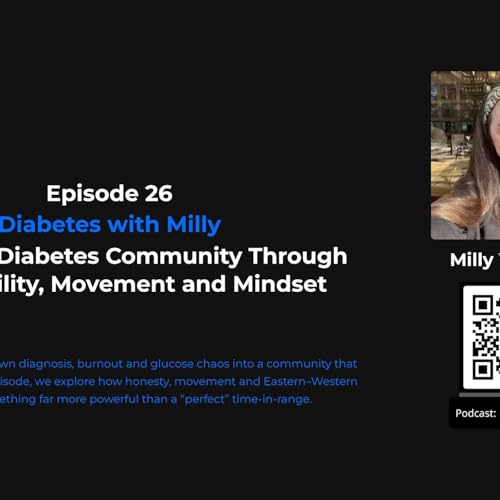
  • 26 – Building a Diabetes Community Through Vulnerability, Movement and Mindset (Diabetes with Mily)
    Dec 9 2025

    Suggest guests or get in contact

    Host: John Pemberton, RD
    Guest: Diabetes with Milly (Milly)

    Episode page: Detailed show notes

    In this episode, Milly joins John to explore how real community forms when people with type 1 diabetes feel safe enough to be vulnerable. Diagnosed during lockdown and thrown into DKA in the final year of her biology degree, Milly rebuilt her life through movement, self-experimenting with strength training, discovering yoga, and eventually travelling alone to India for formal practice in breathwork, mindset and nervous-system regulation.

    What began as a personal diary on Instagram became Diabetes with Milly — a space where 10,000+ people find honesty, humour and connection, and where the Glucose Gals WhatsApp community now supports hundreds of women navigating type 1 diabetes, menstrual cycles, trauma echoes, and real-life blood glucose chaos.

    This conversation sits firmly “Beyond the Numbers”: the human reality of diagnosis, burnout, highs that trigger old trauma, rebuilding confidence, and how movement and mindfulness can reshape the emotional experience of living with the condition.

    Your community is not optional — it is protective infrastructure.

    What This Episode Covers

    • Diagnosis in lockdown: DKA, isolation, and learning to manage T1D without real-world support
    • Sport to strength training: using exercise as both therapy and education
    • Yoga, India, breathwork and regulating the panic response during hypos
    • Trauma memory: why highs can trigger the emotional weight of diagnosis
    • Building an online presence through vulnerability, not perfection
    • Creating the Glucose Gals WhatsApp community (250+ women)
    • Women’s health, menstrual cycles and why female physiology in T1D is so understudied
    • Milly’s plans for a new master’s → PhD in women’s exercise physiology
    • The future: UK meet-ups, movement spaces, and combining strength + yoga for holistic T1D support

    Key Insights

    Vulnerability builds community.
    People don’t gather around perfect numbers — they gather around honesty.

    Movement changes glucose, but a

    Disclaimer

    This podcast is for education and informational purposes only. It does not constitute medical advice and is not a substitute for individualised care.

    The Glucose Never Lies® is independent by design

    We do not accept sponsorships and advertising. We operate via education grants and donations from listeners who value independence. So, consider:
    Buying the GNL a Coffee:
    https://www.buymeacoffee.com/jspfree2

    Enquiries

    Collaboration: John Pemberton — john@theglucoseneverlies.com

    Creatives: Anjanee Kohli — anj@theglucoseneverlies.com

    Follow The Glucose Never Lies®

    Website: https://theglucoseneverlies.com/

    Instagram: https://www.instagram.com/theglucoseneverlies

    LinkedIn: https://www.linkedin.com/company/theglucoseneverlies

    LinkedIn: John Pemberton: https://www.linkedin.com/in/john-pemberton-587104361/

    X: https://twitter.com/GlucoseNLies

    Disclaimer
    This content is for informational purposes only and does not constitute medical advice.

    © The Glucose Never Lies Ltd. All rights reserved....

    Mehr anzeigen Weniger anzeigen
    39 Min.