• They Said Going In-House Would End Her Legal Career
    Oct 14 2026

    Emma Lilley was told that going in-house early would damage her legal career. But the conventional route already felt like a place where she didn't belong.

    Growing up in a working-class family in Stoke-on-Trent, Emma had no family roadmap into law. She originally wanted to study music. When that plan fell through, an available university place led her to a law degree, where she found herself trying to understand things other students seemed to know already.

    In this conversation with Neal Goldstein, the solicitor behind In-house Potter and founder of InHOCO shares how discovering in-house legal work changed her relationship with the profession. She talks about the criticism she faced, the people who took a chance on her, and why her upbringing became one of her greatest strengths.

    There is also an unexpected encounter with Jimmy Carr in Starbucks before a legal exam, a candid discussion about AI and junior lawyer training, and a closer look at the human skills that help lawyers make a difference inside a business.

    Emma explains how her community supported her campaign for regional solicitor admission ceremonies and why making those milestones accessible matters to families. At the end, she remembers the grandfather she wishes could have seen what that campaign achieved.

    Along the way, Neal and Emma explore the difference between pursuing a career that earns other people's approval and building one that feels right to you.

    Find Emma Lilley on LinkedIn and Instagram at @emmalilleylaw, and explore In-house Potter and InHOCO.

    Follow or subscribe to That One Lawyer Podcast for more honest conversations about the people, relationships, and decisions that shape a life in law.

    Mehr anzeigen Weniger anzeigen
    51 Min.
  • Trying to Fit In as a Lawyer Was Costing Her
    Oct 7 2026

    Have you ever felt you had to become someone else to fit in as a lawyer?

    In this selected replay from an earlier episode of That One Lawyer Podcast, Neal Goldstein revisits his conversation with corporate lawyer Lani Medina about the pressure to fit a professional mold and the strengths that pressure can cause you to overlook.

    Lani, a Puerto Rican attorney raised in the Bronx and the first lawyer in her family, recalls feeling out of place at Columbia. She talks about being an introvert in an extroverted world, learning to value her ability to listen, and making herself visible so younger lawyers can see another version of what a corporate attorney can look like.

    Their conversation explores client trust, bringing a human touch to corporate law, and handling difficult people with kindness and professionalism. Lani also shares why she speaks openly about OCD and anxiety, despite uncertainty about how those disclosures will be received.

    They close by discussing whether lawyers can embrace artificial intelligence while preserving their authenticity, judgment, and responsibility to clients.

    Follow or subscribe to That One Lawyer Podcast for more honest conversations about the human side of being a lawyer.

    Mehr anzeigen Weniger anzeigen
    12 Min.
  • Brian Cuban on Being a Lawyer—and an "Ambulance Chaser"
    Sep 30 2026

    In Part 2 of Neal Goldstein's conversation with Brian Cuban, the focus turns to the lawyer Brian became while his personal life was unraveling.

    Brian speaks candidly about his years practicing personal injury law and why he has described himself as an "ambulance chaser." He and Neal discuss the referral relationships, chiropractors, settlements and ethical questions surrounding that period of his career, without pretending the past was cleaner than it was.

    Their conversation also explores addiction and mental health in the legal profession, the role of lawyers assistance programs, and the complicated reality of lawyers who may continue functioning professionally while struggling privately.

    Brian also discusses his transition into writing and his novel The Ambulance Chaser, which draws from a professional world he experienced firsthand.

    The conversation ultimately returns to connection, recovery and what it means to show up for another lawyer who may be struggling. Brian closes with a deeply personal story about a lawyer he knew and what he wishes he could say to him today.

    Follow or subscribe to That One Lawyer Podcast for conversations about the people, relationships and experiences behind the practice of law.

    Brian Cuban - https://briancuban.com/

    Brian Cuban - LI - https://www.linkedin.com/in/briancuban/

    Neal Goldstein - YT - https://www.youtube.com/@ThatOneLawyerPod

    Neal Goldstein - LI - https://www.linkedin.com/in/nealagoldsteinlaw/?isSelfProfile=true

    Mehr anzeigen Weniger anzeigen
    28 Min.
  • Brian Cuban on the Addiction That Nearly Cost Him His Life
    Sep 24 2026

    Brian Cuban's story did not begin with recovery, writing, or being Mark Cuban's brother. It began with a kid in Pittsburgh struggling with shame, bullying, body image, and an overwhelming desire to belong.

    In Part One of this two-part conversation, Brian talks about the childhood experiences that shaped his identity, the loneliness he carried to Penn State, the eating disorder and drinking that followed him into law school, and why he became a lawyer even though he never really wanted to practice law.

    Brian also recounts one of the darkest moments of his addiction and the role his brothers, Jeff and Mark, played when his life was in danger.

    This is a conversation about the things people carry with them long before anyone else can see the consequences, and about the family connections that can matter when everything else begins to disappear.

    Follow or subscribe to That One Lawyer Podcast so you don't miss Part Two of Neal Goldstein's conversation with Brian Cuban.

    Brian Cuban - Buy The Book- The Ambulance Chaser: https://a.co/d/04rp5smw Brian Cuban - Website: https://briancuban.com/ Brian Cuban - LinkedIn: https://www.linkedin.com/in/briancuban/ Neal Goldstein - IG- @nealagoldsteinlaw Neal Goldstein Linkedin -https://www.linkedin.com/in/nealagoldsteinlaw/ Neal Goldstein - Books: https://www.amazon.com/Whos-Waiting-Room-Authentic-Relationships/dp/1642255408/ref=tmm_hrd_swatch_0
    Mehr anzeigen Weniger anzeigen
    33 Min.
  • The Client Relationship Most Lawyers End Too Soon
    Sep 16 2026

    When does the relationship with a client end?

    For many lawyers, the practical answer is when the case ends. Neal Goldstein sees it differently.

    In this episode, Neal talks about treating clients as more than transactions and why some of the most important relationships in a legal career continue long after the immediate legal work is finished.

    He discusses calling clients before they call you, staying connected without an agenda, listening instead of self-promoting, building genuine relationships with referring attorneys, and learning how to have conversations with people from every walk of life.

    Neal also looks back at his early days practicing law, when conversations with taxi drivers and other people he encountered in everyday life unexpectedly became sources of relationships and referrals.

    The episode closes with a deeply personal example. More than a year after resolving a client's case, Neal learned that her husband had died. He called her and took her to lunch. There was no case to discuss and no business objective. There was simply a person he'd developed a relationship with who was going through a difficult time.

    This conversation was originally recorded several years ago for a different project, but the central idea remains remarkably relevant: being a lawyer is about more than what happens while a file is open.

    Follow or subscribe to That One Lawyer Podcast for more conversations about the relationships, decisions, experiences, and human side of building a life in the law.

    Mehr anzeigen Weniger anzeigen
    14 Min.
  • The Loss That Changed Everything for Lawyer Bert Neuborne | Part 2
    Sep 9 2026
    Bert Neuborne spent decades taking on some of the most consequential civil liberties cases in America. But Part 2 of his conversation with Neal Goldstein is about something no courtroom victory could prepare him for. The death of his 27-year-old daughter, Lauren. Lauren died of heart failure during her final year of rabbinical school. Bert continued teaching because he felt a responsibility to his students. After class, he wandered the streets of Greenwich Village, often crying. For a period, he says he could not perceive color. He believed he might never experience joy again. This part of Bert's story is also about marriage. His wife, Helen, had helped put him through law school and supported his decision to leave Wall Street for civil liberties work. Later, when Helen wanted to attend law school herself, Bert moved into teaching in part so he could have more control over his time and become the primary parent to their two daughters. After Lauren died, Bert and Helen grieved differently, but they endured it together. Looking back, Bert tells Neal he does not think he would have made it through alone without her. Work also became a way forward. A friend urged Bert to find something meaningful that could connect him to Lauren. That advice eventually led him into litigation against Swiss banks over assets deposited by people trying to protect their property from the Nazis. Bert initially went to court simply to observe. Instead, a federal judge spotted him sitting in the back of the courtroom and unexpectedly appointed him co-counsel in three competing class actions. The litigation ultimately produced a $1.25 billion settlement for Holocaust victims. But winning created another moral problem. There was not enough money to fully compensate everyone. A traditional adversarial process could have forced different groups of Holocaust survivors to fight one another over their portions of the settlement. Bert could not accept that. He helped create a different process intended to preserve the dignity and solidarity of the victims. But when allocation decisions inevitably benefited some groups over others, some of the very people Bert was trying to help believed he had betrayed them. Decades later, Neal asks what he would do differently. Bert says he would do exactly the same thing. The Swiss bank litigation was followed by litigation involving German industry and wartime slave labor. Bert says the two efforts ultimately distributed approximately $7.5 billion to more than 450,000 people. The work gave Bert purpose after Lauren's death, but immersing himself in the experiences of Holocaust victims also changed him. His view of human nature became darker. His faith in the legal system became more complicated. As Bert explains, if he had been a painter, perhaps he would have painted something in Lauren's memory. If he could compose, perhaps he would have composed something. The closest thing to art he could create was law. The conversation eventually turns to the lessons of an extraordinary life and career. Bert talks about taking risks, avoiding the regret of opportunities never pursued, and why commitment to the craft of lawyering still matters. He also offers a different way of thinking about what lawyers do. The adversarial system sometimes requires lawyers to be warriors. But Bert believes lawyers can also be healers. And when Neal asks Bert whom he would choose if he could have one more conversation with someone he has lost, the answer is Lauren. He would want her to know that he and Helen are okay. Part 2 is a conversation about grief, marriage, purpose, moral responsibility, and what remains after the cases and accomplishments are stripped away. Subscribe to That One Lawyer Podcast for conversations about the human experiences, relationships, choices, risks, and losses behind a life in law. Libsyn Description In Part 2 of Neal Goldstein's conversation with Bert Neuborne, the story moves beyond an extraordinary legal career to the loss that changed his life. Bert and his wife, Helen, lost their 27-year-old daughter, Lauren, to heart failure during her final year of rabbinical school. Bert continued teaching, but afterward he would wander Greenwich Village crying. For a period, he could not perceive color. He believed he might never experience joy again. Bert talks candidly about grief, his marriage to Helen, and why he does not believe he would have made it through that period alone. A friend eventually encouraged Bert to find work that could meaningfully connect him to Lauren. That path led him into the litigation against Swiss banks over assets belonging to Holocaust victims. The case produced a $1.25 billion settlement, followed by an agonizing question: how do you distribute limited money among different groups of victims without forcing those victims to fight one another for it? Bert chose a path designed to preserve their dignity and solidarity. It also resulted in some of the people he was trying to ...
    Mehr anzeigen Weniger anzeigen
    33 Min.
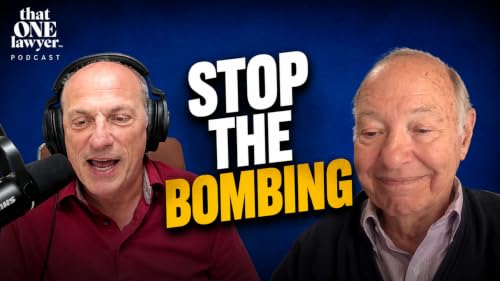
  • The Lawyer Who Got a Court Order to Stop the Bombing of Cambodia - Part 1
    Sep 2 2026

    Bert Neuborne entered Cornell at 16 expecting to become a doctor. Organic chemistry helped change those plans. A few years later, after Harvard Law School and three years on Wall Street, he took a one-year leave to work at the Civil Liberties Union.

    On his second day, Muhammad Ali walked through the door looking for legal help in his fight against the draft.

    Neuborne knew he had found his work.

    In Part 1 of his conversation with Neal Goldstein, Neuborne looks back at practicing civil liberties law during the extraordinary legal and cultural changes of the 1960s and 1970s. He discusses knowing civil rights worker Michael Schwerner, working alongside figures including Ruth Bader Ginsburg, and the period when constitutional lawyers could sometimes watch arguments that began around a lunch table become real changes in the law.

    He also tells the remarkable story of representing B-52 pilots and bombardiers who refused to continue bombing Cambodia without understanding why they were being ordered to do it. The case ultimately sent Neuborne across the country in search of Justice William O. Douglas and produced a temporary injunction stopping the bombing.

    Neuborne also explains the constitutional philosophy behind Madison's Music and why he believes the First Amendment makes more sense when its protections are read as parts of one coherent democratic story.

    It is a conversation about risk, constitutional power, finding meaningful work, and what one lawyer learned from spending decades testing the boundaries of American civil liberties.

    Follow or subscribe to That One Lawyer Podcast for Part 2 of Neal Goldstein's conversation with Bert Neuborne.

    Mehr anzeigen Weniger anzeigen
    27 Min.
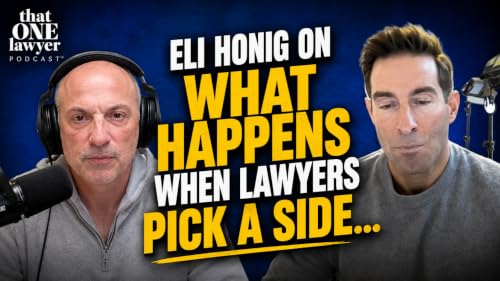
  • The Cost of Calling Out Your Own Side as a Lawyer
    Aug 26 2026

    Eli Honig never planned on becoming a television legal analyst.

    Before CNN, he spent 14 years as a federal and state prosecutor. In this episode, Eli joins Neal Goldstein to talk about the unexpected career pivot that took him from the courtroom to television, the relationships that made that transition possible, and why the skills of a trial lawyer translate so naturally to explaining complicated legal cases to the public.

    They also get into a harder issue: what happens when political preference starts influencing legal analysis. Eli explains why he believes a lawyer's job is to call the law as he sees it, even when that conclusion puts him at odds with people who otherwise share the same professional world.

    The conversation becomes deeply personal as Eli discusses being the grandson of two Holocaust survivors and how his family's history shaped his understanding of justice, accountability, and preserving the stories of those who came before him.

    Eli also reflects on the prosecution of Adolf Eichmann, the importance his prosecutors placed on due process even for an infamous defendant, his path from New Jersey public schools to Harvard Law School, the mentors and relationships that changed his career, and what he wishes he understood earlier about setbacks and nonlinear professional paths.

    Follow or subscribe to That One Lawyer Podcast for more conversations about the people, relationships, choices, and experiences behind a life in the law.

    Mehr anzeigen Weniger anzeigen
    12 Min.