• Ep. 150 - Building Trust, Networks, and Revenue Growth with Todd Cassler - Part 2
    Oct 28 2026
    In Part 2 of Selling Intelligence, Todd Cassler, Chief Revenue Officer at Wilshire, rejoins Mark Petruzzi and KK Anderson to explore how revenue leaders build organizations that can execute across different buyers, channels, and levels of complexity.Todd shares his “future back” approach to revenue strategy, starting with the outcome the organization needs to achieve and working backward to align talent, priorities, reporting, and pipeline discipline. He also explains how leaders should approach third-party distribution as a true partnership, giving external sales teams the same support, resources, and accountability they would provide on their own.The conversation then turns to AI and its role in modern selling. Todd explains why experience, context, and the ability to ask great questions can dramatically increase the value sellers get from AI. He shares how AI can help identify signals and “money in motion” events, allowing salespeople to focus their limited time on relationships and opportunities where change may actually be happening.Todd also shares his approach to coaching the next generation of talent, why people need to take ownership of their careers, and how investing early in personal development can compound over time.What You’ll Learn:Building Revenue Strategy Backward: How a future back approach connects long-term goals with talent, priorities, KPIs, and pipeline execution.Selling Across Different Buyer Tiers: How team structure and specialization should evolve based on organizational size and buyer sophistication.Making Distribution a True Partnership: Why third-party sales teams need the same support, resources, communication, and accountability as internal teams.Using Leading Indicators to Measure Progress: How activity, pipeline movement, relationships, and business trends can reveal performance before revenue appears.Where AI Creates Sales Leverage: How experienced sellers can use AI, context, and better questions to identify signals and prioritize opportunities.Taking Ownership of Your Career: Why personal development is the career lever individuals can control and how early investments in learning can compound over time.Key Topics:Future back revenue strategyBuilding teams for multi-tiered buyersGeneralists versus technical specialistsChannel sales and third-party distributionPipeline hygiene and KPI measurementLeading indicators of sales performanceAI as a multiplier for experienced sellersIdentifying money in motion signalsAI and sales territory prioritizationCoaching and mentoring emerging talentPersonal, corporate, and compensation developmentHiring for attitude and driveCuriosity as a leadership skillGuest Spotlight: Todd CasslerTodd Cassler is Chief Revenue Officer at Wilshire, where he leads global growth and distribution across wealth management, retirement, alternatives, and data and analytics. With more than 20 years of experience across wealth management, asset management, and institutional advisory, Todd brings a practical perspective on building revenue organizations, developing talent, strengthening distribution partnerships, and using technology to improve sales execution.Resources & Mentions:Book: Never Eat AloneWilshireLinkedInAI for sales and opportunity identificationCareer development and mentorship🎧 Listen now and follow Selling Intelligence for more insights from revenue leaders on building stronger teams, using AI effectively, and creating sustainable revenue growth. Subscribe wherever you get your podcasts.Disclosures:Recording Date: August 10, 2026This does not constitute advice or a recommendation or offer to sell or a solicitation to deal in any security or financial product. Except where otherwise indicated, the information contained in this presentation is based on matters as they exist as of the date of preparation of such material and not as of the date of distribution or any future date.The views and opinions expressed are those of the speaker and do not represent Wilshire as a whole.See Privacy Policy at https://art19.com/privacy and California Privacy Notice at https://art19.com/privacy#do-not-sell-my-info.
    Mehr anzeigen Weniger anzeigen
    23 Min.
  • Ep. 149 - Building Trust, Networks, and Revenue Growth with Todd Cassler - Part 1
    Oct 21 2026
    In this episode of Selling Intelligence, Todd Cassler, Chief Revenue Officer at Wilshire, joins Mark Petruzzi and KK Anderson to explore the fundamentals that drive trust, stronger relationships, and sustainable revenue growth.Todd explains the three questions every buyer is trying to answer: Can I trust you? Do you add value? Will you put my interests ahead of your own? He shares how preparation, thoughtful follow-up, and consistent execution help sellers earn that trust over time, especially in complex enterprise sales where relationships can take multiple interactions to develop.The conversation also introduces Todd’s concept of “Network Alpha,” the ability to activate the right relationships at the right time to create favorable outcomes. Todd explains why having a large network is not enough, how sellers can create “presence in their absence,” and why leaders should deliberately train teams to build and activate stronger professional networks.Todd also breaks down why sales teams need focus when managing a broad portfolio. Rather than expecting sellers to master everything, leaders should identify the few opportunities that are truly sellable while training their teams to recognize signals and uncover opportunities that may be hiding on the margins.What You’ll Learn:The Three Questions Every Buyer Asks: Why trust, value, and alignment of interests shape every sales relationship.Building Trust Through Execution: How preparation, responsiveness, and following through on commitments strengthen buyer confidence.Understanding Network Alpha: How activating the right relationships at the right time can create new opportunities and accelerate growth.Creating Presence in Your Absence: Why referrals, advocates, and strong professional relationships can extend your influence beyond direct conversations.Focusing on What Is Sellable: Why salespeople can only deeply focus on a few priorities and how leaders can distinguish between what is sellable and what is simply tellable.Finding Opportunities on the Margin: How curiosity, observation, preparation, and better questions help sellers uncover needs buyers may never state directly.Key Topics:Building buyer trust in complex salesTrust, value, and customer-first sellingNetwork Alpha and relationship-driven growthTurning professional networks into business opportunitiesCreating advocates and referral networksBuilding networking skills across a sales organizationSales preparation and follow-up disciplinePrioritizing three to four key sales opportunitiesSellable versus tellable products and solutionsAsking better questions and identifying hidden opportunitiesGuest Spotlight: Todd CasslerTodd Cassler is Chief Revenue Officer at Wilshire, where he leads global growth and distribution across wealth management, retirement, alternatives, and data and analytics. With more than 20 years of experience across wealth management, asset management, and institutional advisory, Todd brings a relationship-driven approach to building sales organizations, developing networks, and creating sustainable revenue growth.Resources & Mentions:Book: Never Eat AloneWilshireLinkedIn🎧 Listen now and follow Selling Intelligence for more insights from revenue leaders on building trust, strengthening sales organizations, and driving sustainable growth. Subscribe wherever you get your podcasts.Disclosures:Recording Date: August 10, 2026This does not constitute advice or a recommendation or offer to sell or a solicitation to deal in any security or financial product. Except where otherwise indicated, the information contained in this presentation is based on matters as they exist as of the date of preparation of such material and not as of the date of distribution or any future date.The views and opinions expressed are those of the speaker and do not represent Wilshire as a whole.Mark Petruzzi (00:29)Welcome to Selling Intelligence, the weekly conversation for chief revenue authors and the leaders who build revenue teams.I'm Mark Petruzzi here as always with my co host KK Anderson.KK Anderson (00:41)Thanks, Mark. Here's the number that frames today's conversation. It takes six to ten interactions to build trust with someone before you can sell them anything. Six to ten. Now think about how most teams are running outreach right now, and you can see the gap.Mark Petruzzi (00:58)Our guest today has spent more than 20 years building distribution across wealth management, asset management, and institutional advisory. He is the Chief Revenue Officer at Wilshire, a firm with more than one and a half trillion dollars under advisement. Todd, welcome to the show.Todd Cassler (01:17)Mark, hi KK.KK Anderson (01:19)All right. Well let's dig right in, Mark.Mark Petruzzi (01:21)Okay, let's start off with topic one, the three questions every buyer asks. Todd, you have sold in nearly every market and channel there is. Direct to consumer and enterprise, the US, EMEA, Latin America. You told us that ...
    Mehr anzeigen Weniger anzeigen
    23 Min.
  • Ep. 148 - Building the Revenue Engine with Chris Kobus - Part 2
    Oct 14 2026
    In Part 2 of Selling Intelligence, Chris Kobus, Chief Revenue Officer at Genlogs, joins Mark Petruzzi and KK Anderson to explore how revenue leaders can balance immediate sales performance with the strategic decisions that drive long-term growth. From forecasting pipeline requirements and planning future headcount to developing a disciplined approach to value selling, Chris shares how he connects day-to-day execution with the broader needs of a growing business.Chris explains why effective revenue planning requires more than setting bookings targets and calculating pipeline coverage. Leaders must understand conversion rates, average deal sizes, sales cycles, rep productivity, and onboarding timelines to determine when and where to invest in their teams. He also introduces a four-stage value selling framework designed to help customers understand the business impact of unfamiliar technology. By identifying customer challenges, connecting them to measurable business priorities, demonstrating differentiated capabilities, and quantifying financial outcomes, sales teams can build stronger business cases and create meaningful buying conversations.The conversation also examines the growing role of artificial intelligence in sales organizations. Chris discusses why AI adoption requires both urgency and discipline, emphasizing the importance of internal ownership, measurable value, and ongoing adoption. He highlights how AI tools can help revenue teams analyze customer interactions, identify missing information in sales opportunities, and improve execution across the sales process. For CROs, sales executives, and go-to-market leaders, this episode offers practical insights into building a revenue organization that can deliver results today while preparing for future growth.What You’ll Learn:Balancing Short-Term Execution with Long-Term Growth: How revenue leaders can support current-quarter opportunities while planning future pipeline requirements, headcount investments, and strategic business priorities.Building a Data-Driven Revenue Capacity Plan: Why pipeline conversion rates, average contract values, sales cycles, quota attainment, and rep ramp times are essential to determining the right hiring and investment strategy.Applying a Four-Stage Value Selling Framework: How to guide customers from identifying business challenges and understanding their importance to evaluating differentiated solutions and quantifying potential financial returns.Creating Better Discovery Conversations: Why understanding what motivated a prospect to engage can help sellers uncover business problems, evaluate existing solutions, and build a more relevant value proposition.Driving Meaningful AI Adoption in Sales: How organizations can evaluate AI investments, establish internal ownership, measure business impact, and use customer interaction data to improve sales execution.Key Topics:Balancing quarterly revenue execution with multiyear growth planningConnecting customer feedback with product development and future revenue opportunitiesPipeline forecasting, sales capacity modeling, and headcount planningSales onboarding, rep productivity, and quota attainment assumptionsBuilding financial business cases for emerging technology solutionsDiscovery strategies for identifying customer challenges and buying motivationsAI adoption, internal accountability, and measurable business valueUsing AI to analyze sales conversations, CRM data, and opportunity gapsGuest Spotlight: Chris KobusChris Kobus is the Chief Revenue Officer at Genlogs, where he leads revenue growth and go-to-market strategy for a company developing technology and data capabilities for transportation and logistics markets.With a professional background that includes consulting, technology implementation, and value engineering, Chris brings a practical perspective to revenue leadership. His experience includes developing business cases for technology investments, aligning solutions with customer priorities, and helping organizations understand the financial impact of adopting new capabilities.At Genlogs, Chris focuses on building scalable revenue operations, developing sales talent, supporting specialized go-to-market strategies, and connecting customer insights with broader business opportunities.In this conversation, he shares his approach to strategic revenue planning, value-based selling, and thoughtful AI adoption, offering lessons for leaders navigating growth in evolving markets.Resources & Mentions:Genlogs: Chris Kobus’s company, providing technology and data capabilities for transportation and logistics markets.AGS: The growth advisory organization associated with Selling Intelligence, focused on helping businesses build and improve their revenue engines.Battery Ventures: Investment firm mentioned during the conversation in connection with Chris’s professional mentorship.Bill Bench: Mentioned by Chris as a trusted mentor who has provided guidance and perspective...
    Mehr anzeigen Weniger anzeigen
    19 Min.
  • Ep. 147 - Building the Revenue Engine with Chris Kobus - Part 1
    Oct 7 2026
    In Part 1 of Selling Intelligence, Chris Kobus, Chief Revenue Officer at Genlogs, joins Mark Petruzzi and KK Anderson to explore what it takes to build a revenue engine that can scale across people, markets, and changing business priorities.Chris shares his leadership philosophy around developing talent from within and explains why experience alone does not determine whether someone can succeed in enterprise sales. He discusses the importance of finding people with the right attitude, drive, and willingness to learn, then giving them the coaching, playbooks, and real-world exposure they need to grow.The conversation also examines the expanding role of the modern CRO. Chris explains why revenue leadership goes far beyond managing sales and hitting the current quarter’s number. From pipeline and ICP strategy to marketing, business development, channels, pre-sales, and revenue operations, the CRO must understand and manage the full revenue lifecycle while preparing the organization for what comes next.Chris also shares how Genlogs approaches verticalization across very different buyer markets, why specialized go-to-market playbooks matter, and how leaders can introduce change without creating unnecessary chaos across the organization.What You’ll Learn:Developing Talent from Within: Why attitude, curiosity, drive, and willingness to learn can matter as much as previous enterprise sales experience.Leading from the Field: How revenue leaders can build trust and develop stronger teams by working alongside sellers instead of managing from an “ivory tower.”Coaching Beyond the Playbook: Why frameworks like MEDIC only create value when leaders continually challenge sellers on discovery, economic buyers, budget processes, urgency, and deal strategy.Owning the Full Revenue Lifecycle: How the CRO role extends beyond sales to pipeline, ICP strategy, marketing, business development, channels, pre-sales, revenue operations, retention, and expansion.Balancing Today and Tomorrow: Why CROs need to manage current-quarter performance while anticipating future growth needs and identifying where the revenue engine could break.Verticalizing with Purpose: How specialized go-to-market playbooks can help teams navigate different buyer environments without creating organizational chaos.Key Topics:Building and developing high-performing revenue teamsPromoting BDRs and other talent from withinHiring for attitude, drive, and growth potentialMEDIC, discovery, and enterprise sales coachingConsulting skills and value engineering in go-to-market leadershipThe difference between a CRO and VP of SalesOwning the end-to-end revenue lifecyclePipeline, ICP, TAM, and annual operating plan alignmentBalancing short-term execution with long-term growthBuilding trust through transparency with executive leadershipVerticalization and specialized go-to-market playbooksScaling the revenue engine without creating organizational chaosGuest Spotlight: Chris KobusChris Kobus is Chief Revenue Officer at Genlogs, a freight intelligence company. His career began in consulting at Accenture before he moved into value engineering and technology go-to-market leadership. That background shaped his approach to customer value, team development, and building scalable revenue organizations. At Genlogs, Chris oversees a broad revenue mandate spanning sales, marketing, business development, channels, pre-sales, and revenue operations.Resources & Mentions:GenlogsAccentureMEDICIdeal Customer Profile (ICP)Total Addressable Market (TAM)Annual Operating Plan (AOP)Accelerant Growth Solutions (AGS)🎧 Listen now and follow Selling Intelligence for more insights from revenue leaders building the next generation of go-to-market organizations. Subscribe wherever you get your podcasts.Mark Petruzzi (00:29)Welcome to Selling Intelligence. I'm Mark Petruzzi.KK Anderson (00:33)And I'm KK Anderson.Mark Petruzzi (00:34)And most revenue leaders inherit a title before they inherit the job. You get handed a quota, a team, and a seat at the table, and you spend the next few years figuring out how much of the business actually belongs to you. Our guest today runs one of the broadest CRL mandates we have covered on this show: sales, marketing, biz dev channels, pre-sales, and revenue ops.would have done in line into customer success as well.KK Anderson (01:04)Chris Kobus is Chief Revenue Officer at Genlogs, a freight intelligence company that recently closed a $60 million Series B. He started his career in consulting at Accenture before moving into a value engineering role at a supply chain technology startup. And that background shapes how he builds go-to-market motions today. He's also selling into a market that has never had to buy what he's selling before.Which means his team has to help buyers see a problem they didn't know they had. Chris, welcome to selling intelligence.Chris Kobus (01:38)Hi everyone, thanks for having me.Mark Petruzzi (01:40)Yeah, we're happy to have you ...
    Mehr anzeigen Weniger anzeigen
    22 Min.
  • Ep. 146 - Solving the Go-to-Market Riddle with Rick Nee - Part 2
    Sep 30 2026
    In Part 2 of Selling Intelligence, Rick Nee, Chief Revenue Officer at Alcatraz AI, joins Mark Petruzzi and KK Anderson to explore the people and culture behind a scalable go-to-market organization.Rick explains why vertical specialization should go beyond assigning sellers to industries. Sales leaders need to develop enough expertise to become trusted voices in their markets, understand the problems their customers face, and bring insights that make conversations more valuable and less transactional. He shares how Alcatraz encourages sales directors to treat their vertical like their own business, develop informed opinions, participate in industry conversations, and build deeper customer relationships over time.The conversation also explores Rick’s approach to building talent from within. He explains why visible career paths for SDRs can strengthen culture and retention, how internal promotions can create momentum throughout the organization, and why leaders should look beyond the traditional SDR-to-AE path when developing emerging talent.What You’ll Learn:Building Vertical Thought Leaders: How sales directors can develop deeper industry expertise and become trusted resources for customers rather than purely transactional sellers.Treating a Vertical Like a Business: Why sellers should think like business owners within their vertical and use events, speaking opportunities, associations, customer conversations, and content to build credibility.Using Team Selling for Complex Buyers: How sales, engineering, product, and customer success can work together to build trust and support conversations across different levels of the customer organization.Developing SDRs From Within: Why Rick prefers creating internal career paths and how visible promotions can show SDRs that there is a real opportunity to grow inside the organization.Finding the Right Next Role: Why SDR development does not always have to lead to an AE position, and how leaders can identify strengths that may fit account management, renewals, customer success, or other roles.Building a Culture That Retains Talent: How internal mobility, leadership attention, and meaningful development opportunities can contribute to stronger retention in a startup environment.Key Topics:Vertical specialization and industry expertiseSales directors as industry thought leadersBuilding trusted, non-transactional customer relationshipsCustomer advisory boards and team sellingDeveloping SDRs into future GTM leadersInternal promotion versus external hiringCareer mobility across sales, CS, renewals, and channel rolesSales culture and employee retentionUsing data to continuously improve GTM decisionsThe continued importance of human selling in an AI-driven environmentGuest Spotlight: Rick NeeRick Nee is Chief Revenue Officer at Alcatraz AI. In this two-part Selling Intelligence conversation, Rick shares his approach to scaling go-to-market organizations through vertical specialization, data-driven decision making, talent development, and strong internal culture.In Part 2, he focuses on developing people from within, helping sellers build meaningful industry expertise, and creating career paths that allow talent to grow alongside the organization.Resources & Mentions:Alcatraz AIDaniel PinkTo Sell Is Human by Daniel PinkPeter DruckerCustomer advisory boardsVertical pod structureSDR career development and internal promotionSelling Intelligence Featured by FeedSpotSelling Intelligence has been selected as one of FeedSpot’s Top 20 SaaS Sales Podcasts. Feedspot is an RSS Reader that lets you follow your favorite podcasts alongside blogs and news in one place.https://podcast.feedspot.com/saas_sales_podcasts/🎧 Listen now and follow Selling Intelligence for more conversations with revenue leaders building the next generation of go-to-market organizations.Mark (00:38)Welcome back to Selling Intelligence. If you're just joining us, this is part two of our conversation with Rick Nee, Chief Revenue Officer at Alcatraz. Go back and listen to part one when you get the chance, but you can also start right here with us.KK Anderson (00:53)Now, three things from part one worth carrying forward. Rick's team went from three people to 25 in two years while the business tripled. He organizes by vertical pod rather than by segment or geography. And each pod runs its own PL, which is why he can walk into a board meeting after his six coffees and Starbucks every 30 days and not locking himselfMark (01:15)Yeah.KK Anderson (01:16)in a room. He can walk into a board meeting with data.and return a figure instead of a headcount request. And before he changes any structure, he goes to that data, he forms his hypothesis because at the stage that he is in with Alcatraz, guessing gets really expensive really fast.Mark (01:33)Part two is the part most leaders find hardest to copy. The people, Rick, let's pick it back up.Rick Nee (01:39)Yeah.KK Anderson (01:39)All right, Rick. Okay, so let's talk ...
    Mehr anzeigen Weniger anzeigen
    17 Min.
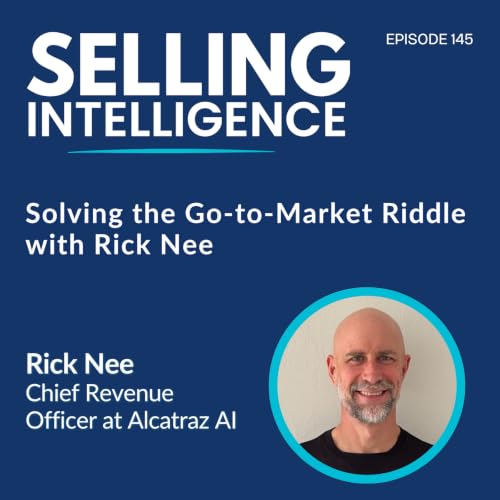
  • Ep. 145 – Solving the Go-to-Market Riddle with Rick Nee - Part 1
    Sep 23 2026
    In this episode of Selling Intelligence, Rick Nee, Chief Revenue Officer at Alcatraz, joins Mark Petruzzi and KK Anderson to unpack what happens after a company reaches product market fit and the challenge shifts from finding customers to building a go-to-market organization that can scale.Rick explains why revenue leaders should resist bringing a fixed playbook into a new company and instead use customer behavior, sales data, and the buyer journey to determine what the organization actually needs. He shares how Alcatraz has built its revenue structure around vertical pods, creating tighter feedback loops between sales, SDRs, customer success, and other customer-facing roles.The conversation also dives into the importance of cleaning CRM data before making strategic decisions, identifying the metrics that actually matter, and reverse engineering performance by vertical to determine where to invest people, capital, and resources.What You’ll Learn:Scaling After Product Market Fit: Why the GTM motion that wins your first customers may not be the one that gets you to the next stage of growth.Playbooks as Starting Points: Why proven sales frameworks should inform your strategy rather than dictate it.Building Around the Buyer Journey: How customer needs and sales complexity should shape hiring, team structure, and resource allocation.The Power of Vertical Pods: How organizing teams around specific industries can improve knowledge transfer, customer understanding, and feedback loops.Reverse Engineering Revenue Data: How sales cycle length, deal size, win rates, pipeline coverage, and land versus expand behavior can reveal where growth opportunities actually exist.Cleaning Data Before Scaling: Why CROs need to validate CRM data and remove misleading outliers before using it to guide major GTM decisions.Key Topics:Scaling a GTM organization after product market fitBuilding a data-driven revenue strategyWhy one-size-fits-all sales playbooks fall shortVertical pod structures and feedback loopsSales cycle and deal size analysis by verticalPipeline coverage and win ratesLand and expand revenue motionsCRM data quality and RevOpsGeneralists versus specialists in early-stage companiesUsing AI to pressure test assumptions and uncover blind spotsPrioritizing high-impact GTM initiatives instead of changing everything at onceGuest Spotlight: Rick NeeRick Nee is Chief Revenue Officer at Alcatraz, a Cupertino-based company focused on facial authentication for physical security. As a revenue leader, Rick focuses on solving the go-to-market challenges that emerge after product market fit, using data to determine how teams should be structured, which verticals deserve investment, and where companies can scale most effectively.In this conversation, Rick shares a practical approach to building revenue organizations around real customer behavior rather than assumptions, industry benchmarks, or rigid playbooks.Resources & Mentions:AlcatrazHubSpotClaudeCRM and RevOps data analysisVertical pod GTM structuresAGS Two Millimeter Club🎧 Listen now and follow Selling Intelligence for more conversations with revenue leaders on building smarter, more scalable go-to-market organizations.Mark (00:30)Welcome back to Selling Intelligence. I'm Mark Petruzzi here with my co-founder and co-host KK Anderson.KK Anderson (00:37)Here's a number we're sitting with. A sales organization that goes from three people to 25 in 24 months has effectively rebuilt itself every quarter. Most leaders in that position reach for the standard playbook because it's the fastest thing available. But our guest today treated the playbook as a starting point instead of an answer and went to his own data to decide what to keep.Mark (01:00)Rick Nee is Chief Revenue Officer at Alcatraz, the Cupertino company replacing badges with facial authentication, backed by more than $100 million in capital and trusted by Fortune 100 Enterprises AI data centers, airports, universities, and professional sports teams. Rick, welcome to Selling Intelligence.Rick Nee (01:23)Thanks for having me. I am very excited to be here. this is exciting and these are topics that I'm pretty passionate about.Mark (01:28)Excellent. All right, first topic, solving the go-to-market riddle. You have said that stage the stage that energizes you the most is the one right after product market fit. When finding customers who want to buy is no longer the problem. Describe what actually changes for a revenue leader at that moment.Rick Nee (01:46)It's a great question. So I didn't figure this out so a little bit later in my career. People ask, hey, do you want to work at a startup? And that can mean a lot of different things, a series D with a thousand customers versus a pre-series or series A, where you're trying to find that product market fit. And so I think you have to like think about where you want to be on that journey. and then if we really define what product market fit means.I was listening to someone...
    Mehr anzeigen Weniger anzeigen
    25 Min.
  • Ep. 144 – Building Predictable Pipeline and Breaking Revenue Silos with Thurman Sneed - Part 2
    Sep 16 2026
    General Episode Description:In Part 2 of Selling Intelligence, Thurman Sneed, Chief Revenue Officer at Marigold, returns to show how the same “do the math” mindset can transform everything from account coverage and customer conversations to seller development and AI adoption. Thurman explains why Marigold moved from a round robin model to vertical specialization, how CSMs and SDRs can grow into revenue generating roles, and why a tighter ICP helps teams focus their resources where they can create the most impact.The conversation also explores how sellers can use customer data and benchmark insights to build stronger business cases and quantify value for executives. Thurman shares how his team is applying AI to sales coaching, account preparation, pipeline generation, and churn prediction, while keeping human judgment at the center. The goal is not AI for the sake of AI. It is using technology where it can genuinely improve speed, capacity, decision making, and revenue outcomes.What You’ll Learn:Vertical Specialization: Why moving away from round robin account assignment can help sellers develop deeper industry expertise and become trusted advisors.Turning CSM Knowledge into Revenue: How customer success teams can use their existing customer knowledge and relationships to identify expansion opportunities.Building the Next Generation of Sellers: Why giving SDRs opportunities to own and close smaller deals can accelerate their development and create stronger career paths.Getting Serious About ICP: How focusing on the right markets and customers can improve efficiency across sales, marketing, and customer success.Selling with Customer Math: How benchmark data and ROI calculations can help sellers turn value propositions into compelling executive business cases.AI That Earns Its Place: How AI can improve sales preparation, coaching, research, pipeline generation, and decision making without removing human judgment.Using AI to Predict Churn: Why clean, accessible data is critical for identifying customer risk before it becomes a lost account.Key Topics:Vertical sales specializationIdeal customer profile strategySDR development and career progressionCustomer success expansion opportunitiesROI based sellingBenchmark data in sales conversationsExecutive level value sellingAI enabled sales coachingSales productivity and capacityAI and revenue team efficiencyChurn prediction and customer retentionHuman judgment in AI driven salesGuest Spotlight: Thurman SneedThurman Sneed is the Chief Revenue Officer at Marigold, where he leads sales, customer success, revenue operations, and marketing. With a career that began in accounting and auditing before expanding into operations and revenue leadership, Thurman brings a distinctive financial and operational perspective to the CRO role. His leadership philosophy centers on disciplined execution, data driven decision making, cross-functional alignment, and helping teams turn ambitious revenue goals into practical, achievable actions.Resources & Mentions:MarigoldVertical coverage modelsIdeal Customer Profile strategyROI calculators and benchmark dataAI enabled sales coachingChurn predictionThe Two Millimeter Club by AGS🎧 Listen now and follow Selling Intelligence for more GTM insights from leading voices in sales, revenue, and business growth. Subscribe wherever you get your podcasts.Mark (00:38)Welcome back to Selling Intelligence. If you're just joining in, you're in the right place. And if you come straight from part one, we picked up where we left off.KK Anderson (00:48)In part one, Thurman Sneed made three things clear. He came into the revenue seat through accounting and operations rather than through a quota. And that lens is why he thinks in arithmetic. He discovered that the individual level math he assumed his managers were doing with sellers was not actually happening. And he treats every function inside the company as a customer, which is what makes the outside selling work.Mark (01:14)So in part two we get practical. Thurman rebuilt the coverage model, taught people who have never carried a quota to carry one, pointed the same math at his customers, and now deciding where AI belongs in all of this. Thurman, welcome back. Let us pick up right here.Thurman (01:33)Thank you, Mark.Mark (01:34)So Thurman,Rebuilding the coverage model. So Thurman, you inherited a model where accounts were assigned round robin and reps were specialized by platform. What was the first change you made and why that one first?Thurman (01:48)Yeah, the first thing that we did is we decided that we were going to have a vertical coverage model as opposed to round robin. And I made that first because I wanted fo I wanted our sales team to learn the customer, to, to learn the terminology, to be very specific, and to enjoy, what they were doing every day, as opposed to today I wake up and I'm gonna be serving.this industry, the next day, I get a hospital, the next day I get an amusement ...
    Mehr anzeigen Weniger anzeigen
    23 Min.
  • Ep. 143 – Building Predictable Pipeline and Breaking Revenue Silos with Thurman Sneed - Part 1
    Sep 9 2026
    General Episode Description:In this episode of Selling Intelligence, Thurman Sneed, Chief Revenue Officer at Marigold, joins Mark Petruzzi and KK Anderson to unpack a simple but often overlooked discipline in revenue leadership: do the math. Drawing from his background in finance, operations, and revenue leadership, Thurman explains how sellers can turn an intimidating quota into a practical action plan by understanding their pipeline, win rates, gaps, and the time they have left to close them.The conversation also explores how Thurman’s finance background shapes the way he approaches forecasting, pipeline quality, and cross-functional leadership. He shares why revenue teams need a single source of truth, how leaders can eliminate bloated pipeline, and why sales, marketing, customer success, and RevOps perform better when they understand each other’s goals and operate as one connected revenue organization.What You’ll Learn:Do the Math: How to break quota goals into pipeline requirements, win rates, and achievable daily actions.Pipeline Gap Planning: How sellers can use existing pipeline, marketing, SDRs, and customer success relationships to build a realistic path to quota.The Value of Time: Why starting pipeline generation early gives sellers more ways to close the gap and avoid end-of-year pressure.Forecasting with a Finance Mindset: How financial discipline helps leaders identify inflated pipeline and focus on opportunities that are actually real.One Source of Truth: Why shared data and reporting create better conversations across sales, marketing, finance, and operations.Breaking Revenue Silos: How understanding the goals of adjacent teams can improve selling, customer handoffs, retention, and overall revenue performance.Key Topics:Pipeline math and quota attainmentIndividual seller forecastingWin rates and pipeline coveragePipeline quality and deal qualificationRevenue forecastingFinance driven revenue leadershipSales accountability and coachingCross-functional revenue alignmentSales, marketing, and customer success collaborationBreaking organizational silosSingle source of truth for revenue teamsGuest Spotlight: Thurman SneedThurman Sneed is the Chief Revenue Officer at Marigold, where he leads sales, customer success, revenue operations, and marketing. With a career that began in accounting and auditing before expanding into operations and revenue leadership, Thurman brings a distinctive financial and operational perspective to the CRO role. His leadership philosophy centers on disciplined execution, data driven decision making, cross-functional alignment, and helping teams turn ambitious revenue goals into practical, achievable actions.Resources & Mentions:MarigoldPipeline management and forecastingRevenue OperationsCross-functional revenue alignmentThe Two Millimeter Club by AGS🎧 Listen now and follow Selling Intelligence for more GTM insights from leading voices in sales, revenue, and business growth. Subscribe wherever you get your podcasts.Mark (00:30)Welcome to Selling Intelligence. I am Mark Petruzzi here as always with KK Anderson. Today we are talking about a phrase that most revenue leaders say and almost nobody actually does.KK Anderson (00:43)Do the math. Our guest uses it with his team constantly, and the first time you hear it, you might think it sounds a little cold, but it's quite the opposite. He uses it to take a seller who is convinced they are going to miss and show them on paper why they are not and how they can close the gap.Mark (01:02)So Thurman Sneed is the chief revenue officer at Marigold. He started his career as an auditor at Arthur Anderson, spent years running go-to-market operations. He has sat in the chief operating officer seat, and now leads revenue. Thurman, welcome to the show.Thurman (01:20)Thank you, Mark. Glad to be here.Mark (01:22)Welcome to Selling Intelligence. I am Mark Petruzzi with KK Anderson and this is the show for revenue leaders who would rather diagnose than guess.KK Anderson (01:32)Here's the thing that got our attention. Our guest spent years in operations assuming that sales managers underneath him were sitting down with individual sellers and walking them through their numbers. Then he took the revenue seat and found out that they were not. Not the team level math, the individual level math.Mark (01:49)Thurman Sneed, aka the Thurminator, I've heard that recently, is the chief revenue officer at Marigo, where he owns sales, customer success, revenue operations, and marketing. He came up through accounting and operations rather than through a quota, which makes him a rare profile in this seat and a very powerful one. Thurman, thanks for being here.Thurman (02:14)Thank you, Mark, for having me. I'm excited.Mark (02:16)So you have a phrase your team hears from you constantly. Do the math. Take us inside the first time you sat down with a rep and actually did it. What went on that that page?Thurman (02:28)Well, the first thing that ...
    Mehr anzeigen Weniger anzeigen
    20 Min.