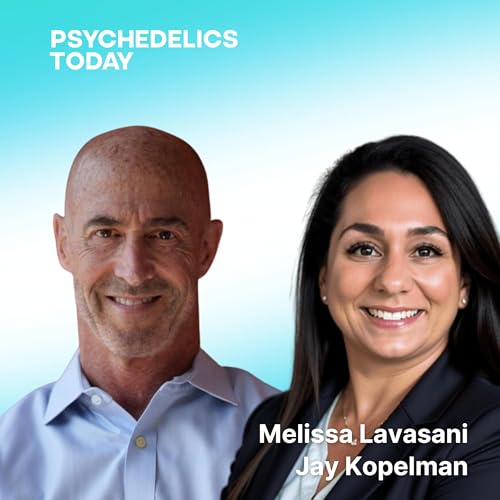
• PT 649 - Melissa Lavasani and Jay Kopelman
    Feb 19 2026
    Melissa Lavasani & Jay Kopelman join our podcast to discuss how psychedelic policy is actually moving in Washington, DC. Lavasani leads Psychedelic Medicine Coalition, a DC-based advocacy organization focused on educating federal officials and advancing legislation around psychedelic medicine. Kopelman is CEO of Mission Within Foundation, which provides scholarships for veterans and first responders seeking psychedelic-assisted therapy retreats, often outside the United States. The conversation centers on veterans, the VA, and why that system may be the first realistic federal pathway for psychedelic care. Early Themes Lavasani describes PMC's work on Capitol Hill, including hosting events that bring lawmakers, staffers, and advocates into the same room. Her focus is steady engagement. In DC, progress often happens through repeated conversations, not headlines. Kopelman shares his background as a Marine and how his own psychedelic-assisted therapy experience led him to Mission Within. The foundation has funded more than 250 scholarships for veterans and first responders seeking treatment for PTSD, mild traumatic brain injury, depression, and addiction. They connect this work to pending veteran-focused legislation and explain why the VA matters. As a closed health system, the VA can pilot programs, gather data, and refine protocols without the pressures of private healthcare markets. Core Insights A recent Capitol Hill gathering, For Veteran Society, brought together members of Congress and leaders from the psychedelic caucus. Lavasani describes candid feedback from lawmakers. The message was clear: coordinate messaging, avoid fragmentation, and move while bipartisan interest remains. Veteran healthcare is not framed as the final goal. It is a starting point. If psychedelic therapies can demonstrate safety and effectiveness within the VA, broader adoption becomes more plausible. Kopelman raises operational realities that must be addressed: Standardized safety protocols across providersIntegration support, not medication aloneClear training pathways for cliniciansReal-world data beyond tightly screened clinical trials They also address recent negative headlines involving ibogaine treatment abroad. Kopelman emphasizes the need for shared learning across providers, especially when adverse events occur. Lavasani argues that inconsistency within the ecosystem can slow federal confidence. Later Discussion and Takeaways The discussion widens to federal momentum around addiction and mental health. Lavasani notes that new funding initiatives signal growing openness to innovative treatment models, even if psychedelics are not named explicitly in every announcement. Both guests stress that policy moves slowly by design. Meetings, follow-ups, and relationship building often matter more than public statements. For clinicians, researchers, operators, and advocates, the takeaways are direct: Veterans are likely the first federal pathwayPublic education remains essentialSafety standards must be shared and transparentIntegration and workforce development need attention now If psychedelic medicine enters federal systems, infrastructure will determine success. Frequently Asked Questions What do Melissa Lavasani & Jay Kopelman say about VA psychedelic policy? They argue that veteran-focused legislation offers a realistic first federal pathway for psychedelic-assisted care. Is ibogaine currently available through the VA? No. They discuss ibogaine in the context of private retreats and future possibilities, not an existing VA program. Why do Melissa Lavasani & Jay Kopelman emphasize coordination? Lawmakers respond more positively when advocates present aligned messaging and clear priorities. What safety issues are discussed by Melissa Lavasani & Jay Kopelman? They highlight the need for standardized screening, monitoring, integration support, and transparent review of adverse events. Closing Melissa Lavasani & Jay Kopelman provide a grounded look at how psychedelic policy develops inside federal systems. Their message is practical: veterans may be the first lane, but long-term success depends on coordination, safety standards, and sustained engagement. Closing This episode captures a real-time view of how federal policy could shape the next phase of the psychedelic resurgence, especially through veteran-facing legislation and VA infrastructure. Melissa Lavasani & Jay Kopelman argue that coordination, public education, and shared safety standards will shape whether access expands with credibility and care. Transcript Joe Moore: [00:00:00] Hello everybody. Welcome back to Psychedelics Today. Today we have two guests, um, got Melissa Sani from Psychedelic Medicine Coalition. We got Jake Pelman from Mission Within Foundation. We're gonna talk about I bga I became policy on a recent, uh, set of meetings in Washington, DC and, uh, all sorts of other things I'm sure. Joe Moore: But thank you both for ...
    Mehr anzeigen Weniger anzeigen
    1 Std. und 10 Min.
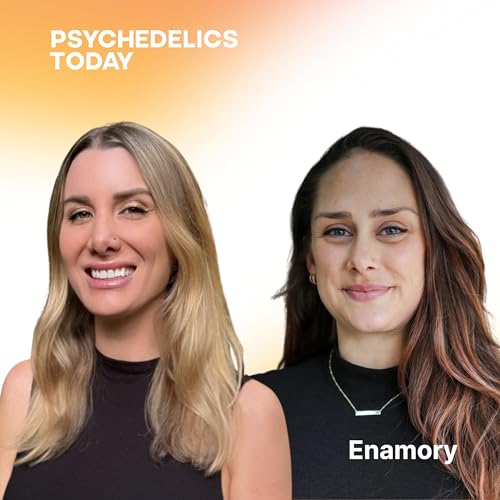
  • PT 648 - Enamory - Couples Therapy with Ketamine
    Feb 10 2026

    Enamory is a clinical practice, training institute, and nonprofit research organization focused on psychedelic assisted couples therapy. In this episode, clinical psychologists Chandra Kian and Kayla Knopp discuss their work integrating ketamine assisted psychotherapy with evidence based couples therapy models.

    Both guests trained as academic researchers at the University of California San Diego Veterans Affairs system, where they worked on large scale couples based PTSD trials. They later co founded Enamory to continue clinical work, train therapists, and conduct research focused specifically on relationships.

    Early Themes in Enamory and Couples Therapy

    The conversation begins with Dr. Kian and Dr. Knopp describing their background in couples based PTSD research and how that work shaped their clinical approach.

    They explain how existing couples therapy models often stall when partners cannot soften, access vulnerability, or understand each other's internal experience. Their early exposure to MDMA assisted therapy research highlighted how psychedelic states can temporarily reduce defensiveness and rigid narratives.

    Mehr anzeigen Weniger anzeigen
    1 Std. und 23 Min.
  • PT 647 - Joshua White: Fireside Project and Lucy, an AI Training Simulator for Psychedelic Support
    Jan 22 2026

    Fireside Project is a nonprofit that helps reduce the risks of psychedelic experiences through a free support line, coaching, education, and research. In this episode, Joshua White speaks with Psychedelics Today about why real-time support matters, what it takes to run a national hotline, and what Fireside learned after more than 30,000 conversations since launch.

    White shares how his background as a lawyer and his early hotline volunteering shaped Fireside's model. He also describes how festival harm reduction work, including lessons from Zendo-style support spaces, revealed a major gap: people often need help during an experience and after it ends.

    A major focus of the conversation is Lucy, Fireside's new voice-to-voice role-play simulator designed to improve psychedelic support skills through low-stakes practice.

    Early Themes With Fireside Project

    Joshua White introduces Fireside Project as an accessible safety net for people who are actively having psychedelic experiences or processing past ones. The support line launched on April 14, 2021, and relies on trained community volunteers who commit to a year of service.

    White explains why anonymity matters. He argues that a phone-based container can make it easier for callers to share vulnerable material without fear of judgment. He also frames service as a key part of integration for volunteers who want to give back or prepare for work in the psychedelic field.

    Core Insights From Fireside Project

    White describes the early difficulty of building Fireside from scratch, including legal design, insurance hurdles, training development, and fundraising. He credits seed support from David Bronner and Dr. Bronner's for helping Fireside prove that people would actually use a psychedelic support line.

    He also explains a key harm reduction point: calling emergency services during a non-medical psychedelic crisis can escalate risk. Fireside aims to help people regulate, re-orient, and stay safer when panic or fear shows up.

    Key concepts discussed include:

    • The thin line between healing and traumatizing during high-intensity psychedelic states
    • Why callers often need connection, not rescue
    • How volunteer capacity and call volume shape how long conversations run
    • The difference between support during an experience and longer-term coaching support

    Later Discussion and Takeaways With Fireside Project

    The conversation then turns to Lucy, a training tool White describes as a "flight simulator" for psychedelic practitioners. Lucy is not part of the live support line. Instead, it offers emotionally responsive role-play scenarios so trainees can practice staying grounded, tracking consent and boundaries, and responding to crisis cues.

    White also addresses recording and consent. He argues Fireside needs strong training feedback loops to improve safety and quality. He describes an anonymization approach designed to remove phone numbers, strip identifying details, and distort voices while preserving emotional tone. He also explains the post-call option for callers to delete their recorded conversation.

    Practical takeaways include:

    • Simulation can help trainees stay regulated when intense material emerges
    • Better training can reduce unnecessary diversion to emergency rooms
    • Clear consent language and easy deletion workflows matter for trust
    • Coaching can expand the continuum of psychedelic support beyond therapy

    Mehr anzeigen Weniger anzeigen
    1 Std. und 11 Min.
  • PT 646 - Manvir Singh: Shamanism the Timeless Religion
    Jan 6 2026

    Manvir Singh joins Psychedelics Today to unpack what shamanism means and why the term matters now. Singh is an anthropologist and author of Shamanism: The Timeless Religion. He argues that shamanism is not limited to "remote" societies or the past. Instead, it reliably reappears because it helps humans manage uncertainty, illness, and the unknown.

    This episode is relevant for the psychedelic community because "shaman" often gets used loosely, or avoided entirely. Singh offers a clear framework for talking about shamanic practice without leaning on romantic myths, drug-centered assumptions, or rigid definitions that do not fit the cross-cultural record.

    Early Themes With Manvir Singh

    Early in the conversation, Manvir Singh explains why many classic definitions of shamanism break down when tested across cultures, including in Siberia where the term originated. He discusses how popular images of shamanism often center "soul flight" and fixed cosmologies. However, ethnography shows more variation, including possession, spirit proximity, and different ways practitioners describe altered experience.

    Singh also traces his path into anthropology, including long-term fieldwork with the Mentawai people off the west coast of Sumatra. There, he studied ritual specialists known as kerei and saw how central they are to healing, ceremony, and community life.

    Core Insights From Manvir Singh

    At the center of the episode, Manvir Singh offers a practical three-part definition. He emphasizes these shared traits as the "beating heart" of shamanism across many settings:

    • A non-ordinary state (trance, ecstasy, or another altered mode)

    • Engagement with unseen beings or realities (spirits, gods, ancestors, witches, ghosts)

    • Services such as healing and divination

    Singh also explores taboo, restriction, and "otherness." He explains how shamans often cultivate social and psychological distance through initiations, deprivation, and visible markers. This helps communities experience the practitioner as different in kind, which increases credibility when the practitioner claims access to hidden forces.

    Later Discussion and Takeaways With Manvir Singh

    Later, Manvir Singh challenges common psychedelic narratives that treat psychedelics as the universal engine of religion or shamanism. He notes that many shamanic traditions do not rely on psychedelics at all, and that rhythmic music, drumming, dance, and social ritual can reliably produce trance states.

    He also clarifies a key mismatch in many contemporary "ayahuasca tourism" settings: in many traditional contexts, the specialist takes the substance to work on behalf of the patient, rather than turning the participant into the primary visionary practitioner.

    Practical takeaways for the psychedelic field include:

    • Use definitions that fit cross-cultural evidence, not marketing language.

    • Avoid assuming psychedelics are required for mystical experience.

    • Notice how authority gets built through ritual, training, and otherness, not only through pharmacology.

    Mehr anzeigen Weniger anzeigen
    1 Std. und 8 Min.
  • PT 645 - Oli Genn-Bash: Functional Mushrooms, Hype Cycles, and Mycelial Thinking
    Dec 28 2025
    Oli Genn-Bash (Brighton, UK) joins Joe Moore for a grounded conversation on the boom in functional mushrooms and why the category may be moving too quickly. As the founder of The Fungi Consultant, Oli works with consumers and brands to demystify functional mushrooms, with a focus on education, traceability, and realistic expectations. The conversation begins with a critique of wellness hype cycles. Oli explains how consumer desperation for help with anxiety, sleep, stress, and cognition can create an opening for a rapid wave of products that are not always grounded in careful sourcing or clear science. Using lion's mane as a case study, he contrasts popular cognitive claims with traditional use, arguing that the most useful path forward is to slow down, get more literate about mechanisms, and build a market that can sustain trust over time. Systems and Culture Oli describes how individual health is inseparable from community realities, including food access, class dynamics, and what wellness advice can sound like when it lands from a place of privilege. They discuss mycelial thinking as a practical framework for collaboration and resource-sharing, and why mushrooms tend to attract unusually generous "teach everyone" communities. They also explore the role of mushrooms in meaning-making and consciousness. Oli shares personal reflections on mushrooms as allies, the felt sense of "agency" in psychedelic experiences, and how those experiences can encourage behavioral change without forcing it. The conversation touches on alcohol culture in the UK and the possibility of non-alcoholic alternatives, including how functional mushrooms, microdosing, and other botanicals can support social confidence and energy for some people. Finally, they look ahead at fungal innovation beyond supplements: materials, soil health, regenerative approaches, bioremediation, and what the broader psychedelic movement might learn from fungi's patience, symbiosis, and balance. Key themes and takeaways 1) Why functional mushrooms feel "too fast" right now Oli argues that functional mushrooms have accelerated into a high-pressure wellness marketplace, with brands rushing products to market and consumers struggling to determine what is legitimate, traceable, and effective. He draws parallels to the UK CBD market, describing how oversaturation and inconsistent quality can erode trust and collapse prices. 2) Lion's mane, tradition, and mechanism Lion's mane is a useful example of how modern marketing can outrun nuance. Oli notes the gap between popular cognitive claims and traditional use, and points toward the gut-brain axis as one plausible bridge that requires more careful explanation and patience. 3) "Functional mushrooms" as a frame Oli prefers the term functional mushrooms over medicinal mushrooms, emphasizing systems-level support rather than a pharmaceutical model. He describes a view of health that starts on the cellular level and asks what supports function, resilience, and prevention. 4) Health is individual and collective Oli speaks candidly about barriers to wellness in the UK, including food poverty, access to education about cooking, and how class dynamics shape what health messaging sounds like. The broader point is structural: it is difficult to talk about supplements without considering the baseline conditions of daily life. 5) Mycelial thinking, futures work, and collaboration The conversation highlights "mycelial thinking" as more than a metaphor. Oli describes collaborations in futures-oriented communities and how fungal logic can inform collaboration, non-zero-sum outcomes, and resource sharing. 6) Mushroom culture and the instinct to share Joe notes how strikingly generous mushroom communities can be, especially around cultivation and identification. Oli agrees and adds a provocative angle: the possibility of "agency" in fungi and a sense that mushrooms invite humans into relationship, curiosity, and participation. 7) Alcohol culture and alternatives Oli reflects on nearly three years without alcohol and describes how functional mushrooms and other botanicals can support mood, energy, and social confidence for some people. They also discuss the realities of events culture, including the need for more inclusive non-alcoholic options and sensitivity to addiction histories. 8) The next 10 years of fungi They look at the expansion of fungi into materials, fashion, regenerative agriculture, soil health, and bioremediation. Oli emphasizes balance: fungal innovations are promising, but scaling and real-world constraints matter. 9) What the psychedelic movement can learn from fungi Oli critiques extractive, capital-driven dynamics in the psychedelic ecosystem and suggests fungi offer a different ethic: patience, humility, symbiosis, and realism about parasitism and imbalance.
    Mehr anzeigen Weniger anzeigen
    1 Std. und 15 Min.
  • PT 644 - Tricia Eastman: Seeding Consciousness, Ancestral Wisdom, and Psychedelic Initiation
    Dec 22 2025
    In this live episode, Tricia Eastman joins to discuss Seeding Consciousness: Plant Medicine, Ancestral Wisdom, Psychedelic Initiation. She explains why many Indigenous initiatory systems begin with consultation and careful assessment of the person, often using divination and lineage-based diagnostic methods before anyone enters ceremony. Eastman contrasts that with modern frameworks that can move fast, rely on short trainings, or treat the medicine as a stand-alone intervention. Early Themes: Ritual, Preparation, and the Loss of Container Eastman describes her background, including ancestral roots in Mexico and her later work at Crossroads Ibogaine in Mexico, where she supported early ibogaine work with veterans. She frames her broader work as cultural bridging that seeks respect rather than fetishization, and assimilation into modern context rather than appropriation. Early discussion focuses on: Why initiatory traditions emphasize purification, preparation, and long timelinesWhy consultation matters before any high-intensity medicine workHow decades of training shaped traditional initiation rolesWhy people can get harmed when they treat medicine as plug and play Core Insights: Alchemy, Shadow, and Doing the Work A major throughline is Eastman's critique of the belief that a psychedelic alone will erase trauma. She argues that shadow work remains part of the human condition, and that healing is less about a one-time fix and more about building capacity for relationship with the unconscious. Using alchemical language, she describes "nigredo" as fuel for the creative process, not as something to eliminate forever. Key insights include: Psychedelics are tools, not saviorsYou cannot outsource responsibility to a pill, a modality, or a facilitatorProgress requires practice, discipline, and honest engagement with what arises"Healing" often shows up as obstacles encountered while trying to live and create Later Discussion and Takeaways: Iboga, Ethics, and Biocultural Stewardship Joe and Tricia move into a practical and ethically complex discussion about iboga supply chains, demand pressure, and the risks of amplifying interest without matching it with harm reduction and reciprocity. Eastman emphasizes medical screening, responsible messaging, and supporting Indigenous-led stewardship efforts. She also warns that harm can come from both under-trained modern facilitators and irresponsible people claiming traditional legitimacy. Concrete takeaways include: Treat iboga and ibogaine as high-responsibility work that demands safety protocolsAvoid casual marketing that encourages risky self-administrationSupport Indigenous-led biocultural stewardship and reciprocity effortsGive lineage carriers a meaningful seat at the table in modern policy and clinical conversations Frequently Asked Questions Who is Tricia Eastman? Tricia Eastman is an author, facilitator, and founder of Ancestral Heart. Her work focuses on cultural bridging, initiation frameworks, and Indigenous-led stewardship. What is Seeding Consciousness about? The book examines plant medicine through initiatory traditions, emphasizing consultation, ritual, preparation, and integration rather than reductionistic models. Why does Tricia Eastman critique modern psychedelic models? She argues that many models remove the ritual container and long-form preparation that reduce risk and support deeper integration. Is iboga or ibogaine safe? With the right oversite, yes. Eastman stresses that safety depends on cardiac screening, careful protocols, and experienced oversight. She warns against informal or self-guided use. How can people support reciprocity and stewardship? She encourages donating or supporting Indigenous-led biocultural stewardship initiatives like Ancestral Heart and aligning public messaging with harm reduction. Closing Thoughts This episode makes a clear case that Tricia Eastman Seeding Consciousness is not only a book about psychedelics, but a critique of how the field is developing. Eastman argues that a successful future depends on mature containers, serious safety culture, and respectful partnership with lineage carriers, especially as interest in iboga and ibogaine accelerates. Links https://www.ancestralheart.com https://www.innertraditions.com/author/tricia-eastman Transcript Joe Moore Hello, everybody. Welcome back. Joe Moore with you again from Psychedelics Today, joined today by Tricia Eastman. Tricia, you just wrote a book called Seeding Consciousness. We're going to get into that a bunch today, but how are you today? [00:00:16.07] - Tricia Eastman I'm so good. It's exciting to be live. A lot of the podcasts I do are offline, and so it's like we're being witnessed and feels like just can feel the energy behind It's great. [00:00:31.11] - Joe Moore It's fun. It's a totally different energy than maybe this will come out in four months. This is real, and there's people all over the world watching in real-time. And ...
    Mehr anzeigen Weniger anzeigen
    1 Std. und 13 Min.
  • PT 643 - Logan Davidson - American Ibogaine, State Strategy, and the Future of Psychedelic Policy
    Dec 2 2025
    Logan Davidson joins the show to talk about the fast-moving world of Ibogaine in American and why state-based leadership is shaping the future of psychedelic reform. Davidson is the executive director of Texans for Greater Mental Health, the legislative director at VETS, and a key strategist behind Texas' landmark interest in ibogaine research. He also advises for Americans for Ibogaine. His work sits at the intersection of science, policy, and lived experience, and this conversation offers a clear look into what is happening right now. Early Themes: The Rise of State Advocacy Davidson explains how he entered politics at nineteen and how his professional path merged with psychedelic policy work during the 2021 Texas legislative session. Through that first bill, he saw how science, bipartisan cooperation, and strong local leadership could advance major reform. Early discussion focuses on: How Texas became the first state to pass a major psychedelic research bill Why ibogaine became a central focus How the special operations community helped shift political momentum The personal mental health stories that shaped Davidson's commitment This section also highlights how Americans for Ibogaine entered the conversation through veterans, researchers, and state lawmakers who felt the urgency of the opioid crisis and traumatic brain injury. Core Insights: Ibogaine, Risk, and the New Research Model In the middle portion of the episode, Davidson breaks down the strategy, challenges, and promise behind ibogaine research and state-based policy innovation. Key insights include: The unique bipartisan environment in Texas Why stories from veterans and spouses moved lawmakers The importance of medical screening for cardiac risk Why research is essential for safety How states can use funding, revenue sharing, and public health goals to shape future access What policymakers are watching right now Effectiveness for opioid use disorder Data from traumatic brain injury studies Cardiac safety protocols The risk of untreated depression and addiction The national security implications of forcing service members to seek illegal care Davidson also explains why removing the psychedelic experience from the molecule remains controversial and why many researchers believe the full experience matters. Later Discussion and Takeaways: The Road Ahead for American Ibogaine In the final part of the conversation, Davidson speaks about the future of American Ibogaine and the broader psychedelic field. He outlines why local leadership matters, why federal funding, like what Psychedelic Medicine Coalition is supporting, could be the next major tipping point, and how big pharmaceutical companies may eventually enter the space through acquisitions or proprietary molecule development. Concrete takeaways include: States should expect clear benefits: lower-cost treatments, shared revenue, and local control Community leaders, not outsiders, often drive legislative wins The need for long-term safety data remains National security concerns highlight why regulated access must expand Federal research money could radically transform the pace and scale of studies He also encourages listeners to join or build local organizations, since nearly every major win comes from people who live in the state pushing from the ground up. Frequently Asked Questions Is Ibogaine safe? Ibogaine has cardiac risks that require medical screening and careful monitoring. Researchers stress that safety improves with proper protocols and more clinical data. Why is Ibogaine important for veterans? Many special operations veterans report major benefits for traumatic brain injury, PTSD, and addiction. Their stories have driven political momentum. How are states involved in Ibogaine research? States like Texas are funding clinical trials, drug development, shaping policy, and exploring revenue and access models to support long-term public health benefits. Will Ibogaine become federally supported in America? New federal interest, including major grants and bipartisan discussions, suggests that broader support may be coming in the next few years. Closing Thoughts This episode shows why the work of Logan Davidson sits at the center of today's psychedelic resurgence. It highlights a complex but hopeful moment where science, policy, and lived experience are beginning to align. As American Ibogaine research expands, state leaders, clinicians, veterans, and advocates all have a role in shaping a safer and more effective future for these treatments.
    Mehr anzeigen Weniger anzeigen
    1 Std. und 17 Min.
  • PT 642 - Michael Sapiro PhD - Truth Medicine, Psychedelics, and Living Your Truth
    Nov 28 2025
    In this episode, Michael Sapiro joins Kyle Buller to explore truth, healing, and psychedelic-assisted psychotherapy through the lens of his new book, Truth Medicine. A clinical psychologist, ordained Zen Buddhist monk, retreat leader, and fellow at the Institute of Noetic Sciences, he blends Buddhist psychology, trauma work, and consciousness studies. The discussion focuses on how people discover and live their truth, and why that truth becomes the core medicine in healing. Early in the Podcast with Michael Sapiro Michael describes how years of clinical work and retreat facilitation shaped his understanding of healing. Real transformation happens when people speak truths they have never allowed themselves to say out loud. These truths often relate to childhood experiences, identity, and how people learned to stay safe. Key early themes include insight into: • Truth as a physical and emotional "ring" in the body • Personas formed in childhood to avoid rejection • Depression and anxiety caused by living from those personas The conversation explores how frightening it can be to challenge old roles and family narratives, yet how necessary it is for authentic healing. Core Insights from Michael Sapiro Michael outlines his model of preparation, psychedelic sessions, and integration, especially in ketamine-assisted psychotherapy. Preparation often includes discovering what he calls the "heart of the hurt" and building trust for the internal process. Core insights include: • Tracing patterns back to their origins in early experience • Using guided imagery, breathwork, and somatic awareness to practice surrender • Understanding healing as applying love to wounded parts • Understanding growth as becoming who you would be without old limits Additional points: • Medicine sessions create real practice in letting go • Defenses should be engaged with, not fought • Sensations in the body offer essential guidance Later Discussion and Takeaways with Michael Sapiro Michael compares one-on-one psychotherapy with retreat work. In group settings he holds space and supports safety, while in individual sessions he uses a blend of silence and active therapeutic guidance. He also shares personal truth work, including embracing his own "bigness," understanding ethics as part of spirituality, and learning to endure anxiety without falling into shame. Listeners gain practical guidance for nurturing wounded parts, developing the ability to endure challenging states, and allowing their strengths to emerge. Frequently Asked Questions Who is Michael Sapiro? Michael Sapiro is a clinical psychologist, ordained Zen Buddhist monk, psychedelic psychotherapist, retreat leader, and research fellow at the Institute of Noetic Sciences. What is the main idea of Truth Medicine by Michael Sapiro? Truth Medicine teaches that discovering and living one's personal truth is the core of healing, with psychedelics serving as a tool that helps reveal and embody that truth. How does Michael Sapiro use ketamine in therapy? He uses ketamine within a structured model involving preparation, supportive dosing sessions, and integration focused on compassion, endurance, and meaningful change. Does he only work in group settings? No. He leads retreats, but much of his work is individual psychedelic psychotherapy focused on trauma, personal truth, and growth. What can clinicians learn from his approach? Clinicians can learn how to balance guided intervention with open space, work directly with defenses, and support healing as both love and action. Closing Thoughts This conversation with Michael Sapiro offers a grounded, practical view of how truth, compassion, and psychedelic-assisted psychotherapy can support real change in the current psychedelic resurgence. By blending body awareness, ethical clarity, and personal growth, this episode provides useful guidance for therapists, guides, and seekers who want to bring more truth medicine into their lives and communities. https://www.michaelsapiro.com
    Mehr anzeigen Weniger anzeigen
    1 Std. und 13 Min.