• 10,000 ways | Jan Rainey is untangling the mysteries of spider silks
    May 20 2025
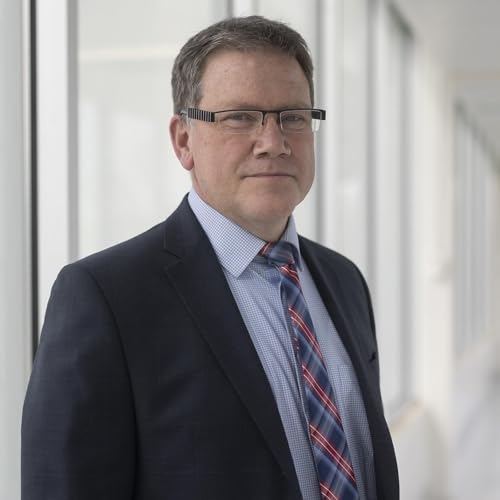
    The Dalhousie University researcher is looking to create synthetic versions of spider's silk that have the potential to help heal damaged nerves and damaged hearts. Researcher Jan Rainey’s curiosity about synthetic fibres began during an undergraduate work term with DuPont. Years later, he heard stories from a fellow researcher that alluded to the amazing properties of spider’s silk. Now he's studying the unique characteristics of spider fibres in hopes of generating synthetic versions that are stronger than bullet-proof Kevlar and body restorative. Drop in, stick around and get trapped in a great science story from a cutting-edge bio-lab. Want to know more? • Jan Rainey’s biography from Dalhousie University • Learn about the fascinating history of Lycra • Explore the history of a most extraordinary textile fibre, spider silk • Cicada recording courtesy of Songofinsects.com
    Mehr anzeigen Weniger anzeigen
    24 Min.
  • 10,000 ways | Pooneh Maghoul: Working at the forefront of geotechnical engineering
    Mar 24 2025
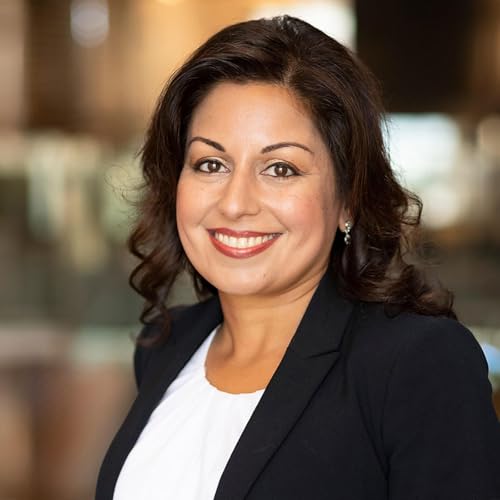
    (Available only in French) Can our critical infrastructure withstand the effects of climate change? Pooneh Maghoul and her research team are working to make our bridges, roads and other critical infrastructures more resistant to climate change and extreme environments on Earth and in space.  She founded the Sustainable Infrastructure and Geoengineering Lab at Polytechnique Montréal. In this podcast, she explains the complexities of permafrost engineering and shares the most important lesson life has taught her. Some of the additional content for this podcast is only available in French. Read Pooneh Maghoul's biography on the Polytechnique Montréal website; Read the La Presse article: Du permélisol... jusqu'à la Lune! Read the blog post from the school of engineering at Polytechnique Montréal: An earthworm robot ... for the Moon!; Awards and honours: Winner of the prestigious ISSMGE (International Society for Soil Mechanics and Geotechnical Engineering) award; Recognized by the Canadian Geotechnical Society
    Mehr anzeigen Weniger anzeigen
    21 Min.
  • 10,000 ways | Researchers from the University of Saskatchewan are global leaders in pandemic preparedness
    Jan 21 2025
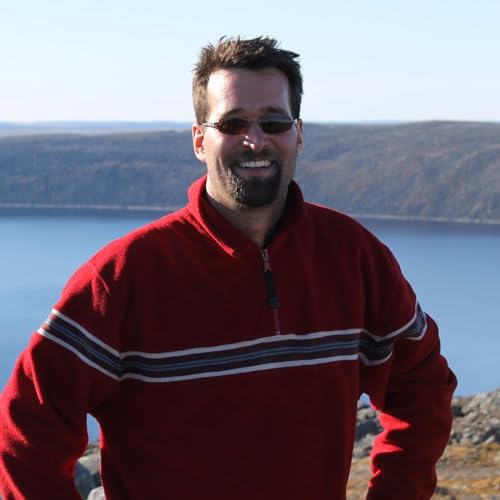
    In 2002, German researcher Volker Gerdts relocated to Saskatoon. Cutting-edge vaccine research was the attraction. Now he is at the helm of the Vaccine and Infectious Disease Organization (VIDO) World-renowned infectious disease specialist Volker Gerdts calls himself a “builder” who is carefully assembling a passionate team working to stop disease outbreaks in their tracks. His passion is infectious as he strives to keep people in Canada safe from future pandemics. The Vaccine and Infectious Disease Organization (VIDO), working out of the University of Saskatchewan, is at the frontline of Canada’s pandemic preparedness initiatives. Want to know more? Learn more about VIDO and how it’s helping to build a healthier world Click here if you’re interested in knowing more about immunology and vaccinology Find out how VIDO is working to identify future diseases in order to control and contain initial outbreaks Visit VIDO’s profile on the Research Facilities Navigator to learn more about research and business opportunities
    Mehr anzeigen Weniger anzeigen
    24 Min.
  • 10,000 ways | How neuroendocrinology crosses sectors to create promising new insights
    Nov 18 2024
    (This podcast is only available in French) Nafissa Ismail focuses on the effects of hormones on the brain to pin down the interactions between our organs and our emotions Epidemiological data shows that the roots of depression form during puberty or adolescence for 75 percent of adults experiencing it. Nafissa Ismail is a professor at the University of Ottawa's School of Psychology and a leading figure in mental health research. Her work is making a significant contribution toward understanding the causes of mental disorders and how to treat them.
    Mehr anzeigen Weniger anzeigen
    23 Min.
  • 10,000 ways | The future of flight depends on sustainability that goes beyond biofuels
    Oct 21 2024
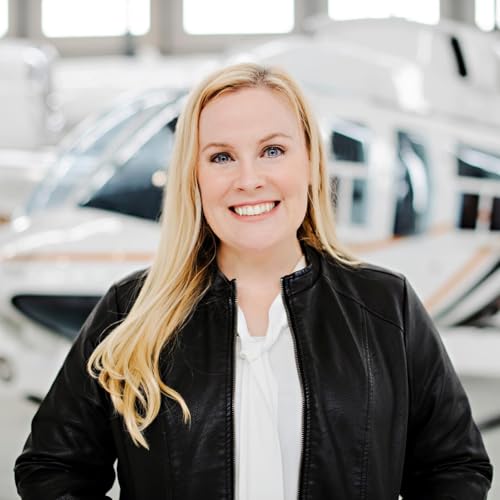
    The University of Waterloo’s Suzanne Kearns is a global leader in sustainable aviation, but her flight path wasn’t without turbulence. Suzanne Kearns grew up in Wiarton, Ont., where she would lie in the grass and watch airplanes from the local airport take flight overhead. Her dreams of flying led to a fixed-wing licence at 16 and helicopter licence a year later. At 24, she was a full-time university lecturer on aviation. Today, as the founder of the Waterloo Institute for Sustainable Aeronautics, she is helping curb the environmental impacts of flight and inspiring the next generation of aviation professionals in the process. Want to know more? Suzanne Kearns biography from the University of Waterloo. More about the history, mission and vision of the Waterloo Institute of Sustainable Aeronautics (WISA), its research studies and its flight simulator lab. Pipistrel Aircraft , a light aircraft manufacturer aiming to provide sustainable and environmentally-friendly solutions to the aircraft industry. Read about University of Waterloo alum Jeremy Wang and his company Ribbit, an innovator in pilotless planes.
    Mehr anzeigen Weniger anzeigen
    25 Min.
  • 10,000 ways | Meet Acadian researcher Céline Surette, for whom interdisciplinarity is second nature
    May 8 2024
    (The audio content of this podcast is only available in French.) Céline Surette embodies both the chemistry of living things and interdisciplinarity to serve the real needs and questions of communities. And to achieve this, and ensure that critical thinking triumphs, she'll pull out all the stops. Céline Surette is Dean of the Faculty of Science and Professor in the Department of Chemistry and Biochemistry at the Université de Moncton. She has a unique perspective on natural ecosystems as well as New Brunswick’s research community, including mentors and students, for whom she is a guiding light. And she isn’t easily thrown off course, even in the face of attempts to criticize science. Listen to Céline Surette talk about all the dimensions of her work in the field and in the lab. Want to know more? Biography: Dr. Céline Surette, Environmental Scientist Group of Shediac, N.B. residents calling for bylaw to ban pesticides - New Brunswick | Globalnews.ca Tracadie- Sheila looking at by-law to ban the use of glyphosate Manganese in water tied to kids' low IQ | CBC News Protecting the health of our oceans: Fisheries and Oceans Canada
    Mehr anzeigen Weniger anzeigen
    24 Min.
  • 10,000 ways | Should bodies of water have the same legal status as people?
    Mar 15 2024
    This podcast is about curious researchers, leading-edge science and the joys of discovery and gets its name from Thomas Edison who said, “I have not failed. I’ve successfully found 10,000 ways that will not work.” Researcher Kelsey Leonard, member of the Shinnecock Nation and founder of the Wampum Lab at the University of Waterloo, delves into ocean, water and climate justice. Shinnecock is a dialect derived from the Algonquian language. It means “people of the stony shores.” It’s along the stony shores of the Shinnecock Nation, on the Atlantic-facing eastern coast of New York’s Long Island that Kelsey Leonard developed her passion for the water. Undergraduate studies took her to Samoa and graduate studies brought her to the University of Waterloo, where she is now the Canada Research Chair in Indigenous Waters, Climate and Sustainability.
    Mehr anzeigen Weniger anzeigen
    24 Min.
  • 10,000 ways | Science (sea) star
    Nov 17 2023
    (Available only in French) This is a podcast about curious researchers, leading-edge science and the joys of discovery. Our podcast gets its name from Thomas Edison who said, “I have not failed. I’ve successfully found 10,000 ways that will not work.” Ocean science research is at a pivotal moment according to Guillaume St-Onge, Director of the Institut des sciences de la mer de Rimouski at Université du Québec à Rimouski. Canada abounds with ocean science expertise and technology, yet its fleet of research vessels has seen better days. Should we be concerned about how this will impact Canadian research in marine geology, physical oceanography, marine biology and marine chemistry? In this episode, a professor of marine geology at Université du Québec à Rimouski and Canada Research Chair in Marine Geology lets us in on his thoughts. Want to know more? Guillaume St-Onge: Guillaume St-Onge's personal page on ISMER's website (French only) Guillaume St-Onge's personal page on UQAR's website (French only ) Canada Research Chair in Marine Geology (French only ) Profile of Guillaume St-Onge on the Fonds de recherche du Québec website (French only ) Facility and partnerships: Navigator's profile for the Paleomagnetism and Marine Geology Laboratory Institut des sciences de la mer de Rimouski (ISMER) of Université du Québec à Rimouski (French only) Paleomagnetism and Marine geology Laboratory Réseau Québec maritime (RQM) (French only) Institut France-Québec maritime (IFQM) (French only) Articles about Guillaume St-Onge’s research (in publication order, from most recent to oldest): L’UQAR obtient le renouvellement de sa Chaire de recherche du Canada en géologie marine [UQAR gets its Canada Research Chair in Marine Geology Renewed], by Jean-François Bouchard, published in UQAR-INFO (August 30, 2023) L'UQAR et ses partenaires reçoivent 154M$ du Fonds d’excellence en recherche Apogée Canada pour l’action climatique et le rôle des océans [UQAR and its partners receive $154 million in funding from the Canada First Research Excellence Fund for climate action and the role of oceans], from the UQAR communications department (May 4, 2023) Remonter dans le temps pour mieux connaître les risques de séismes dans l’estuaire [Going back in time to better understand the risks of earthquakes in the estuary], by Julie Tremblay, published in Radio-Canada ICI Bas-Saint-Laurent (January 19, 2023) Le chercheur Guillaume St-Onge à l’honneur dans Québec Science [Researcher Guillaume St-Onge in the spotlight with Québec Science], with Bis Petitpas, episode on Radio-Canada’s Bonjour la Côte (January 19, 2023) Tremblements de fleuve [River earthquakes], by Joël Leblanc, published in Québec Science(January 12, 2023) Un chercheur de l’UQAR figure pour une quatrième fois parmi les dix découvertes de l’année de Québec Science [UQAR researcher named for the fourth time in Québec Science’s top ten discoveries of the year], by Jean-François Bouchard, published in UQAR-INFO (January 12, 2023) Apogée, un programme de recherche sur les océans sans précédent [An unprecedented marine research program], by Jean-François Bouchard, published in UQAR-INFO (January 9, 2023) Articles of interest on topics addressed in the podcast: Prédire le comportement futur du champ magnétique terrestre [Predicting the future behaviour of Earth’s magnetic field], by Pauline Gravel, published in Le Devoir (February 20, 2016) Le secret du cratère des Pingualuit [The secret of the Pingualuit crater], by Joël Leblanc, published in Québec Science (December 13, 2012) Information about the research vessels mentioned in the podcast: The Coriolis II, ISMER web page (French only) The Coriolis II, REFORMAR web page Le Coriolis II, un laboratoire flottant pour des recherches océanographiques [The Coriolis II, a floating laboratory for marine research], by Valérian Mazataud, Guillaume Levasseur, Alexis Riopel, published in Le Devoir (August 12, 2023) The Listening River , dossier written by Pascaline David, photos by Benjamin Rochette and sound from besidemedia · BESIDE in partnership with Novarium 2 The Amundsen The JOIDES Resolution, press release from the National Science Foundation of the United States: Climate can grind down mountains faster than they can rebuild Daily reports from the JOIDES Resolution Science Operator (International Ocean Discovery Program)
    Mehr anzeigen Weniger anzeigen
    23 Min.