Who Arted: Weekly Art History for All Ages Titelbild

Who Arted: Weekly Art History for All Ages

Who Arted: Weekly Art History for All Ages

Von: Kyle Wood
Jetzt kostenlos hören, ohne Abo

Über diesen Titel

Who Arted is art history and art education for everyone. While most art history podcasts focus on the traditional "fine art" we see in museums around the world, Who ARTed celebrates art in all of its forms and in terms anyone can understand. Each episode tells the story of a different artist and artwork including the traditional big names like Leonardo da Vinci, Pablo Picasso and Andy Warhol along with lesser-known artists working in such diverse media as video game design, dance, the culinary arts, and more. Who Arted is written and produced by an art teacher with the goal of creating a classroom resource that makes art history fun and accessible to everyone. Whether you are cramming for your AP Art History exam, trying to learn a few facts so you can sound smart at fashionable dinner parties, or just looking to hear something with a more positive tone, we’ve got you covered with episodes every Monday and Friday.Copyright 2024 All rights reserved. Kunst Sozialwissenschaften Welt
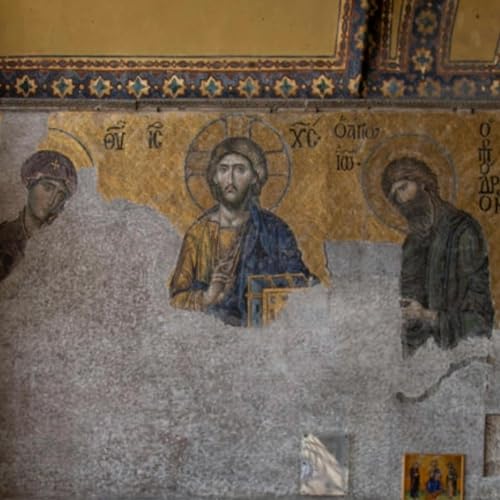
  • The Deesis Mosaic in the Hagia Sophia
    Feb 2 2026
    The Deesis mosaic, located in the South Gallery of the Hagia Sophia in Istanbul, Turkey, is a monumental work of Byzantine art dating back to approximately 1261 CE. Created during the Palaeologan Renaissance, a period of cultural and artistic rebirth following the Byzantine recapture of Constantinople, the mosaic represents a departure from the rigid, stylized forms typical of earlier Byzantine art. The term "Deesis" translates to "prayer" or "supplication," reflecting the composition's theme: Jesus Christ is flanked by the Virgin Mary and John the Baptist, both of whom are depicted in poses of intercession, pleading for mercy on behalf of humanity. The mosaic is a marvel of optical engineering. Byzantine mosaicists used thousands of tiny glass and stone cubes, known as tesserae, many as small as a grain of rice for delicate features like skin tones. These tiles were often angled to catch and reflect light from nearby windows and candles, creating a shimmering effect that gave the figures a sense of life and movement. The artist's use of complementary colors for shading, such as greens and olives mixed with pinks, achieved a vibrant, lifelike flesh tone that anticipated techniques used by Renaissance artists centuries later. Although the bottom half of the mosaic was lost to time and water damage, the surviving upper portion remains a profound testament to the emotional depth and technical sophistication of 13th-century Byzantine craftsmanship. Learn more about your ad choices. Visit megaphone.fm/adchoices
    Mehr anzeigen Weniger anzeigen
    10 Min.
  • Frank Lloyd Wright | Falling Water
    Feb 1 2026
    Frank Lloyd Wright was one of America's most famous and influential architects. He famously said, "No house should ever be on a hill or on anything. It should be of the hill. Belonging to it. Hill and house should live together each the happier for the other." It was this emphasis on unity between the construction and the surrounding landscape that made Falling Water such a breathtaking design. Related Episodes: ⁠Frank Lloyd Wright | Falling Water (full episode)⁠ This is an encore presentation. Every January/February, I release daily episodes to refresh everyone's memory on the 64 artists and artworks that will be included in my Arts Madness Tournament held in March. While most of these daily episodes will be reruns, I will continue publishing new episodes on Mondays. Check out my other podcasts Fun Facts Daily | Art Smart | Rainbow Puppy Science Lab Who ARTed is an Airwave Media Podcast. If you are interested in advertising on this or any other Airwave Media show, email: advertising@airwavemedia.com Learn more about your ad choices. Visit megaphone.fm/adchoices
    Mehr anzeigen Weniger anzeigen
    6 Min.
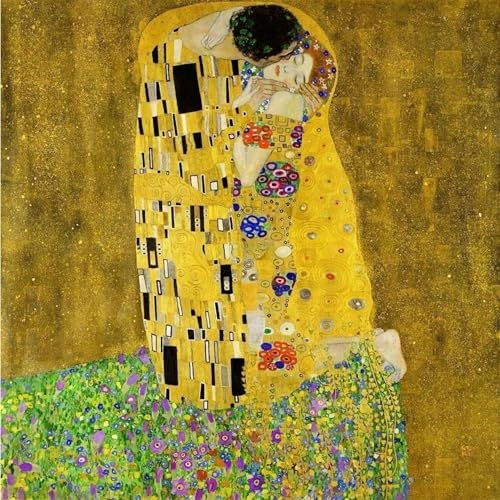
  • Gustav Klimt | The Kiss
    Jan 31 2026
    Gustav Klimt's "The Kiss" is an iconic Art Nouveau painting, renowned for its use of gold leaf and intricate patterns. The painting depicts a couple embracing in a passionate kiss, their bodies adorned with abstract designs that symbolize interconnectedness and the natural world. While the identities of the figures are unclear, the painting has been interpreted as representing mythological figures, Klimt and his companion Emilie Floge, or a more allegorical representation of love. The painting's symbolism, including floral motifs and the gold halo effect, contribute to its spiritual dimension. The Kiss sold immediately after Klimt painted it. In 1908, the Austrian Government bought it for their Moderne Galerie. They paid 25,000 crowns which would be the equivalent of about $240,000 today. That was 5 times higher than the price paid for any painting in Vienna up until that time. It quickly became one of Klimt's most celebrated works extremely popular beyond the fine art world. "The Kiss" has permeated popular culture, appearing in countless reproductions, adaptations, and homages. Its iconic image has been used in advertising, fashion, and even movies. This is an encore presentation. Every January/February, I release daily episodes to refresh everyone's memory on the 64 artists and artworks that will be included in my Arts Madness Tournament held in March. While most of these daily episodes will be reruns, I will continue publishing new episodes on Mondays. Check out my other podcasts Fun Facts Daily | Art Smart | Rainbow Puppy Science Lab Who ARTed is an Airwave Media Podcast. If you are interested in advertising on this or any other Airwave Media show, email: advertising@airwavemedia.com Learn more about your ad choices. Visit megaphone.fm/adchoices
    Mehr anzeigen Weniger anzeigen
    24 Min.
Noch keine Rezensionen vorhanden