The Deesis Mosaic in the Hagia Sophia Titelbild

The Deesis Mosaic in the Hagia Sophia

The Deesis Mosaic in the Hagia Sophia

Jetzt kostenlos hören, ohne Abo

Details anzeigen

Über diesen Titel

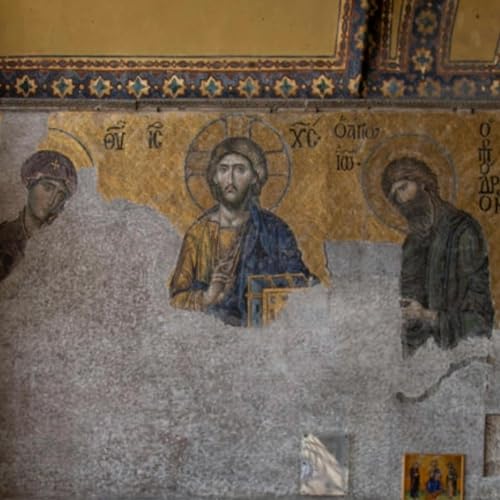
The Deesis mosaic, located in the South Gallery of the Hagia Sophia in Istanbul, Turkey, is a monumental work of Byzantine art dating back to approximately 1261 CE. Created during the Palaeologan Renaissance, a period of cultural and artistic rebirth following the Byzantine recapture of Constantinople, the mosaic represents a departure from the rigid, stylized forms typical of earlier Byzantine art. The term "Deesis" translates to "prayer" or "supplication," reflecting the composition's theme: Jesus Christ is flanked by the Virgin Mary and John the Baptist, both of whom are depicted in poses of intercession, pleading for mercy on behalf of humanity. The mosaic is a marvel of optical engineering. Byzantine mosaicists used thousands of tiny glass and stone cubes, known as tesserae, many as small as a grain of rice for delicate features like skin tones. These tiles were often angled to catch and reflect light from nearby windows and candles, creating a shimmering effect that gave the figures a sense of life and movement. The artist's use of complementary colors for shading, such as greens and olives mixed with pinks, achieved a vibrant, lifelike flesh tone that anticipated techniques used by Renaissance artists centuries later. Although the bottom half of the mosaic was lost to time and water damage, the surviving upper portion remains a profound testament to the emotional depth and technical sophistication of 13th-century Byzantine craftsmanship. Learn more about your ad choices. Visit megaphone.fm/adchoices
Noch keine Rezensionen vorhanden