• Cyber Smart Parenting: Protecting Kids in a Digital World
    Feb 14 2026

    How do you raise safe, confident kids in a world of gaming chats, AI tools, social media, and constant connectivity?

    In this episode of the Where Parents Talk podcast, host Lianne Castelino speaks to cybersecurity professionals Chad Rychlewski and Kae David, who share expert, practical advice from their book Cyber Smart Parenting. As both industry insiders, they translate enterprise-level cybersecurity strategies into realistic steps families can use at home.

    You’ll hear:

    1. Why digital safety conversations should begin in kindergarten
    2. The risks of oversharing photos in the age of AI
    3. How gaming voice chats expose children to strangers
    4. Why locking your child’s credit protects against identity theft
    5. How to talk to teens about their digital footprint without shame
    6. The importance of family digital contracts
    7. Why being present matters more than being technical

    Instead of fear, this conversation focuses on empowerment. The safest kids aren’t the most restricted — they’re the ones who feel safe coming to their parents before a crisis happens.

    This podcast is for parents, guardians, teachers and caregivers to learn proven strategies and trusted tips on raising kids, teens and young adults based on science, evidenced and lived experience.

    You’ll learn the latest on topics like managing bullying, consent, fostering healthy relationships, and the interconnectedness of mental, emotional and physical health.

    Links referenced in this episode:

    1. whereparentstalk.com


    Mehr anzeigen Weniger anzeigen
    30 Min.
  • Overcorrecting in Parenting: Nervous System Regulation, Burnout, and Finding the Middle Ground
    Feb 7 2026

    Why do so many parents feel like they’re failing — even when they’re doing everything “right”?

    In this episode of the Where Parents Talk podcast, host Lianne Castelino is joined by Manu Brune, postpartum specialist, parent coach, mother of 3 and author of Overcorrecting: Parenting in the Middle While the World Shouts in Extremes. They unpack a timely issue facing parents today: overcorrection.

    Brune explains how many parents are unconsciously parenting in reaction to their own childhood experiences, swinging between extremes in an effort to “break generational cycles.” The result? Chronic stress, nervous system dysregulation, parental burnout, and growing self-doubt.

    This episode explores:

    1. How nervous system regulation shapes parent-child relationships
    2. Why perfectionism and hyper-vigilance are exhausting parents
    3. The long-term impact of reactive parenting on children’s mental health
    4. What co-regulation means and how children “borrow calm” from adults
    5. How to parent with consistency without rigidity
    6. Why the space between parenting decisions matters more than the decisions themselves

    This podcast is for parents, guardians, teachers and caregivers to learn proven strategies and trusted tips on raising kids, teens and young adults based on science, evidenced and lived experience.

    You’ll learn the latest on topics like managing bullying, consent, fostering healthy relationships, and the interconnectedness of mental, emotional and physical health.

    Links referenced in this episode:

    1. whereparentstalk.com

    Mehr anzeigen Weniger anzeigen
    35 Min.
  • The Parent's Guide to Life Insurance
    Jan 31 2026

    Life insurance can feel overwhelming for parents — especially when you’re juggling kids, careers, mortgages, and everyday life. In this episode of the Where Parents Talk podcast, host Lianne Castelino speaks with Laura McKay, co-founder and COO of PolicyMe and a mom of two, to break down life insurance in simple, practical terms for families.

    This essential conversation for parents covers what life insurance actually is, why it matters for moms and dads, the difference between term and permanent life insurance, how much coverage families really need, and common mistakes parents make when putting it off.

    You’ll also learn how life insurance fits into different stages of parenthood — from pregnancy and young children to teens and young adults — and how to take a small, manageable first step.

    What you'll learn:

    1. The basics of life insurance and its role in protecting parents and families
    2. Term and permanent life insurance: what’s the difference?
    3. Determining the right coverage amount for your family’s needs
    4. Costly life insurance myths and mistakes parents should avoid
    5. Planning life insurance around major life events, from pregnancy to homeownership and career shifts

    This podcast is for parents, guardians, teachers and caregivers to learn proven strategies and trusted tips on raising kids, teens and young adults based on science, evidenced and lived experience.

    You’ll learn the latest on topics like managing bullying, consent, fostering healthy relationships, and the interconnectedness of mental, emotional and physical health.

    Links referenced in this episode:

    1. whereparentstalk.com
    2. policyme.com

    Companies mentioned in this episode:

    1. Policy Me
    2. Fortune 500

    Mehr anzeigen Weniger anzeigen
    27 Min.
  • The Brain Science Behind Camp
    Jan 24 2026

    In this episode of the Where Parents Talk podcast, host Lianne Castelino speaks with Matthew Kaufman, camp director, author, lifelong camp professional and father, about the powerful science behind camp and what parents can learn from it.

    Drawing from his book The Campfire Effect: How to Engineer Belonging in a Disconnected World, Kaufman explains how camp environments intentionally create safety, belonging, and healthy challenge—and why those elements are essential for learning and emotional growth.

    Parents will learn:

    1. Why children can’t learn or grow unless they feel emotionally safe
    2. How positive stress (not zero stress) builds confidence and resilience
    3. The role of brain chemicals like cortisol, oxytocin, and endorphins in child development
    4. The difference between supporting a child and rescuing them
    5. Simple, practical ways parents can recreate “camp-like” belonging at home through rituals and connection

    This conversation supports parents navigating anxiety, screen overload, and the pressure-filled school year.

    This podcast is for parents, guardians, teachers and caregivers to learn proven strategies and trusted tips on raising kids, teens and young adults based on science, evidenced and lived experience.

    You’ll learn the latest on topics like managing bullying, consent, fostering healthy relationships, and the interconnectedness of mental, emotional and physical health.

    Links referenced in this episode:

    1. whereparentstalk.com

    Mehr anzeigen Weniger anzeigen
    36 Min.
  • Uncovering Your Child’s Genius: Rethinking Intelligence, Learning Styles & Education
    Jan 17 2026

    What if your child’s genius has nothing to do with grades or test scores?

    In this episode of Where Parents Talk, host Lianne Castelino speaks with Houlie Duque, educator, homeschool coach, and founder of Homeschool To Go, to challenge traditional ideas of intelligence and success in education.

    The conversation explores how every child is intelligent—just in different ways—and why the current education system often overlooks creativity, emotional intelligence, kinesthetic learning, and interpersonal strengths.

    Duque explains how parents can identify their child’s unique learning style, build confidence, and nurture strengths without pressure, labels, or comparison.

    This conversation also explores how homeschooling, project-based learning, and family rhythm can help parents create meaningful learning experiences—without overwhelm.

    In this episode, parents will learn:

    1. What “genius” really means in a child
    2. Why grades and gifted labels don’t tell the full story
    3. How learning styles impact focus, motivation, and confidence
    4. The emotional impact of labelling children too early
    5. How to support kids with ADHD or non-traditional learning needs
    6. Small, realistic changes parents can make this week
    7. How homeschooling and experiential learning can work for busy families

    Links referenced in this episode:

    1. homeschooltogo.org
    2. whereparentstalk.com

    Companies mentioned in this episode:

    1. homeschooltogo.org

    This podcast is for parents, guardians, teachers and caregivers to learn proven strategies and trusted tips on raising kids, teens and young adults based on science, evidenced and lived experience.

    You’ll learn the latest on topics like managing bullying, consent, fostering healthy relationships, and the interconnectedness of mental, emotional and physical health.

    Links referenced in this episode:

    1. whereparentstalk.com

    Mehr anzeigen Weniger anzeigen
    32 Min.
  • Preventing and Managing Food Allergies with Confidence
    Jan 10 2026

    Food allergies affect 1 in 13 children—and for many parents, the fear and uncertainty can feel overwhelming.

    In this episode of Where Parents Talk, host Lianne Castelino speaks with Malina Malkani, pediatric registered dietitian, bestselling author, and mom of three, to break down the latest science-backed guidance on food allergy prevention.

    Learn why early introduction of allergenic foods like peanut and egg during infancy can significantly reduce the risk of food allergies, what the research really says about safety, and how parents can confidently introduce allergens in simple, baby-safe ways. Malkani explains the critical window for prevention, common misconceptions, and what to do if you’ve missed it.

    Takeaways:

    1. Understanding the importance of early allergen introduction can significantly reduce food allergy risks in infants.
    2. When it comes to feeding babies, simplicity and variety are key to fostering healthy eating habits.
    3. Parents should prioritize establishing open communication about food allergies to empower their children in social settings.
    4. The role of a caregiver is pivotal in shaping a child's relationship with food, especially during the formative years.
    5. The current landscape of food allergy management is evolving, with more healthcare providers embracing new guidelines and research.
    6. Encouraging children to participate in meal preparation can boost their confidence and independence in making healthy choices.

    Links referenced in this episode:

    1. whereparentstalk.com

    Companies mentioned in this episode:

    1. American Academy of Pediatrics
    2. CDC
    3. LEAP Study
    4. WIC

    This podcast is for parents, guardians, teachers and caregivers to learn proven strategies and trusted tips on raising kids, teens and young adults based on science, evidenced and lived experience.

    You’ll learn the latest on topics like managing bullying, consent, fostering healthy relationships, and the interconnectedness of mental, emotional and physical health.

    Mehr anzeigen Weniger anzeigen
    36 Min.
  • How Nature Can Protect Your Child’s Mental Health
    Jan 3 2026

    Modern parenting often feels like a race against time. Between school pressures, screens, and rising rates of anxiety and depression, many parents are left wondering what their children truly need—and how to support them without burning out themselves.

    In this episode of Where Parents Talk, host Lianne Castelino is joined by occupational therapist, naturalist, parent coach, and author Kathleen Lockyer, founder of the Nature Led Approach and author of Wild Inside. With more than 25 years of experience in child development, mental health, sensory integration, and trauma-informed care, Kathleen offers a reframing of youth mental health—rooted in our forgotten connection to nature.

    The discussion explores:

    1. Why so many children and teens are dysregulated, anxious, or misunderstood
    2. How behaviour often has sensory and nervous system roots—not defiance
    3. The science behind nature’s ability to calm the brain and reduce anxiety, ADHD, and depression
    4. Why just 10 minutes outdoors can make a meaningful difference
    5. Simple, realistic ways parents can reconnect with nature alongside their kids—no camping trips required

    Lockyer also shares personal insights from her own parenting journey, introducing concepts like “sit spots” and “ecoception” to help families slow down, rebuild connection, and foster a sense of belonging in an increasingly overwhelming world.

    This podcast is for parents, guardians, teachers and caregivers to learn proven strategies and trusted tips on raising kids, teens and young adults based on science, evidenced and lived experience.

    You’ll learn the latest on topics like managing bullying, consent, fostering healthy relationships, and the interconnectedness of mental, emotional and physical health.

    Links referenced in this episode:

    1. whereparentstalk.com

    Mehr anzeigen Weniger anzeigen
    34 Min.
  • Raising Kids in the Age of Identic AI: What Parents Need to Know
    Dec 20 2025

    As artificial intelligence rapidly reshapes the world our children are growing up in, many parents are left wondering: What does this mean for my child’s identity, values, and future?

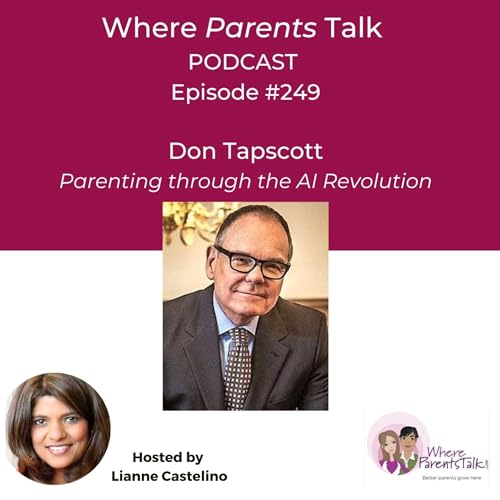
    In this episode of the Where Parents Talk podcast, host Lianne Castelino speaks with global technology thought leader and author Don Tapscott to explore the rise of identic AI and why understanding it is no longer optional for parents.

    Drawing from his latest book, You to the Power of Two: Redefining Human Potential in the Age of Identic AI, Tapscott explains how AI is evolving from a tool we use into an intelligent extension of who we are — and what that means for families.

    Together, they unpack how technology can shape children’s judgment, emotional health, and sense of self, why parents must move beyond fear toward informed engagement, and how creating a family “social contract” around technology can strengthen trust and communication. From digital identity and values to screen boundaries and critical thinking, this conversation offers parents practical insight and reassurance as they raise children in a powerful new digital era.

    Takeaways:

    • The rise of identic AI brings significant implications for how children navigate their identities online, emphasizing the need for parental guidance.
    • As technology advances, parents must prioritize open communication and establish social contracts to ensure responsible device usage among their children.
    • Understanding hormonal changes and their effects on tweens and teens is crucial for maintaining their emotional and mental health amidst social media pressures.
    • It's essential for parents to teach their children about consent and healthy relationships, especially in the context of digital interactions and social media.
    • Navigating the complexities of bullying in the digital age requires a proactive approach to emotional health and effective communication with kids.
    • Fostering independence in children is vital, yet it must be balanced with discipline and guidance in their engagement with technology.

    Links referenced in this episode:

    • whereparentstalk.com

    Companies mentioned in this episode:

    • Blockchain Research Institute

    Mehr anzeigen Weniger anzeigen
    35 Min.