• TecC 46 - Charting the Uncharted: Redrawing the Map
    Feb 20 2026

    In Episodes 43 to 45 we saw some of the foundational developments that characterize the Renaissance, or what we specifically understand to be the Italian renaissance. Now, let’s cast the net wider, and to see similar revolutionary developments emerge elsewhere.

    Read full article here.

    Article written by Ash Stuart

    Images, voice narration and some footnotes generated by AI

    Further Reading & Reference

    * Newitt, Malyn. (2023). Navigations: The Portuguese Discoveries and the Renaissance. Reaktion Books. ISBN 978-1789147025.

    * Diffie, Bailey W.; Winius. (1977). Foundations of the Portuguese Empire, 1415-1580. University of Minnesota Press. ISBN 0-19-690419-6.

    * Cortesão, Armando. (1969). History of Portuguese Cartography. Junta de Investigações do Ultramar-Lisboa.

    * Elbl, Martin M.. (1985). The Portuguese Caravel and European Shipbuilding: Phases of Development and Diversity.

    * Ariganello, Lisa. Henry the Navigator: Prince of Portuguese Exploration. Crabtree Publishing. ISBN 978-0778724339.


    This is a public episode. If you would like to discuss this with other subscribers or get access to bonus episodes, visit ashstuart.substack.com
    Mehr anzeigen Weniger anzeigen
    19 Min.
  • TecC 35D - The Art of Reinvention: Remaking Language, Literature, Life Itself
    Feb 13 2026

    Ever so often arrives a titan of skill supreme and sublime

    Whose life and works will with achievement itself rhyme

    Such as may have set the stage, mayhaps even defined an age

    But our man, if you will, was not of an age, but for all time

    We’ve already seen in this mini-series, a trilogy tracing the development of the English language, such as in Episode 35A becoming slimmer, stronger and sleeker having shed the unnecessary baggage of word endings, then in Episode 35B where Chaucer gave respectability to that language, and finally in Episode 35C where despite the hit-and-miss development of spelling, English found a foothold and some unexpected advantages.

    We will now meet English’s greatest and smoothest operator, its most effective and eloquent elevator, its most remarkable and rakish reinventor. Yes, we will.

    Read Full Article Here

    Article written by Ash Stuart

    Images, most voice narration and some footnotes generated by AI

    Further Reading & Reference

    * Ackroyd, Peter. (2005). Shakespeare: The Biography. Nan A. Talese/Doubleday. ISBN 978-0385511391.

    * Bate, Jonathan. (2009). Soul of the Age: A Biography of the Mind of William Shakespeare. Random House. ISBN 978-1400062065.

    * Greenblatt, Stephen. (2004). Will in the World: How Shakespeare Became Shakespeare. W. W. Norton & Company. ISBN 978-0393050572.

    * Shapiro, James. (2005). A Year in the Life of William Shakespeare: 1599. Harper Collins.

    * Shapiro, James. (2015). The Year of Lear: Shakespeare in 1606. Simon & Schuster.

    * Bloom, Harold. (1998). Shakespeare: The Invention of the Human. Riverhead Books.

    * Bryson, Bill. (2007). Shakespeare: The World as Stage. HarperCollins.

    * Bevington, David. (2010). Shakespeare and Biography. Oxford University Press. ISBN 978-0199586479.

    * Garber, Marjorie. (2004). Shakespeare After All. Pantheon.

    * Crystal, David; Crystal. (2002). Shakespeare’s Words: A Glossary and Language Companion. Penguin.

    * Crystal, David. (2012). Spell it out: the singular story of English spelling. Profile Books Ltd. ISBN 978-1-84668-567-5.

    * Crystal, David. (2019). The Cambridge Encyclopedia of the English Language. 3rd. Cambridge University Press. ISBN 978-1108437738.


    This is a public episode. If you would like to discuss this with other subscribers or get access to bonus episodes, visit ashstuart.substack.com
    Mehr anzeigen Weniger anzeigen
    19 Min.
  • TecC 35C - The Art of Reinvention: The Strange Dance of Sounds
    Feb 6 2026

    Today I’ll discuss, even explain, a very weird phenomenon that we are confronted with every single day. If not justify it, I hope to partly answer a burning question underlying it.

    Read full article here

    Article written by Ash Stuart

    Images, voice narration and some footnotes generated by AI

    Further Reading & Reference

    * Crystal, David. (2012). Spell it out: the singular story of English spelling. Profile Books Ltd. ISBN 978-1-84668-567-5.

    * Hellinga, Lotte. (2010). William Caxton and Early Printing in England. British Library. ISBN 978-0712350884.

    * Crystal, David. (2019). The Cambridge Encyclopedia of the English Language. 3rd. Cambridge University Press. ISBN 978-1108437738.

    * Crystal, David. (2003). English as a Global Language. 2nd. Cambridge University Press. ISBN 978-0521530323.

    * Crystal, David; Crystal. (2014). You Say Potato: A Book About Accents. Macmillan.

    * Lerer, Seth. (2015). Inventing English: A Portable History of the Language. Columbia University Press. ISBN 978-0231174473.

    * Wolfe, Patricia M.. (1972). Linguistic Change and the Great Vowel Shift in English. University of California Press. ISBN 978-0520018358.

    * Stenbrenden, Gjertrud Flermoen. (2016). Long-Vowel Shifts in English, c.1050–1700: Evidence from Spelling. Cambridge University Press. ISBN 978-1107055759.

    * Tutschka, Victoria. (2009). Great Vowel Shift: From Middle to Standard English. GRIN Verlag. ISBN 978-3640489374.

    * Lounsbury, Thomas R.. (1909). English Spelling and Spelling Reform. Harper & Brothers. ISBN 978-1164071594.

    * Okrent, Arika. (2021). Highly Irregular: Why Tough, Through, and Dough Don’t Rhyme—And Other Oddities of the English Language. Oxford University Press.


    This is a public episode. If you would like to discuss this with other subscribers or get access to bonus episodes, visit ashstuart.substack.com
    Mehr anzeigen Weniger anzeigen
    19 Min.
  • TecC 45 - Dominating the Skies, Cementing your Glory
    Jan 30 2026

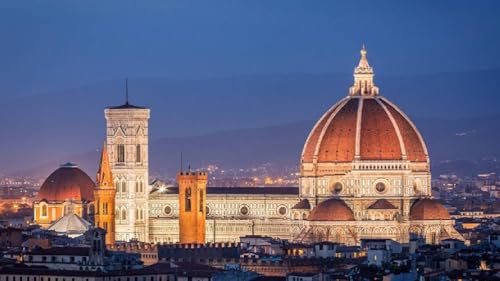
    So last time we discussed what might appear to be largely a theoretical point - linear perspective, promising to give you a sort of ‘live demo’. So here we are, demo time! I also withheld the name of the guy who essentially ‘invented’ linear perspective. So this article is about him as well.

    Finally, as part of this, I will also extend the promise or case I made in the earlier Episode 24. Let’s take the whole thing in perspective!

    Read full article here.

    Article written by Ash Stuart

    Voice narration and some footnotes generated by AI

    Further Reading & Reference

    * King, Ross. (2000). Brunelleschi’s Dome: How a Renaissance Genius Reinvented Architecture. Chatto & Windus. ISBN 978-1-62040-193-4.

    * Prager, Frank D.; Scaglia. (1970). Brunelleschi: Studies of His Technology and Inventions. MIT Press. ISBN 978-0-262-16031-5.

    * Saalman, Howard. (1993). Filippo Brunelleschi: The Buildings. Pennsylvania State University Press. ISBN 978-0-271-01067-0.

    * Battisti, Eugenio. (2002). Filippo Brunelleschi. Phaidon Press. ISBN 978-1-904313-12-0.

    * Bussagli, Marco; Gregori. (2021). Brunelleschi’s Dome in Florence. Scripta Maneant. ISBN 978-8-89584-797-9.

    * Galluzzi, Paolo. (2020). The Italian Renaissance of Machines. Harvard University Press. ISBN 978-0674984394.

    * Brotton, Jerry. (2006). The Renaissance: A Very Short Introduction. Oxford University Press. ISBN 978-0192801630.


    This is a public episode. If you would like to discuss this with other subscribers or get access to bonus episodes, visit ashstuart.substack.com
    Mehr anzeigen Weniger anzeigen
    16 Min.
  • TecC 44 - Perfecting Perspicacity: An Insight into Reality
    Jan 23 2026

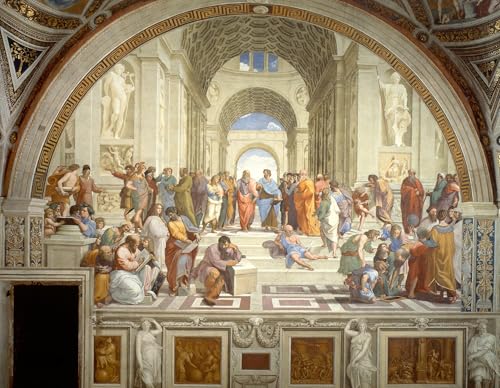
    Back in Episode 24, I made a what-might-seem-bold claim about a certain method being the best tool we have to understand reality, with Episode 32 being one case in point. Today, I’ll explore another one - an altogether more visual one.

    But first...

    Read full article here

    Article written by Ash Stuart

    Voice narration and some footnotes generated by AI

    Further Reading & Reference

    * Ruggiero, Guido. (2015). The Renaissance in Italy: A Social and Cultural History of the Rinascimento. Cambridge University Press. ISBN 978-1107032545.

    * Galluzzi, Paolo. (2020). The Italian Renaissance of Machines. Harvard University Press. ISBN 978-0674984394.

    * Brotton, Jerry. (2006). The Renaissance: A Very Short Introduction. Oxford University Press. ISBN 978-0192801630.

    * Brotton, Jerry. (2002). The Renaissance Bazaar. Oxford University Press. ISBN 978-0192802651.

    * Jardine, Lisa; Brotton. (2000). Global Interests: Renaissance Art between East and West. Reaktion Books. ISBN 978-1861891662.


    This is a public episode. If you would like to discuss this with other subscribers or get access to bonus episodes, visit ashstuart.substack.com
    Mehr anzeigen Weniger anzeigen
    18 Min.
  • TecC 43 - Making Work Art, Making Art Work, Engineering Excellence
    Jan 16 2026

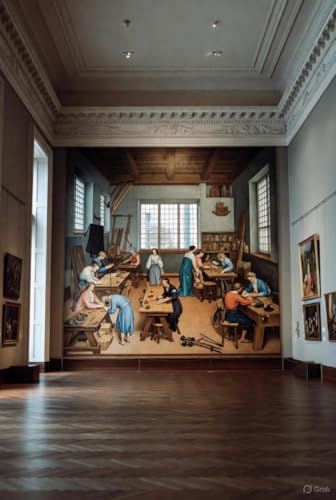
    What is it that makes genius? How much of it is in the persona of an individual and how much of it comes from, what I’ve called, institutional technologies? How does it organize and amplify knowledge and skill? How does that relate to innovation? Let’s start unpacking this today.

    Read full article here.

    Article written by Ash Stuart

    Images, voice narration and some footnotes generated by AI

    Further Reading & Reference

    *


    This is a public episode. If you would like to discuss this with other subscribers or get access to bonus episodes, visit ashstuart.substack.com
    Mehr anzeigen Weniger anzeigen
    22 Min.
  • TecC 42 - Going from a Handful Rapidly to Millions
    Jan 9 2026

    We tend to use the words ‘invention’ and ‘innovation’ somewhat interchangeably, and we probably don’t pause to think about the difference between the two. Not only are they different, but their difference has a fundamental bearing on our journey here. Perhaps no other story demonstrates this better than that we are going to explore today. Let’s get to it.

    But first let’s see what...

    Read full article here

    Article written by Ash Stuart

    Images, voice narration and some footnotes generated by AI

    Further Reading & Reference

    * Eisenstein, Elizabeth L.. (1979). The Printing Press as an Agent of Change: Communications and Cultural Transformations in Early-Modern Europe. Cambridge University Press. ISBN 978-0521299558.

    * Man, John. (2002). The Gutenberg Revolution: How Printing Changed the Course of History. Bantam. ISBN 978-0553819663.

    * Abel, Richard. (2011). The Gutenberg Revolution: A History of Print Culture. Transaction Publishers. ISBN 978-1412849524.

    * Kapr, Albert. (1996). Johannes Gutenberg: The Man and His Invention. Scolar Press. ISBN 978-1859280515.

    * Scholderer, Victor. (1963). Johann Gutenberg: The Inventor of Printing. Trustees of the British Museum.

    * Rees, Fran. (2006). Johannes Gutenberg: Inventor of the Printing Press. Compass Point Books. ISBN 978-0756520748.

    * Koscielniak, Bruce. (2003). Johann Gutenberg and the Amazing Printing Press. Houghton Mifflin. ISBN 978-0618263516.

    * Childress, Diana. (2008). Johannes Gutenberg and the Printing Press. Twenty-First Century Books. ISBN 978-0822575207.

    * Rudolph, Richard C. (1954). A Chinese Printing Manual, 1776. Ward Ritchie Press.

    * McGovern, Melvin P. (1966). Specimen Pages of Korean Movable Types. Dawson’s Book Shop.

    * Eisenstein, Elizabeth L. (2005). The Printing Revolution in Early Modern Europe. 2nd. Cambridge University Press. ISBN 978-0521845434.

    * Mortimer, Ian. (2022). Medieval Horizons: Why the Middle Ages Matter. Vintage.

    * Wood, Michael. The Story of China. Simon & Schuster.

    * The Machine that Made Us - Documentary on the Gutenberg Printing Press with Stephen Fry


    This is a public episode. If you would like to discuss this with other subscribers or get access to bonus episodes, visit ashstuart.substack.com
    Mehr anzeigen Weniger anzeigen
    21 Min.
  • TecC 41 - The Phoenix Principle: Schumpeterian Renewal III
    Jan 2 2026

    On the grand march of life, there are but forces few, Like green shoots in the soil, like early morning dew. After disease and despair, after death and destruction, Nothing comes close to reviving, as the new, as the new.

    Welcome to the New Era! Happy New Era!

    That’s right, that’s not an error, not a typo. Even as this piece is scheduled to go out as my first release in the new year, it also marks the beginning of a new era!

    A new era, in our story of innovation - after all, the new is the very heart of innovation; in our study of achievement - after all, what can be accomplished without trying out something new; in our pursuit of progress - after all, where’s progress if there isn’t something new?

    The last episode was...

    Read Full Article Here

    Article written by Ash Stuart

    Images, voice narration and some footnotes generated by AI

    Further Reading & Reference

    * Turner, Marion. (2019). Chaucer A European Life. Princeton University Press. ISBN 978-0-691-16009-2.

    * Kirkham, Victoria & Maggi, Armando. (2009). Petrarch. A Critical Guide to the Complete Works. University of Chicago Press. ISBN 978-0226437415.

    * Mortimer, Ian. (2022). Medieval Horizons: Why the Middle Ages Matter. Vintage.

    * Belich, James. (2022). The World the Plague Made: The Black Death and the Rise of Europe. Princeton University Press. ISBN 9780691215662.

    * Herlihy, David. (1997). The Black Death and the Transformation of the West. Harvard University Press. ISBN 978-0674076136.

    * MacCulloch, Diarmaid. (2005). The Reformation: A History. Penguin Books. ISBN 978-0143035381.

    * Lindberg, Carter. (2020). The European Reformations. 3rd. Wiley-Blackwell. ISBN 978-1119640813.

    * McGrath, Alister E.. (2021). Reformation Thought: An Introduction. 5th. Wiley-Blackwell. ISBN 978-1119756583.

    * Ozment, Steven. (2020). The Age of Reform, 1250-1550: An Intellectual and Religious History of Late Medieval and Reformation Europe. 40th Anniversary. Yale University Press. ISBN 978-0300203554.

    * Scheidel, Walter. (2021). Escape from Rome. The Failure of Empire and the Road to Prosperity. Princeton University Press. ISBN 978-0691216737.


    This is a public episode. If you would like to discuss this with other subscribers or get access to bonus episodes, visit ashstuart.substack.com
    Mehr anzeigen Weniger anzeigen
    16 Min.