Folgen

  • 2026.02.11 | 76th International Astronautical Congress 2025 - Part 2
    Feb 17 2026

    On The Space Show for Wednesday, 11 February 2026:


    Turn Back Time: Voyager 2 at Uranus

    Ed Stone, Project Scientist, describes the findings of Voyager 2 at Uranus, 40 years ago. (Insert courtesy JPL)


    Perseverance rover status update

    The status of the Perseverance rover, and future plans for exploration and rock sample collection with Steve Reid, Jet Propulsion Laboratory, Pasadena, California (Courtesy AGU)


    IAC 2025 Opening Ceremony

    The remarks of Australian Governor-General Ms Sam Mostyn AC, and historical memories from Kerrie Dougherty, Owen Mace, John Saxon and Gordon Pike from the opening ceremony. (Inserts courtesy IAC)

    Mehr anzeigen Weniger anzeigen
    54 Min.
  • 2026.02.04 | Ensuring American Space Superiority: A New U.S. Space Policy Directive
    Feb 4 2026

    On The Space Show for Wednesday, 4 February 2026:

    The Space Show is in conversation with Angelo Di Grazia, a Committee member of the ⁠Space Association of Australia⁠.

    *******

    Space Show News

    The Artemis II launch has been delayed by at least one month due to a hydrogen leak during a wet dress rehearsal.

    *******

    Ensuring American Space Superiority: A new U.S. space policy directive

    On 18 December 2025, President Trump signed an executive order entitled Ensuring American Space Superiority – essentially the new cornerstone of U.S. National Space Policy.

    Key highlights:

    • Moon missions accelerated — Americans back on the lunar surface by 2028 (with Artemis), with the first pieces of a permanent lunar outpost established by 2030.
    • Space nuclear power push — Deploy reactors in orbit and on the Moon, including a surface reactor launch-ready by 2030.
    • National security focus — Build next-gen missile defence tech (including space-based) by 2028, develop strategies to detect/counter threats (even nuclear weapons in orbit) all the way out to cislunar space, and make the military space architecture more resilient and commercial-friendly.
    • Commercial boom — Aim to pull in an extra 50 billion dollars of private investment by 2028, ramp up launch cadence, replace the ISS with private stations by 2030, and reform acquisitions to favour fast, commercial solutions.
    • Organisational changes — Revokes the old executive order re-establishing the National Space Council (first Trump administration/Biden administration), shifts coordination to the President's science advisor, and tweaks older policies on space traffic management.


    *******

    A word from the new NASA Administrator, Jared Isaacman

    On 19 December 2025, the newly appointed NASA Administrator addressed the agency's staff about his vision for the future of NASA and answered questions from members of the workforce.

    Mehr anzeigen Weniger anzeigen
    49 Min.
  • 2026.01.28 | SPECIAL: 40th Anniversary of the STS 51-L Space Shuttle Challenger Disaster
    Jan 30 2026

    On The Space Show for Wednesday, 28 January 2026:

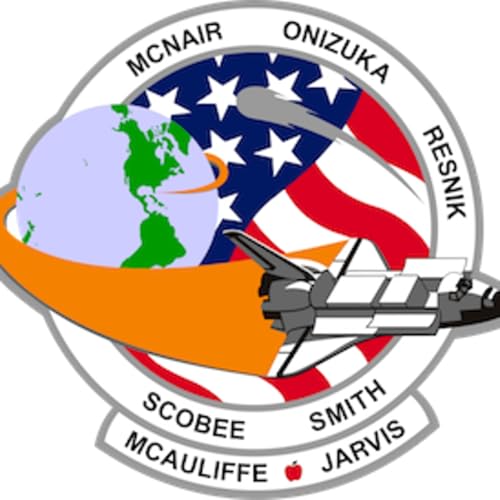
    The 40th anniversary of the STS 51-L disaster that destroyed the Space Shuttle Challenger and killed seven astronauts on 28 January 1986.

    STS-51-L would have been the 25th mission of the NASA Space Shuttle program. Tragically, the Challenger and her crew were lost in an explosion 73 seconds after liftoff from Kennedy Space Center Launch Complex 39B. After a lengthy investigation, the cause was determined to be an o-ring failure in the right solid rocket booster aggravated by extreme cold weather in Florida before the launch.

    The mission was planned as the first Teacher in Space Project flight, in addition to observing Halley's Comet for six days and performing a routine satellite deployment.

    The Challenger crew:

    • Francis R. Scobee, Commander
    • Michael J. Smith, Pilot
    • Judith A. Resnik, Mission Specialist
    • Ellison S. Onizuka, Mission Specialist
    • Ronald E. McNair, Mission Specialist
    • S. Christa McAuliffe, Teacher in Space
    • Gregory B. Jarvis, Payload Specialist
    Mehr anzeigen Weniger anzeigen
    32 Min.
  • 2025.12.17 | 76th International Astronautical Congress 2025
    Jan 10 2026

    On The Space Show for Wednesday, 17 December 2025:


    Bill Nelson, Administrator, NASA and Pam Melroy, Deputy Administrator, NASA, speaking at the National Press Club in Canberra on 23 March 2023. The then Administrators answered questions from Press Club members. (Courtesy NPC)


    Enrico Palermo, Head, Australian Space Agency, Adelaide

    Welcome speech to the 2025 International Astronautical Congress in Sydney: Growth of the Australian space industry and agreements with the U.S. (NASA) and Europe (ESA). (Courtesy IAC)


    Sean Duffy, Acting Administrator, NASA and Clay Mowry, President, International Astronautical Federation, in conversation at the 2025 International Astronautical Congress, Sydney:

    Artemis; American leadership; commercial industry; lunar village; sustainability; NASA does exploration, not routine; and nuclear power on the Moon. (Courtesy IAC)


    Turn Back Time: Pioneer 6 and its interplanetary siblings

    The launch 60 years ago yesterday of Pioneer 6, along with the history of its siblings, Pioneer 7, Pioneer 8, Pioneer 9, and Pioneer E.

    Mehr anzeigen Weniger anzeigen
    44 Min.
  • 2025.12.10 | Conversations at the 24th ASRC 2025 - Part 3: ⁠HEO - Non-Earth Imagery
    Jan 5 2026

    On The Space Show for Wednesday, 10 December 2025:


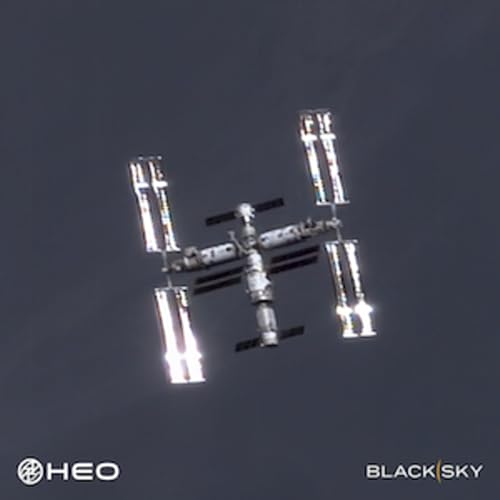
    Conversations at the 24th Australian Space Research Conference 2025 - Part 3: HEO - Non-Earth Imagery

    The Space Show in conversation with Hiranya Jayakody, Chief Technical Officer & Co-founder, HEO, Sydney.

    Hiranya talks about the formation of HEO, its aims, rented and hosted cameras for imaging satellites, reasons for photographing satellites, and the asteroid Apophis mission.


    Impulse Space and LEO Express 3

    A report on the launch of the LEO Express 3 satellite carrying HEO's Holmes Mark 2 camera, a description of Impulse Space, and the vision of founder Tom Mueller for cargo delivery missions to the Moon.


    Turn Back Time: Gemini Rendezvous - Part 2

    Sixty years ago, Gemini 7 and Gemini 6A returned to Earth after a rendezvous in orbit. The story of the parody song "Hello Wally".

    Mehr anzeigen Weniger anzeigen
    48 Min.
  • 2025.12.03 | Conversations at the 24th ASRC 2025 - Part 2: SpIRIT on Orbit
    Dec 30 2025

    On The Space Show for Wednesday, 3 December 2025:


    SpIRIT on Orbit

    Professor Michele Trenti (Principal Investigator, SpIRIT, University of Melbourne) describes the Hermes instrument on the SpIRIT satellite and its results.

    (Conversation with The Space Show recorded at the 24th Australian Space Research Conference 2025)

    [10.01.2024 SpIRIT in the Sky: The Space Show in conversation with Clint Therakam, Thermal Engineer, ⁠Melbourne Space Laboratory⁠ at the University of Melbourne, discussing the ⁠SpIRIT satellite⁠, its experiments, and Clint’s role in the project]

    EIRSAT-1: Ireland’s first satellite

    A description of a similar gamma ray instrument on Ireland's first satellite, EIRSAT-1, and a reading of the poem “All Ways Home” (Gach Sli Abhaile) that was mounted onto the satellite.

    Turn Back Time: Gemini Rendezvous

    Sixty years ago, Gemini 7 and Gemini 6A made a rendezvous in orbit following the scrubbing of the Gemini 6 mission.

    Mehr anzeigen Weniger anzeigen
    43 Min.
  • 2025.11.26 | Conversations at the 24th Australian Space Research Conference 2025
    Nov 26 2025

    On The Space Show for Wednesday, 26 November 2025:

    Reflections on the 24th Australian Space Research Conference (ASRC) 2025

    The ASRC is organised by the National Space Society of Australia, Mars Society Australia, and members of the Australian space research community.

    The ASRC is the primary annual meeting for Australian space research. It welcomes researchers, engineers, educators, business and policy, and other workers from across the university, industry and government parts of the space sector and is not limited to Australian-based research or researchers.

    Skykraft: Space-Enabled Air Traffic Management with Douglas Griffin, Chief Engineer at Skykraft.

    Skykraft is an Australian Air Traffic Satellite Management System that delivers Air Traffic Management (ATM) services from space to serve the global market for air traffic surveillance and communications, especially over remote terrestrial and oceanic regions.

    The Austronaut: Thomas Mueller

    Austronaut workshops and programs equip participants with the fundamental knowledge and skills aligned with astronaut candidate preparation, whilst exploring how these skills can improve both professional and everyday performance to support ongoing success and fulfilment.

    Next workshop — “Exploration: From the Inner World to Outer Space” with Australian polar explorer and private astronaut, Eric Phillips, Melbourne, 29 November 2025.

    Register on Humanitix: https://events.humanitix.com/austronaut-exploration-mel

    Use the discount code “Space_Show” to receive a 50% discount.

    LinkedIn: Austronaut

    Instagram: Austronaut.Space

    Chris Boshuizen: An Australian spaceflight participant aboard Blue Origin’s New Shepherd (NS-22), in conversation with Blue Origin during preparations for NS-25.

    X(Twitter): @cboshuizen

    (Audio insert courtesy of Blue Origin)

    Mehr anzeigen Weniger anzeigen
    51 Min.
  • 2025.11.19 | Blue Origin’s New Glenn (NG-2) and NASA’s ESCAPADE
    Nov 25 2025

    On The Space Show for Wednesday, 19 November 2025:

    New Glenn (NG-2) Launches ESCAPADE

    The launch of the twin ESCAPADE Blue and ESCAPADE Gold spacecraft towards Mars by the second New Glenn rocket. (Inserts courtesy GSFC, Blue Origin)


    Turn Back Time

    The bittersweet story of Venera 2, Venera 3 and Cosmos 96.


    Shenzhou update

    The Shenzhou 20 crew lands in Shenzhou 21, leaving the Shenzhou 21 crew awaiting the launch of Shenzhou 22 on November 25.


    Kessler Syndrome — Part Two:

    Tracking small debris; Kessler will start from smaller rather than larger objects; new detection techniques; policy issues; and the need for regulation. (Courtesy AGU)


    SpIRIT update:

    Melbourne University's SpIRIT satellite has completed its technology tests and is now collecting scientific gamma ray observations.


    Planet Earth — Episode 73: Sentinel B

    Mehr anzeigen Weniger anzeigen
    54 Min.