The Space Show Titelbild

The Space Show

The Space Show

Von: Andrew Rennie for the Space Association of Australia
Jetzt kostenlos hören, ohne Abo

Über diesen Titel

The Space Show is a one-hour radio program presented every Wednesday evening between 7.00 and 8.00 pm Australian Eastern Time by Andrew Rennie for 88.3 Southern FM and the Space Association of Australia Inc. The program aims to promote a public understanding of spaceflight and astronomy and to provide the public and members of the Space Association with up-to-date news, interviews and features of space-related events.Andrew Rennie for the Space Association of Australia Wissenschaft
  • 2026.02.11 | 76th International Astronautical Congress 2025 - Part 2
    Feb 17 2026

    On The Space Show for Wednesday, 11 February 2026:


    Turn Back Time: Voyager 2 at Uranus

    Ed Stone, Project Scientist, describes the findings of Voyager 2 at Uranus, 40 years ago. (Insert courtesy JPL)


    Perseverance rover status update

    The status of the Perseverance rover, and future plans for exploration and rock sample collection with Steve Reid, Jet Propulsion Laboratory, Pasadena, California (Courtesy AGU)


    IAC 2025 Opening Ceremony

    The remarks of Australian Governor-General Ms Sam Mostyn AC, and historical memories from Kerrie Dougherty, Owen Mace, John Saxon and Gordon Pike from the opening ceremony. (Inserts courtesy IAC)

    Mehr anzeigen Weniger anzeigen
    54 Min.
  • 2026.02.04 | Ensuring American Space Superiority: A New U.S. Space Policy Directive
    Feb 4 2026

    On The Space Show for Wednesday, 4 February 2026:

    The Space Show is in conversation with Angelo Di Grazia, a Committee member of the ⁠Space Association of Australia⁠.

    *******

    Space Show News

    The Artemis II launch has been delayed by at least one month due to a hydrogen leak during a wet dress rehearsal.

    *******

    Ensuring American Space Superiority: A new U.S. space policy directive

    On 18 December 2025, President Trump signed an executive order entitled Ensuring American Space Superiority – essentially the new cornerstone of U.S. National Space Policy.

    Key highlights:

    • Moon missions accelerated — Americans back on the lunar surface by 2028 (with Artemis), with the first pieces of a permanent lunar outpost established by 2030.
    • Space nuclear power push — Deploy reactors in orbit and on the Moon, including a surface reactor launch-ready by 2030.
    • National security focus — Build next-gen missile defence tech (including space-based) by 2028, develop strategies to detect/counter threats (even nuclear weapons in orbit) all the way out to cislunar space, and make the military space architecture more resilient and commercial-friendly.
    • Commercial boom — Aim to pull in an extra 50 billion dollars of private investment by 2028, ramp up launch cadence, replace the ISS with private stations by 2030, and reform acquisitions to favour fast, commercial solutions.
    • Organisational changes — Revokes the old executive order re-establishing the National Space Council (first Trump administration/Biden administration), shifts coordination to the President's science advisor, and tweaks older policies on space traffic management.


    *******

    A word from the new NASA Administrator, Jared Isaacman

    On 19 December 2025, the newly appointed NASA Administrator addressed the agency's staff about his vision for the future of NASA and answered questions from members of the workforce.

    Mehr anzeigen Weniger anzeigen
    49 Min.
  • 2026.01.28 | SPECIAL: 40th Anniversary of the STS 51-L Space Shuttle Challenger Disaster
    Jan 30 2026

    On The Space Show for Wednesday, 28 January 2026:

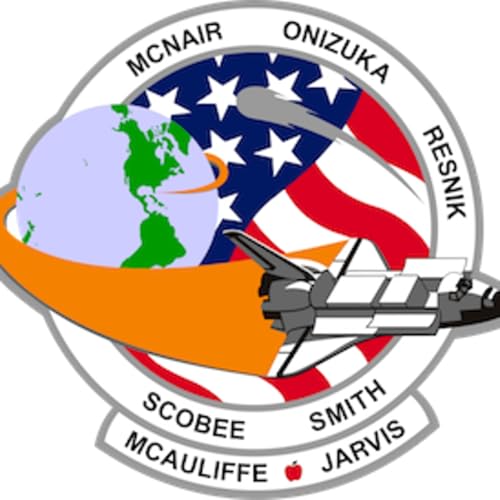
    The 40th anniversary of the STS 51-L disaster that destroyed the Space Shuttle Challenger and killed seven astronauts on 28 January 1986.

    STS-51-L would have been the 25th mission of the NASA Space Shuttle program. Tragically, the Challenger and her crew were lost in an explosion 73 seconds after liftoff from Kennedy Space Center Launch Complex 39B. After a lengthy investigation, the cause was determined to be an o-ring failure in the right solid rocket booster aggravated by extreme cold weather in Florida before the launch.

    The mission was planned as the first Teacher in Space Project flight, in addition to observing Halley's Comet for six days and performing a routine satellite deployment.

    The Challenger crew:

    • Francis R. Scobee, Commander
    • Michael J. Smith, Pilot
    • Judith A. Resnik, Mission Specialist
    • Ellison S. Onizuka, Mission Specialist
    • Ronald E. McNair, Mission Specialist
    • S. Christa McAuliffe, Teacher in Space
    • Gregory B. Jarvis, Payload Specialist
    Mehr anzeigen Weniger anzeigen
    32 Min.
Noch keine Rezensionen vorhanden