• The Misinformation Effect: How Suggestion Contaminates Memory
    Jan 20 2026

    Think your memory is a perfect video recorder? Think again! This video dives into the startling truth about eyewitness testimony and how fragile witness memory can lead to catastrophic miscarriages of justice. From the shocking cases of wrongful conviction (like Ronald Cotton's) to the subtle power of misinformation and co-witness contamination, we uncover the 7 critical ways our brains reconstruct, rather than simply recall, events. Learn about the misinformation effect, the dangers of lineups, how false memories are implanted, and the cognitive shortcuts that prioritize a 'good story' over absolute truth. We also explore solutions like the NICHD Protocol designed to safeguard memory.Key Takeaways:- The paradox of confident yet inaccurate eyewitnesses.- How leading questions can warp your recollections.- The surprising impact of co-witness discussions.- Why 'target absent' lineups are so dangerous.- The science behind implanting full false memories.- Our brain's inherent biases (schemata & narrative fallacy).- The gold standard for protecting witness accounts: the NICHD Protocol.Don't let vital evidence be contaminated! Understand the science behind memory's fragility.Read the full, in-depth article for all the details and scientific studies on SelfSensei.com!

    #WitnessMemory #EyewitnessTestimony #WrongfulConviction #ForensicPsychology #CriminalJustice #MemoryScience #FalseMemory #MisinformationEffect #RonaldCotton #DNAExoneration #JusticeSystem #CognitiveBias #LegalPsychology #TrueCrime #SelfSensei

    Discover all 7 shocking ways witness memory can fail justice. Read the full article on SelfSensei.com!

    Mehr anzeigen Weniger anzeigen
    15 Min.
  • Unlock Faces: Master 6 Universal Emotions & Microexpressions Guide
    Jan 13 2026

    Ever wondered what someone's face is *really* saying? 🤔 Dive deep into the secret language of facial expressions with our comprehensive guide! In this video, we'll explore Dr. Paul Ekman's 6 universal emotions (happiness, sadness, anger, fear, surprise, disgust) and uncover the fleeting, involuntary flashes known as microexpressions that can betray hidden feelings.Learn the science behind reading faces, understand why microexpressions are NOT foolproof lie detectors, and discover how cutting-edge AI (affective computing) is teaching machines to interpret our emotions. Whether you're looking to boost your emotional intelligence or simply understand human connection better, this guide is for you!💡 Key Takeaways:- The 6 universally recognized basic emotions.- What microexpressions are and how they reveal concealed feelings.- Why humans are not natural lie detectors.- The rise of Affective Computing and AI's role in emotion recognition.Ready to see beyond the surface? Read the full article on SelfSensei.com to gain a deeper understanding and cultivate stronger connections! #FacialExpressions #Microexpressions #EmotionalIntelligence

    #facialexpressions #microexpressions #universalemotions #readingfaces #PaulEkman #bodylanguage #emotionalintelligence #nonverbalcommunication #psychology #affectivecomputing #AIemotions #humanbehavior #liedetectionmyth #howtoreadpeople #self-improvement

    Read the full article on SelfSensei.com for a complete guide to understanding universal emotions and microexpressions!

    Mehr anzeigen Weniger anzeigen
    41 Min.
  • Learned Helplessness Explained: How to Overcome It & Reclaim Your Power
    Jan 5 2026

    Ever felt stuck, like your efforts don't matter? You might be experiencing 'learned helplessness.' This video breaks down what learned helplessness is, based on Martin Seligman's groundbreaking experiments. We'll explore its three key deficits (motivational, cognitive, emotional) and how it manifests in everyday life, from academic struggles to relationships.But here's the good news: learned helplessness is LEARNED, which means it can be UNLEARNED! Discover powerful strategies like 'learned optimism,' developing 'learned controllability,' focusing on effort over ability, and the role of professional support like CBT. Learn how small wins can build momentum and help you dismantle the psychological cage of powerlessness.Ready to reclaim your agency and transform your mindset? Watch now and empower yourself to break free! Read the full article for more insights: SelfSensei.com#Learned Helplessness, #Psychology, #Martin Seligman, #Self Improvement, #Personal Growth, #Mental Health, #Overcome Helplessness, #Cognitive Behavioral Therapy, #CBT, #Learned Optimism, #SelfSensei, #Resilience, #Motivation, #Mindset Shift, #Reclaim Your Power

    Ready to reclaim your power? Read the full article on SelfSensei.com to dive deeper into overcoming learned helplessness and transforming your mindset!

    Mehr anzeigen Weniger anzeigen
    32 Min.
  • Jungian Psychology Explained: Persona, Shadow, and the 9 Career Archetypes
    Dec 31 2025

    Have you ever felt like you’re operating without a script? One day you’re the ambitious professional, and the next, you’re the self-sabotaging procrastinator. In this episode, we dive deep into the "Algorithm for Your Life"—the universal human patterns known as Archetypes. We move from the micro-level of depth psychology to the macro-level of global branding to help you find a unifying system for your experiences.In this episode, we cover:

    • The Core of Jungian Psychology: Why Carl Jung rejected the "blank slate" theory and how we are born with innate predispositions.

    • Persona, Shadow, and Self: Understanding the mask we wear, the parts we repress, and the journey toward becoming a "whole" human being.

    • The 9 Career Archetypes: Are you a Steady Climber, a Pivot Master, or a Mosaic Maker? Discover which blueprint governs your professional trajectory.

    • Archetypes in Branding: How companies like Nike (The Hero) and Google (The Sage) use ancient patterns to trigger an immediate emotional response in consumers.

    • The Digital "Networked Self": How we manage multiple personas across LinkedIn, Instagram, and even memes.

    • Shadow Work: A practical look at the Victim and Saboteur archetypes and how to turn self-sabotage into a tool for growth.

    00:00 – The Information Overload of Identity04:15 – Carl Jung and the Collective Unconscious10:30 – Persona vs. Shadow: The First Test of Courage15:45 – The 9 Career Archetypes (Finding your path)22:10 – Brand Archetypes: Why you buy what you buy28:50 – Memes as Modern Digital Folklore33:15 – The Saboteur & The Victim: Surviving your own mind38:40 – The Hero’s Journey & The Alchemist

    What career archetype do you identify with most? Are you a Mosaic Maker balancing different industries, or a Life-First Designer? Let us know in the comments!

    Enjoyed this deep dive? Subscribe for more insights into psychology, technology, and the patterns that shape our world.

    Actionable articles at SelfSensei.com - Unlocking the Code of the Mind: A Beginner’s Guide to Carl Jung’s Archetypes
    #Psychology #Archetypes #CarlJung #CareerAdvice #Branding #PersonalGrowth #ShadowWork

    Mehr anzeigen Weniger anzeigen
    39 Min.
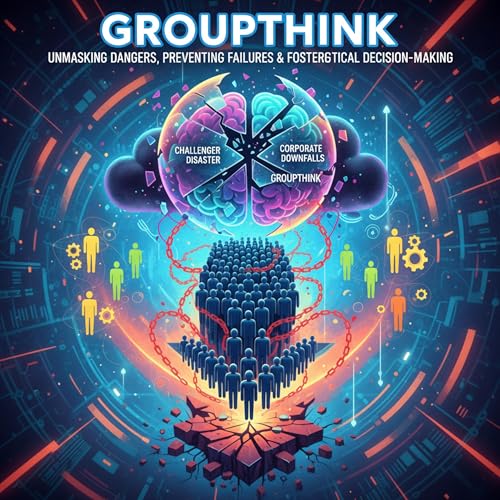
  • AI Groupthink & Governance: The New Challenges of Hybrid Intelligence
    Dec 25 2025

    As we move into 2025, the challenge isn't just building powerful AI—it's integrating it without falling into the "AI Groupthink" trap. This episode dives deep into the convergence of ancient human psychology and cutting-edge artificial intelligence to explore why even the best hybrid teams fail.

    In this deep dive, we explore:

    The Human Foundation: Why our oldest flaws, like groupthink and overconfidence, are being amplified by new machine intelligence.

    Hybrid Intelligence (HI): A look at the iterative workflow between AI-generated insights and human expert oversight.

    The New Bottlenecks: Why the scarce resource is no longer "ideation," but curation, prioritization, and evaluation.

    Coherence Collapse: What happens when a hybrid team loses strategic unity despite high-quality individual outputs.

    The 2025 Regulatory Landscape: Navigating the EU AI Act's August 2025 deadline and the U.S. executive-driven governance model.


    Strategic Tools Highlighted: We discuss professional governance platforms like DataRobot for real-time risk intervention, Holistic AI for automated bias audits, and IBM Watson OpenScale to make invisible risks manageable.


    Stop treating AI as a passive tool and start managing it as a creative partner. The smartest organizations in 2025 won't just have the best models—they’ll have the best human-AI coordination.

    Check out Self Sensei for our in depth narrative "The Groupthink Trap: When Smart Groups Make Disastrous Decisions"

    Timestamps:

    00:00 - Introduction: Humans, AI, and the Strategic Shortcut

    01:15 - The Fragility of Collective Intelligence

    02:45 - Groupthink & Overconfidence: Case Studies in National Hubris

    04:00 - The Incentive Paradox: Why Individual Rewards Lead to Herding

    05:30 - Defining Hybrid Intelligence (HI)

    07:15 - AI Groupthink & Information Convergence

    09:00 - Coherence Collapse: The Hidden Failure Mode

    11:20 - Professional Identity: Vibe Coding & The Shift to Curation

    13:45 - 2025 AI Governance & Global Regulation

    15:30 - The Toolset: DataRobot, Holistic AI, and More


    #AIGovernance #HybridIntelligence #AIEthics #Groupthink #AIStrategy #DecisionMaking #TechTrends2025 #EUAIAct #HumanAI #DataScienceGovernance

    Mehr anzeigen Weniger anzeigen
    14 Min.
  • René Girard’s Mimetic Theory: Desire, Rivalry & The Scapegoat
    Dec 16 2025

    Check out the article at SelfSensei.com - Are Your Desires Truly Yours? A Guide to Finding Fulfillment

    A comprehensive breakdown of René Girard's Mimetic Theory and its profound implications for human psychology and modern culture. We explore the "triangular" nature of desire—why we want what others want—and distinguish between healthy imitation and destructive mimesis. The discussion covers the "scapegoat mechanism," explaining how archaic societies used ritual violence to maintain order and how the Judeo-Christian tradition dismantled this by revealing the victim's innocence.

    Finally, we apply these concepts to the digital age, analyzing how social media algorithms accelerate "internal mediation" and envy by collapsing social distances. We conclude with actionable insights on distinguishing between "thin" (mimetic) and "thick" (authentic) desires to regain intellectual sovereignty.

    #RenéGirard #MimeticTheory #Philosophy #Psychology #SocialMedia #Scapegoat #HumanNature #Rivalry #Culture #SelfAwareness #Sociology #Desire #MentalHealth #DigitalAge #PhilosophyTube

    Mehr anzeigen Weniger anzeigen
    43 Min.
  • The Total Brain Workout: How Music Rewires Your Mind
    Dec 10 2025

    Dive into the fascinating neuroscience of why music is considered the ultimate "total brain workout." In this episode, we explore how rhythm and melody do far more than just entertain—they physically restructure your brain.

    We'll uncover the science behind:

    • Neuroplasticity & Aging: How musical training can fight cognitive decline and build a more resilient brain, even if you start later in life.

    • The "Time Machine" Effect: Why music triggers "Music-Evoked Autobiographical Memories" (MEAMs) and how the medial prefrontal cortex acts as a hub linking songs to your life story.

    • Performance & Tempo: The surprising truth about how slow-tempo music can actually hurt task performance by lowering arousal, while faster tempos might not always be better.

    • Clinical Power: How techniques like Rhythmic Auditory Stimulation (RAS) help stroke and Parkinson’s patients regain movement by bypassing damaged neural circuits.

    • Earworms & Executive Function: The link between those annoying songs stuck in your head and ADHD-related executive function deficits.

    Whether you're a musician or just a listener, discover how to use sound as a tool for focus, memory, and emotional regulation.

    Read the full deep dive on our blog: Your Brain on Music: A Journey into the Science of Sound and Emotion

    #Neuroscience #BrainHealth #MusicTherapy #CognitiveScience #MentalFitness #SelfDevelopment #Focus #Memory #Neuroplasticity #SelfSensei

    Mehr anzeigen Weniger anzeigen
    36 Min.
  • Science of Learning: Master Deep Work & Active Recall
    Dec 5 2025

    Check out the article Study Smarter, Not Harder: An Evidence-Based Guide to Effective Learning at SelfSensei.com

    Stop passive consumption and start mastering your studies. This deep dive explores the neuroscience behind effective learning, challenging the "illusion of competence" that comes from re-reading and highlighting. We break down the concept of "Desirable Difficulty" and provide evidence-based strategies to overcome information overload and decision fatigue.

    Discover how to utilize Retrieval Practice, Spaced Repetition, and the Feynman Technique to build durable knowledge. We also discuss Cal Newport’s "Deep Work" philosophy, explaining how to toggle your brain's Task Positive Network (TPN) for maximum focus. Finally, learn why sleep is non-negotiable for memory consolidation and how to manage technostress in a distracted world.

    #DeepWork #LearningScience #StudyTips #ActiveRecall #Productivity #Neuroscience #FeynmanTechnique #SelfImprovement #Focus #CognitivePsychology #MemoryHacks #Education #BrainHealth #StudentSuccess #DesirableDifficulty

    00:00 – Introduction to Information Overload The hosts introduce the concept of "drinking from a firehose" of information and the resulting cognitive overwhelm that defines the modern age.

    01:05 – The Four Levels of Overload A breakdown of the four compounding levels of overwhelm: Sensory Overload, Cognitive Overload, Emotional Overload, and Decision Fatigue.

    02:15 – The Illusion of Competence Discussion on why passive consumption (highlighting, re-reading) feels productive but fails to create durable knowledge, compared to the concept of "Desirable Difficulty".

    03:40 – The Hierarchy of Understanding Using a "tiered cake" analogy to explain Bloom’s Taxonomy, moving from basic understanding to creation.

    04:50 – Strategy 1: Retrieval Practice Explanation of the "Testing Effect" and the "Brain Dump" method to strengthen neural pathways through active recall rather than passive review.

    05:45 – Strategy 2: Spaced Practice Why distributing study sessions over time (spacing) allows for beneficial forgetting, which strengthens memory retrieval upon review.

    06:30 – Strategy 3: The Feynman Technique The importance of simplifying complex concepts into simple terms (explaining it to a 5-year-old) to identify gaps in knowledge.

    07:15 – Deep Work and Neural Networks Introduction of Cal Newport’s "Deep Work" and the neuroscience behind the Task Positive Network (TPN) versus the Default Mode Network (DMN).

    08:20 – Managing Technostress Practical advice on setting boundaries, such as digital detoxes and "quiet hours" to protect the brain's executive functions.

    09:10 – The Critical Role of Sleep How sleep facilitates the consolidation phase of learning, flushing out metabolic waste (beta-amyloid) and moving data from the hippocampus to the neocortex.

    10:15 – Conclusion: Metacognition Final thoughts on becoming an intentional learner by treating study sessions as measurable experiments rather than passive chores.

    Mehr anzeigen Weniger anzeigen
    13 Min.