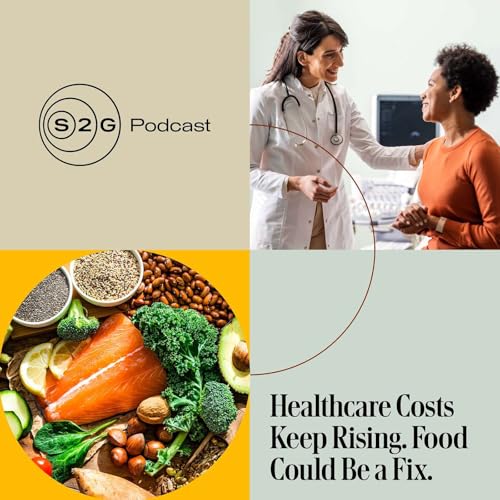
• Healthcare Costs Keep Rising. Food Could Be a Fix.
    Jan 29 2026

    If diet is a major driver of chronic disease, and chronic disease is driving healthcare costs, why are our food and healthcare systems still so separate? And what would change if they weren’t? In this episode, S2G’s Sanjeev Krishnan and Dan Ripma use our new Food as Health white paper as a jumping-off point to unpack what “food as health” really means and why a system that keeps getting more expensive without making people healthier is reaching its limits. They explore the tension between medical ethics and financial reality, the disconnect between hunger and nutrition, and why food has to be part of any serious conversation about cost and prevention. Then we zoom out to what this means for investors and how healthcare economics reshape the opportunity in food. Ultimately, this is a conversation about how food could move from being part of the problem to becoming one of the most powerful tools we have to change the economics and the outcomes of our healthcare system.

    Chapters:

    3:06: Nutrition's Identity Crisis

    5:58: The Hippocratic oath vs. The Bond Market

    8:03: Food as Health as Strategic Infrastructure

    10:48: Economic Implications of Healthcare Costs

    12:41: Challenges in Policy and Nutrition

    16:24: S2G’s Food as Health Strategy

    18:58: Clinical and Economic Evidence

    29:04: Investor Perspective on Food as Health

    This content is for informational purposes only, should not be taken as legal, business, tax or investment advice, or be used to evaluate any investment or security, and is not directed at any investor or potential investor in any investment vehicle sponsored by S2G. Investing involves risk, including the risk of loss. Specific companies mentioned in this podcast are for educational purposes and should not be construed as an endorsement of any kind. S2G holds positions in the companies referenced, but this podcast is for information purposes only and is not intended to promote any such company. All views of the guests on this podcast are solely their opinions and do not reflect the opinions of S2G. Any past performance discussed is not indicative of future results. The views expressed herein are opinions based on certain assumptions and subject to change.

    For more important information, please see s2ginvestments.com/disclosures.

    Mehr anzeigen Weniger anzeigen
    40 Min.
  • S2G's Managing Partners Predict a Year of Complexity and Opportunity
    Jan 15 2026

    What if the biggest risk right now isn’t getting the answers wrong, but asking the wrong questions? In our Season 3 kickoff, all three S2G Managing Partners come together to unpack a moment defined by volatility, AI acceleration, geopolitics, and a rising cost of capital. They explore why constraints are no longer a weakness but a competitive advantage, and how affordability, resilience, and execution matter more than hype. From private markets and global debt to AI, demographics, and the “Age of Adaptation,” Sanjeev Krishnan, Chuck Templeton, and Aaron Rudberg help frame the macro and micro playbook for what it will take to build businesses in 2026. It’s a sharp, honest look at where to find the opportunity when the rules keep changing.


    Key Takeaways:

    1. Constraints create winners. The MPs discuss how tighter capital, higher rates, and geopolitical friction favor disciplined builders and sober investors.
    2. AI is shifting from experiment to ROI. The conversation reveals how 2026 is about using AI to drive real productivity, margin improvement, and “cheaper, faster, better” outcomes.
    3. A human edge still matters. While AI is powerful, Chuck argues it’s human judgment, experience, and the ability to guide it that ultimately turn technology into a real advantage.
    4. Resilience beats efficiency in a volatile world. According to the MPs, the future belongs to companies with durable moats, flexible supply chains, and business models built to survive uncertainty.
    5. The right questions matter more than ever. According to Sanjeev, old assumptions about capital, risk, and growth no longer hold. Success now starts with rethinking first principles.

    This content is for informational purposes only, should not be taken as legal, business, tax or investment advice, or be used to evaluate any investment or security, and is not directed at any investor or potential investor in any investment vehicle sponsored by S2G. Investing involves risk, including the risk of loss. Specific companies mentioned in this podcast are for educational purposes and should not be construed as an endorsement of any kind. S2G holds positions in the companies referenced, but this podcast is for information purposes only and is not intended to promote any such company. All views of the guests on this podcast are solely their opinions and do not reflect the opinions of S2G. Any past performance discussed is not indicative of future results. The views expressed herein are opinions based on certain assumptions and subject to change.

    For more important information, please see s2ginvestments.com/disclosures.

    Mehr anzeigen Weniger anzeigen
    39 Min.
  • Introducing Season 3
    Jan 8 2026

    We're back! Season 3 kicks off January 15th.

    This content is for informational purposes only, should not be taken as legal, business, tax or investment advice, or be used to evaluate any investment or security, and is not directed at any investor or potential investor in any investment vehicle sponsored by S2G. Investing involves risk, including the risk of loss. Specific companies mentioned in this podcast are for educational purposes and should not be construed as an endorsement of any kind. S2G holds positions in the companies referenced, but this podcast is for information purposes only and is not intended to promote any such company. All views of the guests on this podcast are solely their opinions and do not reflect the opinions of S2G. Any past performance discussed is not indicative of future results. The views expressed herein are opinions based on certain assumptions and subject to change.

    For more important information, please see s2ginvestments.com/disclosures.
    Mehr anzeigen Weniger anzeigen
    2 Min.
  • “Everybody in the Pool’: Cleaning Up the Textiles Industry With Matter Filters
    Dec 18 2025

    In this special episode-share, we team up with Everybody in the Pool to spotlight the urgent and fast-growing challenge of microplastic pollution and the breakthrough filtration technology designed to tackle it at scale. Longtime tech and business journalist Molly Wood speaks with Adam Root, Matter’s founder and CEO, about how microfibers from everyday laundry to industrial textile production have become one of the largest sources of ocean microplastics, and why the textile industry is facing mounting pressure from regulators, retailers, and consumers to address the issue. Matter’s regenerative filtration system offers a practical, modular solution that can be deployed across home appliances and industrial facilities, delivering both measurable environmental benefits and meaningful cost savings. It’s a forward-looking conversation about how infrastructure-level innovation can reshape a legacy industry and build cleaner, more resilient water systems worldwide.

    Links:

    Matter Industries Website: https://matter.industries/

    Adam Root LinkedIn

    All episodes: https://www.everybodyinthepool.com/

    Subscribe to the Everybody in the Pool newsletter: https://www.mollywood.co/

    Become a member and get an ad-free version of the podcast: https://everybodyinthepool.supercast.com/

    This content is for informational purposes only, should not be taken as legal, business, tax or investment advice, or be used to evaluate any investment or security, and is not directed at any investor or potential investor in any investment vehicle sponsored by S2G. Investing involves risk, including the risk of loss. Specific companies mentioned in this podcast are for educational purposes and should not be construed as an endorsement of any kind. S2G holds positions in the companies referenced, but this podcast is for information purposes only and is not intended to promote any such company. All views of the guests on this podcast are solely their opinions and do not reflect the opinions of S2G. Any past performance discussed is not indicative of future results. The views expressed herein are opinions based on certain assumptions and subject to change.

    For more important information, please see s2ginvestments.com/disclosures.

    Mehr anzeigen Weniger anzeigen
    39 Min.
  • How AI for Agriculture Can Outsmart Volatility
    Dec 4 2025

    Food prices keep climbing. Farmers are facing shrinking profit margins. Can AI really fix both, or is it just another Silicon Valley hype cycle? With all the talk about an “AI bubble,” we bring you a conversation about how AI is already shaping farm viability today and what it could mean for your grocery bill tomorrow.

    In this episode of the S2G Podcast, Chuck Templeton sits down with Shail Khiyara, CEO of decision-intelligence company SWARM, and Adam Greenberg, CEO of greenhouse OS provider IUNU, to unpack how AI is being used today across fields, greenhouses, and supply chains. They dig into how digital twins, sensors, and machine vision can turn volatility into an advantage, cut waste, and boost margins for growers while helping keep food more affordable for consumers.

    They discuss what it really takes to drive AI adoption in a sector built on thin margins and healthy skepticism, and how partnerships and long-term purchase agreements could reshape the economics of fresh, local food. Whether you’re an AI superfan or a skeptic, an ag insider, or just someone worried about your grocery bill, this conversation offers a grounded look at what a smarter, continuously learning food system might actually look like in practice.


    Chapters:

    03:55 SWARM and IUNU’s AI Solutions

    08:59 Challenges and Mindset Shifts in AI Adoption

    11:50 AI's Impact on Decision Making in Agriculture

    14:10 Accelerating AI Adoption in Agriculture

    25:29 The Cognitive Grid: AI's Future in Agriculture

    27:31 Economic Impacts of AI on Farmers

    32:08 Successful Partnerships and Future Outlook

    36:38 Advice for Farmers on AI Adoption


    This content is for informational purposes only, should not be taken as legal, business, tax or investment advice, or be used to evaluate any investment or security, and is not directed at any investor or potential investor in any investment vehicle sponsored by S2G. Investing involves risk, including the risk of loss. Specific companies mentioned in this podcast are for educational purposes and should not be construed as an endorsement of any kind. S2G holds positions in the companies referenced, but this podcast is for information purposes only and is not intended to promote any such company. All views of the guests on this podcast are solely their opinions and do not reflect the opinions of S2G. Any past performance discussed is not indicative of future results. The views expressed herein are opinions based on certain assumptions and subject to change.

    For more important information, please see s2ginvestments.com/disclosures.

    Mehr anzeigen Weniger anzeigen
    40 Min.
  • Food Security Is National Security: Agriculture Policy for a New Era
    Nov 20 2025

    The Farm Bill, our country’s cornerstone for farm and nutrition policy, has long been a rare beacon of bipartisan success. But the recent deal to reopen the government quietly tacked on yet another extension of the 2018 Farm Bill that has had a series of extensions since 2023. So the question is: are we watching the end of big bipartisan legislation? Or is it time to rethink the playbook entirely, bringing in new stakeholders and connecting more of the issues that shape the system to build a broader coalition?

    Consider the landscape we’re navigating. This year, USDA projects an agricultural trade deficit approaching $50 billion. Meanwhile, defense, Medicare, Social Security, Medicaid, and interest on the debt account for roughly 70% of federal spending. At the same time, 70% of Americans are overweight or obese, and the One Big Beautiful Bill proposes cutting $186 billion from SNAP over the next decade. These are enormous, interconnected challenges, and maybe the only way forward is to bring them to the same negotiating table and design solutions big enough to match the moment.

    In this episode, Sanjeev Krishnan sits down with Randy Russell, President of The Russell Group, a bipartisan government relations firm focused exclusively on food and agriculture public policy, and Grant Leslie, S2G’s new Operating Partner for Government and Policy. Together, they break down how linking agriculture, nutrition, healthcare, and fiscal realities could unlock better outcomes for American producers, communities, and national security. But doing that requires a systems mindset. It means widening the tent. It means seeing farm policy as far bigger than agriculture alone.

    And ultimately, the people who will succeed here will be the ones bold enough to think differently.


    Chapters:

    04:59 Randy Russell's Career Journey

    06:43 The Rural-Urban Divide in Politics

    09:52 State of American Agriculture

    13:46 Challenges in U.S. Agricultural Policy

    16:28 The Future of the Farm Bill

    19:55 New Stakeholders in Food and Agriculture

    22:55 Linking Agriculture, Healthcare, and National Security

    31:49 The Role of Technology and Innovation

    41:41 Food Security as National Security


    This content is for informational purposes only, should not be taken as legal, business, tax or investment advice, or be used to evaluate any investment or security, and is not directed at any investor or potential investor in any investment vehicle sponsored by S2G. Investing involves risk, including the risk of loss. Specific companies mentioned in this podcast are for educational purposes and should not be construed as an endorsement of any kind. S2G holds positions in the companies referenced, but this podcast is for information purposes only and is not intended to promote any such company. All views of the guests on this podcast are solely their opinions and do not reflect the opinions of S2G. Any past performance discussed is not indicative of future results. The views expressed herein are opinions based on certain assumptions and subject to change.

    For more important information, please see s2ginvestments.com/disclosures.

    Mehr anzeigen Weniger anzeigen
    49 Min.
  • Energy Affordability and Fit-for-Purpose Capital with Jigar Shah
    Nov 13 2025

    When voters went to the polls last week, one issue rose above the rest: the cost of keeping the lights on. Candidates promising lower energy bills swept key races, signaling that affordability has become a defining political and economic concern. But throughout his career spanning entrepreneurship, policy, and finance, Jigar Shah has consistently argued that affordability and efficiency must be at the heart of the energy transition. While challenges remain, we live in extraordinary times when proven, scalable solutions like solar, batteries, heat pumps, and home weatherization can dramatically improve efficiency and lower costs. In this episode, Jigar and Sanjeev discuss the discipline and creativity required to build fit-for-purpose capital markets and business models that can unlock these technologies, making clean energy more affordable and accessible for all.


    Chapters:

    03:26 Jigar Shah's Career Journey

    04:55 Jigar's Approach to Problem-Solving

    06:51 The Role of Communication in Energy Investing

    12:38 Jigar's Current Endeavors and Multiplier

    15:15 Challenges and Opportunities in Energy Affordability

    19:58 The Cost-Benefit Paradox in Energy Efficiency

    22:48 Reshaping the Grid Incentive Structure

    29:58 Fit for Purpose Capital Markets

    34:04 Disciplined Business Models

    37:55 The Future of Energy Efficiency


    This content is for informational purposes only, should not be taken as legal, business, tax or investment advice, or be used to evaluate any investment or security, and is not directed at any investor or potential investor in any investment vehicle sponsored by S2G. Investing involves risk, including the risk of loss. Specific companies mentioned in this podcast are for educational purposes and should not be construed as an endorsement of any kind. S2G holds positions in the companies referenced, but this podcast is for information purposes only and is not intended to promote any such company. All views of the guests on this podcast are solely their opinions and do not reflect the opinions of S2G. Any past performance discussed is not indicative of future results. The views expressed herein are opinions based on certain assumptions and subject to change.

    For more important information, please see s2ginvestments.com/disclosures.

    Mehr anzeigen Weniger anzeigen
    41 Min.
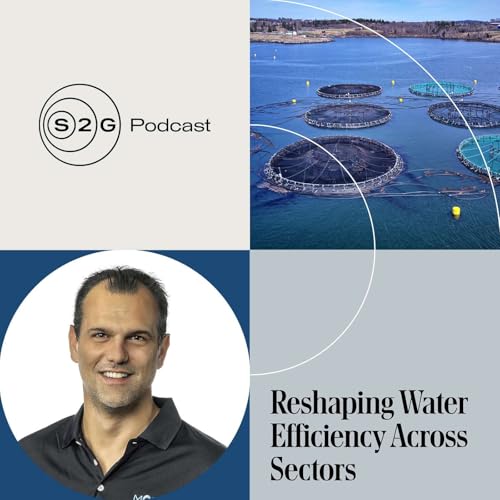
  • Reshaping Water Efficiency Across Sectors with Moleaer
    Oct 30 2025

    What if the future of water efficiency depended on something you can’t even see? In this “The Pitch” style episode, Chuck Templeton sits down with Nick Dyner, CEO of Moleaer, to unpack how nanobubbles, gas particles a thousand times smaller than a human hair, are quietly changing the way industries use and think about water. From fish farms to greenhouses and even chemical-free spas, Moleaer’s technology is improving water efficiency, reducing inputs, saving costs, and cutting emissions across sectors. Nick shares how Moleaer built a company around a technology that had no clear market map, the importance of focus amid abundant potential, and the lessons learned turning a scientific breakthrough into a scalable business. The conversation offers a fascinating glimpse into how disciplined innovation can unlock both profit and planetary benefits, one tiny bubble at a time.


    Key takeaways:


    1. Let the Market Lead: Nick explains that rather than predicting where to play, Moleaer followed customer pull, identifying where nanobubbles solved urgent, scalable problems.
    2. The Importance of Focus: Moleaer succeeded by resisting the temptation to chase every possible application, instead focusing on four key markets: wastewater, irrigation, aquaculture, and surface water.
    3. The Power of Partnership: Nick shares that strategic collaborations with global brands like Jacuzzi have allowed Moleaer to extend its reach without diluting focus, showing how partnership can accelerate adoption more efficiently than expansion.
    4. Adaptive Business Models: According to Nick, Moleaer tailors its go-to-market approach to each sector, which allows the company to meet customers where they are, align incentives around measurable outcomes, and scale efficiently across very different industries.
    5. Multi-layered Value Creation: Moleaer’s technology delivers a value proposition that resonates across stakeholders, helping customers cut costs and improve performance while simultaneously reducing energy use and CO₂ emissions, which strengthens customer loyalty and attracts mission-driven talent.

    This content is for informational purposes only, should not be taken as legal, business, tax or investment advice, or be used to evaluate any investment or security, and is not directed at any investor or potential investor in any investment vehicle sponsored by S2G. Investing involves risk, including the risk of loss. Specific companies mentioned in this podcast are for educational purposes and should not be construed as an endorsement of any kind. S2G holds positions in the companies referenced, but this podcast is for information purposes only and is not intended to promote any such company. All views of the guests on this podcast are solely their opinions and do not reflect the opinions of S2G. Any past performance discussed is not indicative of future results. The views expressed herein are opinions based on certain assumptions and subject to change.

    For more important information, please see s2ginvestments.com/disclosures.

    Mehr anzeigen Weniger anzeigen
    36 Min.