• AI Can't Copy This: Why Every Creator Needs an Origin Story in 2026 | Philip mckernan | 150
    Oct 15 2026

    The story you leave out of your content could be the reason someone connects with your work.

    I sat down with Philip McKernan, author of One Last Talk, who has helped Olympians and World Cup athletes and consulted with the US Army and the Pentagon. We get into why your origin story matters, how to recognise the gifts you undervalue, and why the fear that drives success can eventually become exhausting. Philip walks me through his framework connecting story, gift, and impact, then coaches me live through my discomfort with promoting my upcoming book. A simple drawing exercise leads to a challenge I wasn’t expecting about who I’m letting down by holding back.

    If you’re building a personal brand but feel uncomfortable sharing your story or promoting your work, I think you’ll get a lot out of this conversation.

    Timestamps:
    00:00 Introduction
    02:00 The business pitch that needed a personal story
    07:00 Philip’s own origin story
    11:00 Helping an athlete reconnect with his purpose
    17:00 Finding the gift you overlook
    21:00 When fear-driven ambition becomes exhausting
    24:00 Why I’m not afraid of my business disappearing
    34:00 Buying a castle when business was down 95%
    38:00 Building a better relationship with yourself
    40:00 Why asking for help feels uncomfortable
    43:00 Philip coaches me through a drawing exercise
    47:00 The challenge I wasn’t expecting
    54:00 Why being visible can feel frightening
    57:00 An exercise to uncover your story
    1:03:00 Understanding what your happiest days reveal
    1:09:00 Learning from your darkest days
    1:16:00 How sharing your story creates connection
    1:18:00 Final thoughts and where to find Philip

    If you enjoyed this episode, please like and subscribe, share it with your friends, and leave a review. I read every single one.

    Learn more about the podcast: https://nathanbarry.com/show

    Follow Nathan:
    Instagram: https://www.instagram.com/nathanbarry
    LinkedIn: https://www.linkedin.com/in/nathanbarry
    X: https://twitter.com/nathanbarry
    YouTube: https://www.youtube.com/@thenathanbarryshow
    Website: https://nathanbarry.com
    Kit: https://kit.com

    Follow Philip:
    Instagram: https://www.instagram.com/philip_mckernan/
    LinkedIn: https://www.linkedin.com/in/philip-mckernan
    YouTube: https://www.youtube.com/@philipmckernan
    Website: https://philipmckernan.com

    Featured in this episode:
    Kit: https://kit.com
    One Last Talk: https://onelasttalk.com
    The Ladders of Wealth: https://www.simonandschuster.com/books/The-Ladders-of-Wealth/Nathan-Barry/9798893312393

    Highlights:
    02:00 The business pitch that needed a personal story
    21:00 When fear-driven ambition becomes exhausting
    43:00 Philip coaches me live
    47:00 Why we undervalue our own work
    57:00 An exercise to uncover your story

    Mehr anzeigen Weniger anzeigen
    1 Std. und 19 Min.
  • The #1 Way to Grow Your Audience in 2026 | Domonkos Eross | 149
    Oct 8 2026

    Most creators try to grow by posting more. More content, more platforms, more hours. But the biggest creators and thought leaders grow in a very different way, and most of it happens behind the scenes.

    I sat down with Domonkos "Doma" Eross, founder of Flowin, a creative agency for thought leaders, to talk about what actually drives audience growth right now. We get into his seven strategic steps to succeed as a thought leader, why creator partnerships are the number one source of growth in the creator economy, and Doma’s outreach technique for landing dream clients.

    If you've ever wanted to know the systems the biggest creators use to consistently grow their audiences, I think you'll get a lot out of this conversation.

    Timestamps:
    00:00 Introduction
    01:33 How Doma started working with thought leaders
    03:03 Why direct outreach works
    03:33 The Manchester United cold email
    05:05 Why a well-packaged pitch gets attention
    06:49 Using credibility to get past the first filter
    08:06 How office hours turned into clients
    09:13 Leaving energy vs lingering energy
    10:13 Why curiosity beats a target list
    11:59 How your network compounds
    12:54 The seven steps to succeed as a thought leader
    13:18 Step 1: Develop exceptional knowledge first
    14:17 Step 2: Define your mission and theory of change
    16:19 Step 3: Build an ecosystem strategy
    18:21 Matching your ecosystem to how you make money
    19:51 Step 4: Turn your ideas into the right content
    21:18 Protecting clients from the wrong projects
    22:38 Step 5: Build the right team
    23:12 Why team size and influence don't correlate
    24:55 How James Clear decides what to work on
    26:32 Building a team around impact
    28:26 The most surprising role on a thought leader's team
    30:53 What thought leaders know about saying no
    32:17 Focus on your craft and outsource the rest
    33:22 Step 6: Creator partnerships, the #1 source of growth
    35:14 Why Creator Network works better than list swaps
    37:19 How partnerships work at a smaller scale
    39:00 How much growth Creator Network drives
    40:27 Why partnerships are a win-win
    41:22 Set up partnerships before your podcast episode airs
    44:27 Why the creator economy isn't competitive
    46:32 What Doma has learned from his clients
    47:57 Step 7: Build and perfect your organic channels
    48:13 Why your newsletter is the only channel you own
    49:56 Building a newsletter that sounds like you
    53:05 The three phases of a book launch
    54:15 Teasing your book in your newsletter
    55:26 Why you need to book podcasts months ahead
    56:08 The concentrated strike approach
    56:34 How to pitch the biggest podcasts
    58:48 Which podcasts actually sell books
    59:50 The people behind podcast bookings
    1:01:36 Using a live event to launch a book
    1:03:37 How Doma runs Flowin
    1:05:08 Why Doma doesn't want to scale
    1:06:40 Final thoughts

    If you enjoyed this episode, please like and subscribe, share it with your friends, and leave a review. I read every single one.

    Learn more about the podcast: https://nathanbarry.com/show

    Follow Nathan:
    Instagram: https://www.instagram.com/nathanbarry
    LinkedIn: https://www.linkedin.com/in/nathanbarry
    X: https://twitter.com/nathanbarry
    YouTube: https://www.youtube.com/@thenathanbarryshow
    Website: https://nathanbarry.com
    Kit: https://kit.com

    Follow Doma:
    LinkedIn: https://www.linkedin.com/in/domonkoseross
    Website: https://flowin.consulting

    Featured in this episode:
    Kit: https://www.kit.com
    Flowin: https://flowin.consulting

    Highlights:
    03:33 The Manchester United cold email
    13:18 Why thought leadership is the result, not the goal
    24:55 How James Clear decides what to work on
    33:22 The #1 source of growth in the creator economy
    53:05 The three phases of a book launch

    Mehr anzeigen Weniger anzeigen
    1 Std. und 8 Min.
  • How to Build an Unforgettable Personal Brand | Chris Do | 148
    Oct 1 2026

    Personal brand has become one of the biggest buzzwords in the creator world. Creators everywhere are launching offers, building funnels, and posting consistently, yet very few are creating something people actually remember.

    I sat down with Chris Do, Emmy award-winning designer and founder of The Futur, to talk about what it really takes to build a personal brand that stands out. We get into why most creators end up serviceable but forgettable, why branding comes down to differentiation, and the three-part framework behind brands people obsess over. Chris also shares why the real work of personal branding happens internally, how to find your voice phrase, and the trust triangle that decides who audiences believe. Partway through, he turns the interview around and starts coaching me, and we go much deeper than I expected.

    If you're building a personal brand and wondering why it isn't resonating yet, I think you'll get a lot out of this conversation.

    Timestamps:
    00:00 Introduction
    01:39 What it means to un-bland yourself
    02:48 Why branding is all about differentiation
    03:04 Why Apple has a brand and Dell doesn't
    04:31 How status and identity drive what we buy
    07:29 How Target built a brand
    10:42 How Kit positions its brand
    11:44 Moving from features to meaning
    14:11 Why most personal brands are really marketing funnels
    16:11 Why personal brand work is internal
    16:26 How we lose who we really are
    19:04 Chris starts asking the questions
    20:24 How getting sick at 24 changed Nathan's identity
    21:51 Why we tie our identity to what we do
    23:03 Who are you outside of your work?
    23:36 Why you are the gift
    25:51 How Chris answers "who are you?"
    26:36 The difference between design and art
    28:45 Why being true to yourself comes first
    29:45 Nathan's mission
    32:24 Why Chris moved from commercial work to content
    33:36 Why your brand needs to stand against something
    35:44 Finding your keyword and your nemesis
    37:03 Why the best heroes have great enemies
    40:39 The three-part personal brand framework
    41:49 Chris's own brand triangle
    42:33 Workshopping Nathan's personal brand
    43:30 Separating who you are from your company
    44:44 The story behind Chris's mission
    47:25 Why all strategy is autobiographical
    48:13 Nathan on feeling like a burden
    49:29 Nathan's story about his stepdad
    53:49 Chris's read on Nathan's story
    56:36 Finding Nathan's rallying cry
    59:28 Learning to accept help
    1:01:26 Why we trust people who aren't perfect online
    1:02:00 The trust triangle
    1:04:52 How to find your voice phrase
    1:08:21 Final thoughts

    If you enjoyed this episode, please like and subscribe, share it with your friends, and leave a review. I read every single one.

    Learn more about the podcast: https://nathanbarry.com/show

    Follow Nathan:
    Instagram: https://www.instagram.com/nathanbarry
    LinkedIn: https://www.linkedin.com/in/nathanbarry
    X: https://twitter.com/nathanbarry
    YouTube: https://www.youtube.com/@thenathanbarryshow
    Website: https://nathanbarry.com
    Kit: https://kit.com

    Follow Chris:
    Instagram: https://www.instagram.com/thechrisdo
    X: https://x.com/thechrisdo
    LinkedIn: https://www.linkedin.com/in/thechrisdo
    YouTube: https://www.youtube.com/@thefutur
    Website: https://thefutur.com

    Featured in this episode:
    Kit: https://www.kit.com
    The Futur: https://thefutur.com

    Highlights:
    03:04 Why Apple has a brand and Dell doesn't
    14:11 Why most personal brands are really marketing funnels
    40:39 The three-part framework behind Bryan Johnson's brand
    49:14 Chris turns the interview around
    1:05:17 How to find your voice phrase

    Mehr anzeigen Weniger anzeigen
    1 Std. und 9 Min.
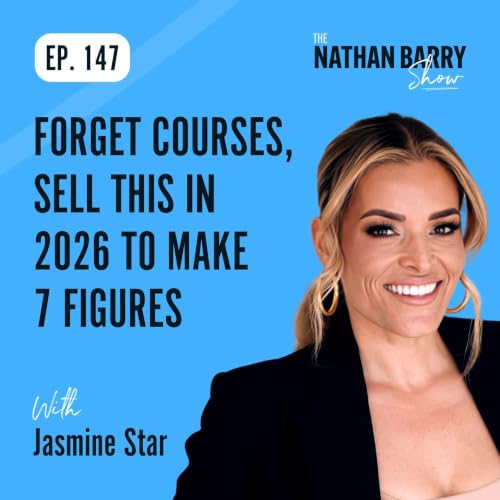
  • Forget Courses, Sell This in 2026 To Make 7 Figures | Jasmine Star | 147
    Sep 24 2026

    The online business world is changing. People have more information than ever at their fingertips, and the business models that many creators started out selling aren't converting the way they used to.

    I sat down with Jasmine Star to talk about why traditional courses and memberships are becoming harder to sell, and the new hybrid offer model she now teaches her clients. We get into how to build offers around specific customer results, how to find out what people will actually pay for before you build, and Jasmine’s four-step framework for building a consistent $10K/month business. She also shares how she delivers high-touch coaching at scale, and the best ways to build trust with your audience in today’s “trust recession”.

    If you’re building an online business and wondering what types of offers still work in today’s crowded online space, I think you’ll get a lot out of this conversation.

    Timestamps:
    00:00 Intro
    01:18 Jasmine’s first digital offer
    04:00 How her $197 course made $255K
    04:40 Why she built a membership
    06:22 The problem with traditional memberships
    08:28 Building Social Curator
    10:27 The creator economy after 2020
    12:07 Why courses and memberships stopped working
    13:12 The hybrid offer
    16:40 How to price an offer
    20:02 Turning coaching into a scalable offer
    22:27 Who the offer is for
    24:28 The 90-day $10K offer
    26:30 The $4K Freedom Formula
    29:32 How to keep clients accountable
    33:50 Why asynchronous coaching works
    35:36 Scaling coaching to hundreds of clients
    39:25 How to market the offer
    44:01 Using webinars to sell
    47:13 Why long-form content is coming back
    50:04 Measuring content performance
    52:43 How Jasmine met Nathan
    53:41 How to get high-value clients
    55:29 Creating an offer people will pay for
    59:55 Finding the right audience
    1:00:49 Getting your messaging right
    1:04:26 Finding your customer's pain point
    1:06:10 Using DMs to build trust
    1:09:38 Building a personal brand
    1:11:48 Final thoughts

    If you enjoyed this episode, please like and subscribe, share it with your friends, and leave a review. I read every single one.

    Learn more about the podcast: https://nathanbarry.com/show

    Follow Nathan:
    Instagram: https://www.instagram.com/nathanbarry
    LinkedIn: https://www.linkedin.com/in/nathanbarry
    X: https://twitter.com/nathanbarry
    YouTube: https://www.youtube.com/@thenathanbarryshow
    Website: https://nathanbarry.com
    Kit: https://kit.com

    Follow Jasmine:
    Instagram: https://www.instagram.com/jasminestar
    Website: https://www.jasminestar.com
    X: https://x.com/jasminestar
    LinkedIn: https://linkedin.com/in/jasmine-star
    YouTube: https://www.youtube.com/@officialjasminestar

    Featured in this episode:
    Kit: https://www.kit.com
    Social Curator: https://www.socialcurator.com

    Highlights:
    03:38 How Jasmine made $255,000 in five days
    12:07 Why courses are no longer enough
    17:31 How to find what people will actually pay for
    33:50 People already have the information
    36:15 Why Jasmine’s ROI guarantee isn't a money-back guarantee

    Mehr anzeigen Weniger anzeigen
    1 Std. und 13 Min.
  • $300M+ Founder: What Nobody Tells You Before Selling Your Business | Ankur Nagpal | 146
    Sep 17 2026

    Should you sell your business, or build it to own forever? Ankur Nagpal sold Teachable for $250 million and Carry for $76 million. I bootstrapped Kit and turned down a $200 million acquisition offer from Spotify. We took very different paths as founders.

    I sat down with Ankur to break down why we made those choices and how they've played out. We get into the key considerations for selling a company vs. building it to own forever, why raising venture capital can quietly trap founders into a specific kind of business, and the hiring and go-to-market tactics Ankur used to build two companies from scratch.

    Ankur also shares how founders can use the QSBS tax break to keep millions more from an exit.

    If you've ever thought about selling your business, or you're trying to decide whether to bootstrap or raise venture capital, this is the episode to listen to before you make that call.

    Timestamps:
    00:00 Introduction
    01:37 Teachable's Story
    03:39 Why Ankur Sold Teachable
    04:47 Nathan's Approach to Building
    07:16 Building to Sell vs. Building to Keep
    08:34 Carry's Story
    09:30 Understanding QSBS Tax Benefits
    16:06 Being Bought vs. Having to Sell
    16:40 Why Raise Capital for Carry?
    18:25 Bootstrapping vs. VC
    22:54 Lessons for Second-Time Founders
    26:10 Ankur's Next Chapter: USVC
    28:36 Recruiting Great Talent
    32:24 Our Contrarian Beliefs
    34:50 Go-to-Market Strategies
    39:18 Ankur's AI Content Strategy
    46:25 Staying Focused
    48:58 Content Workflows
    59:16 Product Market Fit Evolution
    01:02:08 Closing Thoughts

    If you enjoyed this episode, please like and subscribe, share it with your friends, and leave a review. I read every single one.

    Learn more about the podcast: https://nathanbarry.com/show

    Follow Nathan:
    Instagram: https://www.instagram.com/nathanbarry
    LinkedIn: https://www.linkedin.com/in/nathanbarry
    X: https://twitter.com/nathanbarry
    YouTube: https://www.youtube.com/@thenathanbarryshow
    Website: https://nathanbarry.com
    Kit: https://kit.com

    Follow Ankur:
    X: https://twitter.com/ankurnagpal
    LinkedIn: https://www.linkedin.com/in/ankurnagpal
    Instagram: https://www.instagram.com/ankurna

    Featured in this episode:
    Teachable: https://teachable.com
    Carry: https://carry.com

    Highlights:
    03:00 The Perfect Exit?
    10:40 QSBS Tax Benefits For Founders
    18:30 Bootstrapped vs. VC: Which is Higher Status?
    23:20 Product Market Fit for Second-Time Founders
    32:20 Our Contrarian Beliefs

    Mehr anzeigen Weniger anzeigen
    1 Std. und 3 Min.
  • $100M YouTube Lawyer Reveals How to Protect Your Channel in 2026 | Tyler Chou | 145
    Sep 10 2026

    What does it take to turn a YouTube channel into a valuable, sellable business? That's what I wanted to explore with this week’s guest, Tyler Chou (aka The Creators' Attorney).

    Having spent 20 years as an entertainment attorney at giants like Disney and BuzzFeed, Tyler now represents some of YouTube's biggest channels, helping them navigate exits and build sustainable enterprises.

    In this episode, Tyler pulls back the curtain on the legal mistakes creators often make, the crucial steps to take to protect your assets, and why sometimes, a creator doesn't need to sell at all - they just need a sabbatical. Tyler shares insights on how to build a business that can eventually sell for 8 or 9 figures, and what investors are really looking for beyond just views.

    Timestamps:

    00:00 Introduction
    01:09 Private equity looks to buy YouTube channels
    03:52 Creator burnout
    04:52 Protecting your IP and avoiding mistakes
    08:20 Diversifying revenue beyond AdSense and brand deals
    10:43 Avoiding misclassification lawsuits
    12:46 The problem with reaction channels
    17:45 Why buyers love recurring revenue and technical products
    23:11 The power of artificial scarcity
    28:20 How to make your brand less dependent on the creator
    37:48 Should creators sell their business?
    43:49 You might need a sabbatical, not an exit
    45:00 How to protect yourself from predatory buyers
    51:08 Hiring operators to run products
    54:19 The power of angel investors on your cap table
    56:29 The value of books for creators
    1:11:08 Building a network of channels
    1:14:10 Where to find Tyler

    If you enjoyed this episode, please like and subscribe, share it with your friends, and leave a review. I read every single one.

    Learn more about the podcast: https://nathanbarry.com/show

    Follow Nathan:
    Instagram: https://www.instagram.com/nathanbarry
    LinkedIn: https://www.linkedin.com/in/nathanbarry
    X: https://twitter.com/nathanbarry
    YouTube: https://www.youtube.com/@thenathanbarryshow
    Website: https://nathanbarry.com
    Kit: https://kit.com

    Follow Tyler:
    YouTube: https://www.youtube.com/@TheCreatorsAttorney
    LinkedIn: https://www.linkedin.com/in/thecreatorsattorney
    Instagram: https://www.instagram.com/thecreatorsattorney

    Featured in this episode:
    Kit: https://www.kit.com

    Highlights:
    01:38 - Why private equity is buying YouTube channels
    07:50 - The power of building independent revenue streams
    12:58 - Why reaction channels are worthless to buyers
    38:00 - The surprising downsides of taking an exit
    59:20 - The power of books for creator credibility

    Mehr anzeigen Weniger anzeigen
    1 Std. und 17 Min.
  • How to ACTUALLY Sell a Creator Business | Pat Flynn & Liz Wilcox | 144
    Sep 3 2026

    What does it actually take to sell a creator business? That’s what I wanted to get into with Pat Flynn and Liz Wilcox, who sat down with me to share some big news. After 18 years of building Smart Passive Income, Pat has officially sold the business - and Liz is the new owner.

    In this episode, Pat and Liz take us through the entire process, from why Pat decided it was time to let go, to how they valued and structured the deal, why Liz was the right person to take over, and how they planned the transition to make sure the audience felt supported. We also get into what makes a creator business sellable, including building systems, community, recurring revenue, and a brand that can thrive beyond its founder.

    If you're building a creator business and want to understand how to make it more valuable, transferable, and ultimately sellable, I think you'll get a lot out of this conversation.

    Timestamps:
    00:00 Introduction
    01:15 Pat's big announcement
    02:48 Liz's journey to acquiring SPI
    04:30 How SPI became a sellable business
    06:27 Pat's massive success with Pokemon
    08:21 The impact of SPI's community
    10:47 Why Pat let go of SPI
    12:38 Prioritizing community over profit
    14:10 The financial aspects of the deal
    16:15 The future of Smart Passive Income: Team WIN
    18:30 What makes a business sellable
    20:00 Merging Liz's brand into SPI
    21:23 10x is easier than 2x
    22:50 The challenge of selling a personal brand
    24:50 The intentional transition process

    If you enjoyed this episode, please like and subscribe, share it with your friends, and leave a review. I read every single one.

    Learn more about the podcast: https://nathanbarry.com/show

    Follow Nathan:
    Instagram: https://www.instagram.com/nathanbarry
    LinkedIn: https://www.linkedin.com/in/nathanbarry
    X: https://twitter.com/nathanbarry
    YouTube: https://www.youtube.com/@thenathanbarryshow
    Website: https://nathanbarry.com
    Kit: https://kit.com

    Follow Pat:
    X: https://twitter.com/PatFlynn
    Website: https://patflynn.com
    YouTube: https://www.youtube.com/@patflynn
    LinkedIn: https://www.linkedin.com/in/patflynn

    Follow Liz:
    Website: https://www.lizwilcox.com
    YouTube: https://www.youtube.com/@thelizwilcox
    LinkedIn: https://www.linkedin.com/in/liz-wilcox-58740b1b0

    Featured in this episode:
    Kit: https://www.kit.com
    Smart Passive Income: https://www.smartpassiveincome.com
    Built to Sell: https://builtosell.com
    Will It Fly?: https://patflynn.com/book/will-it-fly
    The Virtual Campground: https://thevirtualcampground.com

    Highlights:
    01:15 - The big announcement
    07:12 - Liz's personal mission for SPI
    14:32 - The Pokémon channel's incredible growth
    25:27 - The profound impact of communities
    35:40 - Negotiating and structuring a business sale

    Mehr anzeigen Weniger anzeigen
    1 Std. und 19 Min.
  • How the Author of Atomic Habits ACTUALLY Makes Money | James Clear | 143
    Aug 27 2026

    When James Clear last spoke on the Craft & Commerce stage, Atomic Habits hadn't even been released. Now, it's sold over 30 million copies worldwide.

    I was delighted to welcome James back to the same stage 8 years later to unpack what he’s learned from creating one of the bestselling books of the last decade. In this conversation, James shares his insights on how to create a timeless product, how he built an email list of over 4 million subscribers, and the revolutionary publishing model he’s building with Authors Equity.

    James also answers burning questions from the audience on simplifying complex ideas, building lasting entrepreneurial friendships, protecting your identity as a creator in public, and James’s personal mission in life.

    If you’ve ever wondered what goes into creating a bestselling book, I think you’ll get a lot out of this episode.

    Timestamps:
    00:00 Introduction
    01:07 Expectations for Atomic Habits' success
    02:54 Selling 30M+ copies
    04:48 Timeless marketing principles
    07:18 Positioning for long-term book sales
    09:39 Building the world's largest single-author newsletter
    12:44 Current effective growth tactics
    14:01 Cross-pollinating platforms for growth
    16:51 The vision behind Authors Equity
    20:51 The Atomic Habits tipping point
    23:09 Why books are an underrated business model
    24:48 Simplifying complex ideas
    27:54 Cultivating lasting entrepreneur friendships
    31:33 Protecting your identity as a public creator
    35:30 Why choose traditional publishing over self-publishing?
    39:17 Mining for stories and metaphors
    43:24 What makes Authors Equity different?
    48:50 Daily habits for rebuilding momentum
    51:50 James’s life mission
    54:24 Authors Equity: working with self-published authors
    58:05 James's parting thoughts: 10-year and 1-hour timeframes

    If you enjoyed this episode, please like and subscribe, share it with your friends, and leave a review. I read every single one.

    Learn more about the podcast: https://nathanbarry.com/show

    Follow Nathan:
    Instagram: https://www.instagram.com/nathanbarry
    LinkedIn: https://www.linkedin.com/in/nathanbarry
    X: https://twitter.com/nathanbarry
    YouTube: https://www.youtube.com/@thenathanbarryshow
    Website: https://nathanbarry.com
    Kit: https://kit.com

    Follow James:
    Website: https://jamesclear.com
    Newsletter: https://jamesclear.com/3-2-1
    X: https://twitter.com/jamesclear
    LinkedIn: https://www.linkedin.com/in/jamesclear
    Instagram: https://www.instagram.com/jamesclear

    Featured in this episode:
    Kit: https://www.kit.com
    Atomic Habits: https://jamesclear.com/atomic-habits
    Authors Equity: https://www.authorsequity.com

    Highlights:
    02:10 - James's initial expectations for Atomic Habits
    09:39 - How James built the world's largest single-author newsletter
    23:09 - Why books are an underrated business model
    48:50 - James’s daily habits for rebuilding momentum
    51:50 - James’s life mission

    Mehr anzeigen Weniger anzeigen
    1 Std.