• Silence by Design
    Feb 20 2026
    Episode Notes

    Overview of the Rhode Island hockey rink mass shooting

    Why similar tragedies receive nonstop national coverage—except this one

    Media silence and selective outrage

    Gun control hypocrisy in states with the strictest firearm laws

    Mental health warning signs and red-flag failures

    The role of ideology in shaping which victims matter

    How narratives are protected—even when facts are inconvenient

    Why motive and context suddenly become “irrelevant”

    The dangerous trend of excusing violence when it fits political goals

    The Jimmy Mathis indoctrinating common sense

    Mehr anzeigen Weniger anzeigen
    20 Min.
  • Empty Suite
    Feb 16 2026
    📝 EPISODE NOTES

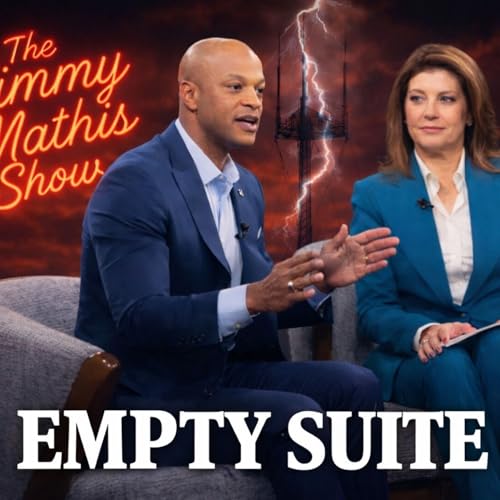
    Governor Wes Moore appeared in Cambridge, Maryland for a CBS-hosted town hall that raised serious questions about media credibility and political staging.

    The event featured a carefully curated audience, scripted questions, and no meaningful pushback on the issues most impacting Marylanders.

    CBS moderator Nora O’Donnell repeatedly asked the Governor about presidential ambitions, despite multiple denials—fueling speculation about a national political strategy.

    No accountability on record-high utility bills, energy policy decisions, or the shutdown of power generation contributing to affordability issues.

    Housing affordability was discussed without addressing rising property taxes, regulatory costs, and the broader cost-of-living crisis in Maryland.

    Redistricting concerns in Maryland’s First Congressional District were ignored, despite ongoing public backlash.

    The Governor faced no follow-up questions on crime, education outcomes, or declining quality-of-life indicators across the state.

    Discussion on how unchallenged media appearances allow politicians to appear “presidential” without defending their record.

    Analysis of why this type of staged event undermines voter trust in both elected officials and legacy media outlets.

    Examination of how growing voter dissatisfaction and rising unfavorable ratings could impact turnout and the upcoming gubernatorial election.

    Final takeaway: without real debates, real town halls, and real accountability, Marylanders are left with optics instead of answers.

    The Jimmy Mathis indoctrinating common sense

    Mehr anzeigen Weniger anzeigen
    20 Min.
  • State of the Spin: Wes Moore vs. Reality
    Feb 13 2026

    In this episode of The Jimmy Mathis Show, Jimmy takes a hard look at Governor Wes Moore’s State of the State address and asks whether the speech reflected the reality Marylanders are living every day.

    The episode breaks down the contrast between political messaging and real-world impacts—rising utility bills, higher vehicle registration fees, ongoing crime concerns, and policies that continue to strain residents and businesses across the state.

    Jimmy also discusses Governor Moore’s upcoming CBS town hall in Cambridge, questioning the national media interest and whether the event is more about political positioning than governing. The conversation covers redistricting efforts, the Republican response, and why quality-of-life issues often get buried beneath national talking points.

    This episode challenges listeners to look past the delivery and examine the results—because leadership isn’t measured by speeches, it’s measured by outcomes.

    Topics Covered

    State of the State: messaging vs. reality

    Utility bills, taxes, and cost-of-living pressures

    Crime statistics vs. quality-of-life concerns

    Redistricting and representation

    National media attention and political ambition

    Why speeches don’t pay the bills

    🎙️ The Jimmy Mathis Show
    Indoctrinating common sense.

    The Jimmy Mathis indoctrinating common sense

    Mehr anzeigen Weniger anzeigen
    24 Min.
  • Politics on the Field & Off
    Feb 11 2026
    🎙 The Jimmy Mathis ShowState of the State, National Ambitions & The Super Bowl Breakdown🏛 Segment 1: Governor Wes Moore & The Bigger Picture

    Governor Moore delivers his State of the State address

    Why hold it at noon and not televise it live?

    CBS Network taping his Cambridge town hall — why the national spotlight?

    Is this about Maryland… or about 2028?

    Recent national polling bump — coincidence or coordinated rollout?

    Attempting a LIVE broadcast from Cambridge to get the pulse of the people

    Media strategy vs. governing strategy

    🏈 Segment 2: Super Bowl — Game, Halftime & The NFL’s Identity Crisis

    Why the game itself felt underwhelming

    Has NFL parity led to mediocrity?

    The most exciting moment wasn’t even football

    The field-storming betting controversy

    Bad Bunny halftime performance — cultural debate vs. accessibility debate

    The alternative halftime event — strong idea, weak production

    Has the NFL become more focused on messaging than football?

    Bread & Circuses: Why sports matter culturally

    When distraction turns political, does it lose its purpose?

    🎯 Broader Themes

    Media narratives vs. reality

    Political positioning at the state level

    The erosion of emotional connection in sports

    Cultural shifts in entertainment

    The balance between politics and play

    📡 What’s Next

    Attempting a LIVE show from Cambridge

    Audience interaction encouraged

    Growing this platform as a community, not just a show

    🔔 Subscribe & Follow

    The Jimmy Mathis indoctrinating common sense

    Mehr anzeigen Weniger anzeigen
    22 Min.
  • National Ambition, Local Failure
    Feb 9 2026

    Show: The Jimmy Mathis Show

    In this episode, Jimmy Mathis examines the growing gap between governing and posturing in Maryland politics, focusing on recent national appearances and messaging by Wes Moore.

    After multiple Sunday show appearances and renewed controversy around redistricting and a White House governors’ dinner, the governor has repeatedly framed recent events through the lens of race. Jimmy breaks down why that strategy raises concerns — not as a cultural issue, but as a governing problem.

    This episode shifts the focus away from national narratives and back to what Maryland residents are experiencing on the ground: rising utility bills, cost-of-living pressures, and policy decisions that are directly impacting families.

    🔍 Topics Covered

    Why repeated race-based framing risks becoming a political distraction

    The real purpose of bipartisan leadership — and why it matters

    How redistricting has become a priority despite low public demand

    Energy and environmental policies and their impact on affordability

    The difference between national ambition and state responsibility

    Why identity politics can weaken accountability instead of strengthening it

    🧠 Key Takeaway

    Elections and political cycles change, but basic governance doesn’t. When leaders prioritize national relevance over local reality, voters feel it — first in their monthly bills, and then in their trust.

    💬 Listener Question

    What should Maryland leadership be focused on right now — national narratives or everyday affordability?

    🔔 Stay Connected

    Subscribe to The Jimmy Mathis Show

    Leave a review if you value policy-first analysis

    Join the conversation in the comments

    The Jimmy Mathis indoctrinating common sense

    Mehr anzeigen Weniger anzeigen
    32 Min.
  • ICE Protests in High Schools — Civil Disobedience or Misinformation?
    Feb 6 2026
    Episode Overview

    Across Maryland and across the country, high school students are organizing walkouts to protest ICE. School administrators are responding, parents are asking questions, and social media is applauding the demonstrations.

    On this episode of The Jimmy Mathis Show, Jimmy Mathis breaks down the legal, constitutional, and historical reality behind student protests—and why civil disobedience is widely misunderstood.

    This episode is not about silencing students. It’s about education, accountability, and telling the full story.

    Topics Covered

    Why students do not have a constitutional right to walk off school property

    The difference between protest and civil disobedience

    Why civil disobedience historically included consequences

    What the Civil Rights Movement actually achieved—and how

    The role of ICE and why understanding it matters before protesting

    Legal vs. illegal immigration: why the distinction matters

    Federal vs. state authority and the role of the Constitution

    Why schools should use protests as real civics lessons

    The responsibility schools have to protect students during school hours

    Key Takeaways

    Civil disobedience is meant to force attention—but it also comes with consequences

    Protest without education leads to misinformation

    Legislative change—not slogans—creates lasting impact

    Schools should teach the entire constitutional process, not just the protest narrative

    Quotes from the Episode

    “The Constitution is not a blank check to break rules.”
    “Civil disobedience only works when people understand what comes next.”
    “If students want to protest, we owe them real education—not applause.”

    Where to Listen

    🎧 Available on YouTube, Spotify, Apple Podcasts, Pandora, and all major podcast platforms.

    📩 Email: jimmymathisonair@gmail.com
    🐦 X: @JimmyMathisShow

    The Jimmy Mathis indoctrinating common sense

    Mehr anzeigen Weniger anzeigen
    17 Min.
  • The flag is the distraction. The energy policy is the damage.
    Feb 5 2026
    Episode Summary

    In this episode of The Jimmy Mathis Show, Jimmy breaks down how Maryland’s political leadership successfully shifted the public conversation away from skyrocketing energy costs—and onto a manufactured controversy that changes nothing.

    What started as legitimate outrage over unaffordable electric bills, power plant shutdowns, and collapsing affordability was suddenly replaced by a media frenzy over comments made by Wes Moore on a niche sports podcast. Jimmy explains why this narrative shift was intentional, effective, and politically convenient.

    This episode connects the dots between energy policy, redistricting distractions, media amplification, and why Marylanders are being asked to argue about symbolism instead of substance.

    Topics Covered

    How and why political narratives get changed

    Maryland’s self-inflicted energy crisis explained simply

    Power plant shutdowns and the lack of replacement capacity

    Why energy costs aren’t driven by weather or markets

    The role of media in amplifying distractions

    Redistricting politics and why voters don’t care

    Why even Democrats like Bill Ferguson are pushing back

    Affordability as the defining issue of this election cycle

    Key Takeaways

    This crisis didn’t happen by accident—it happened by policy

    Energy, food, and transportation costs matter more than symbolism

    When leaders can’t defend results, they change the conversation

    Marylanders are being priced out while being talked around

    Voters should focus on outcomes, not rhetoric

    “The flag is the distraction. The energy policy is the damage.”

    If you’re angry about rising costs, don’t let anyone redirect that frustration.
    Follow the policies. Follow the bills. Hold leadership accountable.

    👉 Redact personal info and post your BGE bill.
    👉 Share this episode with someone feeling the squeeze.
    👉 Subscribe for no-nonsense political commentary.

    About the Show

    The Jimmy Mathis Show delivers direct, unscripted commentary on politics, media, and the issues that actually affect your wallet—without spin, slogans, or party talking points.

    The Jimmy Mathis indoctrinating common sense

    Mehr anzeigen Weniger anzeigen
    24 Min.
  • Stop Calling Vandalism “Art”
    Feb 5 2026
    Episode Notes

    Episode Title: Graffiti Isn’t Art — It’s Vandalism

    Overview

    This episode confronts one of the most ignored drivers of urban decline: unchecked graffiti and the refusal of city leaders to enforce quality-of-life laws. This is a blunt, firsthand breakdown of how tagging destroys neighborhoods, drives businesses out, raises insurance costs, and signals lawlessness—while politicians hide behind language like “culture” and “expression.”

    Key Talking Points
    • Words Matter

      • Calling graffiti “art” reframes criminal behavior as activism

      • Language is being used to excuse destruction of private property

    • Murals vs. Graffiti

      • Murals are commissioned, permitted, and welcomed

      • Tagging is unauthorized vandalism—no confusion, no gray area

    • Quality of Life Is the Real Crisis

      • Residents experience theft, vandalism, assaults—not statistics

      • People leave cities because daily life becomes unbearable

    • Broken Windows in Real Time

      • Repeated tagging leads to property damage, insurance penalties, and abandonment

      • Neglect invites more crime—this is observable, not theoretical

    • Businesses Paying the Price

      • Pharmacies locking goods behind glass

      • Walgreens and banks shutting down due to theft and vandalism

      • Small business owners forced to absorb constant repair costs

    • Selective Enforcement Failure

      • Communities know the repeat offenders

      • Police know the offenders

      • Arrests don’t happen—and the behavior continues

    • The Culture Excuse

      • “Part of the culture” has become political cover for decay

      • Expression does not override property rights

    • Poll Question

      • If someone tags your home or business, should they be arrested?

      • Results to be discussed in the following episode

    Quotes & Soundbites
    • “Murals are art. Graffiti is vandalism. Stop pretending it’s complicated.”

    • “Quality of life matters more than slogans.”

    • “You don’t get to express yourself on someone else’s property.”

    • “When the law isn’t enforced, disorder becomes policy.”

    Takeaway

    Cities don’t collapse overnight—they erode when small crimes are tolerated and accountability disappears. Graffiti is not harmless. It is a warning sign. Enforce the law, defend taxpayers, and restore order—or accept the consequences.

    The Jimmy Mathis indoctrinating common sense

    Mehr anzeigen Weniger anzeigen
    23 Min.