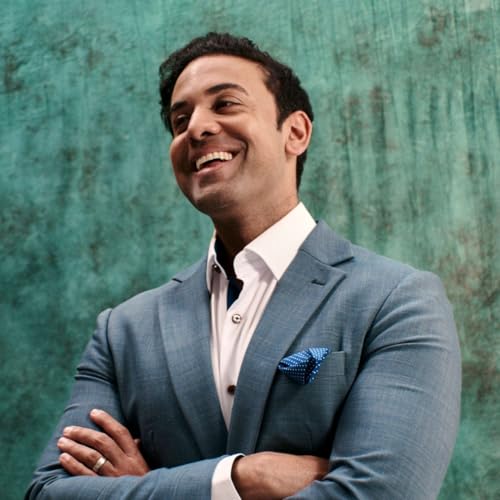
• The AI Wager: Betting on Technology’s Future w/ Philosopher & Author SVEN NYHOLM - Highlights
    Dec 2 2025

    “ I think we're betting on AI as something that can help to solve a lot of problems for us. It's the future, we think, whether it's producing text or art, or doing medical research or planning our lives for us, etc., the bet is that AI is going to be great, that it's going to get us everything we want and make everything better. But at the same time, we're gambling, at the extreme end, with the future of humanity  , hoping for the best and hoping that this, what I'm calling the AI wager, is going to work out to our advantage, but we'll see.”

    As we move towards 2026, we are in a massive “upgrade moment” that most of us can feel. New pressures, new identities, new expectations on our work, our relationships, and our inner lives. Throughout the year, I've been speaking with professional creatives, climate and tech experts, teachers, neuroscientists, psychologists, and futureists about how AI can be used intelligently and ethically as a partnership to ensure we do not raise a generation that relies on machines to think for them. It’s not that we are being replaced by machines. It’s that we’re being invited to become a new kind of human. Where AI isn’t the headline; human transformation is. And that includes the arts, culture, and the whole of society. Generative AI – the technologies that write our emails, draft our reports, and even create art – have become a fixture of daily life, and the philosophical and moral questions they raise are no longer abstract. They are immediate, personal, and potentially disruptive to the core of what we consider human work.

    Our guest today, Sven Nyholm, is one of the leading voices helping us navigate this new reality. As the Principal Investigator of AI Ethics at the Munich Center for Machine Learning, and co-editor of the journal Science and Engineering Ethics. He has spent his career dissecting the intimate relationship between humanity and the machine. His body of work systematically breaks down concepts that worry us all: the responsibility gap in autonomous systems, the ethical dimensions of human-robot interaction, and the question of whether ceding intellectual tasks to a machine fundamentally atrophies our own skills. His previous books, like Humans and Robots: Ethics, Agency, and Anthropomorphism, have laid the foundational groundwork for understanding these strange new companions in our lives.

    His forthcoming book is The Ethics of Artificial Intelligence: A Philosophical Introduction. The book is a rigorous exploration of everything from algorithmic bias and opacity to the long-term existential risks of powerful AI. We’ll talk about what it means when an algorithm can produce perfect language without genuine meaning, why we feel entitled to take credit for an AI’s creation, and what this technological leap might be costing us, personally, as thinking, moral beings.

    Episode Website

    www.creativeprocess.info/pod

    Instagram:@creativeprocesspodcast

    Mehr anzeigen Weniger anzeigen
    16 Min.
  • The Ethics of AI w/ SVEN NYHOLM, Author & Lead Researcher, Munich Centre for Machine Learning
    Nov 27 2025

    As we move towards 2026, we are in a massive “upgrade moment” that most of us can feel. New pressures, new identities, new expectations on our work, our relationships, and our inner lives. Throughout the year, I've been speaking with professional creatives, climate and tech experts, teachers, neuroscientists, psychologists, and futureists about how AI can be used intelligently and ethically as a partnership to ensure we do not raise a generation that relies on machines to think for them. It’s not that we are being replaced by machines. It’s that we’re being invited to become a new kind of human. Where AI isn’t the headline; human transformation is. And that includes the arts, culture, and the whole of society. Generative AI – the technologies that write our emails, draft our reports, and even create art – have become a fixture of daily life, and the philosophical and moral questions they raise are no longer abstract. They are immediate, personal, and potentially disruptive to the core of what we consider human work.

    Our guest today, Sven Nyholm, is one of the leading voices helping us navigate this new reality. As the Principal Investigator of AI Ethics at the Munich Center for Machine Learning, and co-editor of the journal Science and Engineering Ethics. He has spent his career dissecting the intimate relationship between humanity and the machine. His body of work systematically breaks down concepts that worry us all: the responsibility gap in autonomous systems, the ethical dimensions of human-robot interaction, and the question of whether ceding intellectual tasks to a machine fundamentally atrophies our own skills. His previous books, like Humans and Robots: Ethics, Agency, and Anthropomorphism, have laid the foundational groundwork for understanding these strange new companions in our lives.

    His forthcoming book is The Ethics of Artificial Intelligence: A Philosophical Introduction. The book is a rigorous exploration of everything from algorithmic bias and opacity to the long-term existential risks of powerful AI. We’ll talk about what it means when an algorithm can produce perfect language without genuine meaning, why we feel entitled to take credit for an AI’s creation, and what this technological leap might be costing us, personally, as thinking, moral beings.

    Episode Website

    www.creativeprocess.info/pod

    Instagram:@creativeprocesspodcast

    Mehr anzeigen Weniger anzeigen
    1 Std. und 2 Min.
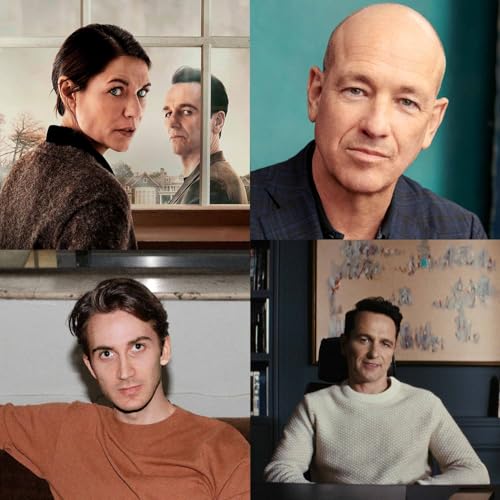
  • HOWARD GORDON & DANIEL PEARLE on THE BEAST IN ME, AI & The Future of Storytelling
    Nov 9 2025

    “How do you render something interior filmically? How do you communicate the details of the lost child, of the amount of time of the stuck creative process, and even the exterior, or the externalization of the house as a kind of hellish thing that's barely staying together—literally flooding with waste—and that you can't afford? So those are the details that we had to carefully figure out how to weave. But, you know, when you look at the first 10 minutes, it could be a horror movie. From that moment, a lot can happen. But what's important about it is that it sets the table for what does happen.” -Howard Gordon

    Today, we explore the dark psychology of obsession, guilt, and the thin line between predator and victim. Our guests are two of television's most accomplished architects of high-stakes drama and moral ambiguity: Howard Gordon, the showrunner and executive producer whose work defined a generation of thrillers with 24 and the multi-award-winning Homeland; and Daniel Pearle, an executive producer and writer who brings a distinct, penetrating depth from his background as a celebrated playwright and his work on series like Accused and American Crime Story.

    Episode Website

    www.creativeprocess.info/pod

    Instagram:@creativeprocesspodcast
    Mehr anzeigen Weniger anzeigen
    18 Min.
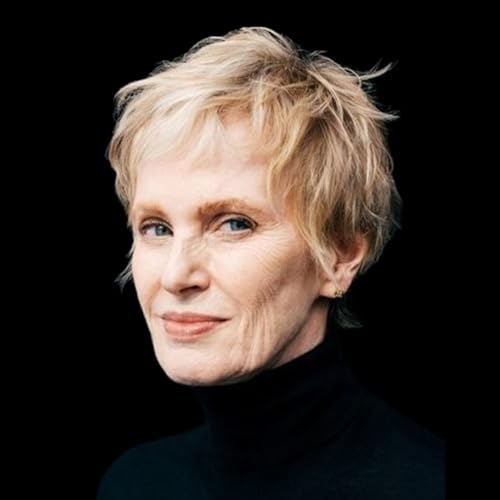
  • In the Presence of the DALAI LAMA - Doc. Director of WISDOM OF HAPPINESS - Highlights
    Nov 6 2025

    I can change my mind. I can reduce anger, hatred. Nothing to do with religion. All religions carry the message of love, loving kindness, and tolerance. With different views, there is a possibility to synthesize new ideas. If majority of the world leaders become female, world become safer. I feel that. Compassion is the key factor. Non-violence, compassion and self-confidence, these are key factors for happy individual, happy community, peaceful world. This century should be century of compassion, century of peace. No more bloodshed. We should develop a big “we,” rather than “we” or “they.” With these wings, you can fly.” -DALAI LAMA

    For decades, the Dalai Lama has been a global symbol of peace, compassion, and resilience, a spiritual leader living in exile from his home in Tibet. But how do you capture the essence of his wisdom—the kind that can truly change a life—in a way that feels intimate and personal? My guest today, documentary filmmaker Barbara Miller, has managed to do just that in her new film, Wisdom of Happiness. It’s a beautiful film that feels less like a documentary and more like a private, heart-to-heart conversation, where he invites us into his thoughts and shares practical steps for finding inner peace in a chaotic world.  She's dealt with anti-globalization, domestic violence, and the fight for female pleasure in her previous works. We’ll talk about how she shifted from exposing systemic pain to focusing on radical hope and her collaboration with Executive Producer Richard Gere and Manuel Bauer, the Dalai Lama’s personal photographer for the last thirty-five years, who made his cinematography debut with this film. She shares what the Dalai Lama taught her about living in harmony with our body, nature, and the world.

    Episode Website

    www.creativeprocess.info/pod

    Instagram:@creativeprocesspodcast

    Mehr anzeigen Weniger anzeigen
    14 Min.
  • WISDOM OF HAPPINESS - Heart-to-Heart w/ DALAI LAMA - Conversation w/ Director Barbara Miller
    Nov 6 2025

     Everybody wants happiness, joyfulness, peaceful world. Our 21st century will not be easy century. Fear, anger, hatred. In our mind we created distinctions. Different nationality, different color, different religion. Strong concept of “we” and “they”. Brothers and sisters of this small planet, we are same human beings. Meanwhile, global warming is a serious problem. Destruction of this planet is actually destruction of yourself. Our common responsibility should be work together, to save our world. We all have this marvelous human brain. The problem is, when negative emotions develop, our whole mind is taken over. So, we must deal with emotions.

    I can change my mind. I can reduce anger, hatred. Nothing to do with religion. All religions carry the message of love, loving kindness, and tolerance. With different views, there is a possibility to synthesize new ideas. If majority of the world leaders become female, world become safer. I feel that. Compassion is the key factor. Non-violence, compassion and self-confidence, these are key factors for happy individual, happy community, peaceful world. This century should be century of compassion, century of peace. No more bloodshed. We should develop a big “we,” rather than “we” or “they.” With these wings, you can fly.” -DALAI LAMA

    For decades, the Dalai Lama has been a global symbol of peace, compassion, and resilience, a spiritual leader living in exile from his home in Tibet. But how do you capture the essence of his wisdom—the kind that can truly change a life—in a way that feels intimate and personal? My guest today, documentary filmmaker Barbara Miller, has managed to do just that in her new film, Wisdom of Happiness. It’s a beautiful film that feels less like a documentary and more like a private, heart-to-heart conversation, where he invites us into his thoughts and shares practical steps for finding inner peace in a chaotic world.  She's dealt with anti-globalization, domestic violence, and the fight for female pleasure in her previous works. We’ll talk about how she shifted from exposing systemic pain to focusing on radical hope and her collaboration with Executive Producer Richard Gere and Manuel Bauer, the Dalai Lama’s personal photographer for the last thirty-five years, who made his cinematography debut with this film. She shares what the Dalai Lama taught her about living in harmony with our body, nature, and the world.

    Episode Website

    www.creativeprocess.info/pod

    Instagram:@creativeprocesspodcast

    Mehr anzeigen Weniger anzeigen
    44 Min.
  • AI & The Future of Life with RISTO UUK, Head of EU Policy & Research, FUTURE OF LIFE INSTITUTE
    Oct 14 2025

    “The Future of Life Institute has been working on AI governance-related issues for the last decade. We're already over 10 years old, and our mission is to steer very powerful technology away from large-scale harm and toward very beneficial outcomes. You could think about any kind of extreme risks from AI, all the way to existential or extinction risk, the worst kinds of risks and the benefits. You can think about any kind of large benefits that humans could achieve from technology, all the way through to utopia, right? Utopia is the biggest benefit you can get from technology. Historically, that has meant we have focused on climate change, for example, and the impact of climate change. We have also focused on bio-related risks, pandemics and nuclear security issues. If things go well, we will be able to avoid these really bad downsides in terms of existential risk, extinction risks, mass surveillance, and really disturbing futures. We can avoid that very harmful side of AI or technology, and we can achieve some of the benefits.”

    Today, we take a closer look at the future of artificial intelligence and the policies that determine its place in our societies. Risto Uuk is Head of EU Policy and Research at the Future of Life Institute in Brussels, and a philosopher and researcher at KU Leuven, where he studies the systemic risks posed by AI. He has worked with the World Economic Forum, the European Commission, and leading thinkers like Stuart Russell and Daniel Susskind. He also runs one of the most widely read newsletters on the EU AI Act. As this technology is transforming economies, politics, and human life itself, we’ll talk about the promises and dangers of AI, how Europe is trying to regulate it, and what it means to build safeguards for a technology that may be more powerful than anything we’ve seen before.

    Episode Website

    www.creativeprocess.info/pod

    Instagram:@creativeprocesspodcast

    Mehr anzeigen Weniger anzeigen
    1 Std. und 3 Min.