Tech, Innovation & Society - The Creative Process: Technology, AI, Software, Future, Economy, Science, Engineering & Robotics Interviews Titelbild

Tech, Innovation & Society - The Creative Process: Technology, AI, Software, Future, Economy, Science, Engineering & Robotics Interviews

Tech, Innovation & Society - The Creative Process: Technology, AI, Software, Future, Economy, Science, Engineering & Robotics Interviews

Von: Technology AI Software Future Economy Science Engineering & Robotics Interviews - Creative Process Original Series
Jetzt kostenlos hören, ohne Abo

Über diesen Titel

Rethinking tomorrow. We focus on technology, innovation, society, AI, science, engineering, the economy & issues facing people & the planet. Leading thinkers, organizations & environmentalists discuss technology, creativity & pathways for a more sustainable future.

Exploring the fascinating minds of creative people. Conversations with writers, artists & creative thinkers across the Arts & STEM. We discuss their life, work & artistic practice. Winners of Oscar, Emmy, Tony, Pulitzer, leaders & public figures share real experiences & offer valuable insights. Notable guests and participating museums and organizations include: Academy of Motion Picture Arts & Sciences, Neil Patrick Harris, Smithsonian, Roxane Gay, Musée Picasso, EARTHDAY.ORG, Neil Gaiman, UNESCO, Joyce Carol Oates, Mark Seliger, Acropolis Museum, Hilary Mantel, Songwriters Hall of Fame, George Saunders, The New Museum, Lemony Snicket, Pritzker Architecture Prize, Hans-Ulrich Obrist, Serpentine Galleries, Joe Mantegna, PETA, Greenpeace, EPA, Morgan Library & Museum, and many others.

The interviews are hosted by founder and creative educator Mia Funk with the participation of students, universities, and collaborators from around the world. These conversations are also part of our traveling exhibition.
www.onplanetpodcast.org

www.creativeprocess.info
www.oneplanetpodcast.org


Interviews conducted by artist, activist, and educator Mia Funk with the participation of students and universities around the world.

INSTAGRAM @creativeprocesspodcast

INSTAGRAM @oneplanetpodcast

Copyright 2021, The Creative Process
Sozialwissenschaften
  • SIRI HUSTVEDT on Love, Grief, AI, Creativity & the Future of Humanity
    Feb 23 2026

    “Grief happens because you don't stop loving the person who died. The person doesn't exist in your reality anymore. The everyday is not colored and shaped by this other human being, but you don't stop loving the person. So grief is a particular kind of unrequited love. And probably without that dynamic relationship with this person, I would be someone else. And he would've been someone else. I mean, Paul died before me. But we were, I think, hugely important to the drama of becoming in our own lives.”

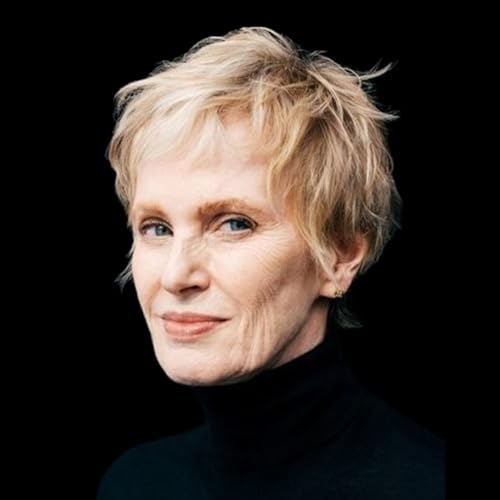
    Today, we are honored to welcome a writer whose work has long explored the intimate landscapes of the mind, memory and the heart. Siri Hustvedt’s writing moves between the personal and the philosophical, the literary and the deeply human. Her work bridges collections of essays, non-fiction, poetry, and seven novels, including the international bestsellers What I Loved and The Summer Without Men. Recipient of the Princess of Asturias Award for Literature and the Gabarron Prize for Thought, her work has been translated into over thirty languages. Her new memoir, Ghost Stories, is a reflection on forty-three years shared with her late husband, the writer and filmmaker Paul Auster. In its pages, we encounter not only love and loss, but the quiet persistence of presence, memory, and language itself.

    (0:00) Grief as Unrequited Love

    Siri explores the emotional reality of living without Paul Auster, noting that grief occurs because love does not stop when a person dies.

    (4:00) Facing Death with Courage

    The importance of not hiding from mortality and how discussing end-of-life wishes offered a necessary perspective.

    (12:37) Reading from Ghost Stories

    Siri reads the opening passage of her memoir, detailing how the loss of her husband deranged her sense of time and bodily rhythms.

    (18:41) The Phantom Limb: ” The beloved is taken away and it feels as if you're amputated or gutted.”

    (21:50)  Grandfather, Father and Son: Generational Traumas Behind Paul Auster's Writing

    (24:11)  How Powerful Emotions and a Person's Life Can Play a Role in Illness

    (30:09) Feeding the Earth

    "Paul very pointedly told me that he wanted to be buried in the Jewish mode. And the phrase he used was, “I want my body to feed the earth.”

    (44:23) Physical Love in Marriage

    On the importance of physical intimacy in long-term marriages, a reality often left out of grief memoirs.

    (54:00) The Philosophy of the Between

    How relational existence is foundational to life.

    (1:00:16) The Hubris of Controlling Nature

    (1:12:00) The Dark History of Statistics

    (1:32:12) The Art of Learning vs. AI and Automated Outcomes

    “I think we have to ask ourselves, what is education? What do we want from it? How do we want people to learn?

    Episode Website

    www.creativeprocess.info/pod

    Instagram:@creativeprocesspodcast

    Mehr anzeigen Weniger anzeigen
    1 Std. und 38 Min.
  • Muse Cells & The Future of Health: Why Stars like Chris Hemsworth & Tony Robbins Turn to Regenerative Medicine
    Jan 25 2026

    “They're kind of like a hidden superhero in your body and we just didn't know they existed. Muse cells eat the damaged cells, and they can actually turn into new cells using the cellular machinery.”

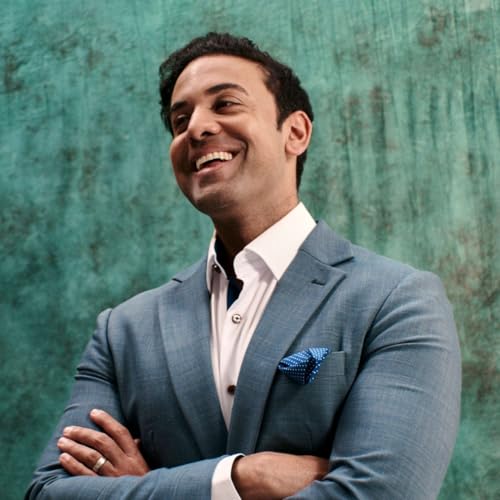
    Dr. Adeel Khan is a global thought leader in regenerative medicine. He is the CEO and Founder of and founder of Eterna Health, whose work with MUSE cell therapy—developed in collaboration with its discoverer, Professor Mari Dezawa—has made him the go-to expert for world leaders, athletes, and celebrities Chris Hemsworth, Kim Kardashian, and Tony Robbins. In this episode, we move beyond the hype of "anti-aging" to explore the hard science of Muse cells (Multilineage-differentiating Stress-Enduring cells). Dr. Khan breaks down how these unique cells differ from the "medicinal signaling cells" (MSCs) found in most clinics and how they act as a bridge to a future where tissue regeneration is standard care.

    (0:00) The "Repair Guys" & The Muse Difference Dr. Khan explains why traditional stem cells (MSCs) often disappoint and how Muse cells offer the "best of both worlds": safety and pluripotency.

    (2:19) Smart Cells: How They Find the Damage Understanding the "homing mechanism" that allows Muse cells to sense inflammation and instinctively travel to injured areas like the brain or heart.

    (3:11) Curing the Incurable: Diabetes & Alzheimer's The potential of the "cure triad"—stem cells, gene therapy, and FMT—to treat complex autoimmune diseases within the next decade.

    (4:40) Biological Noise & The Symphony of Health How "static" in our gene expression indicates aging, and how cellular therapy can reduce this noise to restore the body's harmony.

    (6:40) The Viral Monkey Study Dr. Khan discusses a recent study showing significant de-aging in monkeys through high-frequency cell dosing.

    (7:32) Unshakeable Foundations: Lifestyle as Medicine
    Why advanced therapies must be paired with purpose, community, and mindfulness to create a "bulletproof" body.

    (8:44) From Sketchy to Standardized
    Navigating the regulatory landscape: why Muse cells are being classified as a drug in regions like the UAE and the path toward FDA approval.

    (12:24) A Personal Mission
    Dr. Khan shares the origin of his journey: trying to find solutions for his mother's chronic illness when traditional medicine failed.

    (14:16) The Cancer Hunter
    Unlike other pluripotent cells that risk tumor growth, Muse cells have a unique mechanism that can detect cancer cells and trigger their death.

    (18:30)Future Outlook: AI, Nature & Blue Zones Reflections on the risks of AI, the importance of "Blue Zone" city design, and reconnecting with nature in a post-human world.

    Episode Website

    www.creativeprocess.info/pod

    Instagram:@creativeprocesspodcast

    Mehr anzeigen Weniger anzeigen
    22 Min.
  • Reimagining Longevity: DR. ADEEL KHAN on Muse Cells & the Future of Regenerative Medicine
    Jan 23 2026

    "The repair mechanisms don't work as well as you get older... The whole idea was: if we can give you more of the 'repair guys,' maybe we can reverse disease."

    Dr. Adeel Khan is a global thought leader in regenerative medicine. He is the CEO and Founder of and founder of Eterna Health, whose work with MUSE cell therapy—developed in collaboration with its discoverer, Professor Mari Dezawa—has made him the go-to expert for world leaders, athletes, and celebrities Chris Hemsworth, Kim Kardashian, and Tony Robbins. In this episode, we move beyond the hype of "anti-aging" to explore the hard science of Muse cells (Multilineage-differentiating Stress-Enduring cells). Dr. Khan breaks down how these unique cells differ from the "medicinal signaling cells" (MSCs) found in most clinics and how they act as a bridge to a future where tissue regeneration is standard care.

    (0:00) The Future of Regenerative Medicine

    (6:13) The Muse Difference: Why these cells are "pluripotent" (able to become any tissue) without the cancer risks of Yamanaka factors.

    (10:29) Curing the Incurable: Diabetes & Alzheimer's

    (11:27) The Cure Triad: How combining stem cells, gene therapy, and Fecal Microbial Transplants (FMT) could cure complex autoimmune diseases within a decade.

    (12:56) Biological Noise: Measuring the "mistakes" in our gene expression to quantify aging.

    (16:42) Lifestyle as Medicine: Why Dr. Khan prescribes community, mindfulness, and nature immersion alongside advanced therapies.

    (18:13) From Sketchy to Standardized: The Regulatory Landscape

    (23:25) A Personal Mission: Trying to Save Mom

    (25:38) The Cancer Hunter: How Muse cells naturally detect and trigger cell death in tumors.

    (29:02) Quantum Biology & Healing Frequencies
    (41:13) The AI Pessimist: Planning for a Post-Human World

    (44:03) Reconnecting with Nature

    Episode Website

    www.creativeprocess.info/pod

    Instagram:@creativeprocesspodcast

    Mehr anzeigen Weniger anzeigen
    48 Min.
Noch keine Rezensionen vorhanden