Folgen

  • Chris Lisle on the hidden mental health crisis in live music
    Oct 7 2026
    In this episode of Sound Systems Podcast, Max Bernstein speaks with Chris Lisle, Production Designer & Owner at CLLD, LLC and Executive Director at ECCHO Live, about the creative and operational world behind major live music events.Chris shares his journey from discovering lighting design in the early 1990s to becoming the lighting designer for major tours, festivals, and events including Lollapalooza, Bonnaroo, Austin City Limits, and performances with artists such as Robert Plant, OneRepublic, Babyface, Alice Cooper, Keith Urban, and Miranda Lambert.The conversation explores how massive festival productions are designed and executed, from creating flexible lighting systems for headliners to managing overnight changeovers between completely different productions. Chris also discusses the realities of touring life, including the physical and mental challenges faced by crews, and how Echo Live provides mental health, financial, and wellness resources for professionals working behind the scenes in live entertainment.Key Takeaways:How Chris built a 35-year career in live entertainment from a first lighting job on tour.The role of a festival lighting designer and how major stages adapt to different artist productions.Why artists invest heavily in live production to create memorable fan experiences.The complexity of building and moving large-scale concert productions overnight.What life is really like for touring professionals working long hours on the road.The hidden teams behind live shows, including rigging, audio, video, lighting, staging, and local crews.The impact touring life can have on physical health, relationships, and mental wellbeing.How Echo Live supports entertainment professionals through counseling, financial coaching, and community programs.Why building a healthier live entertainment industry requires supporting the people behind the shows.Noteworthy Quotes:“It was my aha moment in life where I discovered this amazing career that encompassed all these things that I love so much — travel, music, and creativity.” – Chris Lisle“Tour life is not for everybody. It can be one of the most rewarding, amazing careers, but it can also come with a lot of sacrifice.” – Chris Lisle“You become part of a second family. It’s a chosen family.” – Chris Lisle“People that do what we do often get lonely and depressed when the gig is done.” – Chris Lisle“The best clinical tool in your toolbox is your eyeball followed by your nose and your ears and your mouth.” – Chris Lisle“We wanted to make sure that money and finances were never an obstacle for those in our industry to be able to go and get the counseling and therapy that they need.” – Chris LisleKey Timestamps:00:00 - Introduction to Chris Lisle and his role at Lollapalooza01:20 - Designing festival lighting systems and integrating headliner productions03:54 - Managing supporting acts and festival stage changeovers04:40 - Why artists are investing more in live production09:44 - Working with major artists and designing major festivals10:54 - The realities of long-term touring and life on the road16:56 - Life on tour buses and the realities of crew life20:09 - Mental health, substance abuse, and the challenges of touring25:22 - Funding Echo Live and expanding wellness programs29:35 - Closing thoughtsDisclosure: Portions of this episode (such as the introduction or promotional segments) use AI-generated voice narration produced under human editorial review.Follow Our Guest, Chris Lisle:Chris Lisle LinkedIn: https://www.linkedin.com/in/chris-lisle-61a4398/ Echo Live Website: https://www.eccholive.com/ CLLD, LLC Website: https://www.clldllc.com/ Follow the Host, Max Bernstein:LinkedIn: https://www.linkedin.com/in/mberns01/X: https://x.com/relationlcoFollow RELATIONL:Website: https://www.relationl.co/YouTube: https://www.youtube.com/@relationl LinkedIn: https://www.linkedin.com/company/relationl/Instagram: https://www.instagram.com/relationlco/
    Mehr anzeigen Weniger anzeigen
    30 Min.
  • Dylan McDougle on why execution is no longer a valuable skill in music
    Sep 23 2026
    In this episode of Sound Systems Podcast, Max Bernstein speaks with Dylan McDougle, founder and engineer at SUPERSONICS, who has spent his career working at the intersection of music and technology.Dylan shares how his journey from DJing and engineering led him into software development, where he began creating tools to solve operational problems he experienced firsthand in the music business. From using no-code platforms like Airtable to building custom applications, Dylan explains how curiosity and industry expertise helped him transform frustrations into software products.The conversation explores Dylan’s latest platform, Headroom, which helps recording and rehearsal studios streamline bookings, payments, and operations. Dylan also discusses the changing role of AI in software development, why human judgment will become more valuable than execution, and how music professionals can use new technology to solve problems without waiting for traditional solutions.Key Takeaways:How Dylan’s career evolved from DJ and engineer into a software creator.Why the music industry has struggled with fragmented workflows and outdated systems.How no-code tools, automation, and AI helped Dylan learn software development.The story behind Superlist, Dialed, and Headroom.Why specialized software built for specific industries creates better experiences.How Headroom helps studios automate bookings, deposits, and customer management.Why AI reduces the value of execution and increases the importance of decision-making.How creators can use curiosity and technology to build solutions for real problems.Noteworthy Quotes:“The new piece is taking that experience and creating things as opposed to pushing existing things.” – Dylan McDougle“Don’t let ‘I don’t know how’ stop you from doing anything, because the information has never been more accessible.” – Dylan McDougle“The barrier to execution is gone completely. The challenge lies in deciding if that is a feature you should add.” – Dylan McDougle“The new valuable skill is deciding what to execute and how to execute it.” – Dylan McDougleKey Timestamps:00:00 - Introduction to Dylan McDougle and his career in music technology03:00 - Identifying the music industry’s systems problem05:10 - Learning Airtable, automation, and software development11:00 - Creating Dialed to solve live production challenges18:36 - Introducing Headroom for recording and rehearsal studios25:00 - Product development, customer feedback, and feature decisions33:46 - Advice for music professionals adopting technology39:00 - Using AI effectively and avoiding over-engineered solutions42:00 - Closing thoughts on creativity, technology, and the future of musicDisclosure: Portions of this episode (such as the introduction or promotional segments) use AI-generated voice narration produced under human editorial review.Follow Our Guest, Dylan McDougle:Dylan McDougle Instagram: https://www.instagram.com/dylanmcdougleDylan McDougle LinkedIn: https://www.linkedin.com/in/dylan-mcdougle/ SUPERSONICS: https://supersonics.fmFollow the Host, Max Bernstein:LinkedIn: https://www.linkedin.com/in/mberns01/X: https://x.com/relationlcoFollow RELATIONL:Website: https://www.relationl.co/YouTube: https://www.youtube.com/@relationl LinkedIn: https://www.linkedin.com/company/relationl/Instagram: https://www.instagram.com/relationlco/
    Mehr anzeigen Weniger anzeigen
    44 Min.
  • Should every song be mixed for spatial audio? Brad Smalling weighs in
    Sep 2 2026
    In this episode of Sound Systems Podcast, Max Bernstein speaks with Brad Smalling, Chief Executive Officer at Immersify Audio also, Atmos Mixing & Recording and Mastering Engineer at Evergroove Studio, an expert in spatial audio, source separation, and high-end music production. Brad shares how immersive audio experiences are created through object-based mixing, Dolby Atmos, and advanced source separation techniques. The conversation explores how artists and engineers can future-proof their music, remix legacy tracks, and leverage AI-driven workflows without compromising human creativity. Brad also discusses practical considerations for delivering high-quality audio across platforms, including headphones, home theaters, and large-scale venues.Key Takeaways:How spatial audio immerses listeners by placing individual instruments and vocals in a three-dimensional sound field.The technical setup of Atmos, including horizontal, LFE, and overhead speaker channels.Differences between stereo, upmixing, and true spatial audio workflows, and why upmixing can degrade quality.How source separation uses AI and machine learning to extract individual stems from legacy and modern recordings.The importance of human listening in evaluating and refining source-separated tracks.Practical uses for source separation: Atmos mixes, remixes, sync opportunities, and restoring lost multi-tracks.Future-proofing music production for VR, 3D audio, and immersive experiences.Considerations for mixing tracks to different listening devices, including phones, headphones, and high-end systems.Noteworthy Quotes:“Spatial audio allows us to immerse the listener, put them in an environment, and really have them experience and feel that music.” – Brad Smalling“Upmixing can create a technically Atmos track, but it’s a poor representation of true spatial separation.” – Brad Smalling“Source separation uses AI to identify individual instruments, but human listening is still crucial.” – Brad Smalling“Most music should be prepared for Atmos to future-proof it for VR and emerging technologies.” – Brad Smalling“Even with legacy tracks from the 60s, 70s, or 80s, source separation can give new life without re-recording artists.” – Brad Smalling“People are listening to spatial audio on AirPods, Apple Music, and even in cars without realizing it.” – Brad SmallingKey Timestamps:00:00 - Introduction to Brad Smalling and the topic of spatial audio01:17 - What is spatial audio and object-based mixing02:52 - Comparison between stereo and spatial mixes; workflow considerations03:55 - Who is the audience for spatial audio08:45 - How spatial audio works on headphones and head-tracking12:06 - Preparing legacy tracks for Atmos from original multi-tracks14:35 - Source separation techniques and AI use19:03 - Practical uses for source-separated stems22:39 - Listening across devices: phones, headphones, and studios23:37 - How to hire Brad’s studio and access spatial audio servicesDisclosure: Portions of this episode (such as the introduction or promotional segments) use AI-generated voice narration produced under human editorial review.Follow Our Guest, Brad Smalling:Brad Smalling LinkedIn: https://www.linkedin.com/in/brad-smallingImmersify Audio LinkedIn: https://www.linkedin.com/company/immersifyaudio/ Evergroove Studio LinkedIn: https://www.linkedin.com/company/evergroove/ Evergroove Studio Website: https://www.evergroove.com/ Follow the Host, Max Bernstein:LinkedIn: https://www.linkedin.com/in/mberns01/X: https://x.com/relationlcoFollow RELATIONL:Website: https://www.relationl.co/YouTube: https://www.youtube.com/@relationl LinkedIn: https://www.linkedin.com/company/relationl/Instagram: https://www.instagram.com/relationlco/
    Mehr anzeigen Weniger anzeigen
    24 Min.
  • Rod Yancy says bootleg recordings are the antidote to the AI music epidemic
    Aug 17 2026
    In this episode of Sound Systems Podcast, Max Bernstein speaks with Rod Yancy, Founder of Bootleg, a platform helping musicians capture, package, and sell authentic live concert recordings directly to fans. Rod shares how Bootleg is transforming live performances into collectible digital experiences by combining modern recording technology, music rights management, and fan engagement.The conversation explores the complex process behind capturing live shows, from securing publishing rights and working with labels to recording multi-track audio, adding crowd ambience, and delivering finished concert recordings. Rod also discusses how Bootleg creates new revenue opportunities for artists, why live music ownership may become more valuable in the age of AI-generated music, and how preserving authentic human performances can help artists stand out in an increasingly crowded digital landscape.Key Takeaways:How Bootleg helps artists capture live performances and turn them into collectible fan experiences.The challenges of clearing music rights, including songwriters, labels, managers, and sample licensing.How modern concert technology allows live recordings to be captured, mixed, mastered, and delivered quickly.Why crowd audio and fan-generated photos/videos help preserve the energy of a live performance.How live recordings create new revenue streams for independent artists beyond traditional streaming platforms.The difference between selling live recordings as merchandise versus building another streaming service.Why authentic human performances may become more valuable as AI-generated music increases.How live music recordings create a sense of ownership, memory, and connection for fans.The future vision for making live recording tools accessible to artists at every stage of their careers.Noteworthy Quotes:“Having a great live cut is the music that I most prefer.” – Rod Yancy“We're trying to create a capability for artists from all shapes and sizes, not only the largest who could afford to record live and create a new live album.” – Rod Yancy“The thing about live music is it is scarce. It is a live performance that we're capturing authentically.” – Rod Yancy“I think capturing that live experience will be even more valuable in the future because we won't even really know what's real and what's not real.” – Rod Yancy“This allows each artist to go out on the road and eat what they kill, so to speak.” – Rod Yancy“There's something about music ownership that's missing in the modern world.” – Rod YancyKey Timestamps:00:00 - Introduction to Rod Yancy and the idea behind capturing live music02:12 - How Bootleg started from a fan’s desire for better live recordings06:32 - Adding track splits, photos, and fan content to live releases07:01 - Handling covers, publishing royalties, and copyright requirements08:06 - Challenges with samples and securing additional clearances12:03 - Largest venues and concerts captured through Bootleg35:15 - Expanding beyond concert attendees and reaching global fans18:27 - Working with signed artists and different label agreements22:23 - AI-generated music and the growing value of authentic live performances24:35 - Geofencing and creating exclusive access for concert attendees28:17 - Growth of live events and entering the music industry29:17 - Competitors and the future of live concert platforms30:16 - The future vision for Bootleg and making live recording accessible to artists31:45 - How artists and managers can connect with BootlegDisclosure: Portions of this episode (such as the introduction or promotional segments) use AI-generated voice narration produced under human editorial review.Follow Our Guest, Rod Yancy:Bootleg Website: https://bootleg.live/ Bootleg Instagram: https://www.instagram.com/bootleg.live/ Rod Yancy LinkedIn: https://www.linkedin.com/in/rodyancyoath/ Follow the Host, Max Bernstein:LinkedIn: https://www.linkedin.com/in/mberns01/X: https://x.com/relationlcoFollow RELATIONL:Website: https://www.relationl.co/YouTube: https://www.youtube.com/@relationl LinkedIn: https://www.linkedin.com/company/relationl/Instagram: https://www.instagram.com/relationlco/
    Mehr anzeigen Weniger anzeigen
    33 Min.
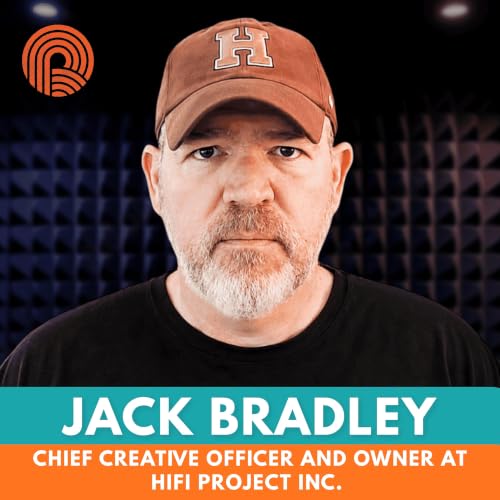
  • Jack Bradley: Why Brands Stopped Breaking New Artists in 2026
    Jul 22 2026
    In this episode of Sound Systems Podcast, Max Bernstein speaks with Jack Bradley, Chief Creative Officer and Owner at Hifi Project Inc., an audio agency specializing in music licensing, custom composition, and brand partnerships. Jack shares how the music licensing landscape has evolved over the last decade, why brands are no longer breaking emerging artists the way they once did, and how influencer culture has changed music discovery. The conversation explores sync licensing economics, the growing importance of authenticity in marketing, why legacy artists continue to dominate major advertising campaigns, and how custom music can create long-term value for brands. Jack also offers practical advice for composers and producers looking to break into the highly competitive world of commercial music.Key Takeaways:Why brands are no longer discovering and breaking artists the way they did during the Apple and Target commercial era.How TikTok, Instagram, YouTube, and influencer marketing have reshaped music discovery.The role authenticity plays in modern brand partnerships and younger consumer behavior.Why legacy artists continue to command premium sync licensing fees for major campaigns.The difference between production music, licensed music, and custom-created brand music.How brands evaluate the ROI of spending hundreds of thousands - or even millions—on music licensing.A behind-the-scenes look at Progressive Insurance's viral "Dog Park" campaign and how custom music became a marketing asset.Practical advice for aspiring composers and producers looking to build careers in commercial music.Noteworthy Quotes:“They are not breaking artists in 2026 like they were in 2016 or before that.” – Jack Bradley“The influencers are the new superstars.” – Jack Bradley“People want things that are authentic, things that are real.” – Jack Bradley“What brands are buying is attention. They're buying the eyeballs and they're buying the fans.” – Jack Bradley“Legacy artists are doing great. They're the songs that labels and publishers get requested for over and over again.” – Jack Bradley“The track has to be done when you deliver it—written, recorded, mixed, mastered, and ready to go.” – Jack BradleyKey Timestamps:00:00 - Are brands still breaking artists in 2026?02:26 - What changed after the Apple and Target commercial era03:47 - How influencer marketing replaced artist discovery05:01 - Modern brand partnerships and artist collaborations08:26 - Authenticity, younger audiences, and the return of live experiences10:20 - The challenges facing emerging artists today12:45 - Why legacy artists dominate sync licensing opportunities14:20 - Understanding music licensing fees and deal structures17:10 - How brands justify spending millions on iconic songs19:36 - What production music is and why brands use it23:43 - Creating custom music for brands and advertising campaigns29:37 - How competitive the commercial music industry really is32:45 - Advice for composers and producers entering the sync business37:01 - The role of AI in music licensing and productionFollow Our Guest, Jack Bradley:Jack Bradley LinkedIn: https://www.linkedin.com/in/jackbradley2112/ Hifi Project Inc. LinkedIn: https://www.linkedin.com/company/hifi-project-inc./ Follow the Host, Max Bernstein:LinkedIn: https://www.linkedin.com/in/mberns01/X: https://x.com/relationlcoFollow RELATIONL:Website: https://www.relationl.co/YouTube: https://www.youtube.com/@relationl LinkedIn: https://www.linkedin.com/company/relationl/Instagram: https://www.instagram.com/relationlco/
    Mehr anzeigen Weniger anzeigen
    33 Min.
  • Chris Herche is building a community of record labels
    Jun 24 2026
    In this episode of Sound Systems Podcast, Max Bernstein speaks with Chris Herche, a SVP of Music, Operations and Marketing at Create Music Group, about how the company has evolved from a digital rights management platform into a data-driven, community-focused hub for independent music entrepreneurs. Chris shares how Create Music Group supports labels and artists with dashboards, analytics, AI tools, and marketing resources, enabling small operators to compete in a fast-changing music industry.The conversation explores the transformation of the music industry over the last decade, including the rise of streaming, the growing role of independent labels, and the increasing importance of data and automation. Chris also discusses the ways Create fosters collaboration between labels across regions, helps operators navigate complex workflows, and builds a supportive community around shared goals. He explains how AI and no-code tools enhance efficiency without replacing the human creativity that drives the industry.Key Takeaways:How Create Music Group evolved from rights management to a multi-faceted platform supporting independent labels.The growing importance of data dashboards and analytics for frontline label operators.How community and collaboration between labels enable shared growth and creative cross-pollination.The role of AI and automation in improving workflows while preserving human-driven artistry.Strategies for empowering small labels to scale without the resources of major labels.The value of hands-on mentorship and supporting young music entrepreneurs in niche genres.Noteworthy Quotes:“I’ve been helping create tools that help labels gather metadata and work more efficiently.” – Chris Herche“It’s not about what you can get from someone; it’s about what you can bring and how you can add value.” – Chris Herche“You don’t need the same resources as a major label; you need data, cash, marketing, and a great dashboard.” – Chris Herche“Being able to build a community within a distributor is really a beautiful thing.” – Chris Herche“AI and automation can help workflows, but art and creativity are always human-driven.” – Chris Herche“Helping these young entrepreneurs pursue their dreams is the most rewarding part of my work.” – Chris HercheKey Timestamps:00:00 - Introduction to Chris Herche and Create Music Group02:03 - How Create Music Group has evolved over the last four years04:37 - Changes in the music industry: leaner teams, faster A&R, and data-driven decisions09:14 - Creating dashboards and tools for independent labels17:00 - Cross-regional collaboration between labels and operators19:35 - AI, automation, and workflow improvements23:49 - Building community and strategic partnerships within Create26:11 - Supporting young music entrepreneurs and niche genres31:11 - Trends from Music Biz and the role of AI in music operationsFollow Our Guest, Chris Herche:Chris Herche LinkedIn: https://www.linkedin.com/in/chrisherche/Create Music Group Website: https://www.createmusicgroup.com/Create Music Group LinkedIn: https://www.linkedin.com/company/createmusicgroup/Follow the Host, Max Bernstein:LinkedIn: https://www.linkedin.com/in/mberns01/X: https://x.com/relationlcoFollow RELATIONL:Website: https://www.relationl.co/YouTube: https://www.youtube.com/@relationlLinkedIn: https://www.linkedin.com/company/relationl/Instagram: https://www.instagram.com/relationlco/
    Mehr anzeigen Weniger anzeigen
    34 Min.
  • The non-tactical music tech founder with Mickey Shiloh
    Jun 3 2026

    In this episode, Max Bernstein sits down with Michaela (Mickey) Shiloh a songwriter, entrepreneur, and founder of HRDRV, to unpack her journey from Grammy-winning songwriter to non-technical music tech founder. Mickey shares how she launched HRDRV (pronounced ‘hard drive’) on Wix in just a few hours, scaled it into a thriving artist community, and eventually rebuilt the platform using AI-powered no-code tools like Lovable and Claude.

    The conversation dives deep into the realities of building software without a technical background, including hiring developers, navigating expensive agency relationships, and learning product design, back-end infrastructure, and security along the way. Mickey explains how modern AI tools have completely transformed her workflow and allowed her to independently build Version 4 of HRDRV.

    Key Takeaways:

    • Why Mickey built HRDRV to connect artists with creative services and sync opportunities
    • How no-code AI tools like Lovable and Claude are changing software development
    • The hard lessons of hiring agencies and managing developers as a non-technical founder
    • Why community is the core reason artists stay on HRDRV
    • How sync licensing can create major career breakthroughs for independent artists
    • Why organic marketing and authenticity outperform expensive growth tactics
    • The reality of “ignore culture” in the music industry and how responsiveness creates trust
    • How artists can use curiosity and everyday problems to spark business ideas

    Key Timestamps:

    00:00 - The road trip that inspired HRDRV

    01:22 - Building the first version using Wix, JotForm, and Trello

    05:29 - Developer horror stories and expensive agency lessons

    17:07 - Discovering Lovable and AI-powered no-code app development

    20:27 - How Lovable and Claude work together to build software

    24:31 - Building apps in a creative flow state

    28:41 - Why technical engineers still matter in AI development

    33:25 - What HRDRV actually does today

    37:26 - Success stories from sync placements and artist growth

    44:45 - The music industry’s “ignore culture” problem

    47:28 - Organic marketing and growing through community

    56:32 - Final thoughts and wrap-up

    Follow Our Guest, Michaela (Mickey) Shiloh:

    • Michaela (Mickey) Shiloh: https://www.linkedin.com/in/michaelashiloh/
    • HRDRV LinkedIn: http://linkedin.com/company/hrdrv/
    • HRDRV Website: https://home.hrdrv.com/

    Follow the Host, Max Bernstein:

    • LinkedIn: https://www.linkedin.com/in/mberns01/
    • X: https://x.com/relationlco

    Follow RELATIONL:

    • Website: https://www.relationl.co/
    • YouTube: https://www.youtube.com/@relationl
    • LinkedIn: https://www.linkedin.com/company/relationl/
    • Instagram: https://www.instagram.com/relationlco/

    Mehr anzeigen Weniger anzeigen
    1 Std. und 1 Min.
  • How Indie Artists Are Gaming Spotify Without Getting Banned with Dorian Perron
    May 20 2026
    In this episode, Max Bernstein sits down with Dorian Perron, Co-founder of Groover, to break down how artists actually grow on Spotify today through playlists, algorithms, and data-driven strategies.Dorian explains why playlisting has become the dominant form of music promotion, replacing traditional outlets like blogs and radio, and how artists can use it to generate real audience growth. He also talks about the risks of artificial streaming, how to identify fraudulent playlists, and why engagement matters far more than follower count.The conversation also explores how Spotify’s algorithm works behind the scenes, including the importance of early traction, popularity scores, and listener behavior. Dorian shares actionable strategies for artists to maximize campaigns, build momentum across platforms, and avoid common mistakes that can hurt long-term growth.Key TakeawaysWhy playlisting has become the most important driver of music discoveryHow to spot fake playlists and avoid artificial streaming penaltiesWhy engagement matters more than playlist follower countHow Spotify’s algorithm rewards early traction and listener consistencyThe growing role of AI in music creation and its impact on the industryKey Timestamps00:00 - Introduction to the changing landscape of playlisting04:42 - Identifying fraudulent playlists and avoiding artificial streams09:12 - How to create successful independent playlists14:01 - Using social media and ads to build playlist engagement19:58 - Why territories like Brazil and Mexico are critical for growth23:08 - How Spotify’s algorithm works and the importance of early traction28:00 - What genres have the biggest indie playlists?28:54 - The role of digital ads in Groover’s growth strategy30:00 - What people think about AI generated music37:29 - Where to follow Dorian and Groover for more tips and updatesFollow Our Guest, Dorian PerronDorian Perron LinkedIn: https://www.linkedin.com/in/dorian-perron-44102177Groover LinkedIn: https://www.linkedin.com/company/heygroover/ Indeflagration LinkedIn: https://www.linkedin.com/company/indeflagration/ Dorian Perron Instagram: https://www.instagram.com/dorianflagrant/ Groover Music Instagram: https://www.instagram.com/groover.music/ Groover Obsessions Instagram: https://www.instagram.com/grooverobsessions/ Groover Website: https://groover.co/en/ Indeflagration Website: https://indeflagration.fr/ Follow the Host, Max Bernstein:LinkedIn: https://www.linkedin.com/in/mberns01/X: https://x.com/relationlcoFollow RELATIONL:Website: https://www.relationl.co/YouTube: https://www.youtube.com/@relationl LinkedIn: https://www.linkedin.com/company/relationl/Instagram: https://www.instagram.com/relationlco/
    Mehr anzeigen Weniger anzeigen
    38 Min.