STR Data Lab™ by AirDNA Titelbild

STR Data Lab™ by AirDNA

STR Data Lab™ by AirDNA

Von: Jamie Lane
Jetzt kostenlos hören, ohne Abo

Über diesen Titel

Whether you're on your first property or your 100th, having the right market data is crucial to starting and scaling your short-term rental business. Join Travel Economist Jamie Lane as he provides trusted insights and delves deep into the numbers that drive this multi-billion dollar industry.

Jamie Lane
Persönliche Finanzen Ökonomie
  • January 2026 Market Review: Strong Bookings, Falling Occupancy
    Feb 19 2026

    Is 2026 shaping up to be a breakout year for short-term rentals — or another year of mixed signals? In this January market review, the STR Data Lab team unpacks early indicators that could define performance for the rest of the year, from rising bookings and shifting travel patterns to economic tailwinds and major event demand. For hosts, property managers, and investors, these first-month signals offer critical clues about where revenue opportunities — and risks — are emerging.

    While occupancy dipped year over year due to continued supply growth, bookings surged at one of the strongest rates in months, signaling healthy future demand. Coastal destinations are seeing robust early reservations ahead of spring break and summer travel, while urban markets are experiencing a surprising boost driven largely by anticipation of the upcoming World Cup. Meanwhile, mountain and ski destinations are facing headwinds from a weak Western snow season — a reminder that hyper-local factors can still outweigh national trends.

    The episode also zooms out to the economic backdrop shaping travel demand: job growth, disposable income, inflation trends, tax policy changes, and even larger tax refunds. The takeaway is clear — when people have money in their pockets, travel follows. Add in the potential windfall from major events like the World Cup, and hosts across many markets could see outsized revenue opportunities if they prepare early.

    You don’t want to miss this episode if you’re planning pricing, investments, or strategy for 2026.

    Key Takeaways

    • Booking momentum matters more than current occupancy. Strong forward bookings suggest healthy demand ahead even if winter performance looks weak.

    • Coastal markets are leading early for spring and summer travel. Hosts in beach destinations should prepare for competitive pricing and high demand.

    • Major events create spillover demand beyond host cities. Nearby markets may benefit from travelers extending trips around large events.

    • Mountain market performance is highly weather-dependent. Diversifying seasonality strategies can reduce risk in ski destinations.

    • Economic conditions are turning favorable for travel. Rising disposable income and tax refunds could fuel increased bookings in 2026.

    Sign up for AirDNA for FREE 👇

    https://bit.ly/4j6rRMa

    https://www.airdna.co/worldcup

    —————

    Connect with Jamie on social media

    LinkedIn: https://www.linkedin.com/in/jamiehlane/

    Twitter: https://twitter.com/Jamie_Lane

    —————

    Connect with Scott on social media

    LinkedIn: https://www.linkedin.com/in/sagescott

    —————

    Connect with AirDNA on social media:

    Instagram: https://instagram.com/airdna.co

    LinkedIn: https://www.linkedin.com/company/airdna/

    Twitter: https://twitter.com/airdna

    TikTok: https://www.tiktok.com/@airdna.co

    —————

    Episode 170

    Mehr anzeigen Weniger anzeigen
    26 Min.
  • Who Owns the Guest? The Economics of Guest Data, Acquisition Costs, and Repeat Demand
    Feb 12 2026

    What if the biggest opportunity in your STR business isn’t higher ADR or better occupancy — but who actually owns your guest relationship?

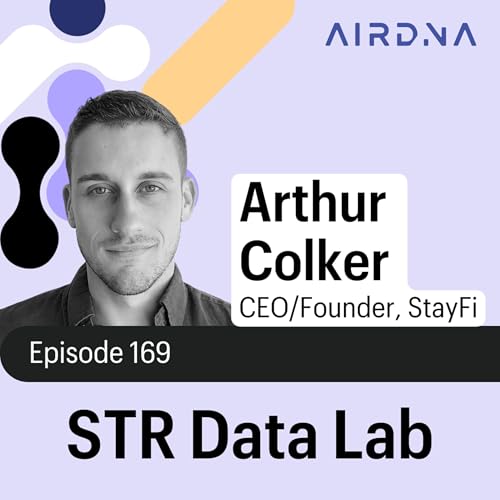
    In this episode of The STR Data Lab, Jamie Lane sits down with Arthur Colker, CEO of StayFi, to unpack one of the most under-discussed levers in short-term rentals: guest acquisition costs and repeat demand. As OTAs continue tightening control over guest data and shifting fee structures, hosts and property managers are left asking an important question — are we building a business, or renting one?

    Arthur breaks down why tracking guest acquisition costs, collecting first-party data, and building a direct booking channel isn’t just about avoiding platform fees. It’s about increasing total occupancy, improving booking windows, and creating long-term resilience. From practical strategies for smaller operators to how advanced hosts are reaching 60%+ direct bookings, this conversation reframes direct booking as a growth strategy — not just a defensive move.

    If you’ve ever wondered whether investing in your brand, email marketing, or direct booking site is worth it — this episode delivers clarity.

    You don’t want to miss this episode.


    Practical Takeaways You Can Apply Now

    • Think beyond the booker. Every guest in the reservation is a potential future customer. Expanding your marketing mindset beyond the primary booker unlocks new repeat and referral opportunities.

    • Consistency beats perfection. A simple monthly email — even plain-text and personalized — can outperform polished newsletters. The goal is to stay top of mind when guests are ready to book again.

    • Direct bookings increase total occupancy — not just margins. The real ROI isn’t only saving OTA fees. It’s filling nights that would otherwise sit empty.

    • Build a brand, even if you’re small. Whether you have one property or ten, guests need an identity to remember. For smaller operators, your personal story and hospitality voice are the brand.

    • Control your pricing strategy. Advanced operators often price higher on OTAs and reward direct bookings with better value — flipping the script from dependence to leverage.

    Sign up for AirDNA for FREE 👇

    https://bit.ly/4rYGQvP

    —————

    Connect with Jamie on social media

    LinkedIn: https://www.linkedin.com/in/jamiehlane/

    Twitter: https://twitter.com/Jamie_Lane

    —————

    Connect with Scott on social media

    LinkedIn: https://www.linkedin.com/in/sagescott

    —————

    Connect with AirDNA on social media:

    Instagram: https://instagram.com/airdna.co

    LinkedIn: https://www.linkedin.com/company/airdna/

    Twitter: https://twitter.com/airdna

    TikTok: https://www.tiktok.com/@airdna.co

    —————

    Episode 169


    Mehr anzeigen Weniger anzeigen
    42 Min.
  • The Future of STR Property Management
    Feb 5 2026

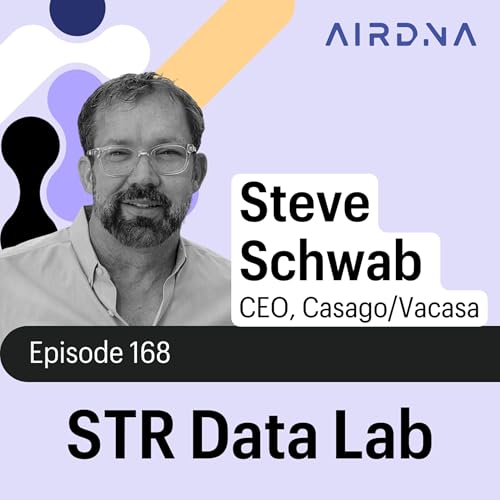
    What happens when one of the largest centralized property managers in short-term rentals meets a deeply local, franchise-driven model? In this episode of The STR Data Lab, AirDNA’s Chief Economist Jamie Lane sits down with Steve Schwab, CEO of Casago, to unpack one of the most consequential industry shifts of the past decade: the Vacasa–Casago merger.

    Steve shares an honest, behind-the-scenes look at how the integration is unfolding — from transitioning thousands of homes and teammates to rethinking how scale, culture, and accountability actually work in hospitality. The conversation goes beyond headlines to explore why local ownership, empowered teams, and owner-centric decision-making may be the antidote to the operational strain that has challenged large STR operators in recent years.

    Along the way, Jamie and Steve dive into franchise economics, technology complexity, churn as a health metric, and the often-underestimated skill that separates top-tier operators from the rest. Whether you’re an independent host, a growing property manager, or an industry professional watching STR evolve in real time, this episode offers a rare perspective on where the business is headed — and what it takes to build something that lasts.

    This is one conversation that will change how you think about scale, leadership, and success in short-term rentals — you don’t want to miss it.

    Key Takeaways You Can Apply Today

    • Local ownership matters more than ever: Empowered, in-market operators create stronger relationships with homeowners, guests, and communities — and reduce churn.

    • Scale isn’t just about size: Breaking operations into locally accountable units can avoid the “dis-economies” that plague centralized models.

    • Technology complexity is the silent killer: From PMS integrations to revenue management and accounting, STR operations are far deeper than they appear — especially in year one.

    • Churn is a health check, not just a metric: Monitoring churn at both the market and portfolio level reveals operational and cultural issues early.

    • The best operators know when to say no: Curating the right inventory, homeowners, and guests is often what separates top-performing property managers from underperformers.

    Sign up for AirDNA for FREE 👇

    https://bit.ly/4qjPZNU

    —————

    Connect with Jamie on social media

    LinkedIn: https://www.linkedin.com/in/jamiehlane/

    Twitter: https://twitter.com/Jamie_Lane

    —————

    Connect with Scott on social media

    LinkedIn: https://www.linkedin.com/in/sagescott

    —————

    Connect with AirDNA on social media:

    Instagram: https://instagram.com/airdna.co

    LinkedIn: https://www.linkedin.com/company/airdna/

    Twitter: https://twitter.com/airdna

    TikTok: https://www.tiktok.com/@airdna.co

    —————

    Episode 168


    Mehr anzeigen Weniger anzeigen
    42 Min.
Noch keine Rezensionen vorhanden