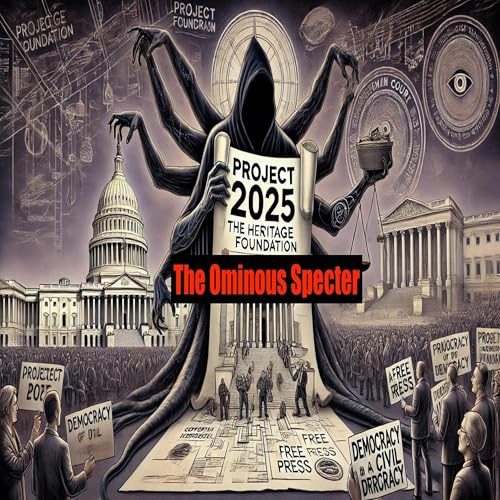
• Reshaping America's Government: Heritage Foundation's Ambitious Project 2025 Unveiled
    Jan 15 2026
    Imagine a blueprint for remaking America’s government from the ground up, drawn by conservative architects at the Heritage Foundation. That’s Project 2025, launched in April 2023 as the 900-page Mandate for Leadership, a detailed roadmap to consolidate executive power and install loyalists across federal agencies, according to the Heritage Foundation’s own documentation.

    Its stated goal? Reshape the sprawling administrative state into a leaner machine aligned with right-wing priorities. Picture Day One of a new Republican presidency: a stack of executive orders ready to sign, firing tens of thousands of civil servants under the revived Schedule F category, reclassifying them as at-will political appointees. The Heritage Foundation’s plan calls for replacing them with vetted personnel from its database, aiming for 20,000 recruits by late 2024. As Government Executive reports, by early 2025, the Trump administration’s Department of Government Efficiency, led by Elon Musk, accelerated this—slashing diversity offices, issuing reduction-in-force plans for 70,000 jobs, and targeting agencies like USAID and the Consumer Financial Protection Bureau, which returned $21 billion to scam victims but now faces elimination.

    Concrete changes abound. The blueprint urges dismantling the Department of Education, shifting programs like those for disabled students to Health and Human Services and curbing federal civil rights enforcement in schools to prioritize “student safety over racial parity in discipline,” per Mandate for Leadership. It eyes abolishing the Department of Homeland Security, merging its immigration functions, and partisan control of the DOJ and FBI, making their leaders directly accountable to the president. Cuts loom for Medicaid via funding caps and work requirements, plus shrinking the NIH and reversing Biden-era environmental rules to boost nuclear energy and corporate tax breaks.

    Experts warn of risks. The ACLU describes it as a “radical restructuring” threatening reproductive, LGBTQ, and immigrant rights. Unions like AFGE decry the potential loss of up to a million federal workers’ protections, echoing fears of politicized governance.

    By mid-2025, courts have reinstated some fired staff at Voice of America and CFPB, signaling legal battles ahead. As return-to-office mandates clash with office closures, the project’s ambition tests America’s checks and balances.

    Looking forward, key milestones like congressional action on Education cuts and union fights could define 2026 governance. Will efficiency triumph or chaos ensue?

    Thank you for tuning in, listeners. Come back next week for more.

    Some great Deals https://amzn.to/49SJ3Qs

    For more check out http://www.quietplease.ai

    This content was created in partnership and with the help of Artificial Intelligence AI
    Mehr anzeigen Weniger anzeigen
    3 Min.
  • Transforming Federal Power: Project 2025's Ambitious Conservative Agenda
    Jan 10 2026
    Project 2025 began not on a campaign stage, but in a Washington think tank conference room. The Heritage Foundation calls it “a conservative policy agenda” and a ready-made governing blueprint, anchored in a nearly 900-page manual titled Mandate for Leadership, meant to guide “the next conservative president” from day one, according to Heritage’s own introduction to the project.

    At its core, Project 2025 aims to dramatically expand presidential control over the federal government. Heritage leaders have said the goal is to “deconstruct the administrative state” and ensure that “all federal employees should answer to the president,” a phrase echoed by Heritage president Kevin Roberts and summarized in reporting by PBS NewsHour and The New York Times. The project embraces the controversial “unitary executive” theory, under which agencies that have traditionally operated with some independence, like the Department of Justice and the Federal Trade Commission, would be firmly pulled into the White House orbit, as described by the Center for Progressive Reform and the ACLU.

    To make that vision real, the blueprint outlines sweeping changes to federal staffing. The National Federation of Federal Employees explains that Project 2025 leans heavily on reviving and expanding “Schedule F,” a Trump-era classification that would allow tens of thousands of career civil servants to be converted into political appointees and easily removed. Heritage’s own materials describe building a database of 20,000 ideologically aligned personnel ready to step into government roles, while critics like Democracy Forward warn this would turn a nonpartisan civil service into a loyal political corps.

    The scope of the policy proposals is just as far-reaching. According to the Project 2025 Mandate for Leadership document and a summary by AFSCME, the plan calls for abolishing the Department of Education, shifting most education authority to the states, and cutting back federal civil rights enforcement in schools. The Heritage blueprint also urges dismantling the Department of Homeland Security and replacing it with a streamlined immigration-focused department that consolidates agencies such as Customs and Border Protection, Immigration and Customs Enforcement, and the Transportation Security Administration, as summarized by Wikipedia’s Project 2025 entry and labor analyses.

    Economic and regulatory policy would be reshaped as well. Heritage’s Mandate argues for repealing the Inflation Reduction Act’s climate investments, closing the Department of Energy’s Loan Programs Office, and rolling back environmental and clean-energy mandates. It also backs major tax changes, including corporate tax cuts and a possible flat individual income tax, along with cuts to Medicare and Medicaid, according to the Heritage document and summaries by AFSCME and the ACLU. The blueprint further recommends abolishing the Consumer Financial Protection Bureau and even the Federal Trade Commission, moves that groups like the Center for Progressive Reform say would weaken consumer and antitrust protections.

    Supporters portray these ideas as a restoration of constitutional government and traditional values. Critics, including the ACLU and multiple academic commentators, warn that centralizing so much power in the presidency, while purging the civil service, could erode checks and balances and politicize law enforcement, with PBS NewsHour noting concerns about expanded domestic use of the National Guard under a more aggressive Justice Department and FBI.

    The next key milestones will be how much of this agenda is embraced by Republican candidates, written into party platforms, or translated into concrete executive orders and legislation should conservatives control the White House and Congress. For now, Project 2025 remains a detailed playbook waiting for a willing administration.

    Thanks for tuning in, and come back next week for more.

    Some great Deals https://amzn.to/49SJ3Qs

    For more check out http://www.quietplease.ai

    This content was created in partnership and with the help of Artificial Intelligence AI
    Mehr anzeigen Weniger anzeigen
    4 Min.
  • Transforming America's Government: A Conservative Blueprint Revealed
    Jan 6 2026
    Imagine a blueprint for remaking America’s government from the ground up, drawn by conservative architects at the Heritage Foundation. Launched in April 2023, Project 2025—formally the 2025 Presidential Transition Project—outlines a sweeping overhaul of the federal bureaucracy in its 900-page Mandate for Leadership, according to the Heritage Foundation’s own documentation.

    At its core, the plan champions the unitary executive theory, placing the entire executive branch under direct presidential control. “All federal employees should answer to the president,” Heritage president Kevin Roberts declared, as cited in Wikipedia’s overview of the project. It calls for firing tens of thousands of civil servants via Schedule F reclassification, replacing them with vetted loyalists from a database aiming for 20,000 recruits by late 2024.

    Concrete examples abound. The Department of Education would close entirely, shifting funds and IDEA programs to states and Health and Human Services to boost school choice and curb what it terms “woke propaganda,” per the Mandate. The Department of Homeland Security? Dismantled, reborn as a lean immigration agency merging ICE, CBP, and TSA. Justice and FBI would answer directly to the White House, ending independent probes and expanding the death penalty, while the FTC and Consumer Financial Protection Bureau face abolition to slash antitrust and consumer safeguards.

    Tax cuts for corporations, a flat income tax, Medicaid caps, and Medicare trims aim to reverse Biden-era policies. Environmentally, it targets the Inflation Reduction Act, closing clean energy offices to prioritize affordable fossil fuels.

    By January 2025, President Trump’s February 11 Executive Order kicked off the Department of Government Efficiency, mandating agency reorganization plans by March 13—Phase 1 cuts, Phase 2 efficiencies—like merging economic bureaus under conservative mandates, as detailed in OPM guidance.

    Experts warn of risks. The ACLU describes it as a radical restructuring threatening rights, while AFGE fears up to a million job losses. Yet proponents see streamlined governance empowering families.

    As 2026 unfolds, Phase 2 plans due last year signal more cuts ahead, with Congress as the next battleground. Will this ambition reshape democracy or spark backlash?

    Thanks for tuning in, listeners—come back next week for more.

    Some great Deals https://amzn.to/49SJ3Qs

    For more check out http://www.quietplease.ai

    This content was created in partnership and with the help of Artificial Intelligence AI
    Mehr anzeigen Weniger anzeigen
    3 Min.
  • Radical Government Overhaul Proposed in Project 2025: Centralized Executive Power and Bureaucratic Upheaval
    Jan 3 2026
    Project 2025 represents one of the most ambitious blueprints for restructuring American government in recent history. Published in April 2023 by the Heritage Foundation, this 900-page policy document outlines a comprehensive plan to reshape the federal government around conservative principles, consolidating executive power and eliminating what its architects view as bureaucratic inefficiency.

    At its core, Project 2025 seeks to place the entire executive branch under direct presidential control. According to the Heritage Foundation's documentation, this approach relies on what legal scholars call the unitary executive theory, an expansive interpretation of presidential power aimed at centralizing greater control over government in the White House. The blueprint specifically targets the independence of agencies like the Department of Justice, the FBI, and the Federal Trade Commission, proposing that their leaders answer directly to the president rather than operate with traditional institutional autonomy.

    The scale of proposed changes is staggering. The project calls for dismantling the Department of Education entirely, transferring its functions to states and shifting education policy authority from Washington to local communities. It recommends abolishing the Department of Homeland Security, consolidating immigration agencies into a new structure. The Consumer Financial Protection Bureau, which has returned 21 billion dollars to consumers harmed by scams and fraud, would be eliminated. Even statistical agencies like the Census Bureau would be restructured and aligned with conservative principles.

    Perhaps most consequentially, Project 2025 envisions replacing career civil servants with political appointees loyal to the administration. Through a mechanism called Schedule F, the blueprint proposes removing employment protections for thousands of federal workers, converting them to at-will positions. This shift would fundamentally alter the nonpartisan character of the civil service that has existed for over a century.

    The policy document extends into areas from healthcare to labor rights. It proposes cutting Medicare and Medicaid through caps on federal funding and stricter work requirements. It recommends making union organizing more difficult and eliminating protections for federal employees' collective bargaining rights.

    Since taking office on January 20, 2025, the Trump administration and his Department of Government Efficiency have begun implementing many of these proposals, though often with methods not explicitly outlined in Project 2025. The administration has eliminated diversity, equity, and inclusion positions government-wide, announced plans to reduce the federal workforce by approximately 70,000 employees, and initiated steps toward closing multiple agencies entirely.

    Legal challenges have already emerged, with courts reinstating employees at the Consumer Finance Protection Bureau and Voice of America after their dismissal. These early battles signal that implementing Project 2025 will face significant constitutional and statutory obstacles.

    As these policies unfold, Americans are witnessing a fundamental experiment in executive power and governmental structure. The coming months will reveal whether courts, Congress, and public opinion will allow such sweeping transformation.

    Thank you for tuning in today. Please join us next week for more in-depth analysis of how these changes continue to reshape American governance.

    Some great Deals https://amzn.to/49SJ3Qs

    For more check out http://www.quietplease.ai

    This content was created in partnership and with the help of Artificial Intelligence AI
    Mehr anzeigen Weniger anzeigen
    4 Min.
  • Sweeping Conservative Blueprint Seeks to Reshape American Governance
    Jan 1 2026
    In April 2023, the Heritage Foundation released a sweeping political blueprint that would reshape American governance in ways both systematic and far-reaching. According to Wikipedia, Project 2025, also known as the 2025 Presidential Transition Project, emerged as a comprehensive initiative designed to consolidate executive power in favor of right-wing policies. What began as a policy document evolved into something far more ambitious: a 927-page manual divided into 30 chapters, complete with a personnel database and prepared executive orders ready for immediate implementation.

    The scale of Project 2025's ambitions becomes clear when examining its specific proposals. According to the National Federation of Federal Employees, the project includes a 180-day playbook with concrete steps for restructuring federal departments starting on day one of a new administration. The American Civil Liberties Union describes the central document, "Mandate for Leadership," as a manual for reorganizing the entire federal government agency by agency to serve a conservative agenda.

    Several agencies face potential elimination under these proposals. According to Wikipedia, Project 2025 calls for dismantling the Department of Homeland Security, Department of Education, and the Federal Trade Commission. The Department of Education's closure represents a particularly significant shift, as the project envisions transferring education control to individual states while eliminating federal civil rights enforcement in schools. Programs serving students with disabilities would transfer to the Department of Health and Human Services.

    The project pursues a controversial expansion of presidential authority through what Wikipedia identifies as an expansive interpretation of unitary executive theory, aiming to centralize greater control over government in the White House. This manifests concretely through Schedule F, a reclassification scheme that would convert tens of thousands of federal civil service workers into at-will political appointees. The Heritage Foundation announced plans to develop a database of 20,000 vetted personnel by the end of 2024, according to Wikipedia.

    Economic and environmental policies receive equally aggressive overhauls. Wikipedia notes the project proposes repealing the Inflation Reduction Act and closing the Department of Energy's Loan Programs Office, redirecting funding away from renewable energy research toward making energy more affordable. Tax policy would shift toward reduced corporate taxation and a flat individual income tax, while Medicare and Medicaid face substantial cuts.

    Recent developments show tangible implementation efforts. According to guidance from the Office of Management and Budget, President Trump issued an executive order in February 2025 directing agencies to undertake large-scale reductions in force and develop reorganization plans by specific deadlines. Phase 1 plans were due March 13, 2025, with Phase 2 plans scheduled for April 14, 2025, targeting implementation by September 30, 2025.

    The Center for Progressive Reform reports that multiple organizations are actively tracking Project 2025's implementation across twenty federal agencies, warning of devastating consequences for workers, the environment, and public health. This unfolding transformation represents perhaps the most comprehensive restructuring of federal governance attempted in modern times, with implications still crystallizing as agencies implement these directives throughout 2025.

    Thank you for tuning in. We look forward to your company next week for more.

    Some great Deals https://amzn.to/49SJ3Qs

    For more check out http://www.quietplease.ai

    This content was created in partnership and with the help of Artificial Intelligence AI
    Mehr anzeigen Weniger anzeigen
    4 Min.
  • Transforming American Government: Project 2025's Sweeping Vision Unveiled
    Dec 30 2025
    Project 2025 represents one of the most comprehensive blueprints for restructuring American government in recent history. Published by the Heritage Foundation in April 2023, this 900-page policy document, officially titled the 2025 Presidential Transition Project, outlines a radical vision for consolidating executive power and reshaping federal agencies according to conservative principles.

    At its core, Project 2025 seeks to eliminate what its architects view as the "administrative state." According to the Heritage Foundation, the initiative includes a 180-day playbook with prepared executive orders ready for implementation, along with a personnel database designed to identify ideologically aligned appointees for key federal positions. The project's most transformative proposal involves a controversial mechanism called Schedule F, which would reclassify tens of thousands of federal civil service workers as political appointees, potentially removing decades of employment protections and enabling wholesale replacement of career staff with administration loyalists.

    The scope of proposed changes is sweeping. The project calls for dismantling entire agencies, including the Department of Education and Department of Homeland Security, while subordinating others to direct presidential control. According to Wikipedia's analysis of the initiative, it seeks to place the Federal Bureau of Investigation, Federal Trade Commission, and Department of Justice under expanded presidential authority, a vision grounded in an expansive interpretation of unitary executive theory.

    Specific policy targets reveal the blueprint's ideological ambitions. The Heritage Foundation's proposal would close the Department of Energy's Office of Energy Efficiency and Renewable Energy, redirect climate research funding, and repeal the Inflation Reduction Act. Education policy would shift dramatically, with the proposal to eliminate federal civil rights enforcement in schools and transfer disability education programs to different agencies. The project also proposes consolidating economic data agencies and cutting funding for Medicare and Medicaid through various mechanisms including work requirements and per capita spending caps.

    Recent developments show these proposals moving from theory toward implementation. In February 2025, according to Office of Personnel Management guidance, the Trump administration issued an executive order launching the Department of Government Efficiency Workforce Optimization Initiative, directing federal agencies to prepare large-scale workforce reductions and submit reorganization plans by March and April 2025. Multiple civil rights organizations, including the American Civil Liberties Union and the NAACP Legal Defense Fund, have begun tracking Project 2025's implementation across federal agencies, documenting concerns about potential impacts on workers' rights, environmental protection, and civil rights enforcement.

    The project's implications extend beyond administrative mechanics. By concentrating executive power and removing civil service protections, Project 2025 fundamentally alters checks within the executive branch itself. Whether these proposals fully materialize depends partly on congressional action, particularly regarding statutory changes needed for some initiatives, and partly on administrative maneuvering through executive orders and agency reorganization.

    As 2025 progresses, listeners should watch for agency reorganization announcements and civil service policy changes. These coming weeks represent critical decision points for American governance structure. Thank you for tuning in today. Please join us next week for more analysis of these developments shaping our nation's future.

    Some great Deals https://amzn.to/49SJ3Qs

    For more check out http://www.quietplease.ai

    This content was created in partnership and with the help of Artificial Intelligence AI
    Mehr anzeigen Weniger anzeigen
    4 Min.
  • Transforming America: The Conservative Blueprint for Sweeping Government Overhaul
    Dec 27 2025
    Imagine a blueprint for remaking America’s government from the ground up, drawn by conservative architects at the Heritage Foundation. That’s Project 2025, launched in April 2023 as the 2025 Presidential Transition Project. Its 900-page Mandate for Leadership outlines a sweeping overhaul, aiming to dismantle what it calls the bloated administrative state and consolidate power in the president’s hands.

    At its core, the plan pushes unitary executive theory, placing agencies like the Department of Justice and FBI under direct White House control. According to the Heritage Foundation’s document, the DOJ has become a “bloated bureaucracy... infatuated with a radical liberal agenda,” so it must be reformed with the FBI director accountable to the president. The blueprint calls for reclassifying tens of thousands of civil servants under Schedule F, stripping protections to install loyalists—a database targeting 20,000 by late 2024, per Heritage reports.

    Concrete changes target key agencies. It proposes abolishing the Department of Education, shifting programs like the Individuals with Disabilities Education Act to Health and Human Services, and curbing federal civil rights enforcement in schools to prioritize “student safety” over racial parity in discipline. The Department of Homeland Security would vanish, replaced by a lean immigration agency merging Customs and Border Protection with ICE. Environmental rules would shrink, Medicare and Medicaid face funding caps and work requirements, and the FTC—guardian of antitrust—would be gutted.

    Latest developments show momentum: President Trump’s February 2025 Executive Order on the Department of Government Efficiency, as detailed in OPM guidance, mandates agency reorganization plans by March and April, with large-scale reductions in force to cut waste and FTE positions.

    Experts warn of risks. The ACLU describes it as a “radical restructuring” threatening reproductive, LGBTQ, and immigrant rights. Labor groups like NFFE decry Schedule F as enabling “political corruption,” while AFGE fears up to a million federal jobs lost.

    This ambitious vision connects family-centric values to border security and economic revival, but critics see authoritarian overreach. As Phase 2 plans roll out by September 2025, the real test looms: Will Congress curb these executive moves?

    Thanks for tuning in, listeners—come back next week for more.

    Some great Deals https://amzn.to/49SJ3Qs

    For more check out http://www.quietplease.ai

    This content was created in partnership and with the help of Artificial Intelligence AI
    Mehr anzeigen Weniger anzeigen
    3 Min.
  • Radical Overhaul: Project 2025's Blueprint for Reshaping America's Government
    Dec 23 2025
    Imagine a blueprint for remaking America’s government from the ground up, drawn by conservative architects at the Heritage Foundation. That’s Project 2025, a 900-page manifesto called *Mandate for Leadership*, released in April 2023, aiming to consolidate power in the presidency and purge what its authors see as a bloated administrative state, according to the Heritage Foundation’s own documentation.

    Fast forward to today: with Donald Trump back in the White House since January 20, 2025, elements of this vision are unfolding at breakneck speed. The Department of Government Efficiency, led by Elon Musk—known as DOGE—has fired tens of thousands of federal workers, targeting diversity offices and entire agencies like USAID and the Consumer Financial Protection Bureau, as reported by Government Executive. Courts have reinstated some employees, but the push rolls on, echoing Project 2025’s call to reinstate Schedule F, stripping civil service protections to install loyalists, per the National Federation of Federal Employees.

    Key proposals cut deep. The plan urges dismantling the Department of Education, shifting programs like those for disabled students to Health and Human Services, and empowering states with school choice to combat “woke propaganda,” the document states. It seeks to abolish the Department of Homeland Security, merging immigration functions into a new agency, while slashing Medicaid through funding caps and work requirements. The DOJ and FBI would answer directly to the president under unitary executive theory, curbing their independence to fight what the blueprint calls a “radical liberal agenda.”

    Experts warn of risks. The ACLU describes it as a “radical restructuring” threatening rights, while unions like AFGE decry potential loss of up to a million jobs and weakened services for veterans and rural communities. Yet proponents, per Heritage, promise efficiency: merging economic bureaus and boosting nuclear innovation.

    This ambition connects the dots from tax cuts—a flat income tax and corporate reductions—to militarized borders, illustrating a total overhaul. As DOGE deadlines loom, like agency RIF plans due April 14, battles in courts and Congress will decide its fate.

    Looking ahead, upcoming Supreme Court rulings and midterms could cement or derail these changes. Thanks for tuning in, listeners—come back next week for more.

    Some great Deals https://amzn.to/49SJ3Qs

    For more check out http://www.quietplease.ai

    This content was created in partnership and with the help of Artificial Intelligence AI
    Mehr anzeigen Weniger anzeigen
    2 Min.