• 500 Days of Summer: A Deconstruction of the Manic Pixie Dream Girl
    Feb 5 2022

    Intro by Maria

    In this episode, Brandon and I discuss the 2009 film 500 Days of Summer. Here’s what that movie is about: Tom, a young guy who is obsessed with falling in love, “falls in love” (and I’m doing air quotes) with Summer. The film follows the 500 days of Tom being “in love”—again, air quotes—with Summer.

    During that time, Tom wants nothing more than a true relationship with Summer, even though Summer from the start tells him she doesn’t want a relationship. When they break up, Tom is in shambles, especially after he finds out Summer is engaged and getting married. Coming from someone who clearly stated she was NOT interested in relationships, this is shocking for Tom, and he basically becomes one of those whiny little boys who doesn’t understand how he, a nice boy, didn’t eventually get the girl. As if that’s the only thing that counts.

    Listen, the movie isn’t entirely horrible. There are bits of truth in there about relationships, and Brandon and I can relate to a lot of the things shown in this film, especially the link between identity and the type of music or films you enjoy.

    However, this movie also has something in it that is annoying, and that’s the manic pixie dream girl. If you don’t know, the manic pixie dream girl, or MPDG, mepejdg, is a female character that only exists to further a man in some way, whether that is by teaching him about life or saving him from his wretched manly self.

    During the episode we talk a lot about this and the movie, so I’m not going to give it all away now. You’ll just have to stay tuned to this next episode of Peculiar Picture Show.

    Show Summary General: A hipster film exposing nice guys

    Brandon: Not first time seeing this, but this movie is “right up my alley”; hipster film; main characters are real musicians

    Maria: Movie not on our list–decided to continue this “nice guy” movie idea; not first time seeing this

    Like: Strangely relatable with a great indie soundtrack

    Brandon: Hipster aspects; identity in music; relatable on numerous levels; points out the hypocrisy of feminist hipster men; the way the story was told and artistic choices

    Maria: Indie music cred; unconventional storytelling; some truth in attraction and love here; entertaining flick

    Dislike: A passive female protagonist and a cliche ending

    Brandon: Wanted Summer to stand up for herself more; a lot of stories about guys like Tom

    Maria: Ending

    Mental Health: Manic Pixie Dream Girls are male fantasy fiction

    Brandon: So-called feminist men who are actually horrible; problems with being an ally and associating that with identity (for some); Tom benefited from a culture that oppresses women even though he calls himself an ally

    Maria: Manic pixie dream girl (MPDG)

    Quotes

    Maria: All of the movies about women being obsessed with men make women out to be serial killers. They don’t ever get the “you were right! You should have boiled my rabbit!” speech. They’re just crazy.

    Next Movie

    Inglourious Basterds (2009) vs. Rachel Getting Married (2008)

    Mehr anzeigen Weniger anzeigen
    51 Min.
  • Taxi Driver: You Talkin’ to Me? (and PTSD)
    Jan 22 2022
    Intro by Maria Trigger warning: The next episode of Peculiar Picture Show talks about trauma, war, rape, and PTSD. If these topics are sensitive to you, then feel free to skip this episode. You talkin’ to me? Are you talkin’ to me? I’m the only one here. Who else would you be talkin’ to? Chances are this monologue is terribly familiar to you—whether you’ve seen the 1976 Martin Scorsese film Taxi Driver or not. It’s these famous movie lines that come to define Travis Bickle, a young Vietnam War vet who has insomnia, so he starts driving New York City cabs at night to pass the time. We tag along with Travis as he drives around the city, picking up various characters and just trying to pass the time. During these outings, we learn that Travis likes to visit porn theaters. He also stalks a woman who really isn’t interested in him, and it’s this rejection that seems to cause Travis to snap, deciding to assassinate a presidential candidate. At the same time, he comes across Iris, a 12-year-old prostitute, played by Jodie Foster, and feels a connection to her—almost like a fatherly one, which eventually leads to bloodshed. Travis Bickle is essentially an unredeemable character. No one wants him to kill a politician just because a woman who supports that politician rejected him—even if the politician is scum. Spoilers, though. He doesn’t succeed. So he decides to kill the next best thing: Iris’s pimp and all the other men taking advantage of her. The movie climaxes in a blaze of bullets and blood, and Iris watches the slaughter. Travis is injured, but he survives, and he becomes a hero—a taxi driver who rose above the scum and addressed injustice by saving a 12-year-old from garbage people. The woman who rejects him earlier in the film also comes back to pay her respects to the newly found hero, and the movie ends with this commentary about the thin line between heroism and villainy. Brandon and I also believe this movie comments on post-traumatic stress disorder, or PTSD—even though it’s not explicit in the film—so a good amount of our time is focused on the history of PTSD and its symptoms. I also discuss my personal experience with trauma. So sit back, hail yourself a cab, and put on your seatbelt because you’re about to speed through to this next episode of Peculiar Picture Show. Sources https://www.ptsd.va.gov/professional/treat/essentials/history_ptsd.asphttps://www.ncbi.nlm.nih.gov/pmc/articles/PMC3181586/ Show Summary General: A great 70s film that inspired a real killer Brandon: Love 1970s film because there’s not as many “Hollywood” happy endings; Joker seems to want to have been this movie because they were afraid for the Joker to be an awful person Maria: Robert De Niro became Jodie Foster’s mentor for this movie; movie inspired John Hinckley Jr to become obsessed with Foster and also to try to assassinate Reagan Like: Great characters and performances, and surprisingly socially aware Brandon: Initially liked this because thought it was complex, but upon re-watching, didn’t seem like it was a positive view of mental illness; film did have awareness of issues, as seen in changes to the original script; doesn’t condone Travis’s actions (feminist?); original perhaps would have commented upon toxic masculinity more than mental illness/PTSD; the ending; character portrait Maria: Character-driven; interesting and kept my attention; classic film; interesting for its time; performances Dislike: Female abuse stemming from male trauma Brandon: First 45 minutes extremely slow, boring; jazz soundtrack, particularly the first time Maria: Jazz soundtrack (when Brandon brought this up); fatigued by the way women are treated in some movies; slightly uncomfortable with the abuse Mental Health: The history of PTSD, and personal experiences with it Brandon: History of PTSD; “official” in 1980, so wasn’t really a term when this movie came out, but has existed for quite some time; in 1980 it was controversial because it emphasized external factors, rather than internal Maria: Personal experiences with trauma; symptoms of PTSD Next Movie Inglourious Basterds (2009) vs. Rachel Getting Married (2008) vs. 500 Days of Summer (2009)
    Mehr anzeigen Weniger anzeigen
    1 Std.
  • Lady Bird: A Millennial Coming-of-Age Story
    Dec 11 2021

    Intro by Brandon

    Lady Bird is probably one of my favorite movies. It’s a Millennial coming of age story, and it’s written and directed by a real Millennial—something we haven’t seen in a lot of similar stories. As such, there are a lot of personal touches in the film that a lot of us Millennials dealt with growing up that are hard to describe but, oddly, easy to relate to. Couple that with some smart humor and you’ve got a pretty amazing film.

    The plot follows Christine McPherson, or Lady Bird, as she has named herself. Lady Bird is a senior in high school who wants to leave her hometown and be her own person. To do that, though, she has to deal with her own academic ineptitude, her youthful naivety, a major financial recession, and a mother who just doesn’t seem to be pleased with anything she does. None of these things represent an insurmountable task, but the film is more about the journey than the destination and who Lady Bird is along the way.

    If you haven’t seen this, it’s an excellent movie, and Maria and I were hard pressed to find anything negative to say about it. It doesn’t spell things out for you, though. Not that it’s particularly hard to understand or enjoy, but there’s more going on here than a story about a teenage girl. The film is subtle and smart in a way that many coming of age films flounder.

    Maria spends some time talking about shame, which is something Lady Bird experiences but doesn’t really talk about. The realness of the shame in this film was no doubt helped by the fact that there was a female protagonist, directed and written by a woman—a rarity in the film world. I spend some time talking about how this film encapsulates the experience many Millennials had growing up, and what we’re still putting up with today. Spoiler alert: Millennials put up with a lot growing up, and it’s made many of us reluctant to accept the label.

    So, I don’t have a witty lead in for this one, but this is a film that Maria and I both related to on a pretty personal level. I hope you enjoy our thoughts on it in this episode of Peculiar Picture Show, the podcast that talks about movies, maladies, and mental health.

    Show Summary Sources

    https://www.scientificamerican.com/article/the-scientific-underpinnings-and-impacts-of-shame/

    General: An intellectual film about growing up

    Brandon: Instantly related to it; only movie about high school that makes me miss high school

    Maria: Takes place in Sacramento, 2002; directed by Greta Gerwig; nominated for several Academy Awards; coming-of-age story; probably biased since we are writers/artists

    Like: Realistic portrayal of shame, with lots of personal touches

    Brandon: Writing; directing; details; seemed very real, especially about Christian teenagers; humor; the character Lady Bird; relatable

    Maria: Out of all films we’ve seen so far, this might be the one I relate to the most; had similar feelings that Lady Bird did, like feelings of shame about house, not having much money, wanting to leave hometown; writing; dialogue; acting; everything

    Dislike: Not much to hate

    Brandon: Nothing

    Maria: Nothing; I can’t imagine someone not enjoying it

    Mental Health: Shame, emotional labor, and Millennial mental health

    Brandon: Emotional labor; Millennial coming-of-age story

    Maria: Effects of shame/guilt on mental health

    Quotes

    Brandon: Every woman understands the concept of putting in emotional labor to keep other people happy; whereas with men, it’s kinda seen as a virtue to not care about that.

    Brandon: That’s what this movie is: a chance for Millennials to define for themselves what [the label of Millennials] means.

    Next time

    Taxi Driver (1976) vs. Almost Famous (2000)

    Mehr anzeigen Weniger anzeigen
    55 Min.
  • Joker: Why So Seriously Wrong on Mental Illness?
    Nov 12 2021
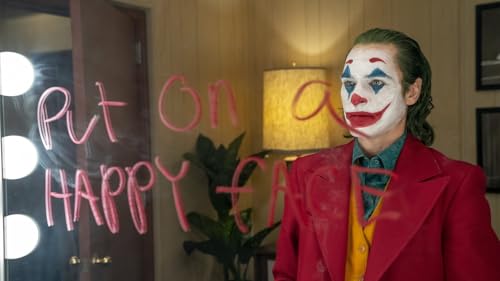
    Intro by Maria The Joker is one of the most recognizable comic supervillains of all time. Even if you’re not a fan, you know who he is, so I guess it’s no surprise that this iconic character has had a variety of portrayals throughout the years. In 2019, the film Joker was released, this time played by Joaquin Phoenix. This “new” version of the Joker is more realistic, showing him having a job as a rent-a-clown and taking care of his mother. He seems less like a comic book character and more like someone who is struggling. Struggling against what, you ask? Cue the mental illness! Yes, this movie explicitly comments upon the Joker’s mental health issues and mental illness. In fact, when this movie came out, Brandon and I had already been releasing our podcast episodes, and so I started to get a bunch of suggestions from friends that we should review this movie because it was so blatantly mental-health focused. And so in early 2020, when Brandon and I picked our 2019 movie picks, it was my pick. Now, just because the movie comments on mental illness doesn’t necessarily mean it helps the stigma around it. The film struggles in this regard. While Phoenix’s portrayal of the Joker is complex, the character’s motivation seems simplistic, driven to become the murderous Joker because he is a victim of his circumstances without enough condemnation by the film’s makers for Brandon to be satisfied. Furthermore, the movie blames the Joker’s mother—herself suffering from mental illness and past trauma and abuse—for all his troubles, and that may have been the worst part of the movie for us as it perpetuates the idea that victims have control over their situations at all times and have the power to stop it. We know this isn’t true, so why does a movie as recent as this still back this lie? So if you haven’t seen this movie yet, that’s OK. Brandon would tell you that you’re not missing much, so just skip it. All you need to do is put on a happy face as we delve into the next episode of Peculiar Picture Show. Sources https://ps.psychiatryonline.org/doi/full/10.1176/appi.ps.52.7.953http://www.mentalhealthcenter.org/wp-content/uploads/2016/04/mentalhealthcenter.org_ebook_mental_illness_and_crime_print.pdfhttps://www.psypost.org/2020/05/watching-the-movie-joker-linked-to-an-increase-in-prejudicial-attitudes-toward-those-with-mental-illness-56892 Show Summary General: Joker and this mental health podcast are a match made in heaven Brandon: Movie was made for this podcast; first time seeing film; movie takes place in the early 1980s; many people divided over this film Maria: My pick; won two Oscars; conflicted about this film Like: There was an attempt (at a movie about mental illness) Brandon: Directing; editing; use of music; Phoenix’s portrayal of Arthur Fleck (won an Oscar); technical aspects; tried to make a statement about mental illness; style Maria: Movie about mental illness first, then a villain origin story; style; entertaining Dislike: Toxic masculinity and a surprising lack of risks Brandon: Seems to revel in toxic masculinity; some things don’t really make sense and seem forced—seemed to throw in hot talking points; movie didn’t take enough risks Maria: Uncomfortable film; Joaquin Phoenix; Mental Health: Hurting perceptions of mental illness and trauma Brandon: Criminality and mental illness; how film can affect people’s views of mental illness Maria: Victim blaming/shaming Quotes Brandon: Toxic masculinity is finding ways to justify violent and abhorrent behavior. And so if you look at gun culture, it’s all about finding ways to glorify people who have used guns to solve problems, who have resorted to violence because that was the only course of action, and you have this entire group of people that dream up scenarios where violence is the noble thing to do. This extends into police culture and into a lot of things, and it’s tied to toxic masculinity. Brandon: This movie kinda has a reputation for being edgy, but one interesting thing they could have done is just let Arthur Fleck be a terrible irredeemable person, but they didn’t do that. They constructed an entire world to be mean to him and unfair to him so he would have to resort to violence. It’s like incel fan fiction. Next time Lady Bird (2017) vs. Star Trek: First Contact (1996)
    Mehr anzeigen Weniger anzeigen
    50 Min.
  • Maria and Brandon on Horror Movies
    Oct 29 2021

    Maria and Brandon talk about what they like in horror movies, Halloween traditions, and their favorites in the genre.

    Mehr anzeigen Weniger anzeigen
    32 Min.
  • Terminator 2: The Best Action Movie of All Time
    Oct 1 2021

    Intro by Brandon

    Terminator 2 is the best action movie of all time. It has two robots fighting, a smart science fiction plot, and Sarah Connor, who is very hot. It also has a 10-year-old John Connor, played by a kid who was 14 and was dating a 28-year-old woman.

    The plot follows both Connors as they try to stop the impending robopocalypse of 1997. The robots send the T-1000 terminator to kill John Connor, and John Connor sends a reprogrammed T-800 Arnold Schwarzenegger model to fight the T-1000 and protect John Connor. John finds in the T-800 the father figure he never had, since his father was killed in the first movie. Sarah is generally a badass and is really good at blowing things up.

    After being traumatized by the terminator in the first movie, Sarah is imprisoned in a psychiatric ward, where she is abused because they think she’s crazy. And that right there is our dilemma: that there seems to be an acceptable pattern of abuse if someone is crazy. So we talk about that. We also talk about how inconsistent John Connor’s character was in the film.

    So buckle in, bust out your best one-liners, and get ready for us to talk about this stellar action film in this episode of Peculiar Picture Show, the podcast that talks about movies, maladies, and mental health. And Sarah Connor.

    Resources
    • https://www.independent.co.uk/news/uk/home-news/mentally-ill-mental-health-act-detained-physical-violence-threats-treatment-a8329891.html
    • https://www.independent.co.uk/voices/mental-health-act-detention-review-psychiatric-hospital-abuse-trauma-a8332301.html
    Show Summary General: A smart thrill ride

    Brandon: In the running for top two action films of all time; more intellectual than some action movies; this made it easy to talk about artificial intelligence and its potential impacts

    Maria: T2 Universal ride; no point in this movie where I’m bored; interesting things about artificial intelligence; this films runs 24/7 in my house

    Like: A lot of little successes, including effects that hold up

    Brandon: So many things this movie does well, especially action scenes and special/practical effects; effective sci-fi film; entertaining; Linda Hamilton; character of the T-1000 is clear even when played by different actors

    Maria: Practical/special effects; entertaining; good example of an action movie

    Dislike: What the fuck is up with John Connor?

    Brandon: John Connor’s character; showing its roots as a 90s movie

    Maria: John Connor is supposed to be 10? WTF

    Mental Health: Mental health crises are not an excuse for abuse

    Brandon: Common trope that someone has seen something so outlandish that everyone thinks they are crazy (gaslighting), but makes you wonder, what would people do if she actually was going through a psychotic episode? Dehumanization of psychiatric patients

    Maria: State hospitalizations/institutions

    Next Film

    Joker (2019) vs. Close Encounters of the Third Kind (1977)

    Mehr anzeigen Weniger anzeigen
    45 Min.
  • Batman Returns: All About That Catsuit
    Sep 18 2021
    Intro by Maria Which version of Batman do you like best? Is it the corny 1960s Adam West climbing-up-walls-that-are-clearly-just-floors Batman? Is it the new Ben Affleck Batman? Oh, maybe you’re a fan of the 1990s animated Batman. How about the he-has-a-temper Christian Bale Batman? There’s so many Batmans. Of course I like the Tim Burton, Michael Keaton Batman, or as I like to call every single role Micheal Keaton has ever done: The Batman where Beetlejuice is just brimming at the surface. Seriously. I dare you to watch a movie with Micheal Keaton and not recognize that smug Beetlejuice voice at some point during his performance. It’s the same voice. I just can’t help but see it. Anyway, in this episode, Brandon and I explore Michael Keaton’s Batman. Well, maybe not really Michael Keaton’s Batman. The movie is called Batman Returns, but it’s the sequel to the first Tim Burton Batman movie, and the other characters in this movie seem to steal the show away from the bat man himself. I mean, no one can deny that Danny DeVito is revolting and over-the-top as the abandoned orphan who becomes the Penguin. And because of this, we love him. And then there’s Michelle Pfeiffer who plays Catwoman, a role that seems to have been made for her since she plays the character with such naturalness and ease. She really outshines everyone in the movie. So much so that it leaves Brandon and I to ponder this: Is this really a Batman movie, or is it a Catwoman one? As for the plot of the movie, it’s not terribly important. Here are the highlights: It’s a superhero movie with a dark Tim Burton twist, but with heavy-handed feminist undertones that lack follow through and authenticity. It’s a Christmas movie, so it’s good to watch during the months of November and December. Oh, and Batman kills tons of people. Christopher Walken is the business tycoon evil villain, with the Penguin and Catwoman as villains too, but more sympathetic, perhaps, as both are victims of trauma. But that’s really all you need to know. Oh yeah, and there’s one last Batman I didn’t mention. Well, there’s tons, but remember when the Batman movies started to be totally cheesy? This began with Val Kilmer nipples-on-the-suit Batman, a movie called Batman Forever. You know, that one with Tommy Lee Jones as Two-Face and Jim Carrey as the Riddler? Then after that movie, there was one of the worst movies ever made, called Batman & Robin with George Clooney as the Batman. Well, you know who is to blame for these very bad Batman movies? Tim Burton and this movie! That’s right. People thought this version of Batman was too dark (which is hilarious because we literally get the Dark Knight Batman in 2005), and so they didn’t want Burton to make the third iteration, instead opting for the lighter Joel Schumacher shitty versions that we now have today. So blame it all on Tim Burton and you can blame it all on the 90s. And that’s really it. That’s all on the next episode of Peculiar Picture Show. Sources Elevated empathy in adults following childhood trauma: https://www.ncbi.nlm.nih.gov/pmc/articles/PMC6169872/ New York Times article on violence against women in the movies: Show Summary General: Maria likes Burton’s vision of Batman Brandon: Protective of this movie and the leaks that went out regarding it Maria: Sequel; my pick; this movie caused the cheesier Batman movies; Burton only did this movie because they gave him creative control Like: Catwoman, Catwoman, a unique dark fantasy, and Catwoman Brandon: Musical score; Michelle Pfeiffer is a badass, and Catwoman is the best thing about this film; Maria: Everything; Tim Burton; style; music; art direction; set design; weird, strange, and dark; Christmas movie; not a kid’s movie; characters; funny; nostalgia Dislike: Fake feminism, some bad action sequences Brandon: Feminist language done at the last minute as a script revision; this movie is in a weird, in-between place that is not for kids but not really for adults; Michael Keaton’s role as Batman, and the character of Batman is a bumbling idiot and not what was expected; Catwoman’s beef with Batman Maria: Corny; surface-level feminism Mental Health: Violence against women in the movies, positive traits of trauma survivors Brandon: Violence against women in the movies during that time Maria: Are superheroes and villains all just victims of trauma, and are there “good” things about experiencing trauma? Next Film Stand by Me (1986) vs. Terminator 2: Judgment Day (1991)
    Mehr anzeigen Weniger anzeigen
    55 Min.
  • Annie Hall: Intellectual Woes and Relationship Age Gaps
    Sep 4 2021

    Intro by Brandon

    The 1977 film Annie Hall is a bit of a paradox. It’s a romantic comedy that’s actually a tragedy about breaking up. It’s an intellectual movie that articulates how being too intellectual can kill a relationship. It’s also a commentary on how men can be jerks when they date younger women, written by a guy who had a thing for really young women. All in all, this is a great intellectual film that doesn’t fail to entertain, and it won four Oscars the year it came out, so it got the recognition it deserved.

    The plot follows Alvy Singer, an intelligent and witty man, and the eponymous Annie Hall, an intelligent and witty woman. Most films would show these two falling in love, and this film does show that, but more than that, this film shows us why they fell out of love. Falling in love is just a backdrop; this is a story of what went wrong. This movie goes deeper with that theme than other similar films, and the writing is brilliant, so this is very much a film that holds up well today.

    As the history of Woody Allen unfolded through the years, we eventually discovered him to be a bit… problematic. So yes, we get into that, and we spend some time talking about whether it’s OK to like good art from bad artists. We also spend some time talking about age gaps in romantic relationships and how mental health was viewed in the middle of the 20th Century.

    So grab your favorite modern philosopher and a bunch of lobsters, we’re going to dive into this reflective and intellectual romantic comedy in this episode of Peculiar Picture Show, the podcast that talks about movies, maladies, and mental health.

    Mehr anzeigen Weniger anzeigen
    1 Std. und 2 Min.