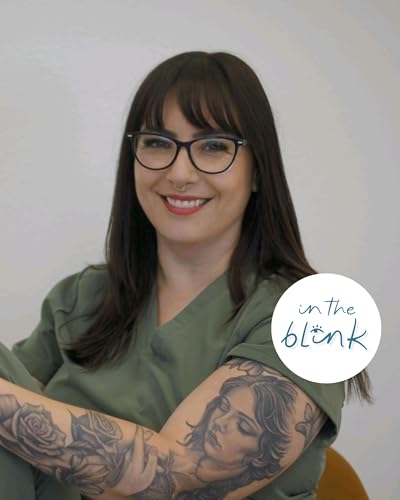
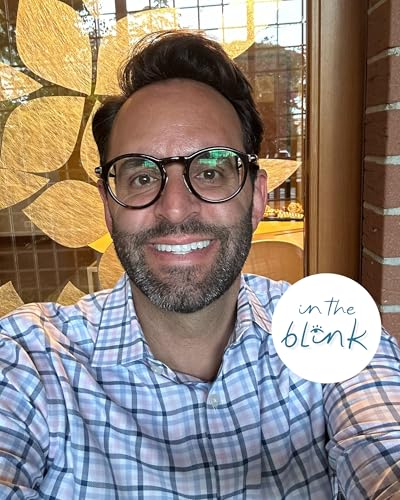
• 20. Dylan and Hannah Bond | Crafting Confidence: Helping People Feel Seen Again
    Jan 9 2026

    This episode explores what happens when art, calling, and compassion intersect, as ocularists Hannah and Dylan Bond share how making custom prosthetic eyes became both their life's work and a form of healing service. From career pivots, illness, legacy craftsmanship, and falling in love at an ocularist conference, to building EYEMKR from the ground up during COVID, the conversation reveals how prosthetic eyes are not just medical devices but powerful tools for confidence, identity, and recovery, especially for children and those navigating trauma, insurance barriers, and life after eye loss.

    "You're loved, you're cared about, you're important. The things that you've gone through are traumatic and difficult to deal with, and it's gonna be okay. There's people out there that care about you, that dedicate their whole lives to helping people like you." - Dylan Bond

    Important points covered:

    • Prosthetic eye-making is a calling, not just a skill: Both Hannah and Dylan were led to the profession through unexpected life shifts that felt deeply purposeful.
    • Art and medicine are inseparable in ocularistry: Precision, creativity, and emotional sensitivity are all required to restore both comfort and confidence.
    • Every prosthetic eye is fully custom, like a fingerprint: No two eyes, sockets, or life experiences are the same, making personalization essential.
    • Children experience profound emotional healing through care-centered spaces: Creating a non-clinical, joyful environment helps kids process medical trauma safely.
    • Insurance remains one of the biggest barriers to care: Despite being medically necessary, prosthetic eyes are often under-covered or denied.
    • DIY eye kits expand access across the globe: EYEMKR's at-home molding kits allow patients worldwide to receive custom eyes without travel.
    • "Cool eyes" can unlock confidence and self-expression: Choosing to stand out rather than blend in can be a transformative moment for many wearers.
    • Community and connection are critical after eye loss: Support groups, foundations, and shared stories reduce isolation and restore hope.

    About Dylan and Hannah Bond:

    Dylan and Hannah Bond are the co-founders of EYEMKR, a homegrown practice creating custom prosthetic eyes that blend artistry and innovation. Dylan entered ocularistry in 2018 at a high-volume practice in Sacramento, while Hannah joined him in 2019, bringing with her a deep family legacy in the craft that spans six generations. In 2022, they relocated to Chico, California, to launch EYEMKR with a mission to make prosthetic eyes more accessible, expressive, and empowering, serving clients both in person and worldwide through their groundbreaking EyeMaker Kit, a DIY mold-making experience.


    Connect with Dylan and Hannah:

    Email: Sparkle@eyemkr.com / dylan@eyemkr.com

    Website: www.eyemkr.com

    Instagram: @eye.mkr

    TikTok: @eye.mkr


    Connect with Meagan:
    Instagram | LinkedIn | Facebook Group Community
    Apply for a prosthetic eye here: www.intheblinkltd.com

    Mehr anzeigen Weniger anzeigen
    48 Min.
  • 19. John Fowler | The Parts of Grief We Don't Talk About
    Dec 26 2025

    In this deeply moving episode, John Fowler shares the raw, unfiltered journey of loving and losing his wife Nickie to cancer—from diagnosis and years of caregiving to hospice, grief, and the long road toward healing. Through stories of helplessness, community, anger, gratitude, and letting go of the life he thought he'd have, the conversation offers an honest look at grief as both devastating and transformative, reminding listeners that healing often begins when we allow ourselves to feel everything and slowly open to a new chapter.

    "You have to let go of what you thought your life was going to be and be open to all the possibilities that are still out there for you." - John Fowler

    Key Insights:

    • Grief is not just losing a person—it's also losing the life and future you imagined.
    • Caregiving can be profoundly isolating, especially when you're helpless to ease someone's pain.
    • Community support can become a lifeline, even when it arrives during the darkest moments.
    • Gratitude should not be used to suppress anger, sadness, or resentment—those emotions need space too.
    • Children are deeply affected by grief, but honesty and closeness can strengthen the parent–child bond.
    • Healing often requires change—sometimes leaving behind familiar places to truly move forward.

    About John Fowler:

    John Fowler is a devoted father and widower who spent four years caring for his wife Nickie as she bravely battled colon cancer. Now raising four adult children — including one with special needs — he approaches life with resilience, patience, and a deep, unwavering compassion. A natural storyteller and a steady presence, John brings strength, warmth, loyalty, and humor into every space he enters.


    Connect with Meagan:
    Instagram | LinkedIn | Facebook Group Community
    Apply for a prosthetic eye here: www.intheblinkltd.com

    Mehr anzeigen Weniger anzeigen
    32 Min.
  • 18. Jamie Estelle Roth | Healing as Surrender: Seeing What's True Without Eyes
    Dec 19 2025

    In this episode, Jamie Estelle Roth shares how losing her central vision became the catalyst for a profound spiritual awakening, leading her into soul contracts, ancestral healing, intuition, psychedelic medicine, and the surprising angels who guided her along the way. Through humor, honesty, and deep surrender, she reveals how blindness stripped away old identities, opened her heart, reconnected her to her purpose, and transformed her pain into clarity, connection, and a new way of seeing.

    "I love myself more than I've ever loved myself, and not in a "I'm so amazing" kind of way. I think all of us should love ourselves for who we are. And if there are things you want to change, then look inside and listen to your spirit." - Jamie Estelle Roth

    Episode insights:

    • Vision loss became her portal into intuition, spiritual sight, and a deeper version of herself.
    • Soul contracts reframed her suffering from "Why me?" to "Why not me?" and helped her see the experience as divinely chosen.
    • Angels and human "messengers" showed up in unexpected ways to guide, comfort, and heal her.
    • Psychedelic experiences like psilocybin and MDMA revealed past lives, subconscious truths, and a deeper knowing beyond physical sight.
    • Energy work and "woo woo" practices filled the emotional gaps that Western medicine couldn't reach.
    • She confronted long-buried trauma, lineage wounds, and old identities, learning to shed everything that wasn't truly her.
    • Losing her sight forced radical presence—listening deeply, feeling more, and seeing others beyond the physical.
    • Her purpose emerged through surrender: to hold space, share her light, and help others navigate their own darkness.

    About Jamie Estelle Roth:

    Jamie Estelle Roth is a bestselling author, podcast host, and visually impaired storyteller whose memoir Should've Seen That Coming chronicles her journey of sudden vision loss and spiritual transformation. Now newly released as an audiobook, narrated in her own voice, Jamie brings listeners even closer to her story with honesty, humor, and heart. Based in California, she's a mom of three, wife, and dog-lover who inspires audiences to find purpose, joy, and resilience in life's most unexpected moments.


    Connect with Meagan:
    Instagram | LinkedIn | Facebook Group Community

    Apply for a prosthetic eye here: www.intheblinkltd.com

    Mehr anzeigen Weniger anzeigen
    57 Min.
  • 17. Gina Holtkamp | Beyond the Hospital Bed: A Caregiver's Story of Trauma, Love, and Healing
    Dec 12 2025

    The episode dives into the often unseen trauma caregivers carry, beginning with the shock of crisis and moving through the quiet, transformative moments of compassion, fear, and resilience. Meagan, together with Gina, explores how caregiving can be both wounding and healing, why setting capacity and boundaries matters, and how guilt, gratitude, and community shape the journey. Ultimately, it's a reminder that caregiving is an act of profound love that changes everyone involved — and that caregivers must also name and process their own trauma to truly heal.

    "We have to process this trauma, release it. The other side of suffering is joy, you get to feel that extreme joy because you've seen the other side and how hard life can be." - Gina

    Core points captured from this episode:

    • Caregivers experience their own form of trauma, often overlooked, and must acknowledge it in order to heal in a healthy way.
    • Capacity matters — caregivers should only give what they are able to give, based on their strengths, limitations, and support system.
    • Intentional caregiving requires clear boundaries and communication, especially about what kind of support one can realistically provide.
    • Guilt is common on both sides: caregivers may feel guilty for not showing up "enough," while patients may feel guilty for needing help or being unable to give back.
    • Caregiving is an act of love without expectation of repayment — true support is given freely, not as a transaction.
    • A caregiver's support system is essential, as caregiving affects the whole family and must be balanced with home responsibilities.
    • Closure and post-traumatic care are vital, whether through rituals, celebration, grief work, or therapy, because trauma lingers if left unprocessed.
    • Suffering is a universal human experience, and when met with compassion, it can lead to personal transformation, deeper connection, and a greater capacity for empathy.


    About Gina Holtkamp:

    Gina Holtkamp lives her faith through showing up wholeheartedly for her friends and family. She believes that stepping into the hardships of others and extending compassion to those in need is not a special role, but one we are all called to do. In her roles as a caregiver and supportive friend, she realized that carrying the weight of the traumas unfolding around her, often led to its own trauma that must be processed. She believes that an intentional approach to caregiving can keep not only the caregiver healthy and prevent burnout, but can help the relationship of the caregiver and person in need move beyond the trauma event. She loves celebrating those who have returned to health, and sometimes celebrating the lives of friends or family that have gone to heaven. Gina loves showing her three sons what faith looks like in action, and involves them in support roles while communicating about compassionate living and the heavy parts of life.


    Connect with Meagan:

    Apply for a prosthetic eye here: www.intheblinkltd.com

    Instagram: https://www.instagram.com/meaganoberle/

    Mehr anzeigen Weniger anzeigen
    39 Min.
  • 16. Kris Oberle | OCD Isn't What You Think: Living Inside the Reality of OCD
    Dec 5 2025

    In this powerful episode, Kris pulls back the curtain on a lifelong battle with misunderstood and often hidden OCD—sharing how intrusive thoughts, shame, misdiagnosis, and treatment-resistant depression nearly cost her everything, and how a combination of ERP therapy, TMS, partial hospitalization, and unwavering support brought her back from the edge. Her story is a raw, hopeful reminder that OCD is not a quirk but a debilitating disorder, that help does exist, and that one more try—one more treatment, one more honest conversation—can be life-changing.

    "I have the lived experience, and I realized I cannot keep hiding this and being so ashamed of everything, because it's only perpetuating this stereotype about what OCD is."-Kris Oberle

    Hear more about:

    • OCD is deeply misunderstood — it's not about cleanliness or quirks, but intrusive, unwanted thoughts that cause intense fear, shame, and anxiety.
    • Diagnosis often takes over a decade, and misinformed providers can worsen symptoms or reinforce fears, making proper OCD-specific care essential.
    • ERP (Exposure and Response Prevention) is the gold-standard therapy for OCD, while traditional talk therapy can unintentionally make symptoms worse.
    • Treatment-resistant depression often coexists with OCD, requiring multi-pronged interventions like medication, therapy, lifestyle changes, and medical treatments.
    • TMS (Transcranial Magnetic Stimulation) can be life-changing for treatment-resistant OCD and depression, offering hope when medications and therapy fall short.
    • Support and openness save lives — sharing her struggles with trusted people became Kris' turning point, proving that connection, compassion, and "trying one more thing" can make recovery possible.
    • Acceptance is a crucial part of healing — OCD doesn't simply "go away," and learning to coexist with it, rather than fight its existence, is a major step toward stability.
    • Lived experience can be a powerful tool — Kris' journey inspired her to pursue counseling and work in a TMS clinic, showing how personal struggles can evolve into meaningful advocacy and support for others.


    About Kris Oberle:

    Kris Oberle is a Colorado State University graduate with BAs in History and Zoology, and is currently pursuing a Master's in Clinical Mental Health Counseling at Adams State University. She entered the mental health field with the intention of drawing on her lived experience to bring authenticity and empathy to her future work as a counselor. Previously, Kris built a meaningful career in animal care—an experience that continues to shape her perspective today—and she hopes to integrate animal-assisted interventions into her future practice, blending her passion for helping others with a deep connection to animals.

    Kris works as a TMS Coordinator at Harmony Neurocare in Castle Rock, Colorado, supporting patients through innovative, evidence-based care. Passionate about challenging the stereotypes that too often surround mental-health discussions and reducing the shame that can keep people from seeking help, she is committed to creating spaces where people feel safe to ask for support and embrace their full story.


    Connect with Meagan:
    Apply for a prosthetic eye here: www.intheblinkltd.com
    Instagram: https://www.instagram.com/meaganoberle/

    Mehr anzeigen Weniger anzeigen
    1 Std. und 2 Min.
  • 15. Perspective: Turning Pain into Purpose
    Aug 11 2025

    In this powerful episode, Meagan explores the profound journeys of individuals who have navigated extraordinary loss and trauma. The podcast weaves together deeply personal stories that reveal how people find resilience, perspective, and healing in the aftermath of devastating experiences. From Buck's transformative volunteering with amputees to Stacy's creation of Marlee's Smile nonprofit after losing her mother to ALS, each narrative demonstrates the human capacity to transform pain into purpose. The episode delves into raw emotional territories, highlighting how grief is not a linear process, but a complex, multilayered experience that requires compassion, connection, and sometimes unexpected pathways to healing.

    "Loss has a way of knocking us sideways, pulling us out of everything we thought we knew, but sometimes what helps us find our footing again isn't more advice or more thinking, it's perspective." - Meagan Oberle

    Key Points:

    • Volunteering and service can provide perspective during personal trauma
    • Grief is multifaceted and requires individual processing
    • Connection with others who understand similar experiences is healing
    • Small acts of kindness can shift mental attitudes during difficult times
    • Sharing personal stories can be a powerful tool for collective healing
    • Mental health recovery is a gradual, non-linear journey
    • Gratitude can be a transformative lens for viewing personal challenges

    Connect with Meagan:

    Instagram: https://www.instagram.com/meaganoberle/

    Mehr anzeigen Weniger anzeigen
    19 Min.
  • 14. David Salvato | Becoming Whole: A Journey Through Faith, Shame, and Self-Acceptance
    Aug 4 2025

    In this deeply moving episode of In the Blink podcast,, Meagan reconnects with her longtime friend David to share a powerful and vulnerable conversation about identity, faith, childhood trauma, and the long road to healing. David opens up about being bullied from a young age, growing up gay in a religious family, and navigating the complexities of faith, shame, and self-acceptance. Through candid stories of resilience, spiritual awakening, and self-guided therapy, he reminds us of the power of choosing healing, reclaiming your truth, and embracing who you are. Tune in for a heartfelt journey of struggle, strength, and ultimately, hope.

    "There's hope for all of us and for any trauma that anybody has been through, whether small or big or multiple, and to not give up and to seek out help if you need help. And because there are so many resources today, so many resources."- David

    Key Takeaways:

    • Bullying Leaves Deep, Lasting Wounds: David experienced persistent bullying from early childhood through college, which contributed to long-term trauma, repression, and shame—especially around his identity and sexuality.

    • Faith and Spirituality Can Coexist with Queerness: Despite the Church's institutional stance, David found personal salvation and strength in his faith, distinguishing between the institutional failings of the Catholic Church and the healing nature of personal spirituality.

    • Healing Is Nonlinear and Self-Driven: David embarked on a 25-year self-healing journey using tools like prayer, meditation, internal family systems (IFS), and self-education via books and online resources—largely without consistent help from traditional therapy.

    • Family Acceptance Isn't Guaranteed, But Chosen Family Can Heal: Rejection from his biological family was deeply painful, but friendships and surrogate families offered the love and support that helped him survive and thrive.

    • Self-Awareness and Rewiring Are Key to Growth: Through mindfulness and introspection, David confronted his inner child, reframed traumatic memories, and actively worked to rewire negative mental patterns formed from years of shame and suppression.

    • Telling One's Story in Safe Spaces Is Inherently Healing: Sharing his story with a trusted friend allowed David to feel seen and affirmed—showcasing how empathetic listening and connection can be powerful tools for healing.


    About David Salvato:

    David Salvato holds a Bachelor's Degree in Communications with a Minor in Spanish from the University of San Diego, where he also completed a semester abroad at St. Clare's, Oxford. He further pursued studies at the University of St. Thomas Aquinas in Rome, Italy, earning degrees in Philosophy, Theology, and a Doctorate in Canon Law. Fluent in English and Italian, with a working knowledge of Spanish, David enjoys a diverse range of interests including learning, nutrition, exercise, psychology, gardening, and exploring new cultures through travel. An aficionado of wine and food, he is deeply rooted in his Catholic faith and holds hopes for a happy, prosperous, and healthy world.

    Connect with Meagan:

    Instagram: https://www.instagram.com/meaganoberle/

    Mehr anzeigen Weniger anzeigen
    41 Min.
  • 13. Emily Jacobson | Creating Internal Safety and Emotional Resilience through Nervous System Regulation
    Jul 21 2025

    Feeling overwhelmed, anxious, or stuck in survival mode? In this episode of In The Blink Podcast, host Meagan talks with somatic life coach Emily Jacobson about how nervous system regulation and neuro-somatic tools can help you feel calmer, stronger, and more grounded. Tune in for practical, body-based ways to manage stress, heal, and feel more like yourself again.

    "I like to compare a nervous system practice to, like an exercise routine, you don't go to the gym and lift a bunch of heavy weights one day, and then all of a sudden you have muscles, right? You have to keep going routinely, consistently. It builds over time."- Emily

    Key points to delve into:

    • The nervous system doesn't understand language—it responds to sensory input: Emily explains that the survival brain (reptilian brain) can't process verbal reassurances. Instead, it reacts to sensory stimuli.

    • Talk therapy is powerful, but may leave people wondering "now what?": While therapy can help explain why we are the way we are, somatic practices offer the how—the actionable tools to shift emotional responses and patterns held in the body.

    • Nervous system regulation increases emotional resilience: By practicing daily nervous system drills (even for just 5 minutes), people can expand their capacity to handle stress and reduce emotional reactivity over time—especially helpful for parenting, grief, and anxiety.

    • There are eight sensory systems—not just five: Beyond sight, hearing, taste, touch, and smell, Emily introduces proprioception (body awareness), interoception (internal sensing), and the vestibular system (balance)—all crucial in helping the body feel safe and grounded.

    • Meditation isn't for everyone—and that's okay: Some people find traditional mindfulness practices dysregulating due to trauma or nervous system state.

    • Simple tools like breathwork and sensory foot stimulation can shift your state fast: Exercises like 3-5-8 breathing and foot sensory stimulation can regulate the nervous system in real-time—offering quick relief and improved body awareness, especially for those navigating grief, trauma, or overstimulation.

    About Emily Jacobson:

    Emily Jacobson is a somatic life coach who specializes in nervous system health. Through one-on-one sessions, group programs, and corporate workshops, Emily teaches practical and simple tools to harness the power of a regulated nervous system. With a diverse background in public service, communications, and transformational coaching, Emily's passion lies in teaching and communicating complex topics with clarity. As a coach certified in Neuro-Somatic Intelligence, Emily guides her clients through nervous system training and dismantles limiting beliefs that hinder personal growth, making transformation easy and approachable for all walks of life. She lives in Littleton with her two children and her rescue lab, Belle.

    Connect with Emily:

    Website: www.emilyjacobson.com

    Email: emily@emilyjacobson.com

    Instagram: www.instagram.com/emilyjacobsoncoaching

    LinkedIn: www.linkedin.com/in/emily-jacobson-bab7b14

    Connect with Meagan:

    Instagram: https://www.instagram.com/meaganoberle/

    Mehr anzeigen Weniger anzeigen
    45 Min.