Folgen

  • In Conversation w/Nuria Godón: “Counterhegemonic voices: Dulce Dueño by Emilia Pardo Bazán and beyond”
    Mar 2 2026

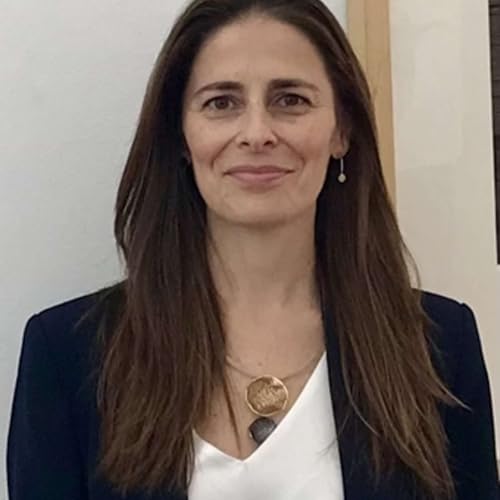
    In this episode, Dean Horswell chats with Dr. Nuria Godón about her most recent co-edited book, Dulce Dueño [Sweet Master] (Stockcero, 2025), and the importance of offering an accessible, critical, and annotated Spanish edition of the last novel by Spanish-Galician writer Emilia Pardo Bazán. The conversation highlights the novel's interpretation as a female Bildungsroman, moving beyond Pardo Bazán’s traditional naturalism toward modernist aesthetics. Co-edited with Dr. Carmen Pereira-Muro (Texas Tech University), the edition brings readers closer to the author’s feminist, critical, and prophetic vision across fields such as literature, gender and religious studies, philosophy, cultural history, and the health sciences. The episode concludes with an early look at Dr. Godón’s current research on water narratives and the literary portrayal of Spanish towns and communities submerged and displaced by dam construction.

    Nuria Godón is Professor of Spanish and Hispanic Studies at Florida Atlantic University. Her research focuses on counterhegemonic discourses and questions of cultural identity in Hispanic literature and film. She has published more than twenty scholarly essays and four volumes on gender-related issues, including her monograph La pasión esclava: Alianzas masoquistas en La Regenta [Enslaved Passions: Masochist Alliances in La Regenta] (Purdue University Press, 2017). Among her most recent publications is the critical and annotated edition of the modernist novel Dulce Dueño [Sweet Master] by Emilia Pardo Bazán, co-edited with Carmen Pereira-Muro (Stockcero, 2025). Among her current projects are a monograph on submerged towns in Spain and a co-edited volume with Carrie Ruiz on the representation of contagious diseases in Spanish literature.

    Mehr anzeigen Weniger anzeigen
    31 Min.
  • In Conversation w/Nuria Godón: “Counterhegemonic voices: Dulce Dueño by Emilia Pardo Bazán and beyond”
    Mar 1 2026

    In this episode, Dean Horswell chats with Dr. Nuria Godón about her most recent co-edited book, Dulce Dueño [Sweet Master] (Stockcero, 2025), and the importance of offering an accessible, critical, and annotated Spanish edition of the last novel by Spanish-Galician writer Emilia Pardo Bazán. The conversation highlights the novel's interpretation as a female Bildungsroman, moving beyond Pardo Bazán’s traditional naturalism toward modernist aesthetics. Co-edited with Dr. Carmen Pereira-Muro (Texas Tech University), the edition brings readers closer to the author’s feminist, critical, and prophetic vision across fields such as literature, gender and religious studies, philosophy, cultural history, and the health sciences. The episode concludes with an early look at Dr. Godón’s current research on water narratives and the literary portrayal of Spanish towns and communities submerged and displaced by dam construction.

    Nuria Godón is Professor of Spanish and Hispanic Studies at Florida Atlantic University. Her research focuses on counterhegemonic discourses and questions of cultural identity in Hispanic literature and film. She has published more than twenty scholarly essays and four volumes on gender-related issues, including her monograph La pasión esclava: Alianzas masoquistas en La Regenta [Enslaved Passions: Masochist Alliances in La Regenta] (Purdue University Press, 2017). Among her most recent publications is the critical and annotated edition of the modernist novel Dulce Dueño [Sweet Master] by Emilia Pardo Bazán, co-edited with Carmen Pereira-Muro (Stockcero, 2025). Among her current projects are a monograph on submerged towns in Spain and a co-edited volume with Carrie Ruiz on the representation of contagious diseases in Spanish literature.

    Mehr anzeigen Weniger anzeigen
    1 Min.
  • In Conversation w/Rachel Harris: Beyond the Battlefield
    Jan 22 2026

    In this episode, Dean Horswell chats with Rachel Harris about her recent research on the IDF archive and the early formation of Israeli film culture. Their conversation moves beyond the finished article to the process itself: what it means to actually undertake archival research, to work inside military and state archives, and to piece together a history from fragmentary, uneven, and sometimes resistant sources. They discuss the intellectual and methodological stakes of reading institutional archives critically, the challenges of access and interpretation, and how archival discoveries can reshape established narratives about cinema, nation-building, and cultural production. The episode offers a behind-the-scenes look at how archival work happens—and why it matters.

    Rachel S. Harris occupies the Gimelstob Eminent Scholar Chair for Judaic Studies, and is a Professor of Film and Multimedia Studies at Florida Atlantic University where she also directs the Program in Jewish Studies. Prior to this, she was an Associate Professor of Comparative and World Literature and The Program in Jewish Culture & Society at the University of Illinois, Urbana-Champaign (2009-2022). She was also was the Shoshana Shrier Distinguished Visiting Professor at Toronto University. She is active in the Association for Jewish Studies where she served as the chair of the Women's Caucus (2017-2019) and the Association for Israel Studies where she served two terms on the board (2015-2019) and Chaired the 37th Association for Israel Studies Annual Conference "Pluralistic Israel: Women, Minorities and Diversity" in 2021. She has served on the committee for the Yonathan Shapiro Award for Best Book in Israel Studies (2019-2022) and as its chair (2021-2022).

    Harris is the author of Warriors, Witches, Whores: Women in Israeli Cinema (2017) and An Ideological Death: Suicide in Israeli Literature (2014). She is the co-editor of Casting a Giant Shadow: The Transnational Shaping of Israeli Cinema (2021) with Dan Chyutin which won The Janovics Center Best Book Award for Outstanding Humanities Research in Transnational Film and Theatre Studies, 2021. She edited Teaching the Arab-Israeli Conflict (2019), and with Ranen Omer-Sherman she edited Narratives of Dissent: War in Contemporary Israeli Arts and Culture (2012).

    She is the editor in chief of the Journal of Jewish Identities.

    Mehr anzeigen Weniger anzeigen
    40 Min.
  • In Conversation w/Rachel Harris: Beyond the Battlefield
    Jan 21 2026

    In this episode, Dean Horswell chats with Rachel Harris about her recent research on the IDF archive and the early formation of Israeli film culture. Their conversation moves beyond the finished article to the process itself: what it means to actually undertake archival research, to work inside military and state archives, and to piece together a history from fragmentary, uneven, and sometimes resistant sources. They discuss the intellectual and methodological stakes of reading institutional archives critically, the challenges of access and interpretation, and how archival discoveries can reshape established narratives about cinema, nation-building, and cultural production. The episode offers a behind-the-scenes look at how archival work happens—and why it matters.

    Rachel S. Harris occupies the Gimelstob Eminent Scholar Chair for Judaic Studies, and is a Professor of Film and Multimedia Studies at Florida Atlantic University where she also directs the Program in Jewish Studies. Prior to this, she was an Associate Professor of Comparative and World Literature and The Program in Jewish Culture & Society at the University of Illinois, Urbana-Champaign (2009-2022). She was also was the Shoshana Shrier Distinguished Visiting Professor at Toronto University. She is active in the Association for Jewish Studies where she served as the chair of the Women's Caucus (2017-2019) and the Association for Israel Studies where she served two terms on the board (2015-2019) and Chaired the 37th Association for Israel Studies Annual Conference "Pluralistic Israel: Women, Minorities and Diversity" in 2021. She has served on the committee for the Yonathan Shapiro Award for Best Book in Israel Studies (2019-2022) and as its chair (2021-2022).

    Harris is the author of Warriors, Witches, Whores: Women in Israeli Cinema (2017) and An Ideological Death: Suicide in Israeli Literature (2014). She is the co-editor of Casting a Giant Shadow: The Transnational Shaping of Israeli Cinema (2021) with Dan Chyutin which won The Janovics Center Best Book Award for Outstanding Humanities Research in Transnational Film and Theatre Studies, 2021. She edited Teaching the Arab-Israeli Conflict (2019), and with Ranen Omer-Sherman she edited Narratives of Dissent: War in Contemporary Israeli Arts and Culture (2012).

    She is the editor in chief of the Journal of Jewish Identities.

    Mehr anzeigen Weniger anzeigen
    1 Min.
  • In Conversation: The Power of Chatbots to Control Human Knowledge
    Dec 15 2025

    In this episode, Dean Horswell chats with Susan Schneider, as they discuss her book, Artificial You: AI And The Future of Your Mind and the subject of Alien Intelligence and A.I.

    Dr. Susan Schneider is a philosopher and cognitive scientist whose work focuses on AI consciousness, the simulation hypothesis, and the future of intelligence. Her recent research spans questions such as whether advanced AI systems could be conscious, what it would mean if we live in a computer simulation, how consciousness relates to quantum mechanics, the emerging “epistemology” of AI chatbots, and how we might understand the nature of alien superintelligence.

    Dr. Schneider is the Founding Director of The Center for the Future of AI, Mind and Society at Florida Atlantic University. Previously, she served as the NASA–Baruch Blumberg Chair in Astrobiology and Technological Innovation at NASA, held the Distinguished Scholar Chair at the Library of Congress, and was a fellow at the Institute for Advanced Study in Princeton.

    Her book, Artificial You: AI and the Future of Your Mind, explores the philosophical implications of artificial intelligence, with a special focus on AI consciousness, mind design, and brain–machine interfaces (BMIs). She argues that the mind is not a ‘program’ and that the most intelligent alien life in the cosmos is likely to be superintelligent AI rather than biological beings.

    Schneider’s recent work develops Superpsychism, the view that our spatiotemporal universe may be generated or structured by a massive qubit-based quantum computer, potentially a natural phenomenon rather than an artifact. She recently completed a three-year project with NASA on advanced alien intelligence as AI and serves as an advisor to Prism: the Partnership for Research into Sentient Machines.

    She is a co-director of the MPCR Lab at FAU's new Gruber Sandbox, a research facility which builds AI systems informed by neuroscience and philosophy of mind. She appears frequently on television shows on stations such as PBS and The History Channel (see below for clips). She writes opinion pieces for venues such as the New York Times, Scientific American, The Wall Street Journal and The Financial Times.


    Mehr anzeigen Weniger anzeigen
    48 Min.
  • In Conversation: The Power of Chatbots to Control Human Knowledge
    Dec 12 2025

    In this episode, Dean Horswell chats with Susan Schneider, as they discuss her book, Artificial You: AI And The Future of Your Mind and the subject of Alien Intelligence and A.I.

    Dr. Susan Schneider is a philosopher and cognitive scientist whose work focuses on AI consciousness, the simulation hypothesis, and the future of intelligence. Her recent research spans questions such as whether advanced AI systems could be conscious, what it would mean if we live in a computer simulation, how consciousness relates to quantum mechanics, the emerging “epistemology” of AI chatbots, and how we might understand the nature of alien superintelligence.

    Dr. Schneider is the Founding Director of The Center for the Future of AI, Mind and Society at Florida Atlantic University. Previously, she served as the NASA–Baruch Blumberg Chair in Astrobiology and Technological Innovation at NASA, held the Distinguished Scholar Chair at the Library of Congress, and was a fellow at the Institute for Advanced Study in Princeton.

    Her book, Artificial You: AI and the Future of Your Mind, explores the philosophical implications of artificial intelligence, with a special focus on AI consciousness, mind design, and brain–machine interfaces (BMIs). She argues that the mind is not a ‘program’ and that the most intelligent alien life in the cosmos is likely to be superintelligent AI rather than biological beings.

    Schneider’s recent work develops Superpsychism, the view that our spatiotemporal universe may be generated or structured by a massive qubit-based quantum computer, potentially a natural phenomenon rather than an artifact. She recently completed a three-year project with NASA on advanced alien intelligence as AI and serves as an advisor to Prism: the Partnership for Research into Sentient Machines.

    She is a co-director of the MPCR Lab at FAU's new Gruber Sandbox, a research facility which builds AI systems informed by neuroscience and philosophy of mind. She appears frequently on television shows on stations such as PBS and The History Channel (see below for clips). She writes opinion pieces for venues such as the New York Times, Scientific American, The Wall Street Journal and The Financial Times.


    Mehr anzeigen Weniger anzeigen
    1 Min.
  • In Conversation: Regenerative Agriculture And America's Food System
    Oct 5 2025

    In this episode, Dean Horswell chats with Stephanie Anderson about the many challenges within America's food and farming system, and how regenerative agriculture, female leadership, and consumer support can help address them.

    Bio: Stephanie Anderson is the author of From the Ground Up: The Women Revolutionizing Regenerative Agriculture (The New Press, 2024). Her work has appeared in The Rumpus, TriQuarterly, Flyway, Hotel Amerika, Terrain.org, The Chronicle Review, Sweet and others. Stephanie is the 2020 winner of the Margolis Award for social justice journalism and a co-editor for the University of Nebraska Press “Our Regenerative Future” book series. Her debut nonfiction book, titled One Size Fits None: A Farm Girl’s Search for the Promise of Regenerative Agriculture, won a 2020 Nautilus Award and 2019 Midwest Book Award. Stephanie holds an MFA from Florida Atlantic University, where she serves as Assistant Professor of Creative Nonfiction.

    Mehr anzeigen Weniger anzeigen
    36 Min.
  • In Conversation: Regenerative Agriculture And America's Food System
    Oct 1 2025

    In this episode, Dean Horswell chats with Stephanie Anderson about the many challenges within America's food and farming system, and how regenerative agriculture, female leadership, and consumer support can help address them.

    Bio: Stephanie Anderson is the author of From the Ground Up: The Women Revolutionizing Regenerative Agriculture (The New Press, 2024). Her work has appeared in The Rumpus, TriQuarterly, Flyway, Hotel Amerika, Terrain.org, The Chronicle Review, Sweet and others. Stephanie is the 2020 winner of the Margolis Award for social justice journalism and a co-editor for the University of Nebraska Press “Our Regenerative Future” book series. Her debut nonfiction book, titled One Size Fits None: A Farm Girl’s Search for the Promise of Regenerative Agriculture, won a 2020 Nautilus Award and 2019 Midwest Book Award. Stephanie holds an MFA from Florida Atlantic University, where she serves as Assistant Professor of Creative Nonfiction.

    Mehr anzeigen Weniger anzeigen
    1 Min.