Folgen

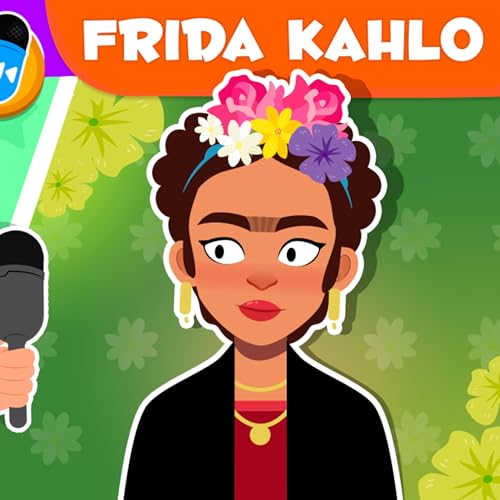
  • Frida Kahlo 🌺 History for Kids 🎙️ Episode 12
    Jan 26 2026

    Funded by the Spanish Ministry of Culture - European Union - NextGenerationEU.
    An educational podcast for children in which we travel to early 20th-century Mexico, specifically to the Blue House in Coyoacán, to meet one of the world's most iconic artists: Frida Kahlo. In this episode of “History Has a Voice,” we will discover how she turned her life and pain into works of art full of color and strength.
    Frida was a woman with a rebellious spirit who, despite suffering from polio as a child and a serious bus accident that forced her to stay in bed for a long time, never gave up. Thanks to a mirror placed above her bed and a special easel, she began to paint self-portraits, capturing her emotions and demonstrating that creativity can heal the soul.
    Proud of her roots, she brought Mexican culture to the world (from Paris to New York) through her traditional clothing and her paintings, which often featured animals such as monkeys and parrots. She will explain the meaning of her famous phrase: “Feet, why do I need them when I have wings to fly?”
    In this episode, we will understand why she claimed to have been born in 1910 (the year of the Revolution) instead of her actual date of birth, meet her spider monkey Fulang-Chang, and learn to see the beauty in difference. An emotional journey to understand the value of authenticity and resilience.
    A very useful and interesting resource for children. It is perfect for introducing 20th-century art in primary education, working on emotional intelligence and coping with adversity, and appreciating the richness of Mexican culture.

    Mehr anzeigen Weniger anzeigen
    11 Min.
  • Marie Curie 🧪 History for Kids 🎙️ Episode 11
    Jan 26 2026

    Funded by the Spanish Ministry of Culture - European Union - NextGenerationEU.
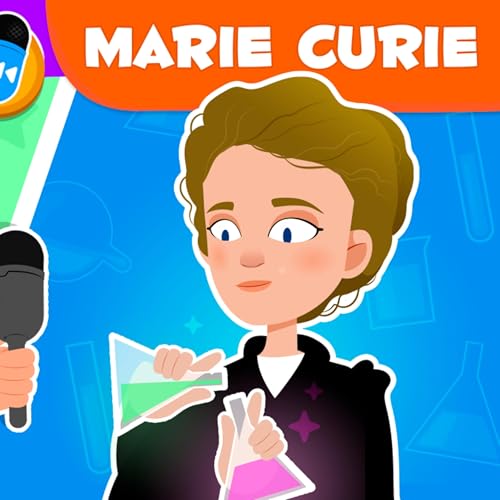
    An educational podcast for children in which we travel back in time to 1920, to a laboratory full of formulas and test tubes, to meet the most important scientist in history: Marie Curie. In this episode of “History Has a Voice,” we'll put on our white coats to discover how her brilliant mind revolutionized physics and chemistry.
    Marie Curie, born Maria Skłodowska in Poland, had to face great injustices, as women in her country were not allowed to go to university. She will tell us how she studied in secret at a “clandestine university” and the pact she made with her sister to be able to travel to Paris, where she finally graduated from the Sorbonne and met Pierre Curie.
    Together with her husband, she researched mysterious minerals and discovered two new elements: polonium and radium, coining the term “radioactivity.” She was the first woman to win a Nobel Prize (and the first person to win two in different disciplines!), although her unprotected experiments put her health at risk.
    In this episode, we will learn what radioactivity is, discover the legacy of her daughter Irène (also a Nobel Prize winner), and reflect on her famous quote: “Nothing in this world should be feared, only understood.” An inspiring journey to encourage boundless curiosity.
    A very useful and interesting resource for children. It is perfect for introducing modern science in primary education, encouraging STEM vocations (especially in girls), and working on values such as effort, perseverance, and equality.

    Mehr anzeigen Weniger anzeigen
    10 Min.
  • Velázquez 🖌️ History for Kids 🎙️ Episode 10
    Jan 26 2026

    Funded by the Spanish Ministry of Culture - European Union - NextGenerationEU.
    An educational podcast for children in which we travel back in time to 1656 to visit the Spanish Golden Age and meet one of the greatest painters in Spanish history: Diego Velázquez. In this episode of “History Has a Voice,” we will land in the court of Madrid to talk to the creator of "Las Meninas."
    Velázquez was born in Seville in 1599 and began training in the art of painting at the age of 11. His talent was so extraordinary that he became the official painter of King Philip IV. But he didn't just paint portraits of royalty; he also painted jesters, ordinary people and even slaves with great dignity, encouraging the world to see them in a more favorable light.
    In this episode, we will delve into the secrets of "Las Meninas," an immense work in which he painted to assert that artists are not mere craftsmen, but creators. He will explain how he achieved that effect of “reality” that makes the viewer feel part of the scene.
    We will also learn the moving story of Juan de Pareja, his assistant and slave, whom Velázquez granted his freedom and painted with great nobility. An inspiring journey to learn how to find beauty in everyday life and look at others with respect.
    A very useful and interesting resource for children. It is perfect for introducing Baroque art in primary education, fostering artistic appreciation, and working on values such as human dignity and equality.

    Mehr anzeigen Weniger anzeigen
    11 Min.
  • Galileo Galilei 🔭 History for Kids 🎙️ Episode 9
    Jan 26 2026

    Funded by the Spanish Ministry of Culture - European Union - NextGenerationEU.
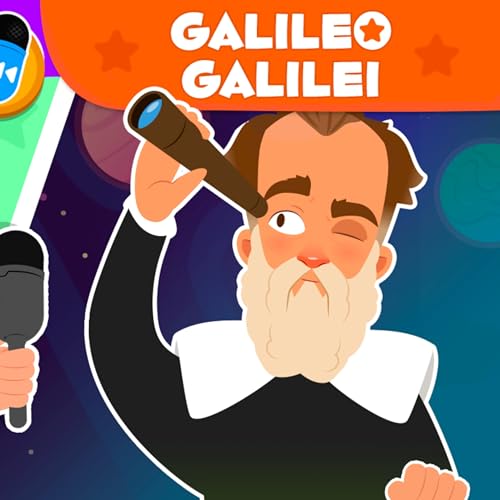
    An educational podcast for children in which we travel back in time to Renaissance Italy, specifically to the year 1609, to meet the man who forever changed the way we look at the sky: Galileo Galilei. In this episode of “History Has a Voice,” we will land in Pisa to chat with the man considered to be the father of modern science.
    Galileo was an extremely curious physicist, mathematician, and astronomer who, although he began studying medicine, preferred numbers and experiments in the end. We will learn the importance of the “scientific method,” which includes observing, questioning, and testing things before taking them for granted and is a way of thinking that laid the foundations for modern science.
    Thanks to the improvements he made to the telescope, he discovered the mountains of the Moon, the phases of Venus, and the four moons of Jupiter, confirming that the Earth was not the center of the universe, but rather revolved around the Sun. His revolutionary ideas caused him serious problems with the authorities of the time, but he never gave up searching for the truth.
    In this episode, we will discover the truth about his famous free-fall experiment in the Tower of Pisa, learn about inventions such as the military compass and the thermoscope (the “grandfather” of the thermometer), and look at the stars through his lens. A fascinating journey to learn not to be afraid of making mistakes.
    A very useful and interesting resource for children. It is perfect for introducing the Renaissance and astronomy in primary education, explaining what the scientific method is, and encouraging critical thinking and curiosity about the universe.

    Mehr anzeigen Weniger anzeigen
    10 Min.
  • Miguel de Cervantes 📖 History for Kids 🎙️ Episode 8
    Jan 26 2026

    Funded by the Spanish Ministry of Culture - European Union - NextGenerationEU.
    Educational podcast for children in which we travel to Valladolid in 1605 to meet the most important writer in the Spanish language: Miguel de Cervantes. In this episode of “History Has a Voice,” we enter his room filled with ink and paper to discover how a man with a life full of difficulties managed to create a masterpiece: Don Quixote de la Mancha.
    Miguel de Cervantes had a life worthy of an adventure novel. He was a soldier in the Battle of Lepanto, where he lost the use of his left hand (earning him the nickname “the one-armed man of Lepanto,” although he still had his hand), and spent five long years as a prisoner in Algiers, attempting to escape four times without success before being rescued.
    Upon his return to Spain, he worked as a tax collector, but a mistake with the accounts led him back to prison. It was there that, to escape his reality, he came up with the story of a dreamy nobleman and his realistic squire, Sancho Panza. He will explain how each character in the book is inspired by people he knew and how he transformed his misfortunes into humor.
    In this episode, we will understand why Sancho is the voice of reality in the face of Don Quixote's madness and receive valuable advice: do not fear failure, because mistakes can be the beginning of a great story.
    A very useful and interesting resource for children. It is perfect for introducing classic literature in primary education, encouraging reading, and working on values such as resilience and the power of imagination.

    Mehr anzeigen Weniger anzeigen
    11 Min.
  • Leonardo da Vinci 🎨 History for Kids 🎙️ Episode 7
    Jan 26 2026

    Funded by the Spanish Ministry of Culture - European Union - NextGenerationEU.
    Educational podcast for children in which we travel to Renaissance Italy, more than 500 years ago, to meet one of the most brilliant minds in history: Leonardo da Vinci. In this episode of “History Has a Voice,” we will land in Florence to discover how one man could be a painter, inventor, anatomist, and architect all at the same time.
    Leonardo da Vinci was born in 1452 in the village of Vinci and was a self-taught child who learned by observing nature, from the flight of birds to the flow of water. In the workshop of his master Verrocchio, he discovered that art and science were not separate things, but complementary tools for understanding the world.
    He was the creator of famous works such as "The Last Supper" and "La Gioconda" (the Mona Lisa), where he applied the sfumato technique to bring them to life and give them mystery. But his genius went beyond painting: he filled notebooks with “mirror” writing (backwards) and designed futuristic machines, dreaming of helicopters and parachutes centuries before they existed.
    In this episode, he will explain why he left some projects unfinished, his secrets for capturing human emotions, and his famous reflection on how inactivity “rusts” the intellect. An inspiring journey to understand that curiosity is the most important superpower.
    A very useful and interesting resource for children. It is perfect for introducing the Renaissance in primary education, encouraging multidisciplinary creativity (STEAM), and awakening interest in scientific and artistic observation.

    Mehr anzeigen Weniger anzeigen
    10 Min.
  • Isabella the Catholic 👑 History for Kids 🎙️ Episode 6
    Jan 26 2026

    Funded by the Spanish Ministry of Culture - European Union - NextGenerationEU.
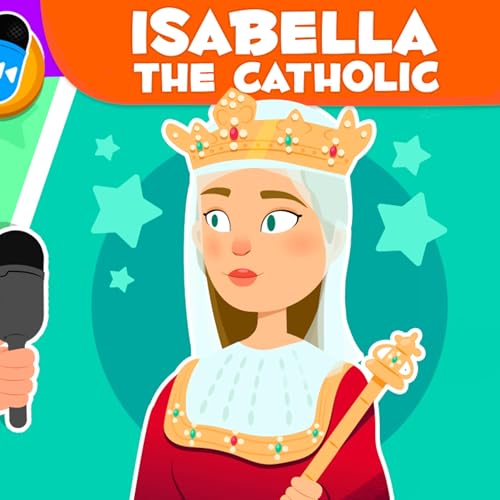
    An educational podcast for children in which we travel back in time to the year 1502, to the Castilian court, to meet one of the most influential monarchs of all time: Isabella I of Castile. In this episode of “History Has a Voice,” we will discover how this queen changed the map of the world and ushered in a new era.
    Isabella the Catholic was a cultured and determined woman who, despite not being the direct heir at birth and facing great challenges, managed to ascend to the throne after the death of her brothers. Together with her husband Ferdinand of Aragon, she united kingdoms, culminated the Reconquista with the capture of Granada, and received the title of “Catholic Monarch” from the Pope.
    Her reign marked a turning point thanks to her support for Christopher Columbus. She took a chance on a risky expedition that ended up connecting Europe with America, initiating a cultural and food exchange (such as chocolate and potatoes) and laying the foundations for the first laws to protect the natives.
    In this episode, we will learn about her serious and firm character, why she decided to finance Columbus's voyage when others rejected it, and the importance she placed on education and justice. An exciting journey to understand the beginning of the Modern Age.
    A very useful and interesting resource for children. It is perfect for introducing the history of Spain and America in primary education, explaining the end of the Middle Ages, and valuing female leadership in the construction of today's world.

    Mehr anzeigen Weniger anzeigen
    11 Min.
  • A Knight in the Middle Ages ⚔️ History for Kids 🎙️ Episode 5
    Jan 26 2026

    Funded by the Spanish Ministry of Culture - European Union - NextGenerationEU.
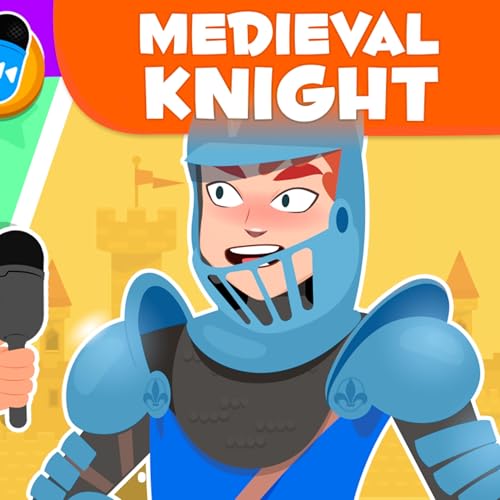
    Educational podcast for children in which we travel back to the year 1190, in the heart of the Kingdom of Castile, to delve into the fascinating Middle Ages. In this episode of “History Has a Voice,” we will don our helmets and armor to visit Don Rodrigo de Villafuerte, a knight who will teach us what it really meant to live among swords, tournaments, and castles.
    Don Rodrigo belongs to the lower nobility and dedicated his life to preparing for war, starting as a page at the age of 7 and as a squire at 14. Through his story, we will understand how the feudal social pyramid worked: from kings and clergy, to nobles who protected the territory, to peasants who worked the land.
    Even though he doesn't live in a giant palace, he does live in a fortified tower in Medinaceli, and his life is full of responsibilities. We'll find out what his chain mail armor looks like, how crops and justice were managed on his lands, and how news traveled thanks to the merchants and pilgrims on the Camino de Santiago.
    In this episode, we will hear an exciting anecdote about an ambush on bandits in the forest, learn why few children went to school at that time, and remember the value of one's word. An adventurous journey to understand medieval loyalty and honor.
    A very useful and interesting resource for children. It is perfect for introducing the Middle Ages in primary education, explaining the concept of feudalism in a simple way, and sparking curiosity about the daily lives of people a long time ago.

    Mehr anzeigen Weniger anzeigen
    11 Min.