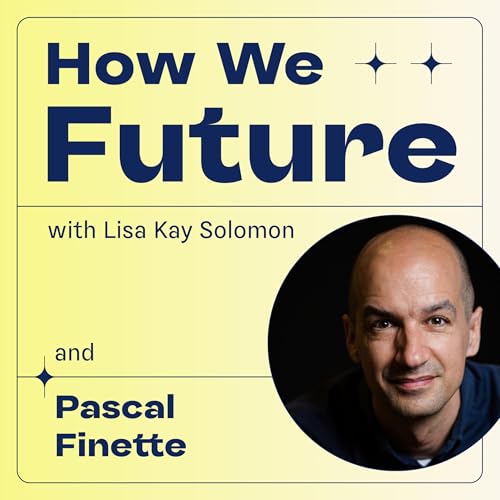
• Disruption Expert Pascal Finette: Becoming Antifragile in a World of Constant Change
    Feb 24 2026

    The future is a paradox we have to learn to hold.

    In this episode of How We Future, Lisa Kay Solomon is joined by Pascal Finette, Co-Founder radical, an organization that offers strategic advice to help leaders build organizations that strengthen under stress instead of breaking. Over nearly three decades, Pascal has led transformations at eBay, Mozilla, and Google, and he brings refreshing honesty about what it really takes to navigate uncertainty.

    The conversation centers on a simple question Pascal asks thousands of executives: "The future is ___." How you fill in that blank reveals everything. Some say bright. Some say terrifying. Pascal argues we need to hold both views at once because the future genuinely is contradictory. He and Lisa talk about the danger of the "official future," that narrow path organizations and people lock themselves into that leaves them brittle when inevitable shocks arrive.

    In this conversation, you'll learn:

    • Why holding opposing views of the future at once is essential
    • Why curiosity is the most important muscle for navigating change
    • What anti-fragility means in practice and how it differs from resilience

    Pascal encourages listeners to ask more meaningful questions about their role in society rather than just focusing on quarterly profits. The future, he reminds us, is ours to create.

    Links from the episode:

    • Radical Briefing
    • The Heretic x GYSHIDO
    • The Official Future Trap
    • Pascal’s Disruption Mapping Exercise
    Mehr anzeigen Weniger anzeigen
    43 Min.
  • Democracy Futurist Aditi Juneja: Why We Need to Look 50 Years Ahead
    Feb 17 2026

    The best way to unstick the present is to think further into the future.

    In this episode of How We Future, Lisa Kay Solomon sits down with Aditi Juneja, Executive Director of Democracy 2076, to explore how thinking 50 years ahead can break down current obstacles and make seemingly unrealistic hopes feel very possible. Democracy 2076 helps us plan democracy not for the next election cycle, but for the next 50 years.

    The conversation reveals how the media we consume shapes our perception of what democracy looks like. From Scandal normalizing election fraud to The West Wing making some viewers think our government is running smoothly, Aditi's research uncovers how TV shows and movies are quietly teaching us civics.

    You'll also hear:

    • Why a 50-year timeline makes change feel possible instead of impossible
    • What happens when people sit down to design constitutional amendments together
    • Why we need to give people a menu of possibilities, not just ask them to imagine the future

    The episode closes with practical advice for staying resilient in noisy political times. Thank you, Aditi, for joining How We Future!

    Links from the episode:

    • Democracy 2076
    • Report co-authored with Harmony Labs on how media shapes people’s attitudes about the problems facing democracy
    • The Long-Term Futures Work of Building a Better Democracy
    • A Constitution for 2076
    • Pro-Democracy Political Coalitions for 2076
    Mehr anzeigen Weniger anzeigen
    47 Min.
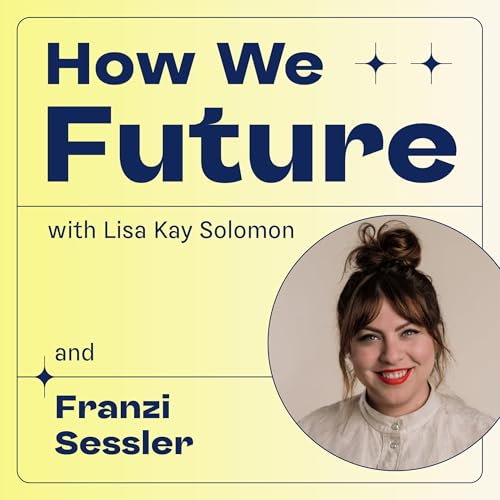
  • Creative Director Franzi Sessler: How Design Brings Us Together
    Feb 10 2026

    Can graphic design be a force for good?

    In this episode of How We Future, Lisa sits down with Franzi Sessler, the co-founder of global design agency Kreatives, to explore how design, storytelling, and creativity can shape better futures.

    Recently, Franzi, and her team have made stunning sports explainers for the Milano Cortina 2026 Paralympic Winter Games. Their collaboration with Allianz and the International Paralympic Committee started in 2024, when her team created animated explainers for all 22 Paralympic sports, helping millions of viewers understand and enjoy the amazing athletes and games.

    The conversation also touches on projects like All Vote No Play and Futures Happening, revealing how design can activate civic imagination, build momentum, and turn uncertainty into possibility. Throughout, Franzi shows what’s possible when constraints are treated as creative fuel and when imagination is taken seriously.

    In this conversation, you’ll learn:

    • How design can close the gap between confusion and connection
    • Why constraints often unlock the best ideas
    • What it takes to design with trust, empathy, and impact

    Links from the episode:

    • Kreatives
    • Milano Cortina 2026 Paralympic Sports Explainer Videos
    • Milano Cortina 2026 Olympic Sports Explainer Videos
    • Franzi’s favorite Paralympic Disciplines to Design for: Boccia and Swimming
    • Paris 2024 Paralympic Sports Explainer Videos
    • Franzi’s All Vote No Play designs
    • The Team
    Mehr anzeigen Weniger anzeigen
    47 Min.
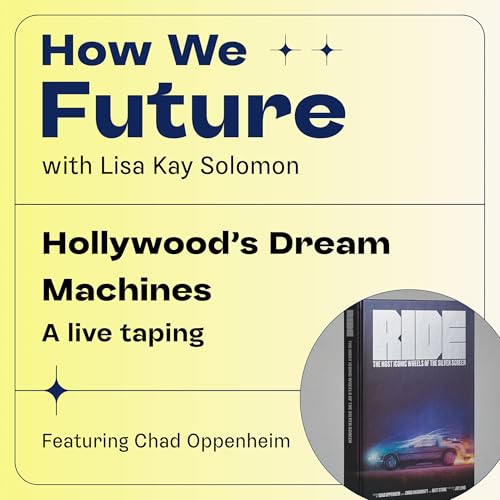
  • Architect Chad Oppenheim: What Hollywood's Cars Can Teach Us About the Future
    Feb 3 2026

    “Life moves pretty fast. If you don’t stop and look around once in a while, you could miss it.”

    For our first-ever live audience recording of How We Future, Lisa Kay Solomon sat down with architect and author Chad Oppenheim at Book Passage in San Francisco.

    The conversation centers around Chad’s book RIDE: The Iconic Wheels of the Silver Screen and the vehicles that became emotional anchors in film history. From the Back to the Future DeLorean to Ferris Bueller’s Ferrari, these cars were modes of transportation, meaning, and possibility.

    Chad shares how childhood Matchbox cars sparked a lifelong fascination with design and storytelling, and how those early influences still shape his architecture today. This live episode explores the importance of imagination and why the things that once made us feel limitless can still guide how we build the future.

    You’ll hear:

    • Why movie cars function as emotional characters
    • How nostalgia shapes creative vision
    • Chad’s favorite movie car

    This week, take Ferris Bueller’s advice and slow down. Revisit a movie that meant something to you as a kid.

    Ask yourself:

    • What did this story, or this machine, make me feel back then?
    • What part of that feeling do I want more of in my future?

    And if you’re up for it, share with us: What was the iconic ride that changed how you saw the world?

    Links from the show:

    • Oppenheim Architecture
    • LAIR: Radical Homes and Hideouts of Movie Villains
    • RIDE: Most Iconic Wheels of the Silver Screen
    • Watch 1 minute Trailer: RIDE
    Mehr anzeigen Weniger anzeigen
    52 Min.
  • Visual Thinking Expert Dan Roam: How to Solve Complex Problems with Simple Pictures
    Jan 20 2026

    Sometimes the fastest way to clarity is to start drawing.

    In this episode of How We Future, Lisa Kay Solomon sits down with visual thinking pioneer Dan Roam to explore how simple sketches can bring clarity to complexity. Dan, author of The Back of the Napkin and five other bestselling books, shares how visual thinking strengthens problem-solving, communication, and our sense of agency in an uncertain world.

    In this conversation, you’ll learn:

    • Why drawing helps us slow down and make sense of complex problems
    • How Dan’s “six by six” framework supports clearer thinking and communication
    • What visual thinking has to do with personal agency and influence
    • Dan's philosophy on AI and its impact on storytellers

    Lisa and Dan trace the roots of visual thinking back to how our brains naturally process the world, then bring those ideas into real life. The conversation also looks ahead as they reflect on what visual thinking means in an era of generative AI, and why human judgment, ethics, and curiosity still matter deeply.

    Links from the show

    • The Back of the Napkin: Solving Problems and Selling Ideas by Dan Roam
    • Blah, Blah, Blah: What to Do When Words Don't Work by Dan Roam
    • Show and Tell: How Everybody Can Make Extraordinary Presentations by Dan Roam
    • Napkin Academy
    Mehr anzeigen Weniger anzeigen
    59 Min.
  • Social Entrepreneur Jill Vialet: How Play Works
    Jan 13 2026

    In serious times, play can be one of our most powerful tools.

    In this episode of How We Future, Lisa talks with Jill Vialet, social entrepreneur, author of Why Play Works, and founder of Playworks, about why play belongs at the center of how we lead, learn, and navigate complexity. Jill covers her journey to building an organization that transformed recess into a source of connection, trust, and resilience for millions of kids.

    Their conversation explores how play helps people regulate their nervous systems, build relationships across differences, and see new possibilities when problems feel stuck. Jill shares lessons from Playworks, why trust is a prerequisite for learning, how unstructured play supports emotional growth, and what leaders can borrow from playgrounds.

    You’ll hear about:

    • How play helps us navigate chaos and uncertainty
    • The connection between play, trust, and feeling safe
    • How small, unexpected tweaks can unlock entirely new futures

    This episode proves that creativity, empathy, and experimentation often emerge when people feel safe enough to engage. If you are leading through uncertainty or looking for new ways to bring people together, Jill offers practical insight and hopeful perspectives on how play can help us move forward.

    Links from the episode:

    Jill Vialet personal site

    Jill’s Substack, “Workswell”

    Jill’s Tee’s Shop

    Why Play Works by Jill Vialet

    Play: How it Shapes the Brain, Opens the Imagination, and Invigorates the Soul by Stuart Brown

    Mehr anzeigen Weniger anzeigen
    44 Min.
  • Modern Elder Chip Conley: Why Life Gets Better with Age
    Jan 6 2026

    Can changing your mindset increase your lifespan?

    To kick off season two of How We Future, Lisa sits down with Chip Conley, entrepreneur, bestselling author, and founder of Modern Elder Academy. Chip has spent decades helping people rethink aging, midlife, and what it really means to live life to the fullest.

    In their conversation, Chip and Lisa explore the idea of the “midlife chrysalis” and why the years around 45 to 55 can be a powerful period of transformation rather than decline. Drawing from his own near-death experience, his work in hospitality, and his time at Airbnb, Chip offers a hopeful and grounded reframing of aging.

    You’ll hear about:

    • How wisdom is distilled from experience and why it matters now more than ever
    • How curiosity and energy can counter ageism at work
    • What hospitality, community, and belonging have to teach us about the future

    From emotional equations to regenerative communities, this episode is a reflection on learning, leadership, and designing a life with intention. If you are navigating change or wondering how to grow older with more joy and agency, Chip offers language, frameworks, and perspective to help you maximize your life.

    Links from the episode:

    • Modern Elder Academy
    • Chip’s podcast, The Midlife Chrysalis
    • Learning to Love Midlife: 12 Reasons why Life gets better with Age by Chip Conley
    • Emotional Equations: Simple Steps for Creating Happiness + Success in Business + Life by Chip Conley
    • Chip Conley on Lenny Rashinsky’s podcast
    • Chip’s post on LinkedIn celebrating his 65th birthday!
    • 10 Commandments or Commitments, by Chip Conley
    Mehr anzeigen Weniger anzeigen
    46 Min.
  • Special: Announcing How We Future Live!
    Jan 27 2026

    Film's most iconic cars are also invitations to the future.

    On January 28, Lisa will be hosting a live taping of How We Future featuring architect and cultural visionary Chad Oppenheim, celebrating his new book RIDE: The Iconic Wheels of the Silver Screen. They'll be gathering at Book Passage in San Francisco's Ferry Building for an evening that blends design, film, and imagination.

    Chad’s work explores how bold ideas come to life, whether through architecture, storytelling, or the unforgettable vehicles that have defined cinema. From the DeLorean to the Batmobile, these cars are visions of possibility. Together, Lisa and Chad will dig into how imagination shapes the futures we hope for.

    If you’re curious about how creative worlds are designed, we'd love to see you there.

    The full conversation will be released next week (February 3rd). If you want to get involved, we would love to hear what questions YOU have for Chad. Plus, we'll send you a free RIDE postcard!

    Fill out this short survey to be a part of an unforgettable evening.

    As always, thank you for tuning in to How We Future.

    Mehr anzeigen Weniger anzeigen
    3 Min.