• What NASA Has to Build Before We Can Live on the Moon
    Jun 16 2026

    NASA is known for rockets, astronauts and moonshots. But at NASA Langley, the work is also about what happens before and after the launch: the testing, partnerships, aeronautics, technology transfer and long-term thinking that turn impossible ideas into repeatable progress.

    Joseph Gasbarre, Director of the Strategic Partnerships Office at NASA Langley, talks through the next era of exploration — from Artemis and returning to the moon, to hypersonics, commercial space, regional air mobility and what it will take to build a lasting human presence beyond Earth.

    The conversation moves from Star Trek and roller coasters to heat shields, lunar infrastructure, AI, NASA's "front door" for innovators, and why Hampton Roads continues to play a major role in the future of flight and space.

    0:00 Why going to the moon more often changes everything
    2:44 NASA is more than rockets and shuttles
    3:04 From Star Trek fan to aerospace engineer
    4:14 Artemis, launch day and years of NASA work coming together
    7:46 What NASA Langley may study from Artemis reentry
    9:04 Testing heat shields, speed and reentry at 32,000 mph
    11:15 G-force, roller coasters and Pennsylvania amusement parks
    16:31 How NASA recruits the next generation of talent
    19:21 Mars travel, moon launches and escape velocity
    20:47 Could humans live on the moon or Mars?
    23:21 What space movies get right and wrong
    24:18 How NASA thinks decades into the future
    25:18 NASA's view on AI as a tool
    26:32 The rise of commercial space companies
    27:08 How innovators can partner with NASA
    29:59 Hypersonics and faster commercial flight
    31:17 The sonic boom problem and NASA's X-59
    32:32 How NASA Langley looks at strategic partnerships
    35:13 Putting more things on the lunar surface
    36:17 Why launch cadence matters for innovation
    37:01 NASA's coming "front door" for partnerships
    37:34 Risk, safety and lessons from NASA history
    39:48 The infrastructure we don't yet have around the moon
    42:23 Handling public criticism and NASA education
    45:25 Competing for talent in the space economy
    49:35 Why people stay at NASA: mission
    50:28 What Joseph wants to see before retirement
    51:51 The first "A" in NASA: aeronautics
    52:36 The future of flight, eVTOLs and regional air taxis
    54:44 What Hampton Roads food should go to the moon?
    56:21 Why this is an exciting time to be at the forefront

    Subscribe to The Fervent Four:
    YouTube: https://www.youtube.com/@Innovate757?sub_confirmation=1
    Apple Podcasts: https://podcasts.apple.com/us/podcast/fervent-four/id1596516837
    Spotify: https://open.spotify.com/show/7egTPUyiUEZF4QACNKBYI6?si=f9b82187dee54d12

    Mehr anzeigen Weniger anzeigen
    57 Min.
  • The AI Opportunity Most Nonprofits Are Missing
    Jun 9 2026

    Nonprofits are being asked to do more than ever with teams that are already stretched thin. But what happens when AI gives mission-driven organizations the capacity to move faster, understand donors better, and spend more time on the relationships that actually drive impact?

    Jim Funari, CEO of StratusLIVE, joins The Fervent Four to talk about how AI, software, and digital engagement are reshaping the nonprofit world. From donor relationships and fundraising to team capacity and national reach, this conversation explores why technology is no longer just back-office support. It is becoming central to how mission-driven organizations grow, serve, and survive. https://stratuslive.com/

    The conversation also highlights a Hampton Roads company making serious waves well beyond the region. StratusLIVE was named to the initial tranche of the IHR200, Innovate Hampton Roads' list of the 200 most promising and important privately owned businesses in Hampton Roads — a reminder that major technology companies are being built right here in the 757. https://www.innovate757.org/ihr200/

    00:00 Mistakes Teach More Than Wins
    02:11 Why Nonprofits Struggle to Market Themselves
    04:20 What StratusLIVE Actually Does
    05:36 Building a Nonprofit Tech Company
    08:05 Staying Current in a Fast-Moving Tech World
    11:13 How AI Can Help Nonprofits Do More With Less
    13:02 Is There a First-Mover Advantage in Nonprofit AI?
    14:01 Why Focus on Nonprofits?
    15:51 The Next Generation of Nonprofit Fundraising Tools
    17:29 Using AI Agents to Reduce Back-Office Work
    18:53 Will AI Replace Jobs or Create More Capacity?
    21:47 Bringing National Customers to Virginia Beach
    24:21 Building a Business With Family
    27:48 Local vs. Remote Talent in Hampton Roads
    30:15 Hiring for Curiosity and Team Fit
    34:03 Why Curiosity Matters in Leadership
    36:02 Raising Capital in Hampton Roads
    40:44 Why the Team Matters More Than the Idea
    41:57 What Founders Overlook About Execution
    43:43 Finding Your First Customers
    46:15 Why Mistakes Are Better Teachers Than Wins
    47:34 Adjusting Strategy as the Market Changes
    51:17 National Impact Through Corporate Giving
    53:44 A Hampton Roads Company Creating Big Impact
    54:11 Why Nonprofits Need Technology at the Table
    55:41 Where to Eat in Virginia Beach

    Mehr anzeigen Weniger anzeigen
    58 Min.
  • How to Build a Business That Lasts for Decades
    Jun 2 2026

    What does it really take to build a business that lasts for decades?

    Building an agency or service-based business is not just about landing the first client. It is about hiring the right people, delivering consistently, earning trust, surviving hard seasons, and making decisions that protect the company long after the excitement of launch wears off.

    In this episode of the Fervent Four Show, Tony Cortinas, president and cofounder of Marathon Consulting, shares what he has learned from building a Hampton Roads technology consulting company that has lasted 20 years.

    The conversation covers Marathon's early leap of faith, the story behind the company's name, the discipline it took to grow without sacrificing quality, and why people, culture, and client relationships have remained central to the company's success.

    Marathon Consulting was also named to the first group of 20 companies selected for the IHR200, Innovate Hampton Roads' curated list of the 200 most important privately owned, growth-scalable businesses in the region. https://marathonus.com/

    Watch the full conversation to hear what building a lasting business really looks like, and why endurance may be one of the most underrated forms of business success.

    Learn more about the Fervent Four Show:
    https://www.innovate757.org/ferventfour/

    (0:00) Building relationships, starting the business, and launching before the Great Recession
    (2:04) Managing time between company building and client work
    (2:43) History and background of Metro Information Services and Keene
    (4:52) Phased approach to launching the company
    (7:04) Initial funding and relationship with Town Bank
    (7:29) Company growth and employee numbers
    (10:17) Origin of the Marathon name and logo
    (13:49) Community involvement and support
    (18:06) Influence of Metro and Keene on company culture
    (19:26) Multi-step interview process and hiring standards
    (22:13) Key qualities sought in potential hires
    (23:48) Transitioning from client-facing roles and rewriting old systems
    (25:32) The impact of AI and automation on consulting
    (29:57) Predictions on AI's effect on jobs and consulting
    (32:50) Evolution of Marathon Consulting's partnership structure
    (38:28) Opening an office in Richmond: Challenges and strategies
    (44:47) Future plans for geographic expansion and service offerings
    (46:37) Overcoming growth plateaus and breaking through employee milestones
    (48:27) Scaling challenges with growing teams
    (49:35) Transition from small to large team dynamics
    (50:10) The importance of food in company culture
    (51:34) Returning to the office post-pandemic
    (52:10) Reflecting on two decades of business growth
    (53:18) Employee retention and long-term staff
    (54:16) Future branding and company milestones
    (55:16) Episode wrap-up and final thoughts

    Mehr anzeigen Weniger anzeigen
    55 Min.
  • The Bigger Strategy Behind Pharrell's Something in the Water
    May 26 2026

    Something in the Water was never just about music. In this conversation, Robby Wells breaks down the bigger strategy behind cultural moments, regional storytelling, and building events that make people feel ownership in where they live.

    Wells is a branding and cultural strategy leader who has worked behind the scenes on major Virginia moments like Something in the Water and Mighty Dream. His work sits at the intersection of storytelling, events, culture, commerce, and community impact, helping turn big ideas into experiences that make people think differently about their cities.

    From Pharrell's influence, Something in the Water, Mighty Dream, and Atlantic Park to Noodle, Newport News, skateboarding, city branding, and the next generation of builders, this conversation explores why culture can change how a city sees itself, and why emerging leaders need access, belief, and a real chance to take the ball and run with it.


    0:00 Thinking bigger and being free to dream
    0:17 Robby Wells joins the conversation
    0:45 Moving from Los Angeles to Virginia
    1:14 The assumption that Robby and Pharrell grew up together
    1:59 How skateboarding shaped Robby's view of creativity
    4:00 Skateboarding, hustle, and innovation
    7:17 Atlantic Park and the skater mindset
    9:10 Culture, commerce, and modern city-building
    10:30 Why festivals can be bigger than ticket sales
    11:33 Why some people only see the surface
    13:01 Understanding the festival experience
    14:00 Applying big-brand strategy to the 757
    16:14 Why others have to take the ball and run with it
    17:01 Elephant in the Room and what happened next
    21:12 The gap between emerging builders and the establishment
    24:32 Lionel Sapp, AI, and giving builders a real shot
    25:56 Everybody wants to be invited
    28:25 Bringing the future into the room
    29:46 Thinking small, systemic doubt, and taking chances
    32:28 How to give more people a shot
    33:32 Risk-taking, doubt, and learning to move anyway
    34:12 Free to Dream and why big ideas matter
    36:01 What "Something in the Water" really means
    37:54 Creating emotional ownership around an event
    39:35 Could Something in the Water come back?
    40:52 Why Newport News needed more than another music festival
    41:49 Building the pitch for Noodle
    42:55 Collective illusion and changing a city's story
    45:05 Culture, science, music, and Newport News' opportunity
    47:05 Handling negativity while building something new
    49:45 How negative narratives become accepted
    51:22 Using AI to imagine the future of Newport News
    53:42 Why Noodle's programming came together so easily
    54:49 Robby's first impressions of Virginia
    57:15 The people who changed how Robby saw the region
    59:34 Favorite food in town and closing thoughts

    Watch more episodes of The Fervent Four Show:
    https://www.innovate757.org/ferventfour/

    Learn more about NOODLE:
    https://www.noodlecon.com/

    Follow Something in the Water:
    https://www.instagram.com/somethinginthewater/

    Learn more about Mighty Dream:
    https://eitr.com/

    Follow Innovate Hampton Roads:
    https://www.innovate757.org/

    Mehr anzeigen Weniger anzeigen
    1 Std. und 1 Min.
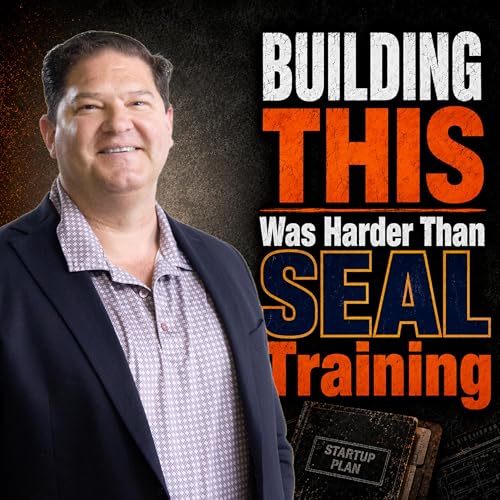
  • Former Navy SEAL on Why Starting a Business Was Harder Than SEAL Training
    May 19 2026

    Former Navy SEAL and Neptune Shield CEO Nicholas Rocha joins The Fervent Four Show to talk about military service, entrepreneurship, veteran transition, mental health, and why building a company can be harder than elite military training.

    After 26 years in the Navy, nine combat deployments, and a career inside one of the most demanding communities in the world, Rocha found himself facing a different kind of challenge: figuring out life after service. In this conversation, he shares how veterans can find a new mission through business, why the right team and support system matter, and how entrepreneurship can give former service members purpose, structure, and a reason to keep going.

    Rocha also opens up about veteran suicide, his own moment of crisis, the "Quick Reaction Friends" concept, and why asking for help can be one of the strongest things a person can do.

    This episode is for veterans, founders, military families, entrepreneurs, and anyone trying to build something meaningful after a major life transition.

    https://neptuneshield.com/

    0:00 Intro, giving veterans a new mission
    1:22 How Nick first connected with Virginia Cup
    2:17 Failing eighth grade, ADHD, and finding structure
    4:07 Catching up in school and discovering the Navy
    6:20 Seeing Navy SEALs for the first time
    7:47 How Nick entered the SEAL pipeline
    11:19 Why SEAL culture used to stay quiet
    14:00 SEAL books, public stories, and what not to reveal
    17:20 Why "team" matters more than "SEAL"
    19:18 What was harder, Neptune Shield or the SEAL teams?
    22:00 Why so many startups fail
    23:57 Starting a CBD company to help his daughter
    28:02 Transitioning after 26 years in the Navy
    30:22 The crisis veterans face after service
    32:30 The cost of training a Navy SEAL
    33:30 "Everybody dies, but not everybody truly lives"
    34:44 Helping veterans understand the new battlefield
    35:30 Nick opens up about his own crisis
    38:15 Quick Reaction Friends and suicide prevention
    42:42 How the same framework applies to business
    44:46 Why veterans need tools, resources, and a plan
    46:16 Why founders have to ask for help
    47:44 Showing up and doing the work
    53:20 Could Neptune Shield expand to other cities?
    54:38 Validating technology with operators
    56:05 What's next for Neptune Shield
    58:01 The food of Hampton Roads
    59:42 Closing thoughts

    The Fervent Four Show

    Where Hampton Roads entrepreneurs tell their stories.

    Since 2020, The Fervent Four Show has been the weekly conversation connecting the entrepreneurs, innovators, and community builders shaping the future of Hampton Roads, Virginia. Each Thursday at 11 a.m. EST, hosts Tim Ryan and Zack Miller sit down with founders, CEOs, investors, and ecosystem leaders to explore the real stories behind regional growth — from bold startups and 757 trailblazers to nationally recognized brands born right here.

    Whether you're launching your first venture or scaling your next big idea, these candid, conversational episodes deliver insights on entrepreneurship, innovation, leadership, and business growth that will keep you fired up long after the mics go off.

    Subscribe on Apple: https://podcasts.apple.com/us/podcast/fervent-four/id1596516837
    Spotify: https://open.spotify.com/show/7egTPUyiUEZF4QACNKBYI6?si=704d8e723f3842f5
    YouTube: https://www.youtube.com/@Innovate757?sub_confirmation=1

    Mehr anzeigen Weniger anzeigen
    1 Std.
  • From Wall Street to Building 757 Angels
    May 12 2026

    Organized startup capital has been one of the biggest challenges for cities across the country, and Hampton Roads struggled with it for decades.

    That started to change in 2015 when Monique Adams helped launch 757 Angels, building one of the region's first organized angel investment networks focused on backing high-growth startups and entrepreneurs.

    After surviving the pressure of Wall Street investment banking in New York, Adams brought that experience to Hampton Roads and helped shape a new era of startup investing in the region.

    In this episode of The Fervent Four Show, Adams reflects on what it really took to build 757 Angels, from investor skepticism and startup risk to the pressure of creating systems, relationships, and infrastructure for a startup ecosystem that was still finding its footing.

    The Fervent Four Show is where Hampton Roads entrepreneurs tell their stories.

    New episodes every Tuesday at 6AM.

    Explore more: Innovate Hampton Roads https://www.innovate757.org/ferventfour/


    0:00 Why Startup Capital Was a Problem in Hampton Roads
    1:41 Meeting Monique Adams and the Origins of 757 Angels
    5:12 Surviving Wall Street Investment Banking
    12:29 Leaving New York for Hampton Roads
    17:12 The Reputation That Followed Monique Into Virginia
    21:48 The Lunch That Changed Everything
    23:24 The Self Doubt Behind Building 757 Angels
    29:37 "There's No Way This Is Part Time"
    35:35 The Biggest Problem With Angel Investing
    41:20 Why 757 Angels Never Became a Fund
    49:00 The Real Mission Behind 757 Angels
    50:48 Building the Startup Pipeline in Hampton Roads
    52:45 "Hard Things Are My Middle Name"
    56:14 Handling Pressure While Building an Ecosystem
    58:13 The People Who Helped Shape Monique's Career
    1:00:25 Learning the "Power of the Pause"
    1:02:26 Why She's Going to Meet the Dalai Lama
    1:04:13 What Founders Still Need Most
    1:06:25 Final Thoughts

    Mehr anzeigen Weniger anzeigen
    1 Std. und 6 Min.
  • "Your Baby's Ugly" — The Truth Most Agencies Won't Tell You
    May 5 2026

    Most marketing doesn't fail because of bad ads. It fails because the foundation is broken.

    In this episode of The Fervent Four Show, Nicole Newsome, CEO of Qantm Creative, breaks down what she calls "radical honesty" — the willingness to tell clients the truth, even when they don't want to hear it.

    From firing toxic clients to rebuilding broken brands before spending a dollar on ads, this is a conversation about doing the hard work first and building businesses that actually last.

    If you've ever wondered why your marketing isn't working, this is probably why.


    00:00 Intro
    02:20 Nicole's background in sales and startups
    05:45 What "radical honesty" really means
    08:50 "Your baby's ugly" and fixing broken businesses
    12:40 Why most marketing fails before it starts
    16:30 Firing clients and protecting your team
    20:40 Building a culture of trust and transparency
    25:10 Radical honesty in personal relationships
    29:30 Compensation, leadership, and trust
    34:10 Side hustles and the modern workforce
    38:30 AI in marketing, threat or advantage
    43:10 SEO vs AEO and the future of search
    47:30 Showing up in the 757 ecosystem
    51:00 Building better businesses in Hampton Roads

    https://qantmcreative.com/

    Mehr anzeigen Weniger anzeigen
    1 Std. und 6 Min.
  • The Hidden Business Value of Comments (Most Companies Ignore This Data)
    Apr 28 2026

    Most companies already have the data they need—they're just ignoring it. In this episode, we break down how comments expose customer intent, fix your messaging, and drive smarter decisions, featuring insights from Marc Weinberg of YourComments.AI.


    0:00 Why negative comments stick more than positive ones
    3:49 Intro to Marc Weinberg and YourComments.AI
    6:28 The core problem, too many comments to actually use
    7:57 How companies like Tesla use customer feedback at scale
    10:07 Why most people ignore comments, and why that's a mistake
    11:36 Comments as a business intelligence tool beyond social media
    13:12 The role of bots, spam, and platform limitations
    16:28 Why big platforms don't solve the problem
    18:16 Real time comment insights and future use cases
    21:05 Understanding sentiment and customer perception
    23:14 The psychology of feedback and decision making
    29:12 Comments as signals, not noise
    33:17 Filtering data, positive, negative, and patterns
    35:03 The real challenge, what to do with the data
    38:00 Using AI to uncover trends, intent, and patterns
    41:10 The risk of audience capture when listening too closely
    43:08 Using repeated questions to improve messaging and products
    46:09 How creators and companies use comments to build new products
    49:45 Why some content wins, and what comments reveal about it
    56:18 The shift from social connection to algorithm driven content
    58:04 Cutting out noise and focusing on signal
    1:00:17 The mental cost of ignoring how comments affect you
    1:02:47 Building better teams and communication through feedback

    Mehr anzeigen Weniger anzeigen
    1 Std. und 11 Min.