• Employee-Centered Leadership with Benjamin Granger
    Feb 20 2026

    Although I often describe myself as a sociologist, my academic foundation began with psychology—I completed a dual major in psychology and sociology. One of the courses that most shaped my early thinking was Industrial/Organizational Psychology. At the time, I struggled with what felt like a top‑down, management‑centric approach. I even recall asking the professor whether the field existed mainly to validate decisions leaders already wanted to make. If he’s listening now, I offer a sincere apology for my younger, overly blunt critique.

    My career ultimately led me to workplace ethnography through a sociological lens, focusing on organizational structures, systems, cultures, and group dynamics—including critical themes like diversity, equity, inclusion, and belonging. In essence, I study how to build stronger workplace communities across in‑person, remote, and hybrid environments. Work remains one of the most powerful forces shaping identity, social perception, and life opportunities. One of the first questions we ask one another is still: “What do you do for a living?” Work undeniably defines us—and the systems around it matter.

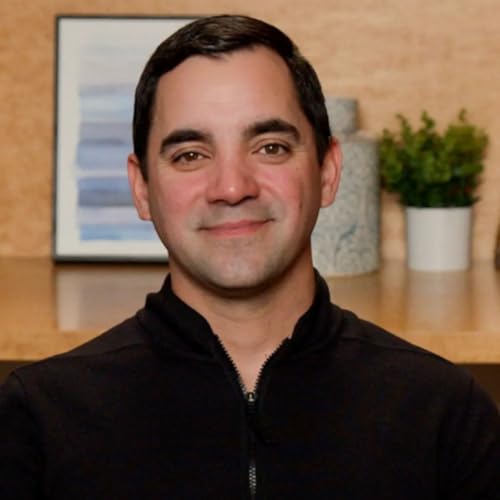
    That’s why I was particularly excited to welcome today’s guest: Dr. Benjamin Granger, Chief Workplace Psychologist at Qualtrics. It’s a title that signals both responsibility and influence. In this role, Dr. Granger helps organizations worldwide elevate employee experience and adopt leadership practices that create more human‑centered, high‑performing cultures. His new book, A Leader Worth Following, distills these insights into actionable strategies for leaders seeking to build trust, connection, and long‑term organizational health.

    In our conversation, we explore Dr. Granger’s journey into I/O Psychology and how his desire for real‑world impact led him toward applied professional practice rather than a purely academic path. We examine the rising imperative for human‑centered leadership—especially in an era defined by uncertainty, rapid change, and heightened expectations around wellbeing and psychological safety.

    Dr. Granger also draws on evolutionary psychology to explain why certain leadership traits resonate more strongly today, and how leaders can better align their behaviors with how people naturally build trust, assess credibility, and form meaningful connections. Ultimately, he encourages leaders to take ownership of the experiences they create, understand the perceptions they shape, challenge outdated leadership norms, and cultivate environments where people feel connected, supported, and empowered to thrive.

    Along the way, we bridge longstanding gaps between psychological and sociological approaches to understanding work—revealing how the integration of both disciplines offers a more holistic perspective on leadership, culture, and employee experience.

    Dr. Benjamin Granger: https://www.linkedin.com/in/benjamin-granger-7147991b/

    “A Leader Worth Following: https://benjamingranger.com/

    Mehr anzeigen Weniger anzeigen
    58 Min.
  • Mindful Experiences with Izzy Justice
    Feb 13 2026

    If you’re a sports fan, a winter fan, or an Olympics fan, this is a great time of year. I’ve been watching the Olympics—especially the Nordic skiing events, since cross‑country skiing is one of the activities I really enjoy. The United States has had some impressive results, including Ben Ogden winning a silver medal, Jessie Diggins earning a bronze, and several other standout performances. It’s inspiring to see everything come together for athletes who have spent years working toward their goals.

    But talk about pressure. So much comes down to one day, one event, one performance. That’s a tremendous amount of stress. It’s not just a physical challenge but a mental one as well, especially for those favored to win or in contention for a medal. I just watched Jessie Diggins earn her medal while skiing with bruised ribs and collapsing at the finish—as she often does. Commentators described her ability to “tune out” distractions, “channel” pain, and “focus” on exactly what she needs to do. All of this highlights the mental side of performance.

    Today on Experience by Design, we welcome a guest who specializes in that mental side—specifically, the electrical impulses and brain states we experience during different types of activities. In his new book, Life Explained: Chasing 10 Hertz, Dr. Izzy Justice explores neurohacks that reduce brain frequency, enhance sensory input, and create more mindful experiences. Izzy discusses his research on brainwave frequencies, especially the “magic” 10 Hz state in which sensory input is amplified and cognitive function peaks.

    Dr. Justice explains how trauma and panic can impact athletes during competition, particularly in sports where unexpected challenges can arise. But these principles extend far beyond athletics—we also explore how they apply to creativity in business, focus in education, learning, and everyday tasks.

    We also talk about the importance of translating academic findings for public audiences. Izzy emphasizes the need for actionable language and accessible frameworks for managing brain states, and why greater education is essential for helping us regulate our own brain activity, reduce the noise around us, and reach that 10 Hz state to create more mindful experiences.

    Mehr anzeigen Weniger anzeigen
    58 Min.
  • The WeRoad Experience with Fabio Bin
    Feb 6 2026

    One of the challenges of getting older—especially for men—is meeting people and forming new friendships. Social connection is a fundamental human need, yet the demands of work, responsibilities, and constant distractions make it difficult to create the time and space for meaningful relationships. A recent Pew study found that men and women report loneliness at similar rates. However, women are more likely to lean on their social networks for support, while men often struggle in silence.

    A Gallup poll further reveals that young men in the U.S. are lonelier than their counterparts in other parts of the world. According to the report, “U.S. men stand out, not only in terms of absolute rates of loneliness but also in how much more likely they are to feel lonely compared with younger women and others in their own country. This is a rare pattern across wealthy countries, none of which exhibit a starker divide between young men and the rest of the nation’s residents.”

    There is a clear need for men—and for people more broadly—to have opportunities to gather, meet, and genuinely connect.

    Enter WeRoad, a travel experience company designed to bring people together through shared journeys. Fabio Bin, Co-founder and Chief Marketing Officer of WeRoad, helped create the company with the loneliness epidemic in mind. He joins me on Experience by Design to discuss WeRoad’s origins and its mission to foster human connection, not just tourism. While the trip is the product, the true experience comes from the people who share it with you.

    From the thoughtful screening and training of travel coordinators, to pre-trip events that help groups bond, to post-trip virtual communities, every aspect of WeRoad is designed around building relationships and cultivating a sense of belonging.

    We talk about WeRoad’s growth across Europe and its efforts to expand into the United States—something that survey data suggests is sorely needed. We explore how WeRoad helps people break out of their social bubbles and form new communities through shared adventures. Fabio also describes how travelers are building an identity as “WeRoaders”—some even getting WeRoad tattoos—and shares the company’s new initiative, WeRoadX, which empowers travel leaders to design their own trips based on their passions through a participatory design approach.

    Fabio Bin: https://www.linkedin.com/in/fabiobin
    WeRoad: https://www.weroad.com/

    Mehr anzeigen Weniger anzeigen
    1 Std. und 7 Min.
  • Unique Brand Experiences with Barry LaBov
    Jan 30 2026

    This past weekend, I had the pleasure of attending an RV Expo in Worcester Massachusetts. I’m not looking for an RV, but am generally RV curious. I find the concept of an RV pretty interesting, and I have to say that walking about the expo revealed the range of designs that exist in the RV market. Different sizes, different features, slide outs, Fifth wheels, hitches, toy haulers, so much to take in at once given that I am a RV newbie. I also learned that RV manufacturers are always taking customer feedback and trying to improve their designs, as any good business does.

    What was more surprising was that the majority of RVs made in the US come out of Indiana. In fact, turns out that Elkhart, Indiana is the RV capital of the wold. I’m originally from Michigan, and frankly had no idea that RVs happen in Indiana even though it is a neighboring state. Beyond basketball and corn in Indiana, there are also RVs. Who knew?

    My guest today on Experience by Design is also from Indiana, Fort Wayne to be exact. Barry LaBov is the founder and CEO of LABOV Marketing and Communications, but he is much more than that. He also has authored over a dozen books, including his new book The Power of Differentiation, aimed at leaders looking to differentiate their brands and products by moving beyond a commodity mindset and showcase what makes them unique. This focus not only makes companies more attractive to customers, but also employees as it gives them a sense of purpose regarding the work they do.

    We talk about his work with clients guiding them to differentiate and identify what makes them unique. We explore the vital aspects of connecting customer and employee experience, and why alignment in your experience design matters. He digs into the branding challenges in troubling times as companies try to navigate the social landscape. He describes the importance of qualitative data in understanding your customers and employees, and not waiting for the “perfect data” to present itself. He also describes his experiences as a musician, touring with the band Mark Urgent and how learning music is similar to his efforts as a marketing expert.

    And of course we talk about RVs.

    Barry LaBov: https://www.barrylabov.com/

    LABOV: https://www.labov.com/

    “The Power of Differentiation”: https://www.barrylabov.com/books

    Mehr anzeigen Weniger anzeigen
    1 Std. und 14 Min.
  • AI and Customer Experience with Hakob Astabatsyan
    Jan 23 2026

    We are living through an unmistakably accelerated era of technological transformation. History shows that periods like this often reshape not only how organizations operate but also how individuals relate to one another and engage with the world.

    Looking back, the impact of major technological shifts seems obvious. But living through them is far more complex. On any given day, headlines announce CEOs radically reorganizing around artificial intelligence and replacing roles once held by people, while other reports note that many companies have yet to realize measurable benefits from their significant AI investments.

    The reality is that the long‑term implications—for business, society, and our daily lives—are still unfolding. Organizations must therefore be thoughtful and strategic, not reactive, in how they adopt and integrate AI technologies.

    This week, we’re fortunate to explore these questions with Hakob Astabatsyan, founder of Synthflow.ai, an end‑to‑end Voice AI platform that aims to “redefine how enterprises connect with customers.” Our conversation goes well beyond Synthflow’s product offering to examine the evolving nature of AI itself.

    We discuss the technical and philosophical challenges of building AI‑driven voice orchestration systems capable of mimicking human conversation. Hakob reflects on the current limitations of AI—particularly in handling emotional nuance—and the possibilities for AI tools to simulate empathy in certain contexts. He also explains Synthflow’s Visual Conversational Flow Builder, which enables organizations to design guided conversational paths that help customers navigate interactions more effectively and improve outcomes.

    Throughout our discussion, Hakob emphasizes a central point: AI should enhance human capabilities, not replace them. While disruption is inevitable, the greater opportunity lies in elevating uniquely human skills—critical thinking, creativity, communication, and collaboration. This shift will require educational institutions to rethink what and how they teach in order to prepare students for the world emerging around us.

    Hakob also looks ahead, predicting that 2026 will be a pivotal year for AI adoption, driven not by futuristic breakthroughs but by improvements in usability, accessibility, and seamless integration into everyday business operations.

    Hakob Astabatsyan: https://www.linkedin.com/in/hakob-astabatsyan/

    Synthflow.ai: https://synthflow.ai/

    Mehr anzeigen Weniger anzeigen
    59 Min.
  • Decluttering and Transformation with Saahil Mehta
    Jan 16 2026

    I think we can still technically say we are in the midst of the new year even though we are two weeks into it. I don’t know if there is a statute of limitations on how long you can wish another person a happy new year, since also technically it is the new year until the next new year at which point this new year will become the old year.

    One of the things that is meant to last throughout the new year are the changes that we want to make in our lives. While January 1st as a starting date is in many ways arbitrary as a demarcation point of transformation, it still is symbolically significant as a point where changes take place. Experience design can be about transformation, having these metamorphic experiences that make us different in some fundamental way. The new year definitely is one of those moments when transformation can take place. But if change is going to take place as the saying goes, “let it begin with me.”

    One of the common resolutions is to simplify one’s life and ‘declutter’ what is causing our lives to become unmanageable or not able to navigate easily. The psychological impacts of clutter can be many, including increased stress levels, difficulty focusing, procrastination, difficulty with relationships, lower quality of life, decreased well-being, and feelings of being overwhelmed. We can accumulate and hold onto things throughout our lives, some of them material and some emotional and even relational. When we hold onto things that no longer serve us and only get into the way, they can impede our progress.

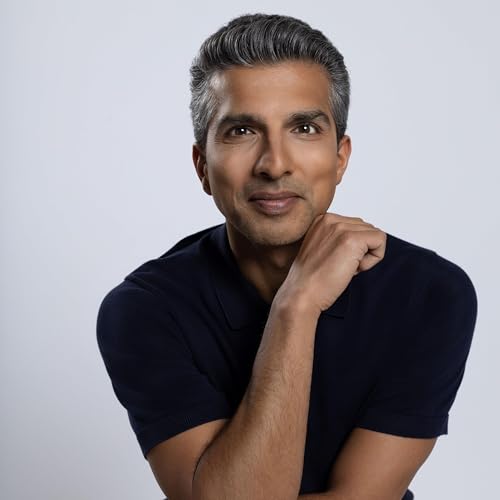
    This is why it is a perfect time for today’s guest on Experience by Design. Saahil Mehta is on a mission to help people declutter. Part of this might come from his background as an engineer, creating things that are planned out and well organized. Part of it might come from his mountaineering expeditions, planning each element and only bringing what you need to accomplish your goal. All of it comes from his desire to get people in a place where they can move forward and achieve their dreams.

    We talk about his book “Break Free: A Guide to Decluttering Your Life”, where he lays out his approach to helping others develop better relationships, have more time for their passions, and find a better path to move forward in their lives. Saahil describes his 7 Internal Summits Priority Framework as a tool that helps individuals prioritize the most important areas of their life. We also talk about the importance of overcoming people pleasing behavior, sharing the roots of the pattern and how we can start to prioritize more of our own needs.

    Saahil also shares his own transformative experience from a 2016 retreat where he learned to embrace authenticity and discovered others' confidence in him despite his self-doubt. Together we explore authentic success versus societal expectations. We discuss the importance of prioritizing the things that matter most to us, and emphasize the need for honest self-assessment and the importance of creating space for reflecting on those things in our daily lives.

    Finally, we have a link to Saahil’s Exponential Success Blueprint Webinar, which you can register for free.

    Saahil Mehta: https://www.saahilmehta.com/

    Saahil Mehta on LinkedIn: https://www.linkedin.com/in/saahilmehta/

    Exponential Success Blueprint Webinar: https://www.saahilmehta.com/success

    Mehr anzeigen Weniger anzeigen
    1 Std. und 2 Min.
  • Trauma and Healing Experiences with Janet Roche and Christine Cowart
    Jan 9 2026

    Designing Holidays—and Environments —that Heal, Not Harm

    As the holiday season winds down, many of us breathe a sigh of relief. The decorations are packed away, the music fades, and the whirlwind of expenses and obligations comes to an end. Yet, for many, the aftermath brings its own stress—credit card bills, fatigue, and even emotional strain. The truth is, the holiday experience can carry its own form of trauma.

    Trauma is far more common than we often acknowledge. Research suggests that over 70% of Americans have experienced at least one traumatic event in their lifetime. The American Psychological Association defines trauma as “any disturbing experience that results in significant fear, helplessness, dissociation, confusion, or other disruptive feelings intense enough to have a long-lasting negative effect on a person’s attitudes, behavior, and other aspects of functioning.”

    This raises an intriguing question: What if we could design environments—whether for holidays, workplaces, or communities—that reduce trauma and even promote healing?

    Despite its prevalence, trauma often goes untreated. Few who experience it receive the help they need. This gap inspired Janet Roche and Christine Cowart to take action. After meeting as volunteers at Vermont Adaptive Ski and Sports, they recognized the need for trauma-informed training for those working with vulnerable populations. In 2019, they co-founded the Trauma-Informed Design Society (TIDS) with a mission:

    “To create physical spaces that promote safety, well-being, and healing—spaces that respect identity, worth, and dignity, and foster empowerment.”

    On the latest episode of Experience by Design, we explore their framework for designing environments that minimize harm and support recovery. Janet and Christine share real-world applications—from correctional facilities to schools—and highlight Oregon’s recent mandate for trauma-informed behavioral health units, which has driven demand for their credentialing programs and continuing education courses.

    Today, TIDS offers a suite of resources, including:

    • Trauma-Informed Design Credentialing Courses
    • Partnerships with the American Society of Interior Designers
    • An evaluation tool for K-12 schools

    Their next course begins January 31st. Learn more at https://www.tidsociety.com.

    Janet Roche: linkedin.com/in/janetrochedesigns

    Christine Cowart: https://www.linkedin.com/in/christine-cowart-trauma-informed-consultant/

    Mehr anzeigen Weniger anzeigen
    1 Std. und 18 Min.
  • Submerged Experiences with Henry Rausch
    Jan 2 2026

    Happy New Year’s everyone!

    New Year is the time of year when we build unrealistic expectations about what the huge celebration we should be part of, and what big changes we are going to make in the form of our resolutions. It is a lot to live up to, and can create a lot of pressure. All of which is why I don’t like New Year’s.

    To be honest, I feel like our run of holidays go steadily downhill starting with Labor Day and ending with New Year’s Day in terms of the pressure that they create. We can get fixated on the types of experiences we should be having, and measuring what happens to often unrealistic expectations. The good news is that the only way to go is up! However your holidays went, I hope things are looking up for you.

    Experiencing a lot of pressure, going down, and going back up are all great themes for this week’s guest on Experience by Design. I first learned of Henry Rausch when I found his book “Submerged: Life on a Fast Attack Submarine in the Last Days of the Cold War.” For long-time listeners, you will be familiar with my fascination with US naval history as well as the working environments of submarines. His book is a great first-person account of being deployed on a submarine, including the “ups and downs” associated with submarine life. “Submerged” is currently the #1 Best Seller on Amazon in the Biographies of the Military Navy, as well as a winner of other book awards, including First Place in Published Nonfiction at WriterCon 2025.

    Hank’s second book is “How to Hotwire an Airplane: A Novel of Regret and Redemption,” and weaves together his father’s experience being a medic in the Vietnam War along with his own experiences being a pilot. The book places this in the context of US border policy its impact on those who cross the border seeking a better life.

    Taken together, Hank’s work explores personal transformation under stressful and sometimes dire circumstances.

    We discuss his experiences in the US Navy, and what he learned about leadership as a naval officer. He describes the months submerged while on patrol, along with the good times of being back in port. He talks about his subsequent work as an IT consultant working in satellite operation centers, and how lessons from his submarine tours informed his management style in civilian life.

    Finally we talk about the lessons that learning to fly has on life. As Hank describes, when you are teaching someone to fly, you have to let them fail up to the point that they might die. He emphasizes the need to enforce high standards, and how performance and recognition will predict how much satisfaction is felt in their work.

    He also teases the new book that he is working on, so we get a sneak preview of that as well.

    Henry Rausch: https://henryrausch.com/

    “Submerged: Life on a Fast Attack Submarine in the Last Days of the Cold War”: https://www.amazon.com/Submerged-Life-Fast-Attack-Submarine-ebook/dp/B0DN8CFV3S

    “How to Hotwire an Airplane: A Novel of Regret and Redemption”: https://www.amazon.com/How-Hotwire-Airplane-Henry-Rausch-ebook/dp/B0DHV4VVHX

    Mehr anzeigen Weniger anzeigen
    1 Std. und 4 Min.