• The original talking bass - Orville “Hoppy” Jones and the Ink Spots
    Feb 8 2026
    Celebrate the life and music of Orville “Hoppy” Jones, a founding member of the Ink Spots, a legendary vocal group with roots in the Indiana Avenue scene. As the Ink Spots’ bass vocalist, Hoppy developed a unique “talking bass” — a spoken-word recitation that helped define the group’s sound. Immensely popular with listeners in the late 1930s and 1940s, its rhythmic, narrative delivery has led some music historians to describe Hoppy as a forerunner of later spoken-word and rap traditions. Though his life was cut tragically short at age 39, Hoppy left behind a sound and a style that helped shape American popular music.
    Mehr anzeigen Weniger anzeigen
    21 Min.
  • Bandleader, teacher, and saxophonist Larry Liggett
    Jan 25 2026
    Explore the music of the Indianapolis saxophonist, bandleader, and music educator Larry Leggett, known professionally as Larry Liggett. We’ll share rare recordings from Liggett, including his work for the legendary Chicago label Chess Records. Larry Liggett was born in Brazil, Indiana in 1921. He began playing music at an early age. At 10-years-old, he became the youngest member of the Brazil High School Marching Band. He continued to distinguish himself in college, becoming the first Black musician in the symphonic band and orchestra, at Indiana State University. Liggett moved to Indianapolis during the 1940s and began teaching at Crispus Attucks High School in 1948. He continued working in the Indianapolis Public School system for the next 40 years. During that time, Liggett was performing jazz music at nightclubs across Indianapolis. Liggett also enjoyed success as a recording artist. During the 1950s, his recordings for Chess received national airplay. In 2004 his contributions to Indiana music were acknowledged by the Indianapolis Jazz Foundation, who inducted Liggett into the Indianapolis Jazz Hall of Fame.
    Mehr anzeigen Weniger anzeigen
    18 Min.
  • The Naptown R&B pioneer Enoch “Sonny Boy” Wiliams
    Jan 11 2026
    Listen to music from Enoch “Sonny Boy” Williams, a Rhythm & Blues pianist and vocalist from Indianapolis. Williams was born in London, Kentucky in 1917, but he was raised in Indianapolis. He began performing professionally in 1935, quickly establishing himself as a regular presence at Indiana Avenue venues including The Cotton Club, The Rhumboogie, and Sunset Terrace, where he became known for his energetic piano playing and engaging vocal style. In the early 1940s, Williams achieved national recognition through a series of recordings made for Decca Records. Among his most remembered records was the 1943 single “Reverse the Charges,” which became a modest hit. The song was influential enough that later artists such as Bud Powell and Etta Jones recorded their own versions.
    Mehr anzeigen Weniger anzeigen
    16 Min.
  • Indiana Avenue’s Black Christmas Party
    Dec 14 2025
    On December 19, 1970, the Indianapolis affiliate of the Southern Leadership Conference’s Operation Breadbasket held a “Black Christmas Parade” on Indiana Avenue. The parade featured marching bands, floats, and local celebrities. The grand marshal of the parade was the Soul Saint, an Afrocentric version of Santa Claus. The “Black Christmas Parade” was part of a full day of events that also included a keynote speech by Reverend Jesse Jackson. The day ended with a “Black Christmas Party” at Foster’s Motor Lodge, featuring some of the greatest funk and soul bands in Indianapolis, including the Highlighters, the Moonlighters, the Turner Brothers, Indy 5, the Perfections, and others. The purpose of the “Black Christmas Parade” went beyond spreading holiday cheer. A spokesperson for Operation Breadbasket said the parade was created to raise awareness of the services and products available through local Black business owners and to develop a sense of Black pride within the Indianapolis community. Listen to a tribute to the “Black Christmas Parade,” featuring an hour of music from Indianapolis funk bands that performed at the event.
    Mehr anzeigen Weniger anzeigen
    18 Min.
  • Celebrating Christmas at Sea Ferguson’s Cotton Club
    Dec 7 2025
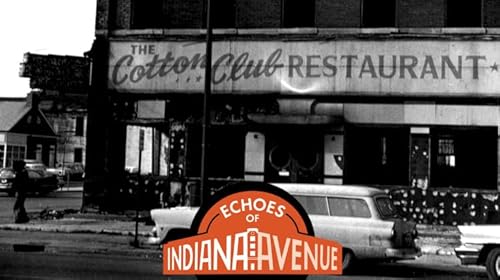
    Celebrate the Christmas holiday at Sea Ferguson’s Cotton Club — a legendary Avenue nightclub that hosted the greatest stars in American music, from Ray Charles to Louis Armstrong. Along with his brother, Denver Ferguson, Sea played a key role in shaping the Avenue’s entertainment scene. Sea was born in Brownsville, Kentucky, in December of 1899. He came to Indianapolis during the 1920s, and by the 1930s, he had become one of the most prominent businessmen on the Avenue. His influence as a civic leader in Naptown was recognized in 1938, when Sea was voted “Mayor of Bronzeville” — an informal title used in Black communities during segregation for someone who held real power and leadership in everyday life, at a time when official political power was often out of reach. Today, Sea is best remembered for his connection to the Avenue music scene. In 1931, he opened the Trianon Ballroom. The club’s official grand opening took place on Christmas Eve of that year. The ballroom occupied the third floor of a building located at the corner of Vermont and Senate Streets. In 1933, Sea expanded to the first floor, opening a restaurant and bar called the Cotton Club. Before long, the name “Cotton Club” stuck, and locals used it to describe the entire building — not just the bar. Sea Ferguson hosted legendary concerts at the club, and on this week’s show, we’ll celebrate the season by listening to holiday music from the artists who performed there, including Fats Waller, Ray Charles, Big Maybelle, Charles Brown, Louis Armstrong, Lowell Fulson, and more.
    Mehr anzeigen Weniger anzeigen
    19 Min.
  • Celebrating the musical collaboration of Wes Montgomery and Jimmy Smith
    Nov 30 2025
    Celebrate the December birthday of the late, great jazz organist Jimmy Smith by listening to his recordings with the Avenue jazz guitarist Wes Montgomery. Jimmy Smith was born in Norristown, Pennsylvania, in 1928. He began his career on piano before switching to the organ in the early 1950s, developing a revolutionary sound that blended bebop and blues with deep gospel roots. In 1956, Smith signed with Blue Note Records, where he quickly became a sensation with groundbreaking albums like The Sermon, Back at the Chicken Shack, and Midnight Special. Today, Jimmy Smith is recognized as one of the most influential musicians in the history of jazz—and the most important figure in establishing the Hammond B-3 organ as a leading instrument in the genre. Jimmy Smith performed on Indiana Avenue in 1961 at the Pink Poodle nightclub. But his strongest connection to Naptown came in 1966, when he entered the studio with guitarist Wes Montgomery. Those sessions produced two albums: Jimmy & Wes: The Dynamic Duo and The Further Adventures of Jimmy and Wes. At the time, Jimmy Smith and Wes Montgomery were two of the most recognizable instrumental voices in jazz, each with a massive audience of devoted listeners. Expectations were high for their collaboration. Jazz fans were not disappointed. Jimmy and Wes shared a rare chemistry in the studio, and critics have since cited these sessions as some of the finest recordings of Jimmy Smith’s career.
    Mehr anzeigen Weniger anzeigen
    11 Min.
  • ARCHIVES: Rap Songs that Sampled the Avenue
    Nov 26 2025
    The music of Indiana Avenue has been sampled dozens of times, by famous artists including Jay-Z, Kendrick Lamar, A Tribe Called Quest, and many more. Listen back to this archived episode to hear some of the most sampled artists from the Avenue.
    Mehr anzeigen Weniger anzeigen
    4 Min.
  • Thanksgiving night dances on the Avenue
    Nov 23 2025
    Celebrate the Thanksgiving holiday by looking back at Thanksgiving night concerts and dances held on Indiana Avenue. For some Avenue residents, Thanksgiving didn’t end at the dinner table. Holiday gatherings often continued late into the night at neighborhood ballrooms and clubs, where music was as important as turkey and pumpkin pie. From the 1940s, to the 1960s, the Avenue’s Thanksgiving stages drew some of the biggest names in American music — including Dinah Washington, Lionel Hampton, Roy Hamilton, and Earl Bostic — along with local favorites, including The Presidents. Join us on this episode, as we revisit those Thanksgiving nights when music, dancing and community were as important as the holiday feast.
    Mehr anzeigen Weniger anzeigen
    18 Min.