Folgen

  • The High-Demand World of Medical Massage | Ep. 27
    May 6 2026

    In the 2026 labor market, the human touch is more valuable than ever. While many industries are being disrupted by automation, the field of massage therapy remains fundamentally human-centric. This episode features Ally Middleton, who shares how she transitioned from an aspiring opera singer to a medical massage practitioner and business owner with 16 years of experience.

    The conversation debunks the myth that massage is just a "vacation luxury" and explores its role in rehabilitating surgery patients, managing chronic conditions like lymphedema, and optimizing professional athletic performance. Ally breaks down the rigorous schooling requirements—including 600 hours of anatomy, kinesiology, and pathology—and explains why the MBLEx is a critical hurdle for any aspiring therapist. Whether you are looking for an entrepreneurial path with high schedule flexibility or a career that provides "instant gratification" through helping others, this episode offers a comprehensive roadmap to the world of therapeutic bodywork.

    Guest Bio

    Ally Middleton is a Licensed Massage Therapist (LMT), Medical Massage Practitioner, and the founder and co-owner of Lifelong Massage. Originally trained in Texas, she has over 16 years of experience in the field. Throughout her career, Ally has worked in diverse settings, including dental offices, athletic clubs, and alongside chiropractors and surgeons. She is also a former massage therapy instructor and an active member of her community chorus.

    What We Cover
    • The Problem-Solving Mindset: Using soft tissue work to muscles, tendons, and the nervous system to achieve specific health goals.
    • A "Windy" Career Path: How a conversation with parents and a daily drive past a massage school led to a 16-year career.
    • The Olympic Effect: How global events like the Olympics bring public awareness to modalities like cupping.
    • Licensing and Schooling: Navigating the 600-hour state requirements and the national MBLEx exam.
    • Medical Specializations: Exploring niche areas like Manual Lymphatic Drainage for edema and scar tissue.
    • Longevity and Ergonomics: The importance of "body mechanics" and table height to prevent therapist burnout.
    • The Economics of Touch: Why seeing 20–22 clients per week is a full-time workload.
    • AI Resistance: Why robots in New York City will never replace the therapeutic relationship built between a human therapist and client.

    Learn more about Ally and Lifelong Massage:

    • Website
    • Facebook
    • Instagram

    Mehr anzeigen Weniger anzeigen
    36 Min.
  • The Need For More Therapists: High Demand, AI, and Career Flexibility | Ep. 26
    Apr 29 2026

    In 2026, the need for mental health support has never been higher. Following the societal shifts of 2020, awareness has boomed, yet the industry faces a significant shortage of clinicians to meet the demand. In this episode, psychotherapist Liza Brackbill breaks down the "hiding in plain sight" reality of the profession: it is a career that blends evidence-based science with the unpredictable art of human connection.

    Liza explains the critical differences between psychiatrists, psychologists, and social workers, providing a roadmap for those considering a Master's or PhD path . We also discuss the impact of social media and the "dopamine hits" driving anxiety in younger generations, as well as the industry’s cautious embrace of AI as a therapeutic tool . Whether you are a "helper" by nature or an aspiring entrepreneur looking to open your own practice, this conversation offers an honest look at the emotional rewards and lifestyle flexibility of modern psychotherapy.

    Guest Bio

    Liza Brackbill is a Licensed Independent Clinical Social Worker (LICSW) based in Massachusetts and the founder of Pathways and Possibilities Counseling Services. She holds a Bachelor’s degree in Psychology and a Master’s in Social Work (MSW). Before entering the clinical field, Liza spent three summers as a guide in Yellowstone National Park, an experience she credits with helping her gain perspective before committing to her graduate studies . Her practice specializes in anxiety-related disorders, including panic, social anxiety, OCD, and hoarding.

    What We Cover
    • The "Science and Art" of Therapy: Why following a script isn't enough when a real person is in front of you.
    • Anxiety & Social Media: Understanding the "Anxious Generation" and the addictive nature of dopamine feeds.
    • The Credentialing Roadmap: Breaking down the differences between an LICSW, a Psychologist (PhD), and a Psychiatrist (MD).
    • Hoarding as Anxiety: A look into the specialized niche of hoarding disorder.
    • Clinical Internships: The "trial by fire" of sitting across from your first patient.
    • Work-Life Balance: How teletherapy has shifted the profession away from traditional evening/weekend hours.
    • AI in Therapy: Why Liza believes human-to-human connection is "insulated" against the rise of ChatGPT.
    • The "Little League" Test: Can a therapist maintain a consistent schedule for family and community?

    Resources:

    https://www.pathwaysandpossibilities.org

    Mehr anzeigen Weniger anzeigen
    35 Min.
  • Beyond the Clinical Grind: Discovering Your Niche as a "Psychodietitian" | Ep. 25
    Apr 22 2026

    The healthcare sector remains the primary force behind consistent labor growth, offering a vast array of roles beyond traditional surgery or nursing . Dr. Nina Crowley exemplifies this variety, combining her background as a Registered Dietitian and a PhD in Health Psychology to influence the obesity care landscape. By moving away from the limited metrics of weight and BMI, her work focuses on the science of body composition—measuring muscle, fat, and bone to provide a clearer picture of patient health .

    The path to becoming a credentialed healthcare professional involves rigorous academic training, including the 1,200-hour supervised practice required for dietitians and the deep research involved in a PhD dissertation. This conversation explores the "Big Conference Energy" required to build a professional network, the psychological complexities of behavior change, and the transition from outpatient bariatric clinics to industry thought leadership. For those curious about the financial realities of the field, we also apply the "Disney World" test to evaluate the lifestyle of a modern dietitian and psychologist .

    Guest Bio

    Dr. Nina Crowley is a Registered Dietitian (RD) and a PhD in Health Psychology, currently serving as the Director of Clinical Thought Leadership at Seca. With over 20 years of experience in the field, she has worked in community nutrition through the WIC program and provided clinical counseling for bariatric surgery patients at the Medical University of South Carolina . She is a frequent speaker at healthcare conferences and the host of the podcast In the Know with Nina, where she discusses cutting-edge outcomes in obesity and cardiometabolic health.

    What We Cover
    • The "Psychodietitian" Hybrid: Why Dr. Crowley needed a PhD in psychology to be a more effective dietitian .
    • Body Composition vs. BMI: Using bioelectric impedance to talk to patients about outcomes other than just weight .
    • The Credentialing Gap: Why every dietitian is a nutritionist, but not every nutritionist is a dietitian.
    • Specialization Paths: How to advance in niche fields like oncology, sports nutrition, or eating disorders.
    • Research and Dissertations: Understanding the five-year journey of self-determination theory and behavioral research.
    • Clinical to Industry Pivot: How clinical experience leads to corporate roles in medical technology.
    • Networking for Jobs: Why "Big Conference Energy" and professional relationships are the keys to career mobility.

    Learn more by subscribing to Dr. Nina Crowley's podcast: In the Know with Nina

    Connect with Dr. Nina Crowley

    Email: drninacrowley@gmail.com

    LinkedIn: https://www.linkedin.com/in/ninacrowley

    Twitter/X: https://x.com/psychodietitian

    Instagram: https://www.instagram.com/ninamcrowley/

    Facebook: https://www.facebook.com/ninacrowley

    TikTok: https://www.tiktok.com/@dr.ninacrowley

    Mehr anzeigen Weniger anzeigen
    42 Min.
  • Is Nursing the New Path to Prosperity? A Mid-Career Shift from Business to RN | Ep. 24
    Apr 15 2026

    The modern labor market frequently experiences volatility, but one profession remains in consistently high demand: nursing. As healthcare needs grow due to an aging population, the role of the Registered Nurse has expanded far beyond the hospital floor. This conversation features Lauren, an RN who left a career in specialty pharmacy analytics to enter the nursing field in her 30s. She shares the "hiding in plain sight" reality of nursing as a stable career where opportunities are often brought directly to you through strong professional networks.

    The discussion provides a deep dive into the educational requirements for a career pivot, specifically the benefits of an accelerated nursing course for those who already hold a bachelor's degree. We also tackle the "Family Dinner Test," evaluating how home healthcare offers a level of schedule flexibility that traditional hospital shifts cannot match . From overcoming the "gross factor" of the job to understanding the different scopes of practice between medical assistants and licensed RNs, this episode serves as a comprehensive guide for anyone considering a future in healthcare.

    Guest Bio

    Lauren is a Registered Nurse currently practicing in home healthcare in South Florida. She holds a business degree and spent the early part of her career working in reporting and analytics for specialty pharmacies before pursuing an accelerated nursing program. With experience in both hospital "med-surg" units and independent home health visits, she offers a unique perspective on the lifestyle and financial stability available in the nursing profession today .

    What We Cover
    • The Decision to Pivot: Moving from Microsoft Access spreadsheets to hands-on patient care in your 30s.
    • Accelerated Schooling: How prior degree holders can become a nurse in approximately two years.
    • The Nursing "Club": Why nurses look out for one another and how networking drives the job market.
    • Hospital Reality: Navigating 12-hour shifts and the intense physical demands of the "med-surg" floor .
    • The "Gross Factor": Dealing with squeamishness and why a genuine desire to help people is the ultimate requirement.
    • Home Healthcare Flexibility: How a "point system" for patient visits allows nurses to control their own schedules.
    • Advanced Career Paths: The differences between RNs, Nurse Practitioners, and Nurse Anesthetists .
    • The Prosperity Test: Evaluating nursing against lifestyle goals like coaching Little League or being home for family dinner.

    Connect With Us

    • Find Larry Port on LinkedIn
    • Subscribe to our Channel on YouTube

    Mehr anzeigen Weniger anzeigen
    27 Min.
  • Is Your Job a Dead End? The "Where You Work Matters" Ranking Revealed | Ep. 23
    Apr 8 2026

    Finding a career path that leads to long-term financial success often feels like a guessing game, but big data is finally bringing clarity to the labor market. This deep dive features Shrin Rao, Director of Workforce Innovation at the Burning Glass Institute, as he unveils the "Where You Work Matters" study—a revolutionary ranking profiled by The Wall Street Journal. Unlike traditional "Best Places to Work" lists that often rely on internal surveys or "pay-for-play" models, this research analyzes the actual career histories of over 12 million workers to identify which companies truly drive economic mobility.

    The conversation explores why certain employers offer 68% higher promotion rates and 50% better pay for the exact same roles compared to their competitors. We also navigate the "Credential Value Index" (CVI), a tool designed to act as a "nutrition label" for non-degree certifications. Whether you are considering a transition into UX design, welding, or IT, understanding the ROI of your training is essential in the 2026 economy. We also explore the unique career path of working in the nonprofit sector and how business acumen from the corporate world is being used to fuel social impact and workforce innovation.

    Guest Bio

    Shrin Rao is the Director of Workforce Innovation at the Burning Glass Institute, a nonprofit data laboratory that researches the future of work and learning. Shrin began his career at the Boston Consulting Group (BCG) after earning a degree in finance from the University of Texas. After obtaining his MBA, he transitioned into the nonprofit sector to apply big-data analytics and strategic business acumen to the challenge of advancing economic mobility for all workers.

    What We Cover
    • The "Where Your Work Matters" Study: Analyzing how employer choice is a primary driver of career success.
    • Debunking "Best Place to Work" Lists: Why real-world career data is more reliable than internal corporate surveys.
    • The Power of Occupation Controls: How the study compares "like-for-like" roles (e.g., comparing software engineers only to other software engineers).
    • Staggering Differences in Mobility: Why top-ranked "Platinum" employers see significantly higher retention and promotion rates.
    • The Credential Value Index (CVI): A public resource for assessing the wage gains and job placement rates of non-degree certifications.
    • ROI on Specific Certs: Comparing the financial outcomes for roles like UX Designers and Welders.
    • Nonprofit Careers: Shrin’s personal journey from BCG to mission-driven data science.

    Resources:

    • Where You Work Matters Index
    • Burning Glass Institute

    Connect With Us

    • Find Larry Port on LinkedIn
    • Subscribe to our Channel on YouTube

    Mehr anzeigen Weniger anzeigen
    30 Min.
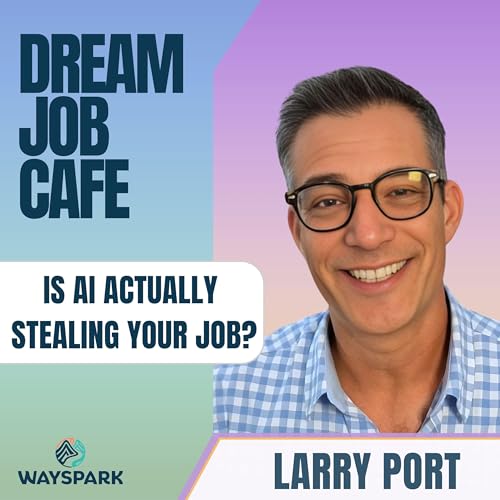
  • Is AI Actually Stealing Your Job? The Truth About the Current Labor Market | Ep. 22
    Apr 1 2026

    Today’s labor market feels more volatile than ever, leaving many to wonder if artificial intelligence is the primary culprit behind recent layoffs and hiring freezes. While headlines often point toward a looming "AI apocalypse," the underlying data from the Bureau of Labor Statistics and the New York Fed tells a much more nuanced story.

    Larry Port introduces the #WTFISUP Report and provides a deep dive exploring why we are currently in a "low hire, low fire" dynamic and why historical tech disruptions—from the printing press to the ATM—suggest that human-centric roles are more resilient than we think.

    We explore the structural realities of the modern workforce, including how "talent hoarding" by big tech and the rising age of the workforce are impacting entry-level opportunities. We visit the academic study of diffusion, which sheds light on how new technologies often take decades to fully materialize. Consequently, societal and organizational constraints may put brakes on job disruption during the AI transition.

    Whether you are a software engineer, a recent college graduate, or a professional concerned about automation, understanding these market forces is essential for long-term career planning.

    What We Cover
    • The "Low Hire, Low Fire" Dynamic: Understanding the stagnation in the current labor market.
    • AI vs. Reality: Why data suggests AI likely isn’t the main culprit for youth unemployment—at least not yet.
    • Historical Context: How past innovations like the telephone and the automobile faced similar skepticism before becoming essential.
    • Talent Hoarding: Why major tech companies over-hired and how those "bench" roles led to recent layoffs.
    • The Diffusion of Innovation: Why it takes decades for organizations to actually adapt to and benefit from new technology like AI.
    • The Human Element: Why radiologists, translators, and bank tellers have seen job growth despite technological threats.

    Connect With Us

    • Find Larry Port on LinkedIn
    • Subscribe to our Channel on YouTube

    Mehr anzeigen Weniger anzeigen
    20 Min.
  • The Financial Advisor Career: Acting As A GPS For Clients (with Mike Giordano, CFP®) | Ep. 21
    Mar 25 2026

    What does a Financial Advisor actually do all day? Host Larry Port sits down with Mike Giordano, CFP®, to find out. This career is much more than crunching numbers on a computer screen. Mike explains how financial advising is essentially a human endeavor. Advisors act like a GPS for their clients. They help people navigate major life transitions, from funding college educations to planning for retirement.

    Mike shares his very unique career path. He started as a sports broadcaster before realizing his television industry peers desperately needed basic financial guidance. He explains the daily reality of the wealth management job. You will learn what skills are necessary to succeed and why a level head is far more important than complex math abilities. The role also offers incredible work-life balance and family time for those willing to put in the effort early in their careers.

    Guest Bio

    Mike Giordano, CFP® is a Private Wealth Advisor at Williams Wealth Management in Greenville, South Carolina. He holds a degree in Broadcast Journalism from Syracuse University and earned his CFP certification from Northwestern University. Before entering wealth management, Mike worked as a television broadcaster and sports anchor.

    He now uses his background in communication to simplify complex financial information for his clients. Mike operates on the core belief that wealth without direction is just a number on a page. He works closely with professionals to align their financial resources with their actual life goals.

    What We Cover

    1. How Mike transitioned from tracking sports scores in the newspaper to managing stock portfolios.
    2. Why financial advising relies heavily on human psychology and caring about client stories.
    3. The daily routine involves engaging in meaningful client conversations and using financial planning software.
    4. Why the wealth management field is a great fit for highly organized and level-headed people.
    5. How artificial intelligence serves as a tool for quick research, but cannot replace the comfort of human advice.
    6. The practical steps to enter the profession include shadowing professionals and networking.
    7. The reality of the early career grind versus the excellent family balance you can achieve later on.

    Resources Mentioned

    1. Williams Wealth Management
    2. Syracuse University
    3. Fidelity
    4. Costco
    5. Wendy's

    Mehr anzeigen Weniger anzeigen
    27 Min.
  • UX Designer: The Glue Between Outcomes And Experience (with Edward Case) | Ep. 20
    Mar 18 2026

    The career of a User Experience (UX) Designer involves acting as the glue between technical software outcomes and human interaction. Host Larry Port sits down with Edward Case to explore the reality of product design. Edward shares what it takes to translate complex requirements into intuitive digital experiences. The conversation covers the daily life of a UX designer, including user research, wireframing, and collaborating closely with product managers.

    Edward explains how the role is evolving from static design handoffs to working directly in the codebase using modern tools. Listeners will learn about the essential skills required for this path, such as inherent curiosity, empathy, and the ability to accept harsh critiques. We also discuss the work-life balance of a design leader. Edward reveals how he manages to coach a soccer team and hit family dinners while maintaining high engagement with his projects.

    Guest Bio

    Edward Case is the Director of Product Design and UX at Vantaca, an artificial intelligence software company based in Wilmington, North Carolina. Operating within Vantaca's Product Development organization, Edward shapes the user experience for complex community association management software. His team translates technical accounting and property management requirements into intuitive features.

    Before joining Vantaca, Edward worked in architectural sculpture, designed golf courses, and ran his own web design business. He draws on his unique background in fine arts to craft elegant, pleasurable software experiences for thousands of daily users.

    What We Cover

    1. How a background in sculpture and fine arts translates directly to building digital applications.
    2. The critical differences and overlaps between user interface design and user experience design.
    3. Why empathy and an understanding of human behavior are more important than a traditional technical background.
    4. The daily reality of testing, validating ideas, and facing brutal design critiques without ego.
    5. How the UX designer role is rapidly evolving to include active coding and pull requests instead of just static mockups.
    6. The flexibility and trade-offs required to balance a demanding tech career with family life and coaching a youth soccer team.
    7. Why people who need strict, black-and-white answers might struggle in the unpredictable field of product design.

    Resources Mentioned

    1. Vantaca
    2. Rocket Matter
    3. Figma
    4. Claude Code
    5. Lovable
    6. React

    Mehr anzeigen Weniger anzeigen
    27 Min.