• Klaus Schwab: The Compass
    Jan 3 2026
    In this special episode of Der Große Neustart, Sibylle Barden speaks with Professor Klaus Schwab, founder and architect of the World Economic Forum, about a new chapter in his life’s work. After more than 55 years of building and shaping global institutions, Klaus Schwab has entered a new phase of service. This conversation is not about Davos. It's about being a compass for the Intelligent Age - in a world of growing complexity. It explores what leadership requires today. What happens when truth and trust erode. What remains human when intelligence is no longer our monopoly. And why institutions must once again give direction, not just convene. With the launch of his Intelligent Age series and the Schwab Academy, Klaus Schwab is doing what has defined his life’s work: naming a transformation, shaping a framework, and inviting the world to think ahead — together. More information: Schwab Academy - Sibylle Barden
    Mehr anzeigen Weniger anzeigen
    1 Std. und 9 Min.
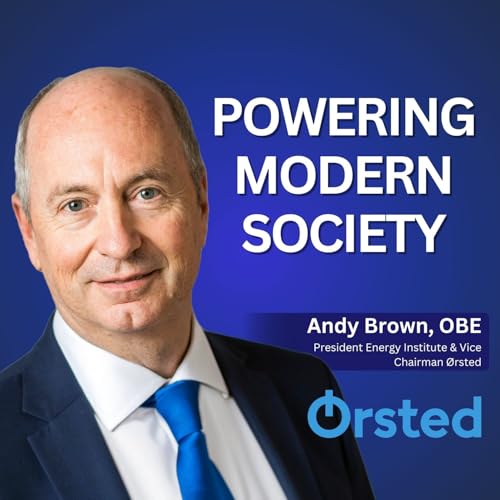
  • Ørsted’s Andy Brown: "We should think in centuries.”
    Dec 10 2025
    “We’re not in an energy transition. We’re in an energy addition.” In this wide-ranging conversation, Andy Brown OBE, ⁠President of the Energy Institute ⁠and ⁠Vice Chairman of Ørsted⁠, breaks down the real state of the global energy system with rare clarity. Drawing on the Statistical Review of World Energy, Andy reveals what the data actually shows: – Global energy demand rose 2% – CO₂ emissions rose 1% – Every energy source — fossil and renewable — grew simultaneously The transition, he argues, is not yet a transition at all. It is an addition. We explore: 1. The global energy picture – Why decarbonising electricity is the world’s most urgent task – Why electrification — still only 20% of final energy use — must accelerate dramatically – How China has become both the problem and the solution: • 57% of all new renewables • Two-thirds of global EV sales • Electricity growth equal to adding an entire Germany in a single year 2. Ørsted — leadership through turbulence Andy discusses Ørsted’s rise to the world’s offshore wind leader — and the hard lessons from recent U.S. setbacks, supply-chain pressures, and a $9bn equity raise. He explains how risk management, staged commitments, and culture helped stabilise the organisation during crisis. 3. Carbon capture — from theory to reality A deep dive into one of the world’s most advanced CCS chains: Ørsted’s biogenic CO₂ capture, liquefaction, transport via Northern Lights, and permanent storage 2.6 km beneath the Norwegian seabed. Andy explains why CCS may be essential — and why without a global CO₂ price, it cannot scale to the levels required by the IPCC. 4. Leadership at scale Reflecting on leading Pearl GTL in Qatar — one of the largest industrial projects ever built — Andy shows how a culture of care delivered world-record safety performance. He shares what leadership requires when systems are in flux, and how incumbents can be moved from fossil to future. 5. Talent, purpose, resilience From developing the next generation of leaders to surviving a five-artery heart bypass, Andy speaks openly about purpose, vulnerability, and creating environments where people dare to step beyond what they were asked to do. 6. The long view Andy closes with a profound shift in perspective: “Everyone thinks in decades. We should think in centuries.” This episode is a masterclass in systems thinking — energy, economics, geopolitics, leadership — and what it truly takes to transform the foundations of modern society. A conversation for anyone shaping, or trying to understand, the next era of global energy. For more information: Ørsted, Energy Institute
    Mehr anzeigen Weniger anzeigen
    1 Std.
  • Aldo Kane & The Wild Ones: Fighting for Earth’s Rarest Species
    Aug 14 2025
    The age of watching is over. For more than 70 years, David Attenborough showed us the beauty of the natural world. But beauty doesn’t cut it anymore. Action does. Wildlife populations have declined by 73% in the past 50 years — and by 95% in Latin America. We are losing up to 150 species every day. There are more tigers in captivity than in the wild. Aldo Kane, former Royal Marine Sniper turned conservation filmmaker, ventures where few dare to follow in the new Apple TV+ documentary series The Wild Ones. Together with Declan Burley and Vianet Djenguet, he searches for the world’s most endangered species in remote jungles, scorching deserts, and high mountains — often in war zones and minefields. From tracking the rarest Gobi bear in Mongolia to capturing the elusive leopard in Armenia’s minefields, their work is not just about filming — it’s about changing the fate of species. The Wild Ones gather irrefutable evidence and deliver it directly to policymakers, the UN, conservation leaders, and governments who can create protected zones, deploy military patrols, and enforce anti-poaching laws. In this 60-minute conversation, Aldo shares how wildlife storytelling is evolving into direct conservation action — where everyone can make a difference — and why the future of our planet depends on it.
    Mehr anzeigen Weniger anzeigen
    56 Min.
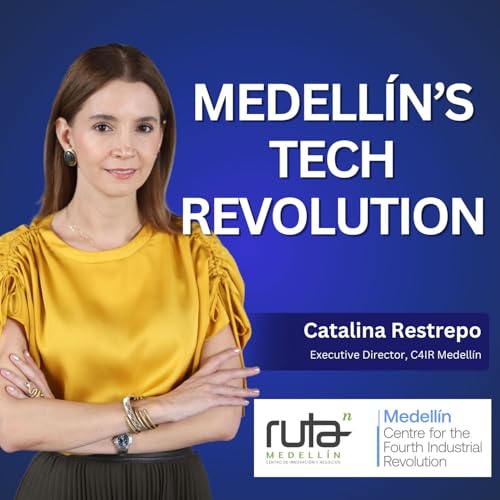
  • Shaping the Fourth Industrial Revolution: Inside Medellín’s C4IR with Catalina Restrepo
    Jun 10 2025
    What happens when a city once defined by conflict becomes a global hub for responsible innovation? In this episode of Der Große Neustart speaks with Catalina Restrepo Carvajal, Executive Director of the Centre for the Fourth Industrial Revolution (C4IR) Medellín — the only C4IR in Latin America and part of a global network created in collaboration with the World Economic Forum. From AI education and digital health to ethical GovTech and climate-smart urban design, Catalina shares how Medellín is leading Latin America’s tech revolution — and what it means to build trust, inclusion, and public value through emerging technologies. A powerful conversation about dignity, systems change, and the future we choose to create.
    Mehr anzeigen Weniger anzeigen
    58 Min.
  • Emmanuel de Merode on 100 Years of Virunga — A Masterclass in Quiet Leadership
    Apr 19 2025
    This might be the moment you first hear about one of the most important — and least understood — places on Earth. Virunga National Park, nestled in the heart of the Democratic Republic of Congo, is Africa’s oldest national park and home to a third of the world’s remaining mountain gorillas. It’s also a frontline of armed conflict, poverty, and ecological destruction — and yet, a bold transformation is underway. Emmanuel de Merode is building real-world systems change from the ground up, using hydroelectricity, microfinance, sustainable agriculture, and conservation to rebuild a war-torn economy. As Director of Virunga, he has spent 20 years turning a war zone into a blueprint for peace and prosperity through nature. In this episode, he speaks about: • Translating theory into electricity, jobs, cocoa, and peace • Why peace in eastern Congo requires economic dignity • How illegal charcoal and cocoa trades fund violence • Creating 21,000 green jobs and Congo’s first chocolate factory • Building the Kivu–Kinshasa Green Corridor — the world’s largest protected tropical forest reserve • How quiet, principled leadership can move mountains — literally “They weren’t killing the gorillas for the meat... They were killing them because the forest had become too valuable.” This is not just a story of conservation — it’s a masterclass in quiet leadership, moral clarity, and systemic change in one of the most fragile yet vital places on Earth.
    Mehr anzeigen Weniger anzeigen
    1 Std. und 19 Min.
  • Feeding the Future: Ismahane Elouafi on Soil, Science, and Survival
    Mar 26 2025
    In this moving and timely episode, Der Große Neustart welcomes Dr. Ismahane Elouafi, Executive Managing Director of CGIAR, the world’s largest agricultural research network—leading 9,000 scientists across 89 countries. CGIAR’s research powers 60% of the world’s wheat and 50% of its rice, and for over 50 years has shaped how the world grows food—securing food systems and lifting millions out of poverty. We speak with Dr. Elouafi about what it takes to feed 10 billion people in a world of climate shocks, shrinking biodiversity, and deep global inequality—and how science must be at the center of the solution. She reminds us: “Eight hundred million people go hungry today. With a 2-degree rise in temperature, that number could rise by 180 million. With a 4-degree rise? Two billion.” 🔍 Topics we explore: - Why soil, science, and survival are inseparable - The launch of CGIAR’s new 2025–2030 global research portfolio - The promise of gene editing—and why it shows the need to democratize science - Why old models can’t guide our future in a time of irreversible biodiversity loss - The need for differentiated climate policy, with stark global disparities in consumption: → Americans eat 128kg of meat/year → Nigerians: 7kg, Indians: less than 1kg - Why we must diversify beyond a handful of crops: “There are 30,000 edible plants in the world. Why are we relying on just a few?” - How investing in women farmers unlocks food security and community transformation Recognized by The New York Times as one of 10 women redefining leadership, Dr. Elouafi offers not only scientific clarity, but a compelling call to action—grounded in public good, equity, and dignity. “We must design a system that benefits everyone—especially the most vulnerable.”
    Mehr anzeigen Weniger anzeigen
    1 Std. und 1 Min.
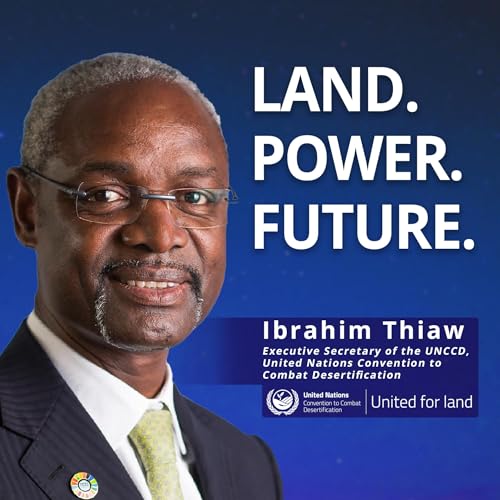
  • UNCCD’s Ibrahim Thiaw: Land, Power & the Race to Restore Our Future
    Feb 26 2025
    In this episode, Ibrahim Thiaw, Executive Secretary of the United Nations Convention to Combat Desertification (UNCCD), discusses the reality of land degradation—and the encouraging path to restoration. 🌍 Why does this matter? 40% of the world’s land is already degraded, affecting nearly half of humanity. Every year, we lose 100 million hectares—an area the size of Egypt. If we continue like this, by 2050, we will have lost land the size of South America. Land degradation isn’t just an environmental crisis—it threatens food security, fuels migration, and drives conflict. So, who is taking responsibility for restoring our planet’s most valuable resource? But there is hope. From the Great Green Wall in Africa to China’s Loess Plateau transformation, solutions exist—and they are working. 🎙️ What we discuss: ✔️ The real cost of land degradation—and how 50% of global GDP depends on land and nature. ✔️ Who controls the land? The hidden power structures behind global land ownership. ✔️ Proven solutions—from regenerative agriculture to large-scale reforestation projects. ✔️ Success stories—including Africa’s Great Green Wall and Saudi Arabia’s Vision 2030. ✔️ The impact of war on land—and how ecosystems in conflict zones can be restored. This is more than an interview—it’s both a wake-up call and a roadmap forward. The solutions are there.
    Mehr anzeigen Weniger anzeigen
    1 Std.
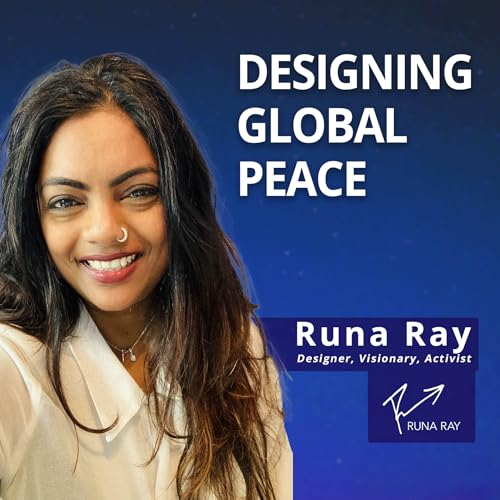
  • Runa Ray: Stitching Together a Fashion Revolution
    Jan 8 2025
    "I think we need an entire revolution in the fashion industry," says⁠ Runa Ray⁠, my first guest of 2025. And she is making it happen—as a designer, activist, and visionary. Her journey spans the⁠ Global Peace Flag Initiative⁠, endorsed by the United Nations and hailed as the largest art movement for peace and climate action, to presenting collections at Monte Carlo Fashion Week, the Grammy Awards, and shaping policy at the World Bank. Through pioneering innovations like algae-based textiles, zero-stitch techniques, and plant-based dyes, Runa challenges both designers and consumers to rethink their role in the system. She shares profound insights: witnessing coral graveyards in the Maldives, confronting the staggering waste of the fashion industry, and advocating tirelessly for an integrated ocean system. Born in India and refined by her work with Dior and Galliano in Paris, Runa has turned couture into a powerful tool for change—blending sustainability, peacebuilding, and innovation to redefine the very purpose of fashion. Runa is stitching together peace, sustainability, and transformation—one design at a time.
    Mehr anzeigen Weniger anzeigen
    1 Std. und 11 Min.