Folgen

  • a16z's First Employee on the History of a16z, Venture Capital & Fixing the Government | Scott Kupor
    Nov 4 2026
    Scott Kupor is the director of the U.S. Office of Personnel Management (OPM), which serves as the HR and talent agency for the federal government's roughly two million civilian employees. He worked with Marc Andreessen and Ben Horowitz at Loudcloud and Opsware, which sold to Hewlett-Packard in 2007. In 2009 he became the first employee of Andreessen Horowitz, where he spent 16 and a half years as managing partner, building the firm's operations and later investing in later-stage healthcare companies. Scott explains how a16z adapted Michael Ovitz's CAA model to venture capital, how the Skype deal and a willingness to market in an industry that considered it taboo accelerated the firm, and why he had to set his ego aside as the firm grew. He also shares why he left for government, why its incentive structure is "completely screwed up," how OPM is changing performance ratings and promotion rules, and how programs like Tech Force aim to bring young talent into government. He also tells the story of the underground mine in Boyers, Pennsylvania, where federal retirement paperwork was processed by hand for decades. Show notes: https://www.davidsenra.com/episode/scott-kupor Made possible by Ramp: https://ramp.com Deel: https://deel.com/senra AppLovin: https://applovin.com/senra Chapters (00:00:00) Quitting HP mid-financial crisis to join a16z (00:01:37) His first day (00:04:00) How a16z copied Michael Ovitz's CAA playbook (00:10:18) After-hours bourbon in Marc Andreessen's office (00:13:31) The Skype deal that returned half the first fund (00:18:37) Why VCs thought marketing was beneath them (00:21:48) Swallowing his ego as a16z grew (00:27:12) Why he left a16z to run the government's HR (00:30:37) Why government is afraid to take any risk (00:33:24) Why 99.7% of federal employees get a passing grade (00:36:13) Recruiting 1,000 engineers into government (00:38:37) Only 7% of the federal workforce is under 30 (00:40:31) Why "a job for life" is the wrong pitch (00:43:09) Why the government would never have hired Big Balls (00:46:39) Why DOGE had to be a big bang (00:48:56) The underground mine with 400 million pages of paper (00:55:28) Why government has to accept some failure (00:57:14) How young people can join Learn more about your ad choices. Visit megaphone.fm/adchoices
    Mehr anzeigen Weniger anzeigen
    58 Min.
  • High School Dropout to Multi-Billionaire: The Relentless Drive of Rafael Vivas
    Nov 1 2026
    Rafael “Raf” Vivas is a founding team member of AppLovin, the digital advertising and marketing company led by Adam Foroughi, where he has worked since 2011 in roles spanning business development, eCommerce and growth marketing, and co-founded the game publisher Lion Studios. He started in performance marketing at 14 working for his older brother, dropped out of high school, and at 17 built his own mobile ad platform, where Adam was one of his customers. When Adam decided to build a competing ad network, he recruited Raf as his first business hire in 2011, and Raf's one condition was that he live in the office. Raf explains how a small, unfunded team beat VC-backed rivals by going all in on technology, why he started Lion Studios to beat one of AppLovin's own partners and grew it to over $250 million in revenue in two years, and why he walked away at 28 and came back after the IPO as the stock collapsed. He also shares why AppLovin is against delegation and keeps its team small, how his mentor Mark Rosner taught him that every detail matters, and the best advice he ever received. Show notes: https://www.davidsenra.com/episode/rafael-vivas Made possible by Ramp: https://ramp.com Deel: https://deel.com/senra AppLovin: https://applovin.com/senra Chapters (00:00:00) Kicked out of his house at 16 (00:06:42) Starting his own ad platform at 17 (00:09:58) “Don't be mad, but I'm going to compete with you” (00:11:06) His one condition: living in the office (00:15:40) Turned down by VCs while already profitable (00:21:00) Why he's against delegation (00:24:15) Two years of persistence to land one customer (00:30:42) Lion Studios: built to kill a Cheetah (00:38:41) Walking away from AppLovin at 28 (00:44:13) The IPO that brought him back (00:45:44) The stock buyback that made $50 billion (01:01:01) The mentor who redlined the NDA (01:03:54) “Do you want to be Michael Jordan or Tiger Woods?” (01:05:46) The best advice he ever received: stay in the game Learn more about your ad choices. Visit megaphone.fm/adchoices
    Mehr anzeigen Weniger anzeigen
    1 Std. und 7 Min.
  • From a $27,500 Charter Company to a $4 Billion Private Jet Giant | Kenn Ricci, Flexjet
    Oct 28 2026
    Kenn Ricci is the chairman and largest shareholder of Flexjet, a fractional private jet company that operates more than 360 aircraft and is the largest Gulfstream operator in the world. A former Air Force-trained pilot, Kenn bought a small Cleveland charter company in his twenties so he could keep flying, built it into Flight Options, lost control of it to Raytheon in 2002, and bought it back during the 2008 financial crisis before acquiring Flexjet from Bombardier in 2014. He explains how Warren Buffett’s purchase of NetJets unlocked his financing, why he avoids mergers, why he has kept Flexjet private, and why he gave his children their wealth early through a family limited partnership. He also shares the advice from Notre Dame’s Father Ted Hesburgh that shaped his idea of a life of significance, and why every Flexjet employee can fix a customer’s problem without approval. Show notes: https://www.davidsenra.com/episode/kenn-ricci Made possible by Ramp: https://ramp.com Deel: https://deel.com/senra AppLovin: https://applovin.com/senra Chapters (00:00:00) Kenn's son had never flown commercial (00:02:34) Giving your kids their wealth while you're alive (00:07:03) Charlie Munger: "You give them the money" (00:15:57) The rule his kids made to avoid jealousy (00:25:36) Buying a failed charter company for $27,500 (00:35:05) Turned down by every bank until Buffett bought NetJets (00:39:33) $100 million in sales in 3 months (00:41:36) Why he hates mergers (00:42:58) Losing his company: the worst day of his life (00:52:15) Buying his company back in the financial crisis (00:56:08) The $600 million problem that led to Gulfstream (01:03:01) Father Hesburgh's 3 rules for a life of significance (01:05:47) Why he gave away everything he owned (01:09:57) Why any employee can comp a $300,000 trip Learn more about your ad choices. Visit megaphone.fm/adchoices
    Mehr anzeigen Weniger anzeigen
    1 Std. und 11 Min.
  • Competition, Intensity & Building a $115 Billion Global Bank | Nik Storonsky, Revolut
    Oct 25 2026
    Nik Storonsky is the co-founder and CEO of Revolut, a digital bank valued at $115 billion that is available in 38 countries. A former trader, he started Revolut with a card for spending abroad without bank fees and expanded it into a full-service bank with the goal of becoming number one in 100 countries. Nik explains why founders have an edge over professional CEOs, how he runs Revolut like a machine, and why he funds product bets algorithmically, doubling down on winners and cutting losers. He discusses hiring self-guided people over experienced executives, what Europe's regulatory constraints taught him, why he keeps VCs off his board, starting the Quantum Light fund, buying ads across Europe's airports, and how AI is changing the way Revolut is organized. Show notes: https://www.davidsenra.com/nik-storonsky Made possible by Ramp: https://ramp.com Deel: https://deel.com/senra AppLovin: https://applovin.com/senra Chapters (00:00:00) Coming for Jamie Dimon's dinner (00:02:04) Building the #1 bank in 100 countries (00:06:12) Why founders beat professional CEOs (00:08:45) Revolut's biggest mistake (00:12:47) Why legacy banks can't innovate (00:17:20) Running a company like a machine (00:20:28) Funding winners and cutting losers like a trader (00:23:31) How AI is changing Revolut's team structure (00:25:23) 50 direct reports and spreading innovation fast (00:29:59) Hiring self-guided missiles (00:33:31) Too much money makes founders weaker (00:37:38) What Europe's constraints taught Revolut (00:41:08) Why VCs are like football cheerleaders (00:49:28) Starting a fund to compete with VCs (00:54:28) From zero marketing to buying Europe's airports (01:00:21) Funding moonshots like a global tech company (01:03:58) Building an unstoppable machine Learn more about your ad choices. Visit megaphone.fm/adchoices
    Mehr anzeigen Weniger anzeigen
    1 Std. und 7 Min.
  • Managing $525 Billion by Rethinking Wealth Management | Kurt MacAlpine, Corient
    Oct 18 2026
    Kurt MacAlpine is a partner and the CEO of Corient, which manages approximately $525 billion in client assets. He became a first-time CEO at 39, believes wealth management was built on a flawed incentive structure, and applied a professional services partnership model to the industry. Kurt explains why Corient has one compensation plan and one P&L, how sharing the benefits of scale helps clients and partners, and why he kept building while the stock market questioned his strategy. He discusses buying back shares, taking CI Financial private with Mubadala Capital, integrating acquisitions, and building a business designed to last for generations. Show notes: https://www.davidsenra.com/episode/kurt-macalpine Made possible by Ramp: https://ramp.com AppLovin: https://applovin.com/senra Deel: https://deel.com/senra Chapters (00:00:00) Building Corient and managing $525 billion (00:05:32) Why wealth management’s incentives are broken (00:11:42) Bringing the partnership model to wealth management (00:22:15) Sharing the benefits of scale with clients (00:24:25) One compensation plan, one P&L, no exceptions (00:27:58) Why independent wealth managers join Corient (00:39:21) Staying the course when the stock market disagrees (00:48:25) Betting on the business through share buybacks (00:51:52) Taking CI Financial private with Mubadala Capital (00:59:08) Acquiring great partners and building one company (01:04:43) Giving employees a voice in building the brand (01:12:39) Building a business that lasts for generations Learn more about your ad choices. Visit megaphone.fm/adchoices
    Mehr anzeigen Weniger anzeigen
    1 Std. und 20 Min.
  • Lessons from Napoleon, Steve Jobs, Joan of Arc & Other Leaders | Ben Wilson
    Oct 14 2026
    Ben Wilson is the host of “How To Take Over The World,” which is one of my favorite podcasts. How To Take Over The World examines history’s greatest leaders and conquerors, and has benefited millions of people. In this episode, we talk about the common traits among the individuals he has studied such as Napoleon, Leonardo da Vinci, Joan of Arc, Thomas Edison, Steve Jobs, Arnold Schwarzenegger, and more. We also discuss the fact that Ben is battling advanced cancer. He’s a good guy, a close friend, and one of my favorite podcasters. He has four young children. Please watch this episode and see if you can help with medicine, introductions, or donations. GoFundMe: https://www.gofundme.com/f/help-ben-fight-cancer-support-his-treatment (00:00:00) What Ben has learned from making How to Take Over the World and studying history’s greatest leaders. (00:55:51) Living like you're dying. Ben on facing cancer. Learn more about your ad choices. Visit megaphone.fm/adchoices
    Mehr anzeigen Weniger anzeigen
    1 Std. und 11 Min.
  • Creating Muse: The Fastest-Growing AI Product Since ChatGPT | Alexandr Wang, Meta
    Oct 11 2026
    Alexandr Wang is the chief AI officer of Meta and co-founder of Scale AI. We talk about the seven-month effort to build Muse, why Meta focused on personal AI agents instead of coding, and how Mark Zuckerberg and Nat Friedman helped shape the product. Alexandr shares how Zuckerberg recruited him after Meta's Llama 4 setback, why he left Scale after nine years, and how he's rebuilding Meta's AI lab around small teams, exceptional talent, and minimal bureaucracy. We also discuss using memes to make a product go viral, the importance of having a single point of view, and why Alexandr believes AI could give everyone the ability to pursue bigger ambitions. Show notes: https://www.davidsenra.com/episode/alexandr-wang Made possible by Ramp: https://ramp.com Deel: https://deel.com/senra AppLovin: https://applovin.com/senra Chapters (00:00:00) The vision behind Muse (00:01:32) Discovering the potential of personal AI agents (00:03:34) Three years of therapy in one AI session (00:05:46) Building Muse in 7 months (00:09:16) Why Meta bet on personal AI (00:16:51) Mark Zuckerberg's obsession with improving products (00:20:15) How Meta knew Muse was ready to launch (00:23:32) Why great products need a single point of view (00:25:56) Making Meta cool again with memes (00:34:38) Building trust with AI agents (00:38:43) The future of human ambition (00:45:22) The call from Mark Zuckerberg that changed everything (00:52:13) Leaving Scale AI for Meta (00:55:19) Rebuilding Meta's AI lab from scratch (00:58:13) From founder to coach (01:05:55) The future billionaires at Alexandr's 19th birthday party (01:08:04) Diamond mining vs. building skyscrapers (01:09:21) Why Alexandr has more than 200 direct reports Learn more about your ad choices. Visit megaphone.fm/adchoices
    Mehr anzeigen Weniger anzeigen
    1 Std. und 12 Min.
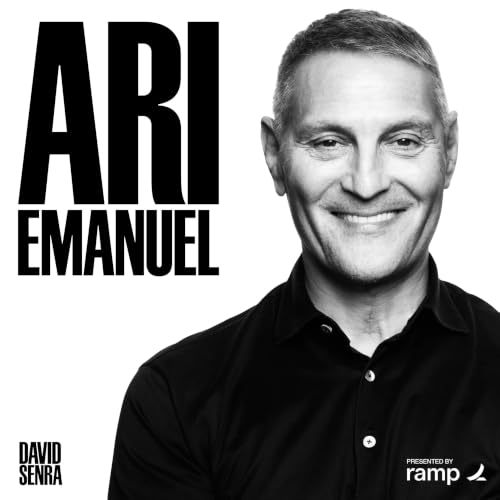
  • Channeling Rage, Rolling Calls & Building an Entertainment Empire | Ari Emanuel, WME & TKO
    Oct 7 2026
    Ari Emanuel is the co-founder of Endeavor, executive chair and CEO of TKO, executive chairman of WME Group, and founder of MARI. We talk about his $4.2 billion bet on the UFC, the ESPN deal that proved it right, lessons from Egon Durban and David Geffen, and how constantly making calls creates opportunities you can’t plan for. Ari also opens up about dyslexia, decades of insecurity, and learning to enjoy his life without losing the drive that built his businesses. Show notes: https://www.davidsenra.com/episode/ari-emanuel Made possible by Ramp: https://ramp.com AppLovin: https://applovin.com/senra Deel: https://deel.com/senra Chapters (00:00:00) The UFC negotiation that blew up (00:03:33) Meeting Egon Durban and buying IMG (00:07:30) Betting $4.2 billion on the UFC (00:15:16) Getting the ESPN deal done (00:22:58) Taking over William Morris (00:30:02) Starting Endeavor with a table and a phone (00:32:53) Why you won’t remember the extra $400 million (00:35:01) Stop telling yourself stories (00:39:21) David Geffen: Get in traffic and get hit (00:45:19) Why Ari rolls the calls (00:49:35) Building your own school of entrepreneurship (00:51:56) Learning from Elon Musk and betting on live events (00:53:58) Learning from Hollywood’s greatest agents (01:00:23) Outgrowing rage without losing ambition (01:10:10) Psychedelics, purpose, and letting go of legacy (01:18:18) How Entourage changed Ari’s life (01:22:32) Ari never had a plan B Learn more about your ad choices. Visit megaphone.fm/adchoices
    Mehr anzeigen Weniger anzeigen
    1 Std. und 24 Min.