Folgen

  • Shot Down Over Hanoi - Episode 71
    Apr 20 2026

    Retired Col. Thomas Kirk shares his story of surviving solitary confinement for two years as a prisoner of war at the “Hanoi Hilton."

    In this episode, Host Rick Crandall talks with Tom, a fighter pilot, squadron commander, and Vietnam War POW. From one of the most intense air-combat battlefields in history to the harrowing story that followed, Kirk explores what it took to persevere through the unthinkable. There is a lot to learn!

    🎧 What you’ll hear:

    • Inside Hanoi airspace: What it felt like flying through dense SAMs, AAA, and MiGs
    • October 28, 1967: Leading a major strike, getting hit, and making the call to finish the mission
    • Ejection and capture: The moment everything changed
    • Life inside the “Hanoi Hilton”: Torture, isolation, and survival
    • Two years alone: How routine, discipline, and mindset kept him going in solitary confinement
    • The tap code: Communication, connection, and resilience among POWs
    • Leadership under pressure: Commanding pilots in one of the most dangerous theaters of war
    • Coming home: The physical and emotional return after 5.5 years
    • Perspective: Faith, service, and “every day above ground is a great day.”

    Key takeaway:

    Kirk’s story reframes resilience as endurance over years, built on discipline, belief, and connection to others.

    About the guest:

    Col. Thomas H. Kirk is a retired U.S. Air Force Colonel and combat veteran of both Korea and Vietnam. He commanded the 357th Fighter Squadron and flew missions over North Vietnam in the Republic F-105 Thunderchief. Shot down on his 67th mission, he spent more than five years as a prisoner of war. He was awarded the Air Force Cross, four Silver Stars, and multiple Distinguished Flying Crosses. After his release, he returned to active duty in leadership roles before retiring and later built a successful business career, continuing to speak on leadership and resilience.

    Learn More:

    • Read the full show notes on the Wings Over the Rockies website
    • Donate to Wings Over the Rockies Air & Space Museum
    • Subscribe and leave a review to support the show

    This episode is supported in part by United Airlines.

    Mehr anzeigen Weniger anzeigen
    44 Min.
  • Behind the Wings Season 8 Trailer
    Apr 13 2026

    Season 8 of Behind the Wings podcast is here. Hosted by Rick Crandall, the next 10 episodes deliver first-hand accounts from across the aerospace world, spanning historic combat missions, classified Cold War programs, and pivotal moments in space exploration. This season continues the show’s focus on connecting past, present, and future through the people who lived it.


    Release Schedule:

    New episodes drop every other Monday, beginning April 20, 2026.


    More Info:
    Visit Wings Over the Rockies Air & Space Museum.
    Support Wings' Mission of aerospace education and inspiration.

    Special thanks to United Airlines for supporting the podcast and helping bring these stories to life.

    Mehr anzeigen Weniger anzeigen
    1 Min.
  • Supersonic Flight Without the Boom - Episode 70
    Feb 16 2026

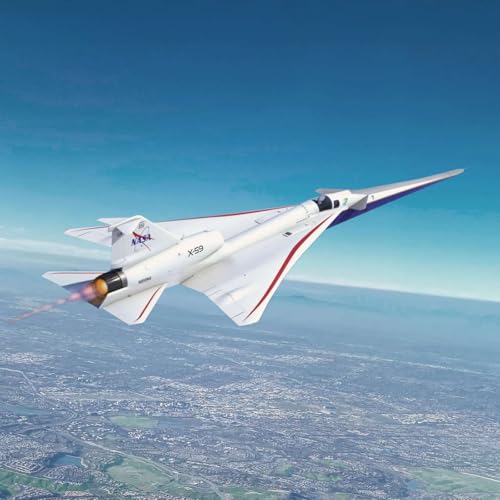
    Get an inside look at NASA’s Quesst mission and the effort to bring supersonic flight back over land, without the disruptive sonic boom.


    For more than 50 years, civil aircraft in the U.S. have been effectively barred from flying supersonic over land, not because of speed, but because of noise. NASA aims to change that paradigm with the X-59, a purpose-built experimental X-plane designed to reshape shockwaves so they reach the ground as a quiet “sonic thump” rather than a window-rattling boom.


    We’re joined by Cathy Bahm, Low Boom Flight Demonstrator Project Manager at NASA Armstrong, who leads the design, build, and flight test progression of the X-59, and Lori Ozoroski, Commercial Supersonic Technology Project Manager at NASA, who oversees mission planning, acoustic validation, and community response testing, and how that data is delivered to regulators.


    Why it matters: if regulators adopt a noise-based limit, commercial supersonic routes over land could become realistic again, potentially cutting long U.S. flights nearly in half.

    Mehr anzeigen Weniger anzeigen
    42 Min.
  • The F-100 Saved This Pilot's Life - Episode 69
    Feb 2 2026

    Retired Pilot Col. John “Warman” Stewart discusses his Vietnam combat sorties and how the Super Sabre saved his life.


    In this episode, we explore the history of the North American F-100, John’s Air Force career, his first supersonic flight, and what it was like operating one of the most important fighters of the Cold War. We also get an in-depth walkaround to understand how the Super Sabre's design features enabled its mission.

    From breaking the sound barrier to supporting troops on the ground, this one is going to be cool!


    What You'll Hear

    • The F-100 Super Sabre was the U.S. Air Force’s first supersonic fighter, marking a major leap in speed, capability, and risk during the early Cold War.
    • Flying the F-100 required constant attention, as early supersonic airplanes left little margin for error and demanded precise energy management.
    • John’s Air Force career placed him at the forefront of the jet-age transition, pushing the envelope for both pilots and their aircraft.
    • Combat operations over Vietnam highlighted the F-100’s role in close air support, where speed and firepower directly supported ground troops.
    • The Super Sabre’s legacy is one of innovation and hard-earned lessons, shaping fighters and tactics that followed for decades.

    Support Wings Over the Rockies' non-profit mission to educate and inspire future aerospace leaders: https://wingsmuseum.org/support/donate/

    Mehr anzeigen Weniger anzeigen
    36 Min.
  • Designing a Home for Artemis II - Episode 68
    Jan 19 2026

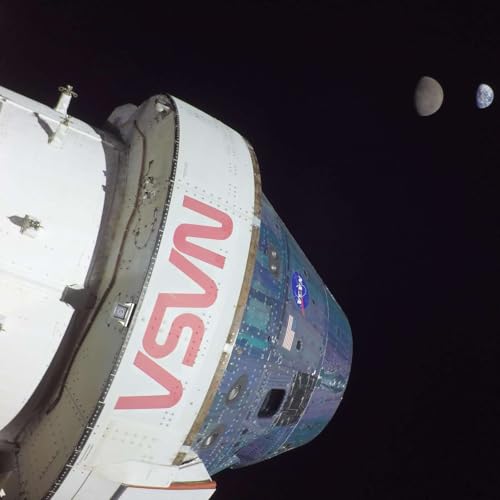
    Human Factors Engineer Cynthia Hudy shares what it takes to design a spacecraft around the people who fly it.


    We explore Cynthia’s role designing the systems inside Orion, from displays and controls to life support, radiation protection, and the everyday realities of living in deep space. We also discuss how astronaut feedback and human-in-the-loop testing are shaping Artemis II, the first crewed Orion mission to carry humans beyond low-Earth orbit since Apollo 17.

    From engineering for diverse crews to preparing humans for deep-space autonomy, this one is going to be cool!


    What You'll Hear

    • Artemis II is NASA’s first crewed mission beyond low Earth orbit since Apollo 17
      This 10-day flight around the Moon is the critical proving mission before astronauts return to the lunar surface.
    • Orion is designed like a “tiny house” in deep space
      Every system inside the capsule is engineered so four astronauts can live, work, sleep, eat, exercise, and respond to emergencies in an extremely confined space.
    • Human factors engineering shapes nearly every design decision
      Orion is built around human physical and mental limits, treating the crew as an essential part of the spacecraft system—not an afterthought.
    • The interior of Orion is where Artemis II differs most from earlier missions
      Life support, a functioning bathroom, exercise equipment, food and water systems, and crew-controlled displays are all coming online for the first time.
    • Astronaut testing directly changed how Orion works
      “Human-in-the-loop” trials led to real design changes, from how doors open in microgravity to how astronauts sleep, move, and access critical systems.
    • Artemis II is the proving ground for future Moon landings and Mars missions
      What Orion demonstrates about comfort, safety, autonomy, and crew well-being will shape Artemis III and long-duration human exploration.

    Support Wings Over the Rockies' non-profit mission to educate and inspire about aerospace: https://wingsmuseum.org/support/donate/

    Mehr anzeigen Weniger anzeigen
    38 Min.
  • From the End Zone to the Cockpit - Episode 67
    Jan 5 2026

    NFL Alum and Pilot Jimmy Graham shares stories about stunt flying and how it helped him relax when off the field.


    In this episode, we discuss how Jimmy earned his pilot certificates during his football career, airshow aerobatics, and his restored 1957 Army Beaver and Vietnam-era UH-1 Huey. We also explore Jimmy's role as Chairman of the EAA Young Eagles program, and his commitment to inspiring future aviators. From the discipline of professional football to the focus required in the cockpit, this one is going to be cool!


    Resources:

    • Jimmy Graham Bio
    • EAA Bio
    • Young Eagles
    • Bell UH-1H Iroquois Fact Sheet (U.S. Air Force)
    • de Havilland Canada DHC-2 Beaver Fact Sheet (Wikipedia)

    Chapters:

    • (00:00) - Intro
    • (01:04) - Meet Jimmy Graham
    • (01:29) - Football vs Flying
    • (04:18) - Early Aviation Inspiration
    • (05:52) - College Years
    • (07:25) - Unexpected Path to the NFL
    • (08:55) - Draft Day
    • (09:44) - First Huddle
    • (10:29) - Career Highlights
    • (11:04) - Motivation Shift
    • (12:11) - Flight School
    • (14:00) - Ten Licenses
    • (15:12) - Flight Training & Checkrides
    • (17:01) - Lifelong Education
    • (19:20) - Decision-Making
    • (20:30) - First Aerobatic Flight
    • (21:16) - Young Eagles
    • (23:08) - Aviation as Therapy
    • (25:44) - Jimmy's Aircraft
    • (28:36) - Growing Young Eagles
    • (32:31) - What’s Next
    • (35:33) - Advice
    • (37:33) - Outro

    Mehr anzeigen Weniger anzeigen
    39 Min.
  • From Warthogs to Reapers - Episode 66
    Dec 22 2025

    Retired Fighter Pilot Lt. Col. Tammy Barlette shares how flying the A-10 prepared her for operating UAVs like the MQ-1.


    In this episode, she discusses the Warthog's capabilities, combat missions in Iraq and Afghanistan, controlling the Predator and Reaper drones, returning to jets after a spinal injury, and how she now shares lessons from the flight deck as a mental performance trainer. As air superiority continues to shift from cockpits to control rooms, we get an inside look at why the pilot's role is more complex than ever before. This one is going to be cool!


    Resources:

    • Athena’s Voice (Tammy's Speaking Website)
    • Crosscheck Mental Performance (Tammy's Training Website)
    • A-10 Fact Sheet (U.S. Air Force)
    • MQ-1 Fact Sheet (U.S. Air Force)
    • MQ-9 Fact Sheet (U.S. Air Force)

    Chapters:

    • (00:00) - Intro
    • (01:21) - Balancing Perfectionism
    • (02:26) - Aviation Beginnings
    • (03:44) - Tammy's Pilot Journey
    • (05:15) - Flying the T-37
    • (06:53) - Selecting the Warthog
    • (08:22) - From ROTC to the Cockpit
    • (09:26) - Flying the Thunderbolt II
    • (10:13) - Favorite Stories
    • (12:17) - A-10 Capabilities
    • (13:28) - Close Air Support Training
    • (14:18) - Transitioning to UAVs
    • (15:59) - Flying the Predator
    • (17:58) - MQ-1 Capabilities
    • (19:09) - Separating Missions and Personal Life
    • (20:15) - Combat in Iraq and Afghanistan
    • (22:24) - Weapons School and the MQ-9
    • (26:03) - Changing Policies
    • (26:59) - From Jets to Drones to Jets Again
    • (27:54) - Flying Mistakes
    • (29:52) - Aircraft Performances
    • (30:36) - The Future of Uncrewed Aircraft
    • (31:22) - Mental Performance Training
    • (35:50) - Tammy's Advice
    • (36:45) - Outro

    Mehr anzeigen Weniger anzeigen
    38 Min.
  • Test Flying the SR-71 Blackbird - Episode 65
    Dec 8 2025

    Retired Test Pilot Rogers E. Smith recalls flying the final SR-71 Blackbird flight and how a fuel leak grounded the aircraft forever.


    In this episode, we discuss his Canadian and American military careers, flying experimental aircraft for NASA, and piloting a MiG-25 at 80,000 feet in Russia. From first to fourth-generation fighters, Rogers has flown nearly every U.S. jet and then some, all without ever attending a formal test pilot school. This one is going to be cool!

    Resources:

    • Rogers' Website
    • Rogers Smith's Bio (Canada's Aviation Hall of Fame)
    • Rogers' SR-71 Career Synopsis (NASA)
    • SR-71 Fact Sheet (National Museum of the US Air Force)
    • Bell X-22 (Wikipedia)
    • X-29 Advanced Technology Demonstrator Aircraft (NASA)

    Chapters:

    • (00:00) - Intro
    • (01:20) - Aviation Beginnings
    • (02:47) - Flying the F-86
    • (04:32) - From First to Fourth Generation Fighters
    • (05:06) - How Jet Capabilities Evolved
    • (08:58) - Becoming a Test Pilot
    • (09:56) - Favorite Airplane
    • (11:04) - The Bell X-22
    • (12:34) - The Grumman X-29
    • (15:16) - Joining NASA
    • (18:37) - Flying at 85,000 Feet
    • (22:16) - The Cockpit View
    • (23:40) - SR-71 Research and Testing
    • (27:44) - The Last Blackbird Flight
    • (29:40) - The Russian‑American Flight Exchange
    • (36:52) - Flying the MiG-25
    • (37:34) - Rogers' Advice
    • (40:32) - Outro

    Mehr anzeigen Weniger anzeigen
    42 Min.