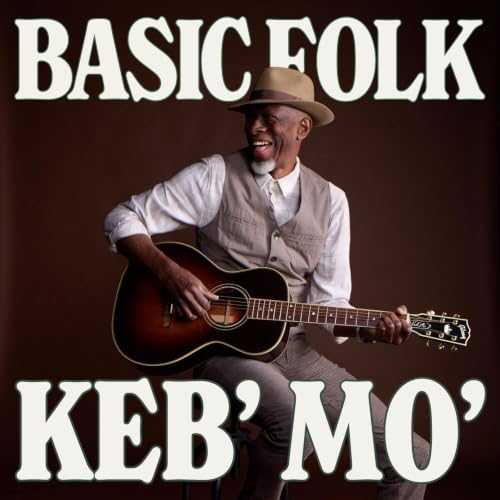
Basic Folk Titelbild

Basic Folk

Basic Folk

Von: The Bluegrass Situation
Jetzt kostenlos hören, ohne Abo

Basic Folk features honest conversations with folk musicians hosted by Cindy Howes and Lizzie No. We approach interviews with warmth, humor and insightful questions. Since 2018, this podcast has dignified under the radar roots musicians by providing a platform that they might not otherwise have. You’ll hear interviews from Three-time Grammy-winning guitar gods like Molly Tuttle, Haitian American folk legends like Leyla McCalla and deep feelers like songwriter John Hiatt.

Basic Folk is dedicated to showcasing the best in folk, bluegrass, acoustic and americana including Black, Brown and Queer folx who have been excluded, or felt like they did not belong, in the folk world. Cindy & Lizzie each bring a unique perspective to these honest conversations with folk musicians. We are equally dedicated to repainting the broad landscape of folk music as we are to tearing down the ivory towers of the music industry. What would Bruce Springsteen do if he ever got the keys to that mansion on the hill? Let's find out together on Basic Folk.

Basic is an official production of The Bluegrass Situation. Thanks for listening.

Welcome to Basic Folk.

Follow Basic Folk on social media: https://basicfolk.bio.link/

Sign up for Basic Folk's newsletter: https://bit.ly/basicfolknews

Help produce Basic Folk by contributing: https://basicfolk.com/donate/

Interested in sponsoring us? Contact BGS: https://bit.ly/sponsorBGSpods

All rights reserved.
Kunst Musik Sozialwissenschaften Unterhaltung & Darstellende Künste
  • Jimbo Mathus: still singing for Rosetta & Squirrel Nut Zippering, ep. 352
    Sep 17 2026

    Jimbo Mathus grew up in a house full of musicians, and by the time he was 8 years old, he was sitting in on family jam sessions. He dropped out of college, joined the Merchant Marines and eventually settled in Chapel Hill, North Carolina. He formed The Squirrel Nut Zippers in 1993, which experienced massive success in the mid- to late ‘90s. The band was swept into the short-lived swing music revival, alongside The Brian Setzer Orchestra, Big Bad Voodoo Daddy, and movies like The Mask and Swingers.

    It was a short-lived revival, but the Zippers offered fans something deeper and darker that led to a lifelong career for the ever-curious Mathus. Right around the time the band was rising to stardom, Mathus released the album Play Songs for Rosetta under the name James Mathus and His Knockdown Society. Originally released in 1997, the album was recorded in tribute and as a benefit for Charley Patton's daughter, Rosetta Patton Brown, whom he grew up with. Jimbo learned in his thirties that Rosetta was Charley’s daughter and that she had never received any royalties from his music. (There is a new vinyl addition of the album available for pre-order in a very limited run until Sept. 30, 2026.)

    In our conversation, Jimbo opens up about his connection to Rosetta and what he learned about Charley Patton through his very private daughter. He talks about his short film called Postcards to Rosetta, which explores the secret moments in the life of Charley Patton and particularly the relationship he had with his daughter. The short film features marionettes interpreting moments in Charley’s life. Mathus also comments on his ethos on genre and talks his band’s new album, which he has been working on for thirty years. Titled The Squirrel Nut Zippers Starring in "Fat City" (The Ballad of Lil' Tony), the album is based on Mathus’ grandfather’s life as a bootlegger, juke joint operator, and big band promoter in the South.

    Follow Basic Folk on social media: https://basicfolk.bio.link/

    Sign up for Basic Folk's newsletter: https://bit.ly/basicfolknews

    Help produce Basic Folk by contributing: https://basicfolk.com/donate/

    Interested in sponsoring us? Contact BGS: https://bit.ly/sponsorBGSpods


    Advertising Inquiries: https://redcircle.com/brands
    Mehr anzeigen Weniger anzeigen
    51 Min.
  • Rachel McCartney's Return to Music, Being a Horse Girl, & Accidentally Snubbing David Gray, ep. 351
    Sep 3 2026

    For 17 years, Rachel McCartney had set aside a music career and all the anxiety and uncertainty that came along with it. She was in her mid-30s and wanted a family and some stability. Once she started a new life as an ICU nurse and mother to two young children, her musical career and the momentum she had created over the past three decades in New England and Western Pennsylvania didn't much cross her mind.

    I met Rachel when I was 18 years old while at Emerson College. It was the year 2000 and the folk scene in Boston was popping with incredible talent: Lori McKenna, Deb Talan (The Weepies), Anaïs Mitchell and many others were selling out shows left and right in listening rooms across New England. Rachel was a frequent name that popped up in the newspaper, on radio, as a busker in the subway and around town at venues like The Kendall Cafe, Toad and of course, the folk mothership, aka Club Passim. It was a lucrative time for the singer-songwriter with a big voice and great songs.

    She would frequently appear with another Boston-famous, yet under-the-radar songwriter, the Atlanta-born Brian Webb. Although, their friendship was hard-won after their brief romantic relationship ended. However, they kept performing together as the two were each other's musical kindreds, their voices blending effortlessly. If you were at Rachel's recent album release, you were treated to some Rachel & Brian classics that lit up the WERS Coffeehouse in the early 2000's. Needless to say, I am so thrilled that Rachel's released new music and am very excited that she agreed to be on the podcast today.

    In our conversation, we discuss her move from Iowa to Massachusetts as a teen and how the impact of that has influenced the way she makes decisions for her kids. She talks about her relationship to the guitar, her singing and her songwriting. She addresses the allegations that, indeed, she is a horse girl through and through.

    She moved to Pittsburgh in her 20s on a whim, something we have in common. She reflects on Pittsburgh, busking in Boston and what it was like to choose a stable life with a family in nursing. Her new album, Taming Dragons, was produced by Zack Hickman and she shares what it felt like to be in the studio after nearly two decades. I was pleased to point out that dragons also appear on Tori Amos' new album (In the Time of Dragons), which then led Rachel to share what the dragon symbolizes for her.

    We did this interview in my backyard (like Oprah) and you can hear birds, lawn mowers and Francie in the background, but I think it all adds to the atmosphere. I have interviewed Rachel many times, but it was all before my cerebral cortex was fully formed, so this is basically the first real interview I have done with the fabulous Rachel McCartney! - Cindy

    Follow Basic Folk on social media: https://basicfolk.bio.link/

    Sign up for Basic Folk's newsletter: https://bit.ly/basicfolknews

    Help produce Basic Folk by contributing: https://basicfolk.com/donate/

    Interested in sponsoring us? Contact BGS: https://bit.ly/sponsorBGSpods


    Advertising Inquiries: https://redcircle.com/brands
    Mehr anzeigen Weniger anzeigen
    1 Std. und 10 Min.
  • Keb' Mo' Defines the Blues as Honesty Music, ep. 350
    Aug 20 2026

    We are so honored to welcome Keb' Mo' (aka Kevin Moore) on the show for our 350th episode! After many decades of incredible music, his new solo acoustic album, The Breakdown, was written and recorded at his home studio near Nashville following open-heart surgery and personal life changes. He's also recently released his second collaborative album with the legendary Taj Mahal.

    We were blown away by Keb' Mo's definition of the blues: "honesty music." There's a lot of debate nowadays whether the blues is something that includes a formal set of requirements. Is it a genre? Is it a type of sound that's trapped in a particular historical era? Kevin didn't even give the time of day to any of those gatekeeper explanations. He said if the music has that honesty, has the moan and the sense of speaking to Black experience for a Black audience who understand what it's like to struggle, that's what the blues is.

    There's a spectrum of humility to ego in music. Some artists use music and performance as vehicles for their own notoriety. During this interview, I was struck by how far on the opposite end of the spectrum Keb' Mo' falls. Kevin went from being a kid in Compton asking his parents for a guitar, knowing how much $25 meant in those days, to now being an artist sponsored by so many guitar companies. He still remembers a time when the idea of having a collection of guitars was crazy talk.

    His humility during our conversation is so present. I asked Kevin, "What does success mean to you and do you think you've achieved it?" His answer was, "I get to keep playing and I don't have to get a regular job." Even after all these years and so many accolades, it's a privilege for him to play his own original music in front of people and to be a part of this tradition.

    I just wanna shout out how generous Kevin is as a conversation partner. I came into this interview nervous because he's one of the more legendary guests that we've had on the show. I found myself a number of times having to sit back and receive a compliment. He's the first to say, "That was a great question. You're really thoughtful. You're killing it!" So I was really lucky to interview him. - Lizzie No

    Follow Basic Folk on social media: https://basicfolk.bio.link/

    Sign up for Basic Folk's newsletter: https://bit.ly/basicfolknews

    Help produce Basic Folk by contributing: https://basicfolk.com/donate/

    Interested in sponsoring us? Contact BGS: https://bit.ly/sponsorBGSpods


    Advertising Inquiries: https://redcircle.com/brands
    Mehr anzeigen Weniger anzeigen
    58 Min.
adbl_web_anon_alc_button_suppression_t1
Noch keine Rezensionen vorhanden