• Colin Angle on Why Home Robots Failed Before and Why AI Changes Everything
    May 6 2026

    Home robots have been promised for decades.


    Most of them did not fail because the ambition was too small. They failed because the technology was not yet good enough to understand people, adapt to real homes, or earn a place in daily life.


    In this episode of Automated, Brian Heater speaks with Colin Angle, founder and CEO of Familiar Machines & Magic and co-founder of iRobot, about why this moment in robotics feels fundamentally different.


    After helping define consumer robotics with Roomba, Colin is now focused on a new category of robot built not just to perform tasks, but to understand context, respond with intention, and build long-term connections inside the home.


    The conversation explores why the hardest problem in robotics was never simply movement. For years, robots could hear commands and execute narrow tasks, but they struggled with situational awareness, context, and the complexity of real-world environments. Colin explains why recent advances in AI have changed that, making capabilities that once felt impossible now practical.


    Brian and Colin also revisit one of Roomba's most important lessons. A robot can technically work and still fail in the home. The real challenge is not just functionality. It is whether the product fits naturally into people’s routines. Colin shares why one of Roomba’s biggest failure modes was not a rare edge case, but something much more common: people turning it off because it was annoying at the wrong time, and never turning it back on.


    The conversation also digs into what physical presence adds to AI. Colin reflects on early iRobot experiments like My Real Baby and explains why embodied systems can create a deeper and more memorable connection than software on a screen.


    They also discuss why Colin believes the next major consumer robot will not be a humanoid trying to replicate human labor in the home. Instead, he argues the real opportunity is building machines people trust, enjoy interacting with, and want around over time.


    Privacy is another major part of that equation. Colin explains why home robots need to run on the edge, not rely on constant cloud streaming, and why trust, latency, and cost all matter just as much as technical capability.


    This conversation is a deep look at what held home robotics back, what AI has finally unlocked, and why the next breakthrough may come from building robots that feel less like tools and more like a natural part of everyday life.


    Connect with Colin Angle

    https://www.linkedin.com/in/colinangle/


    Learn more about Familiar Machines & Magic

    https://www.familiarmachines.com/


    We’d love to hear from you.

    Have thoughts or guest suggestions?

    Reach us at podcast@automate.org.


    You can find the transcript and more episodes of Automated at automated.fm.

    Unlock full access to Automated and explore everything automation.


    Subscribe today and leave a review on YouTube, Apple Podcasts, and Spotify.

    Subscribe to the Automated Newsletter:

    https://www.automate.org/automation/newsletter-automation-roundup


    You can also find us on:

    LinkedIn https://www.linkedin.com/showcase/automated-podcast-by-a3/


    Instagram https://www.instagram.com/automatedpod/

    Hosted on Acast. See acast.com/privacy for more information.

    Mehr anzeigen Weniger anzeigen
    51 Min.
  • Martial Hebert on Why Self-Driving Cars Took So Long and What Everyone Got Wrong About AI
    Apr 29 2026

    Self-driving cars were supposed to be everywhere by now.


    They are not.


    And the reason is not what most people think.


    In this episode of Automated, Brian Heater speaks with Martial Hebert, Dean of Carnegie Mellon University’s School of Computer Science, about the reality behind decades of robotics and AI development.


    Martial has spent more than 40 years at the Robotics Institute and worked on some of the earliest autonomous vehicle systems. From that perspective, the story is not about technology failing.


    It is about expectations being wrong.


    The core technology for self-driving cars has existed for years. What slowed everything down is something far less visible: validation, safety, and the challenge of proving these systems can operate reliably in the real world.


    That gap between “it works” and “it can be trusted” is where most timelines break.


    The conversation also explores why physical AI is fundamentally different from the AI most people are familiar with. Unlike software, robots have to operate in unpredictable environments, interact with people, and handle edge cases that cannot be fully simulated.


    Martial explains why simulation alone is not enough, and why real-world experimentation is still essential, even when it is slow, expensive, and difficult to scale.


    They also discuss the robotics data problem. While large language models benefit from massive amounts of internet data, robotics systems struggle to collect the kind of real-world data they actually need.


    Brian and Martial also dig into a deeper idea that often gets overlooked: progress in robotics is not just about better algorithms. It is about building long-term ecosystems of talent, culture, and expertise.


    That is part of what turned places like Carnegie Mellon into leaders in autonomy, and why many of today’s breakthroughs are the result of decades of accumulated work.


    They also explore the role of DARPA and long-term research funding, not as a way to build products quickly, but as a way to push the limits of what is possible and force entirely new breakthroughs.


    This conversation offers a grounded perspective on why progress in AI takes longer than expected and what it actually takes to move from impressive demos to systems that work in the real world.


    Connect with Martial Hebert

    https://www.linkedin.com/in/martial-hebert-76448756/


    Learn more about Carnegie Mellon Robotics

    https://www.ri.cmu.edu/


    We’d love to hear from you.

    Have thoughts or guest suggestions?

    Reach us at podcast@automate.org.


    You can find the transcript and more episodes of Automated at automated.fm.


    Unlock full access to Automated and explore everything automation.

    Subscribe today and leave a review on YouTube, Apple Podcasts, and Spotify.


    Subscribe to the Automated Newsletter:

    https://www.automate.org/automation/newsletter-automation-roundup


    You can also find us on:

    LinkedIn https://www.linkedin.com/showcase/automated-podcast-by-a3/


    Instagram https://www.instagram.com/automatedpod/

    Hosted on Acast. See acast.com/privacy for more information.

    Mehr anzeigen Weniger anzeigen
    48 Min.
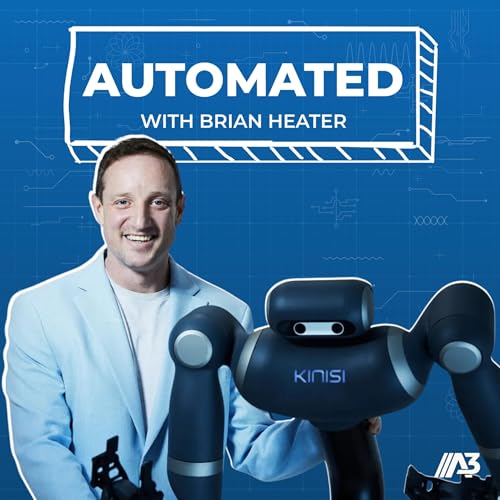
  • Bren Pierce on Why Humanoid Robots Are Overhyped and What Actually Works in Robotics
    Apr 22 2026

    Humanoid robots are everywhere right now. From viral demos to bold promises about home automation, it often feels like the future has already arrived.


    But behind the scenes, the reality is far more complex.


    In this episode of Automated, Brian Heater speaks with Bren Pierce, founder of Kinisi Robotics and co-founder of Bear Robotics, about what it actually takes to build and deploy robots in the real world.


    Bren explains why many humanoid robot demonstrations are misleading. While the technology has made major advances in movement and control, real-world deployment is still limited by manipulation, reliability, and the complexity of unstructured environments.


    The conversation explores why household robotics may be further away than most people think. Despite impressive demos, creating a robot that can operate independently in a dynamic home environment remains an unsolved challenge that could take years to fully unlock.


    They also discuss the gap between robotics innovation and practical business applications. Many companies are still experimenting, often driven by internal pressure to adopt AI and automation, even when the return on investment is unclear.


    Bren shares lessons from building multiple robotics companies, including why focusing on real problems matters more than chasing hype. Instead of targeting futuristic home use cases, Kinisi is focused on warehouse and industrial environments where the technology can deliver value today.


    The episode also dives into the challenges of scaling robotics systems. From deployment complexity to training and usability, the biggest barrier is not just building the technology, but making it reliable and usable without requiring expert engineers.


    Brian and Bren also explore the parallels between robotics and autonomous vehicles, highlighting how long it can take for breakthrough technologies to transition from demos to real-world impact.


    This conversation offers a grounded perspective on where robotics actually stands today and what it will take to move from impressive demos to real deployment.


    Connect with Bren Pierce

    https://www.linkedin.com/in/brenpierce/


    Learn more about Kinisi Robotics

    https://www.kinisirobotics.com/


    We’d love to hear from you. Have thoughts or guest suggestions? Reach us at podcast@automate.org.


    You can find the transcript and more episodes of Automated at automated.fm.


    Unlock full access to Automated and explore everything automation.

    Subscribe today and leave a review on YouTube, Apple Podcasts, and Spotify.

    Subscribe to the Automated Newsletter:

    https://www.automate.org/automation/newsletter-automation-roundup


    You can also find us on:

    LinkedIn https://www.linkedin.com/showcase/automated-podcast-by-a3/


    Instagram https://www.instagram.com/automatedpod/

    Hosted on Acast. See acast.com/privacy for more information.

    Mehr anzeigen Weniger anzeigen
    57 Min.
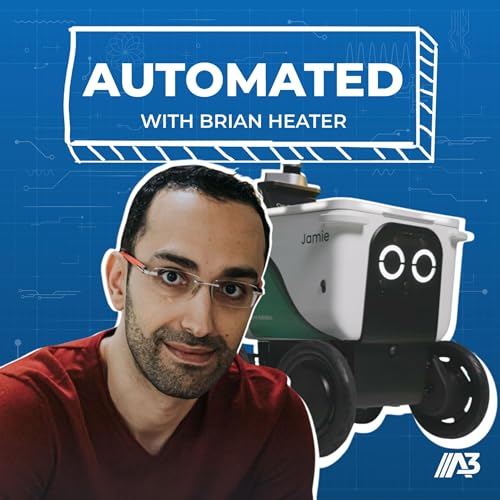
  • Ali Kashani on Last Mile Delivery, Robotics at Scale, and the Future of Autonomous Delivery
    Apr 15 2026

    Last-mile delivery is one of the most expensive and inefficient parts of the global supply chain. While goods can travel across oceans for just a few dollars, getting them from a local hub to a customer’s door remains disproportionately costly.


    In this episode of Automated, Brian Heater speaks with Ali Kashani, CEO of Serve Robotics, about the realities of deploying delivery robots in the real world and what it takes to scale autonomous systems beyond early pilots.


    Ali explains how Serve Robotics evolved from an internal Postmates project into an independent company operating thousands of robots in live environments. This transition reflects a broader shift in robotics from controlled experimentation to real-world deployment at scale.


    The conversation explores why building in the real world is essential for robotics. Lab environments often miss critical edge cases, while public deployment reveals the unpredictable human behavior, operational challenges, and environmental complexity that define real performance.


    They also discuss the economic implications of reducing last-mile delivery costs. Lowering delivery from $10 to closer to $1 could unlock new demand, expand local economies, and create new categories of jobs that support and operate these systems.


    The episode also examines safety, public perception, and the long-term impact of autonomous delivery on cities. From reducing reliance on cars to improving walkability and safety, these systems may reshape how urban environments function.


    Brian and Ali also explore scaling challenges, lessons from acquisitions, and the operational realities of running thousands of robots in public. From unexpected real-world incidents to long-term infrastructure shifts, this conversation offers a grounded look at what it takes to bring robotics into everyday life.


    We’d love to hear from you. Have thoughts or guest suggestions? Reach us at podcast@automate.org.


    You can find the transcript and more episodes of Automated at automated.fm.


    Unlock full access to Automated and explore everything automation. Subscribe today and leave a review on YouTube, Apple Podcasts, and Spotify.


    Subscribe to the Automated Newsletter:

    https://www.automate.org/automation/newsletter-automation-roundup


    You can also find us on:

    LinkedIn https://www.linkedin.com/showcase/automated-podcast-by-a3/

    Instagram https://www.instagram.com/automatedpod/


    Hosted on Acast. See acast.com/privacy for more information.

    Mehr anzeigen Weniger anzeigen
    46 Min.
  • Zachary Jackowski on Generalization in Robotics and the Reality of Deploying Robots in the Real World
    Apr 8 2026
    Robotics is advancing quickly, but building systems that can operate reliably in the real world remains one of the most complex challenges in technology.In this episode of Automated, Brian Heater speaks with Zachary Jackowski of Boston Dynamics about the shift from research to commercialization and why generalization is emerging as the defining problem in modern robotics.Zachary explains how Boston Dynamics approaches robot design, from early research platforms like Atlas R1 to more refined production systems. Early versions prioritize exploration and performance, while newer iterations focus on reliability, repairability, and deployment in real environments. This evolution reflects a broader shift across the industry toward building systems that can move beyond controlled demos and operate consistently in the field.The conversation explores why generalization is critical for robotics. Training robots on a single task does not prepare them for real-world variability. Instead, diverse data, multiple environments, and exposure to different behaviors are required to build systems that can adapt and perform across use cases.They also discuss the challenge of data collection and deployment, including the chicken-and-egg problem of needing real-world data to improve systems that are not yet ready for large-scale deployment. Incremental rollout, focused applications, and controlled environments are key steps in bridging that gap.The episode also examines why industrial environments are the starting point for humanoid robots. Factories provide structure, repeatability, and trained operators, while home environments introduce unpredictability that current systems are not yet equipped to handle at scale.Brian and Zachary also explore how different robot platforms, including humanoids, quadrupeds, and wheeled systems, each serve distinct roles. Rather than a single dominant design, the future of robotics will likely involve multiple systems working together and benefiting from shared data and learning.From actuator design and system simplification to deployment strategy and data diversity, this conversation offers a grounded look at what it takes to bring robotics into real-world applications.Key Moments:(00:00) Boston Dynamics and the shift to commercialization(02:11) Zachary’s path into robotics and Boston Dynamics(04:16) From research to product development(07:19) Research versus commercialization in robotics(08:53) Why early robots are built differently(11:16) Designing better systems through iteration(13:22) Advances in actuator performance(14:36) Safety and robot design decisions(16:11) Why humanoid robots are just the starting point(17:21) Why generalization is the real breakthrough(20:10) The data collection challenge in robotics(21:31) Why data diversity matters more than volume(23:24) Why robots are going to factories first25:52 Why robots are not ready for homes31:34 Why complexity increases in real-world roboticsSponsors: maxon designs and manufactures precision drive systems that enable reliable, high‑duty‑cycle performance in industrial automation, robotics, and smart manufacturing. https://www.maxongroup.com/We’d love to hear from you. Have thoughts or guest suggestions? Reach us at podcast@automate.org.You can find the transcript and more episodes of Automated at automated.fm.Unlock full access to Automated and explore everything automation. Subscribe today and leave a review on YouTube, Apple Podcasts, and Spotify.Subscribe to the Automated Newsletter:https://www.automate.org/automation/newsletter-automation-roundupYou can also find us on:LinkedIn https://www.linkedin.com/showcase/automated-podcast-by-a3/Instagram https://www.instagram.com/automatedpod/ Hosted on Acast. See acast.com/privacy for more information.
    Mehr anzeigen Weniger anzeigen
    37 Min.
  • Ranjay Krishna on Why Robots Still Fail in the Real World and the Data Problem Holding Them Back
    Apr 1 2026

    Robotics is advancing quickly, but real-world deployment is still far more difficult than most people expect.


    In this episode of Automated, Brian Heater speaks with Ranjay Krishna, a professor at the University of Washington and former researcher at Ai2, about the fundamental challenges preventing robots from working reliably outside controlled environments, and why solving the data problem is key to unlocking the next wave of robotics.


    Much of the work discussed in this episode was developed during his time at Ai2.


    Ranjay explains why today’s robots struggle with tasks that humans find intuitive, from learning by observation to understanding perspective and adapting to new environments. While AI models have made massive progress in language and vision, robotics introduces a new layer of complexity where actions change the world in real time and small errors compound over time.


    The conversation explores the limitations of current approaches, including why training robots in simulation often fails to translate to the real world, and how the lack of diverse environments creates major gaps in performance. Ranjay shares how his team at the Allen Institute is addressing this by building large-scale simulated environments designed to better reflect the variability of real-world spaces.


    They also discuss the concept of an ImageNet moment for robotics, and what it would take to create the kind of large, diverse datasets that transformed AI. By generating hundreds of thousands of simulated environments and scaling data collection, his team is exploring whether robots can learn more effectively in simulation and generalize those skills into the physical world.


    The conversation also covers why robotics requires more than just better models, including challenges in hardware, sensing, and real-world interaction. From embodiment and perception to reasoning and adaptation, it is a grounded look at why robotics remains one of the hardest problems in AI and what needs to happen next for the industry to move forward.


    We’d love to hear from you. Have thoughts or guest suggestions? Reach us at podcast@automate.org.


    You can find the transcript and more episodes of Automated at automated.fm.


    Also, join us at MassRobotics for a happy hour with Brian Heater from A3. Wednesday, April 8 - 4:30 PM - 6:00 PM EDT


    Unlock full access to Automated and explore everything automation. Subscribe today and leave a review on YouTube, Apple Podcasts, and Spotify.


    Subscribe to the Automated Newsletter:

    https://www.automate.org/automation/newsletter-automation-roundup


    You can also find us on:

    LinkedIn https://www.linkedin.com/showcase/automated-podcast-by-a3/

    Instagram https://www.instagram.com/automatedpod/

    Hosted on Acast. See acast.com/privacy for more information.

    Mehr anzeigen Weniger anzeigen
    43 Min.
  • Erik Nieves on Why Humanoid Robots Are Failing the Most Important Test
    Mar 25 2026

    Billions are flowing into humanoid robots. But on the factory floor, nobody cares what the robot looks like.


    In this episode of Automated, Brian Heater speaks with Erik Nieves, CEO and co-founder of Plus One Robotics, about the gap between robotics investment and real-world deployment. Recorded live at the A3 Business Forum in Miami, Nieves explains why enterprise customers have one question and one question only: does it hit 2,200 picks per hour with three nines of uptime?


    From the Cambrian explosion happening across warehouse automation to why dexterity remains the biggest unsolved problem in robotics, Nieves gives one of the most grounded, honest assessments of where the industry actually stands. He also explains why human-in-the-loop systems are not a limitation but a competitive advantage, and why robots are about to end the era of labor arbitrage entirely.


    Key Moments:

    (00:00) Why Enterprise Customers Don't Care What the Robot Looks Like

    (00:38) From Astronomy to Robotics: Erik Nieves' Origin Story

    (04:44) CES Humanoid Demos vs Real-World Deployment

    (06:52) Has the Capital Outpaced the Technology

    (09:32) Plus One Robotics at Year Ten

    (11:15) What Has Changed and What Has Stayed the Same

    (12:25) KPIs Matter More Than Form Factor

    (13:28) Why Humanoids Cannot Meet Industrial Rates Yet

    (15:59) Dexterity Is the Real Problem Nobody Is Solving

    (19:33) Legs vs Wheels: The Debate That Won't Die

    (21:43) Why Robots Are Still Behind a Fence

    (23:06) The Fence Is Not There to Keep the Robot In

    (24:59) The Cambrian Explosion in Robotics

    (26:57) How Plus One Robotics Was Founded

    (29:42) Why Human in the Loop Was the Right Bet

    (34:27) Robots Will End the Era of Labor Arbitrage

    (36:01) Nearshoring vs Reshoring

    (37:53) Why San Antonio Is a Hidden Advantage

    (39:08) Talent, Universities, and the AI Pipeline

    (41:04) Why Hardware Companies Cannot Go Fully Remote

    (42:17) Mentorship Only Works in Person

    (46:34) The One KPI That Runs the Entire Company


    Sponsored by SANYO DENKI America: SANMOTION delivers precise, reliable multi-axis control for advanced robotics systems.


    Learn more at https://www.sanyodenki.com/america/


    We'd love to hear from you! Have thoughts or guest suggestions? Reach us at podcast@automate.org


    You can find the transcript and more episodes of Automated at automated.fm


    Unlock full access to Automated and explore everything automation. Subscribe today and leave a review on YouTube, Apple Podcasts, and Spotify.


    Subscribe to the Automated Newsletter:

    https://www.automate.org/automation/newsletter-automation-roundup


    You can also find us on:

    LinkedIn https://www.linkedin.com/showcase/automated-podcast-by-a3/

    Instagram https://www.instagram.com/automatedpod/


    Hosted on Acast. See acast.com/privacy for more information.

    Mehr anzeigen Weniger anzeigen
    49 Min.
  • iRobot CEO Gary Cohen on Turnarounds, Feature Wars, and the Future of Roomba
    Mar 18 2026

    Robot vacuums have been on the market for over 20 years and are still in fewer than 20 percent of US homes. In this episode of Automated, Brian Heater speaks with Gary Cohen, CEO of iRobot and the brand behind Roomba, about what it actually takes to rebuild one of the most iconic names in consumer robotics.

    Gary breaks down the shift from feature-led to consumer-led product development, explaining why iRobot missed key market opportunities and how competitors used that window to take significant market share. He shares the full story behind the failed Amazon acquisition, the Chapter 11 restructuring, and how he rebuilt the company's entire product line in under 12 months to win Prime Day 2025.

    They also discuss why the robot vacuum market is far from saturated, why simplifying the setup and onboarding experience matters more than any new feature, and what the Gillette razor wars teach us about the robot vacuum arms race happening right now. Gary also addresses data privacy under the new ownership structure and previews what iRobot's roadmap looks like over the next two to three years, including a Japan-first product launch and the long-awaited iRobot lawnmower.


    We'd love to hear from you! Have thoughts or guest suggestions? Reach us at podcast@automate.org


    You can find the transcript and more episodes of Automated at automated.fm.


    Unlock full access to Automated and explore everything automation. Subscribe today and leave a review on YouTube, Apple Podcasts, and Spotify.


    Subscribe to the Automated Newsletter:

    https://www.automate.org/automation/newsletter-automation-roundup


    You can also find us on:

    LinkedIn

    https://www.linkedin.com/showcase/automated-podcast-by-a3/

    Instagram

    https://www.instagram.com/automatedpod/

    Hosted on Acast. See acast.com/privacy for more information.

    Mehr anzeigen Weniger anzeigen
    43 Min.