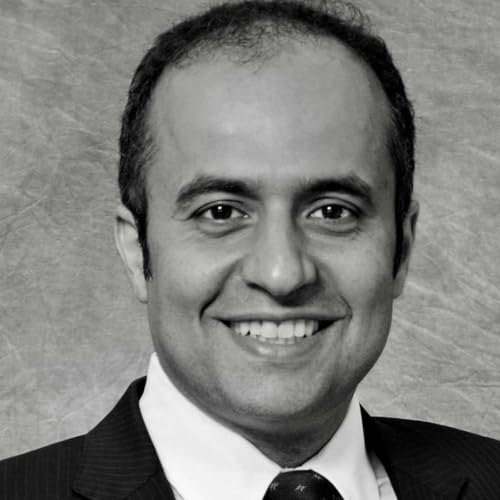
• Unlocking the Secrets of Specialty Finance with Coromandel Capital's Co-Founder and Managing Partner, Rob McGregor
    Oct 24 2025
    Launched in 2019, Coromandel Capital offers flexible, non-dilutive, growth-oriented asset-based lending solutions to businesses in specialty finance, fintech, and technology-enabled sectors that generate predictable, recurring revenue. As one of the few non-bank lenders specializing in small-ticket debt capital solutions, Coromandel Capital and similar entities—willing to provide financings below $20 million—are vital players for capital-intensive specialty lenders. The firm's financings typically range from $5 million to $50 million and have a three-year term.Co-Founder and Managing Partner Rob McGregor and I engaged in discussions on a variety of topics, including:- The role of debt financing in empowering startups and other early-stage and growing companies, particularly in relation to venture capital funding.- The risks associated with double pledging assets, including explanations thereof, especially in light of the recent collapse of First Brands.- The utilization of debt as a strategic tool for business growth.- The hidden costs related to venture debt.- The untapped potential inherent in the specialty finance sector.- The significance of diligent monitoring within lending relationships.- Strategies for growing as a private lender while safeguarding and maintaining capital.- Navigating the crowded and competitive private, non-bank lending industry to establish enduring relationships with borrowers and investors.Among the characteristics Coromandel seeks in ideal borrower partners are:- Balance-sheet intensive businesses (those originating or acquiring assets, tangible or intangible) that would otherwise finance these assets through equity.- Companies that have raised equity from Seed to Series B (or similar stages within their lifecycle), possess adequate capitalization to support operational expenses and maintain sufficient 'runway,' with a portion of this equity potentially serving as a contribution (also known as "haircut capital," "first loss capital," or "overcollateralization") for Coromandel's credit facility.- Subject matter experts and/or executives who are trailblazers with deep industry roots, a robust track record, and a validated business model.- Companies operating within sizable markets and differentiating themselves through cost-effective customer acquisition strategies, as well as firms that have identified an untapped or "greenfield" opportunity to address underserved or unserved markets.“Thank you for joining the Asset Backed podcast. To catch all the latest content, subscribe today and follow Endurance Strategies and Andres Sandate on LinkedIn, the Asset Backed YouTube Channel, and find our sister show, ATLalts, anywhere you listen to your podcasts. This audio represents Endurance Strategies' intellectual property.Podcast DisclaimerThis podcast is produced and hosted by Andres Sandate, and is the property of Endurance Strategies, LLC. Andres Sandate is a Financial Advisor with Gramercy Park Wealth Advisors, LLC, and a Registered Representative of GPWA, LLC, a member of FINRA/SIPC. Gramercy Park Wealth Advisors, LLC and GPWA, LLC are not responsible for the content of this podcast and do not offer investment, legal, or tax advice, nor do they recommend or endorse any securities, products, or strategies discussed.No part of this podcast may be published, reproduced, transmitted, or rebroadcast in any media or any form without the express written permission of Endurance Strategies, LLC.This podcast does not constitute an offer to sell or a solicitation of an offer to buy any fund interests, securities, or other financial instruments, nor does it constitute a solicitation on behalf of Endurance Strategies, LLC, its affiliates, or any third-party investment managers, their affiliates, products, or strategies. Any such offer or solicitation may only be made pursuant to the delivery of formal offering documents.Endurance Strategies, LLC has no obligation to update or revise any information contained herein. The company makes no representations or warranties as to the accuracy or completeness of the information, and this podcast should not be relied upon as the basis for investment decisions or for any other purpose.This material may be protected by copyright. © Endurance Strategies, LLC. All rights reserved.
    Mehr anzeigen Weniger anzeigen
    1 Std. und 20 Min.
  • Data-driven real estate lending with Mount North Capital's Brian Seidensticker and Kiah Hochstetler
    Jun 13 2025

    We spend a lot of time speaking with managers and investment professionals across asset-backed finance, asset-based lending, and specialized, niche areas of credit, seeking out teams and platforms that are not just engaged in private credit but are winning due to distinctive, hard-to-replicate edges with competitive moats around their sources of return.

    Recently, I sat down with Brian Seidensticker and Kiah Hochstetler, co-founders of Mount North Capital, to discuss how they source and execute opportunistic real estate investments. One standout takeaway from that conversation was this: Mount North’s unique local partner model is a big reason they can consistently find, vet, and turn distressed properties, which most listeners may not associate with private credit, into yield. In addition to their unique partnership model, Mount North Capital utilizes data and in-house proprietary technology, unlike real estate sponsors I have met previously as part of the underwriting.


    Here’s the idea in a nutshell:
    👉 They combine proprietary data with boots-on-the-ground local expertise.
    👉 Local partners — people who know their markets inside and out — act as both the eyes and execution arm for sourcing overlooked distressed real estate that institutional platforms simply can't pursue due to inefficiencies, a lack of data, and their scale.
    👉 Many local investors and operators know how to identify attractive opportunities but often lack the capital to scale beyond a few properties at a time.
    👉 Mount North steps in with funding, data, and a repeatable process, empowering these local partners to do more deals than they could alone, while Mount North retains ownership and control of the asset throughout. It offers a unique way to gain exposure to short-duration real estate credit, and I found their competitive pillars to be distinctive. One of the biggest advantages Mount North Capital explained in the episode is the combination of the data (just the raw amount is impressive in its own right) and the technology tools they have built internally over the past decade. They utilize it on every single deal for screening and to aid underwriting. They don't pursue deals that waste what is most valuable to all smart capital allocators - time.

    The partnership model they have created at Mount North Capital solves two key industry problems in distressed and opportunistic real estate:
    1️⃣ It vastly increases deal flow — more local relationships mean access to more auctions, more insider knowledge, and faster boots-on-the-ground diligence. What real estate investor doesn't want to see more deals that fit their investment criteria?
    2️⃣ It reduces risk — local partners share upside and have a vested interest in executing on budget and on time. If something goes off track, Mount North still owns the asset outright and can step in directly. No foreclosure, no mortgage, simply an operational decision to move on.


    The result? A repeatable, scalable model that taps into local know-how while keeping tight asset-level control and institutional standards.

    In a world where many private real estate funds chase the same on-market deals, Mount North’s local partner network is a powerful advantage — one that came up again and again in our conversation.

    If you’re an advisor, family office, or investor exploring asset-backed investments in real estate or private credit alternatives with a shorter duration, the Mount North Story is fascinating in my opinion.

    Follow Asset Backed and our sister podcast ATLalts for more insights from private market innovators. If you liked the conversation and learned something, we would appreciate it if you left us a positive review. If you found the topic helpful, please tell a friend about our show.

    #ATLalts #AlternativeInvestments #MountNorthCapital #RealEstate #PrivateCredit #LocalPartners #DealFlow #Podcast

    Mehr anzeigen Weniger anzeigen
    1 Std. und 4 Min.
  • Specialty Finance Masterclass with Monachil Capital Partners Founder & CIO Ali Meli
    May 9 2025
    https://www.atlalts.com/ - Our flagship pod, ATLalts, provides education, insights, and analysis of alts and private markets to RIAs and HNWIhttps://www.endurancestrategies.com/ - Learn, invest, educate and partner with us on alts, private markets, and non-traditional strategieshttps://sandate.substack.com/ - Check out my blog on asset backed financeYouTube Video of this episode: https://youtu.be/9OsDqg6bk1ghttps://www.linkedin.com/in/sandate/ - Connect with me on LinkedInhttps://calendly.com/sandate - Book time on my calendaremail me at andres@atlalts.com or andres@gpwealthadvisors.comAli Meli is the Founder, Chief Investment Officer, and Managing Partner of Monachil Capital Partners. Since launching the firm in 2019, Ali has been at the helm of the firm's overall management, guiding strategic initiatives and spearheading investment decisions and capital raising activities.Prior to establishing Monachil, Ali spent 14 years at Goldman Sachs, where he spearheaded some of the firm's most notable and lucrative structured credit transactions. He most recently served as a Partner and Global Co-Head of Structured Finance, Investing and Lending ("SFIL"). His previous roles included European Co-Head of Principal Funding and Investments ("PFI"). Ali earned a Bachelor of Science in Electrical Engineering and Management Science from the Massachusetts Institute of Technology.On this episode of Asset Backed, Ali and I discuss a wide variety of topics which specialty finance investors, practitioners, fund managers, and industry participants will find interesting. Among the many topics Ali & I discussed in this episode:- His background and motivation behind forming the firm and launching his first fund.- Evolution of specialty finance from mid 2000s (Prosper, peer to peer)- The shift to and addition of smaller originators and the key drivers of their success and the magnitude of this change over the longer term- Why bank business models did not support these smaller originators and their gravitation towards larger credits and borrower relationships - Why smaller originators are interesting as an asset class and secular trends propelling this part of the credit markets (e.g. reduced cost of technology, AI, data driven decisioning), which could help them growWhy this episode? - Non-bank lenders and specialty finance companies across areas such as structured consumer finance, commercial finance, transportation, factoring and invoice financing, MCAs, and ABL require funding partnerships to make loans to customers. - Firms such as a Monochil provide capital to these niche but massive segments of the lending or credit markets where they have seniority, access to data, books, records, and controls as the senior, first-lien, first position lender.- Examples of niche credit markets aka specialty finance include non-bank consumer lending, SME and invoicing/receivables financing among many other sub-verticals within what is called specialty finance- Specialty finance is only just beginning to become familiar to wealth advisors and RIAs, which is one of the key reasons I launched this podcast and run a sister podcast called ATLalts. - Many RIAs have allocated to large direct lending strategies and stopped looking at additional opportunities to gain exposure in private creditWhy Specialty Finance?- It is less correlated to corporate sectors- Lending is moving away from banks- Banks used to have a monopoly on "lead-gen", "payment infrastructure", "servicing", "consumer data", and "funding". As these four "moats" are being democratized, barriers to entry are easing. - Funding is turning from a competitive strength for commercial banks to weakness (payment technologies are making them more flighty and elastic)- What 20 years ago was mainly possible through having a bank account, is now achievable with an investment account (you can simply link your debit card to your brokerage/wealth account)- Banks are not only losing their monopoly as the source of consumer financing, but also to manage savings for customers...no longer best option for either saving or lending arguably - All of this creates opportunity for investors to earn attractive risk adjusted returns with private credit firms like Monochil who specialize in lending to niche markets or industries and areas such as structured creditDisclaimer: Nothing contained herein is, or shall be relied upon as, a promise or representation as to the past or future. This conversation has been prepared solely for informational purposes and is not to be construed as a solicitation or an offer to buy or sell any securities or related financial instruments. Viewers should not construe the contents of this conversation as legal, regulatory, tax, accounting or investment advice or a recommendation. Viewers should consult independent counsel, tax and financial advisors as to legal and related matters concerning any transaction.
    Mehr anzeigen Weniger anzeigen
    55 Min.
  • Strategically Investing and Navigating Through Market Volatility with Brook Scardina, Managing Partner - Capital Markets & Investments, Oak Real Estate Partners
    Apr 7 2025

    Brook Scardina is a Managing Partner - Capital Markets & Investments with Atlanta, GA-based Oak Real Estate Partners (OREP). OREP is an institutional small balance sheet private credit bridge lender that invests in high-quality, short-duration senior-position loans on positive income-producing commercial real estate assets.

    Brook and I discussed how investors can think about investing and navigating this period of volatility and market uncertainty, how alternatives and private credit generally, and real estate bridge lending specifically, can help mitigate portfolio volatility, offer enhanced diversification, and attractive risk-adjusted yields.


    The investment thesis at OREP is supported by increasing and tighter banking regulations which has created a unique investment opportunity for experienced private credit lenders to fill the lending void in the generation of attractive, uncorrelated returns that enhance diversification.

    About Oak Real Estate Partners:
    https://www.oakrepartners.com/about/

    Brook Scardina Bio:
    Brook Scardina is Managing Partner, Capital Markets & Investments, for Oak Real Estate Partners (OREP), where he leads the external capital markets strategy for the national fund manager focused on the institutional investment sector. He is responsible for advising on, solving and delivering alternative investment solutions that support the institutional return objectives of investors including foundations and endowments, sovereign wealth funds, family offices, and corporate and public pension plans.

    Over the past two decades, Brook has been involved in the participation and underwriting of more than $12 billion in capital deployed across multiple asset classes including equity, fixed income, diversifying strategies, hedge funds and alternative assets, and complex investment strategies. His career includes roles managing the financial and investment risk complexities for well-known organizations such as the Georgia Tech Foundation, UNC Management Company and UPS Group Trust, a $29-billion defined benefit trust. Immediately prior to joining OREP, Brook was Head of Institutional Consulting for Crescent Wealth Advisory.

    Brook, who holds a Series 65 certification from the Financial Industry Regulatory Authority (FINRA), earned master’s degree in business administration from Auburn University and a bachelor’s degree in finance from Georgia Southern University. He has served as a client advisory board member of the Bank of New York Mellon and is the current Chairman of the Board for the Roswell United Methodist Foundation in Atlanta, where he is based.

    Mehr anzeigen Weniger anzeigen
    56 Min.
  • Sreeni Prabhu, co-founder, Managing Partner, Co-CEO & Group Chief Investment Officer, Angel Oak Capital
    Oct 11 2024

    Disclaimer: Nothing contained herein is, or shall be relied upon as, a promise or representation as to the past or future. This conversation has been prepared solely for informational purposes and is not to be construed as a solicitation or an offer to buy or sell any securities or related financial instruments. Viewers, listeners, and subscribers should not construe the contents of this conversation as legal, regulatory, tax, accounting or investment advice or a recommendation. Viewers, listeners, and subscribers should consult independent counsel, tax and financial advisors as to legal and related matters concerning any transaction or financial matter. Any views expressed on this podcast, related websites, related blogs, or other related platforms related to this content that you may visit, watch, or listen to, or any articles, interviews, conversations, or discussions therein, are those of the participants and are not intended as a forecast or as investment recommendations. Information provided are as of the dates described in the content and/or the time of the recording and are subject to change at any time.


    Sreeni is a co-founder, Managing Partner and Group Chief Investment Officer at Angel Oak Capital and is responsible for the overall investment strategy of the firm. He is also the Chief Executive Officer and President at Angel Oak Mortgage REIT, Inc. (NYSE: AOMR).

    Prior to Angel Oak, Sreeni was the Chief Investment Officer of the investment portfolio at Washington Mutual Bank in Seattle where he managed a $25 billion portfolio. He was also part of the macro asset strategy team at the bank. Sreeni previously worked for six years at SunTrust Bank in Atlanta, where he was responsible for investment strategies and served as Head Portfolio Manager for the $3 billion commercial mortgage-backed securities portfolio. He began his career at SunTrust in 1998 as a Bank Analyst focused on asset/liability management and liquidity strategies.


    Sreeni holds a B.B.A. degree in Economics from Georgia College and State University and an M.B.A. in Finance from Georgia State University.


    Sreeni and I discussed his backstory which includes his being born and raised in India, his university years as a collegiate tennis player, his first jobs out of college, his career progression in financial services and how that led to the background needed to form Angel Oak, getting his firm started following the GFC with his co-founders, and key decisions and milestones that have allowed Angel Oak to reach its current size and scale.


    Mehr anzeigen Weniger anzeigen
    1 Std. und 18 Min.
  • Cesar Bello, Partner, Research and Portfolio Management at Corbin Capital Partners, L.P.
    May 31 2024

    About Cesar Bello:
    Cesar Bello is Partner, Research and Portfolio Management lead of the Litigation Finance ("LitFin") effort at Corbin Capital Partners. Cesar also works more broadly on the firm’s private investment program. Prior to joining Corbin, Cesar worked at Skadden, Arps, Slate, Meagher & Flom LLP and Ivy Asset Management. Cesar is the Portfolio Manager of the LitFin strategy at Corbin Capital, which has been active in commercial litigation finance since 2018, deploying approximately $400mm with a differentiated approach focused primarily on shorter duration, credit-like opportunities with downside protection.

    About Corbin Capital Partners:
    Corbin Capital Partners is a woman-led independent alternative asset management firm that specializes in multi-strategy hedge fund and opportunistic credit investing. Corbin has experience creating and managing differentiated commingled and bespoke portfolios for investors globally. As a firm that strives to create high-quality solutions for clients, Corbin deploys a broad toolkit of investing techniques, including external fund investments, opportunistic co-investing and direct trading capabilities. The firm is focused on maintaining its client centric model and continuing to serve as a trusted partner to clients. As a woman-led firm, Corbin Capital is committed to diversity, equity, and inclusion throughout the organization, inspired by its diverse leadership team. As of April 1, 2024, Corbin had $9.10 billion in assets under management.

    About Litigation Finance:
    Litigation finance is the provision of third-party capital to help finance law firms or plaintiffs pursuing legal claims in exchange for a portion of proceeds received. This is an emerging asset class in the U.S. that is generally underbanked and misunderstood, in part because the "collateral" is often difficult to value. Cesar and the Corbin Capital team recently published a great white paper on LitFin that I recommend checking out.

    About the Episode:
    In this episode Cesar explains the background of the LitFin industry, what it is, how the asset class works, and the various ways to access it. We spend the majority of the conversation talking about the different investment approaches, and Corbin Capital's focus on shorter duration credit-like cases with emphasis on downside protection as well as multiple off-ramps and levers to express risk and unlock value, with examples from real cases. We discussed risk factors, challenges, and how LitFin firms are differentiated in their approach to portfolio construction and case origination plus much more.

    Additional Resources:
    Cesar was interviewed for a story by Bloomberg Law on LitFin and you can read that article here.

    Mehr anzeigen Weniger anzeigen
    48 Min.
  • Derek Pilecki, CFA, Managing Member and Portfolio Manager, Gator Capital Management
    May 29 2024

    Derek is a former client and runs a successful investment management organization based in Tampa, Florida. He is a husband, father, founder, and investor that specializes in small and mid-cap financials. He and I caught up and talked about banks, private credit, financial industry stocks, his research and investment process, and much more in this episode. He has grown his firm largely through word-of-mouth and his excellent investment letters and research notes. I hope you enjoy the conversation.

    In 2008, Derek Pilecki founded Gator Capital Management. He currently manages a long/short financials strategy, long-only financials strategy, and various other individual portfolios. Derek has managed a private fund for 11 years. He launched one mutual fund and took over management of another mutual fund.

    From 2002 through 2008, Derek was a member of the Goldman Sachs Asset Management (GSAM) Growth Equity Team (Co-Chair of the Investment Committee for the Growth Team and a Portfolio Manager).

    Prior to GSAM, Derek was an Analyst at Clover Capital Management in Rochester, NY and Burridge Growth Partners in Chicago, IL. He covered the Financials sector at both firms. Before entering graduate school, Derek worked at Fannie Mae providing interest rate risk analysis for the company’s mortgage investment portfolio.

    Derek holds an MBA with honors in Finance and Accounting from the University of Chicago and a BA in Economics from Duke University. He is also a CFA® charterholder.

    Mehr anzeigen Weniger anzeigen
    57 Min.
  • Vadim Verkhoglyad, CFA dv01
    May 23 2024

    Vadim Verkhoglyad is the Vice President, Head of Research Publication at dv01.

    • His LinkedIn is here.
    • He has over 16 years of experience across structured credit, finance, and technology, and has an extensive background in data and performance analysis, research, and capital markets. He kickstarted his career as an analyst at Fitch Ratings and then transitioned to hedge fund Tricadia Capital, where he rose from systems analyst to senior vice president over his 12-year tenure
    • He has worked at dv01 for over five years, and regularly produces in-depth research on dv01 and industry data on asset classes including consumer unsecured, mortgage, student loan, auto and credit cards
      • These reports are available here, and Vadim also breaks down actionable insight from these reports on dv01's podcast In the Tranches of Structured Finance

    dv01

    • dv01 is a leading capital markets fintech company driving technological innovation and loan-level transparency and loan-level lending data in structured finance.
    • Founded in 2014, the company was acquired by the Fitch Group in 2021
    • It has over 230 million loans, 1,200 securitizations, and $6 trillion in original balance across the consumer unsecured, mortgage, auto, student loan, point of sale, home efficiency and small business asset classes.
    • dv01 was born out of the founder's frustration at the lack of transparency as a mortgage bond trader at Bear Stearns & JPM. Data was scarce, technology was outdated.
    • dv01 addresses the challenges by providing analysis-ready data (i.e., clean data) AND embedded analytics (reducing the vendor subscriptions a firm needs), ultimately streamlining their workflow
    • dv01 works with both issuers and investors and the company brings a wealth of knowledge to alternative investment firms.

    Topics / Questions that Vadim and I discussed on this episode:

    • Overall picture of consumer balance sheets, and what performance is like for various asset classes
    • The financial health of the American households
      • Loan performance trends (delinquencies, modifications, prepayments) and highlights of certain segments (regions, DTI, FICO ranges)
      • Impact of student loan repayments and broader consumer debt (credit card)
    • Discussion of the financial health in Florida in particular where insurance costs have soared recently
    • Origination trends
      • How credit underwriting has impacted origination volume
    • Economic health of different generations
      • Why Gen Zs' debt management is different to previous generations and why they are in a stronger relative position than Millenials
    • Why consumer ABS is poised for a strong year
    • Why media reports that subprime auto could be the next credit crisis are potentially inaccurate
    Mehr anzeigen Weniger anzeigen
    1 Std. und 2 Min.