

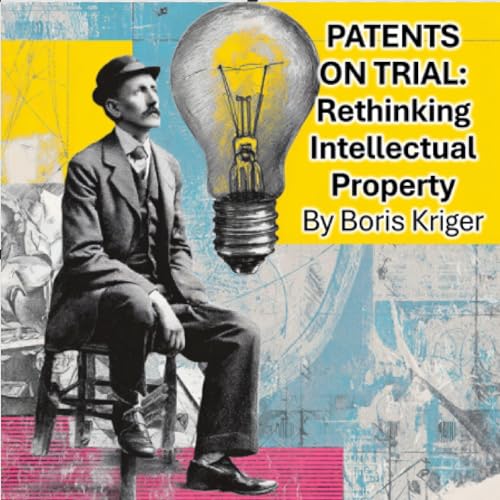
Patents on Trial
Rethinking Intellectual Property
Artikel konnten nicht hinzugefügt werden
Der Titel konnte nicht zum Warenkorb hinzugefügt werden.
Der Titel konnte nicht zum Merkzettel hinzugefügt werden.
„Von Wunschzettel entfernen“ fehlgeschlagen.
„Podcast folgen“ fehlgeschlagen
„Podcast nicht mehr folgen“ fehlgeschlagen
Nur 0,99 € pro Monat für die ersten 3 Monate
 Bist du Amazon Prime-Mitglied?
Audible 60 Tage kostenlos testen

Patents on Trial
Für 15,95 € kaufen
-
Gesprochen von:
-
Chris Reynolds
-
Von:
-
Boris Kriger
Über diesen Titel
For centuries, the patent has stood as a symbol of invention—a mark of genius, a reward for creativity, a promise that innovation would be protected and shared. But behind this polished image lies a more tangled reality. Patents today are wielded less as shields and more as weapons. They grant monopolies over life-saving drugs, obstruct progress in software and biotechnology, and often reward delay, secrecy, and litigation over actual discovery.
In this unflinching exploration, the author traces the journey of the patent system from its noble origins to its increasingly distorted present. With clarity and precision, the book uncovers how a structure designed to foster openness now encourages concealment, how it often confuses ownership with invention, and how the very act of filing can stall the future it claims to protect.
From stories of suppressed medicines and global patent wars to emerging questions around AI inventorship and the ethics of patenting life, this work draws a wide arc across law, technology, and society. It challenges the assumption that patents validate quality or serve justice, and it asks whether a different path—more transparent, more balanced, more humane—is still possible.
This is not a rejection of invention. It is a call to reclaim it.For centuries, the patent has stood as a symbol of invention—a mark of genius, a reward for creativity, a promise that innovation would be protected and shared. But behind this polished image lies a more tangled reality. Patents today are wielded less as shields and more as weapons. They grant monopolies over life-saving drugs, obstruct progress in software and biotechnology, and often reward delay, secrecy, and litigation over actual discovery.
In this unflinching exploration, the author traces the journey of the patent system from its noble origins to its increasingly distorted present. With clarity and precision, the book uncovers how a structure designed to foster openness now encourages concealment, how it often confuses ownership with invention, and how the very act of filing can stall the future it claims to protect.
From stories of suppressed medicines and global patent wars to emerging questions around AI inventorship and the ethics of patenting life, this work draws a wide arc across law, technology, and society. It challenges the assumption that patents validate quality or serve justice, and it asks whether a different path—more transparent, more balanced, more humane—is still possible.
This is not a rejection of invention. It is a call to reclaim it.
