Yackety Science Titelbild

Yackety Science

Yackety Science

Von: Brian Cross and Matt Smith
Jetzt kostenlos hören, ohne Abo

Über diesen Titel

Yackety Science shines a bright, but humorous, light into all of the darkest corners of the laboratory, the test tube, and the cyclotron. We find the comical in your cosmology, the droll in your hydrology, the booyah in your biology, and the golly-gee in your geology.Brian Cross and Matt Smith Wissenschaft
  • Episode 201: The Death of Ptolemy’s Armadillo
    Feb 23 2026

    Yackers Matt and Brian return triumphantly to the studio for what some are calling the Second Coming, others the Puntocalypse, and still others Yackety Science Season 2. The team takes a whirlwind tour of 2025 science breakthroughs—tricky tumors, new swine finds, and fresh eyes on the skies. A helium-filled man-o-war floats to the top of the listener mailbag. Brian weeps all over Galileo’s telescopes. And Matt susses out the secrets of sulfur, taking its malodorous measure.


    Got a question, comment, or correction? Yack right back at us at YacketyScience@gmail.com.

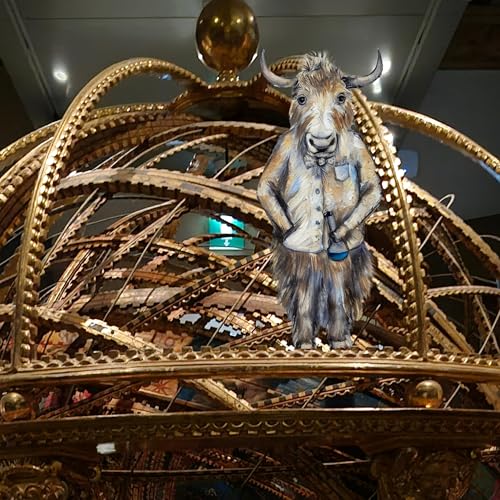
    Episode Art: Carl Yagan standing atop Santucci’s armillary sphere at the Galileo Museum in Florence, Italy.

    Theme music: “Funky Machine” (ID874) by Lobo Loco (Accessed through FreeMusicArchive.org.; CC BY-NC-ND 4.0)

    Production help provided by Scott Gregory.

    Yackety Science is recorded at the studios of Public Radio Tulsa, Kendall Hall, University of Tulsa, and at the Center for Creativity at Tulsa Community College.

    Links:

    Green Energy:The Green Giant: Images of China’s clean energy infrastructure reveal a transformation of unmatched scale and speed. (Science, Vol 390, Issue 6779)

    Gene Therapy and Rare Diseases:

    Gene-editing therapy made in just 6 months helps baby with life-threatening disease by Jocelyn Kaiser (Science; May 15, 2025).

    Patient-Specific In Vivo Gene Editing to Treat a Rare Genetic Disease by Musunuru et al. (NEJM N Engl J Med 2025;392:2235-2243)

    New Gonorrhea Drugs :New antibiotics for gonorrhea could help beat back drug-resistant infections by Kai Kupperschimdt (Science, 11 Dec 2025)

    Vera C. Rubin Observatory: All-Seeing Eye: The Vera C. Rubin Observatory is set to transform astronomy. Its wide and fast survey will discover billions of dynamic objects while building up a deep map of the universe (Science, Vol 388, Issue 6753)

    Denisovans Among Us: ‘Dragon Man’ skull belongs to mysterious human relative by Andre Curry (Science, 18 Jun 2025)

    Neurons, Mitochondria, and Tumors: Hoover, G., Gilbert, S., Curley, O. et al. Nerve-to-cancer transfer of mitochondria during cancer metastasis. Nature 644, 252–262 (2025).

    Particle Physics Mystery Solved:Long-running physics experiment dashes hope of new particles and forces by Adrian Cho (Science, Vol 388, Issue 6751)

    Xenotransplants:Man’s pig kidney fails just shy of setting record (Science, Vol 388, Issue 6750.)

    Heat Tolerant Rice: A natural gene on-off system confers field thermotolerance for grain quality and yield in rice. Li, Wei et al. (Cell, Volume 188, Issue 14, 3661 - 3678.e21)


    Mehr anzeigen Weniger anzeigen
    53 Min.
  • Episode 15: Fake and Phossy, Bald and Bleached
    Nov 17 2025

    Description:

    In this final episode of the season, Dr. Valerie O’Brien joins the Yackers to take on conniving cuckoos, fake blood, and electrolysis in space. (So many bald astronauts!) Matt devotes his Chemical Minute to phosphorus and explains why “phossy jaw” may not be as much fun as it sounds. Finally, the team snorts some spice and stops by Arrakis to explore the confusing biology of hungry, hungry sandworms.


    Got a question, comment, or correction? Yack right back at us atYacketyScience@gmail.com.

    Episode Art: Image modified from “Cuculus canorus chick1” byvladlen666 (C0 1.0 Universal).

    Theme music: “Funky Machine” (ID874) byLobo Loco (Accessed through FreeMusicArchive.org.; CC BY-NC-ND 4.0)


    Production help provided by Scott Gregory.

    Yackety Science is recorded at the studios of Public Radio Tulsa, Kendall Hall, University of Tulsa, and at the Center for Creativity at Tulsa Community College.

    Guest Host: Valerie O’Brien, Ph.D., is a former Associate Professor and Faculty Department Chair of Life Sciences at TulsaCommunity College. Valerie’s research interests lie in Behavioral Ecology, Entomology and Virology. Her most recentpublication is 'Nonrandom Weather-Related Mortality in a Purple Martin (Progne subis) Roost'.

    Links:

    Cuckoo Birds:

    ●Genomic data reveal the complexity of egg mimicry evolution in cuckoos by Michael D. Sorenson and Claire N. Spottiswoode (Science 30 Oct 2025).

    Fake Blood:

    ● First-in-human phase 1 trial of hemoglobin vesicles as artificial red blood cells developed for use as a transfusion alternative by Azuma H et al. Blood Adv. 2022 Nov 8;6(21):5711-5715.

    Electrolysis in Space:

    ●Magnets could improve oxygen production in space: Forces that go unnoticed on Earth could help move bubbles in orbiting spacecraft by Carolyn Wilke, special to C&EN (Chemical andEngineering News, Aug. 20, 2025)

    ● A magnetic push for electrolysis in space by Vensaus,P. Nat. Chem. 17, 1632–1633 (2025).

    Mehr anzeigen Weniger anzeigen
    54 Min.
  • Episode 14: Putting Quantum Baby in a Corner
    Oct 22 2025

    In this most Nobel episode of Yackety Science, the Yackers visit Stockholm to explore quantum tunneling, gas storage, and the plight of scurfy mice. Along the way, they are struck by micro-lightning and the sight of a most gruesome in-flight snack. The element silicon makes for a rocky edition of Matt’s Chemical Minute. And Prof. Craig Davis of OSU stops by to talk bobwhite biology, wetland decline, and the futile search for sewage plovers.


    Got a question, comment, or correction? Yack right back at us at YacketyScience@gmail.com.


    Theme music: “Funky Machine” (ID874) by Lobo Loco (Accessed through FreeMusicArchive.org.; CC BY-NC-ND 4.0)


    Production help provided by Scott Gregory.


    Yackety Science is recorded at the studios of Public Radio Tulsa, Kendall Hall, University of Tulsa, and at the Center for Creativity at Tulsa Community College.


    Guest: Dr. Craig Davis

    Craig Davis holds the Bollenbach Chair in Wildlife Management at Oklahoma State University. His research focuses on several areas including the response of grassland birds to fire-grazing interactions, assessment and classification of wetlands, wetland bird ecology, aquatic and terrestrial invertebrate ecology, and upland gamebird ecology and management.


    Links:


    • The Nobel Prize in Physics 2025 was awarded jointly to John Clarke, Michel H. Devoret and John M. Martinis “for the discovery of macroscopic quantum mechanical tunnelling and energy quantisation in an electric circuit.”

    • The Nobel Prize in Physiology or Medicine 2025 was awarded jointly to Mary E. Brunkow, Frederick J. Ramsdell and Shimon Sakaguchi "for their discoveries concerning peripheral immune tolerance."

    • The Nobel Prize in Chemistry 2025 was awarded jointly to Susumu Kitagawa, Richard Robson and Omar M. Yaghi "for the development of metal–organic frameworks."

    • This Chilling Recording Reveals Large Bats Catching, Killing and Eating Birds Midflight by Margherita Bassi - Daily Correspondent (Smithsonian; October 15, 2025)
    • Spraying of water microdroplets forms luminescence and causes chemical reactions in surrounding gas by Yifan Meng, Yu Xia, Jinheng Xu, and Richard N. Zare (Science Advances; Vol 11, Issue 11; 14 Mar 2025)


    Mehr anzeigen Weniger anzeigen
    54 Min.
Noch keine Rezensionen vorhanden