• First Sunday of Lent 2026
    Feb 22 2026

    On this First Sunday of Lent, the Church presents Christ’s victory over Satan in the desert (Matthew 4:1–11), showing that temptation is permitted by God not for defeat but for triumph; by answering each assault with Scriptum est — “It is written” — Our Lord teaches us that fidelity to Sacred Scripture, the perennial Magisterium, and disciplined penance is the path to spiritual victory. Lent is our desert: through fasting, prayer, and almsgiving we combat the temptations of the flesh, pride, and worldliness, clinging to the unchanging Catholic faith and liturgical tradition, especially in times of ecclesial confusion. Christ’s example calls laity, clergy, and bishops alike to courageous repentance, doctrinal clarity, and persevering holiness, trusting that if we endure the combat faithfully, the angels too will minister to us in victory.

    Mehr anzeigen Weniger anzeigen
    7 Min.
  • Quinquagesima Sunday
    Feb 15 2026

    On Quinquagesima Sunday, as we stand at the threshold of Lent, the Church gives us St. Paul’s great hymn to charity (1 Cor. 13) and the healing of the blind man at Jericho (Luke 18) to teach that without supernatural love (caritas) we are spiritually blind and all our orthodoxy, sacrifice, knowledge, or zeal are “as sounding brass.” Our Lord announces His Passion—“Behold, we go up to Jerusalem”—yet even the Apostles do not understand, reminding us that pride and self-reliance darken the intellect, while humble perseverance—“Jesus, Son of David, have mercy on me”—restores sight. True Catholic life, especially in times of trial and exile, demands both unwavering fidelity to doctrine and crucified charity: faith must be living, hope steadfast, but charity supreme, for it alone endures eternally.

    Mehr anzeigen Weniger anzeigen
    8 Min.
  • Sexagesima Sunday : February 8, 2026
    Feb 8 2026

    Sexagesima Sunday stands at the Church’s solemn threshold to Lent, a warning and a mercy from Holy Mother Church. By silencing the Alleluia and clothing the altar in violet, the Church reminds us that the Christian life is not comfort but combat. In the Epistle, St. Paul lays bare the cost of fidelity—sufferings, humiliations, and weakness—yet he glories in them, for “power is made perfect in infirmity” (2 Cor. 12:9, Douay-Rheims). The Church teaches us here that grace does not flourish in ease, but in humility and perseverance. As pre-Lenten history shows, these Sundays were established to awaken souls from spiritual negligence and prepare them to enter Lent as disciplined soldiers of Christ, not passive observers of faith.

    In the Gospel, Our Lord’s Parable of the Sower confronts each soul with a serious question: not whether the seed is good, but whether the soil is ready. The Word of God bears fruit only in hearts that hear, keep, and endure with patience (Luke 8:15). From the Traditional Catholic and Vatican in Exile view, the crisis of our age is not a failure of the Gospel but a failure to cultivate the soul through doctrine, discipline, and obedience. Sexagesima Sunday calls both clergy and faithful to examine their interior ground, uproot distractions and compromise, and prepare now—before Lent begins—to receive Christ’s Word deeply, so that it may bear lasting fruit unto salvation.

    Mehr anzeigen Weniger anzeigen
    8 Min.
  • Septuagesima Sunday 2026
    Feb 1 2026

    Septuagesima Sunday Summary:
    On Septuagesima Sunday, Holy Mother Church awakens us from spiritual complacency by silencing the Alleluia and calling us back to discipline, vigilance, and conversion; through Saint Paul’s warning that even the baptized can be lost if they do not persevere, and Our Lord’s parable of the laborers in the vineyard, we are reminded that grace is freely given but must be faithfully cooperated with, for privilege without effort leads to presumption, not salvation; from the perspective of the Vatican in Exile and the perennial teaching of the Church before 1958, this season summons both clergy and faithful to renewed self-mastery, penance, and holy fear, so that we may run the race not merely to start, but to finish well and obtain the crown.

    Mehr anzeigen Weniger anzeigen
    6 Min.
  • Third Sunday After Epiphany: The Leper and The Centurion receive miracles by Faith
    Jan 25 2026

    On this Third Sunday after Epiphany, the Church continues the manifestation of Christ as true King and Lord, revealed not only by His mercy but by His divine authority: authority over sickness, distance, law, and souls. In healing the leper and praising the faith of the Roman centurion, Our Lord shows that true faith is humble submission to His will and recognition of His authority—“Lord, if Thou wilt…” and “I am not worthy…”—while warning that those who presume on privilege without obedience risk exclusion from the Kingdom. Drawing from the constant teaching of the pre-1958 Church, this Gospel teaches that faith flourishes where authority is respected and collapses where it is denied, a lesson painfully evident in the modern crisis addressed by the Vatican in Exile. The faithful are called to repentance, reverent worship, and obedience rooted in humility, while clergy are exhorted to govern and preach with clarity and courage, remembering that Christ heals and saves not through ambiguity, but through truth spoken with authority and received in faith.

    Mehr anzeigen Weniger anzeigen
    7 Min.
  • The Importance of Marriage : Second Sunday After Epiphany 2026
    Jan 18 2026


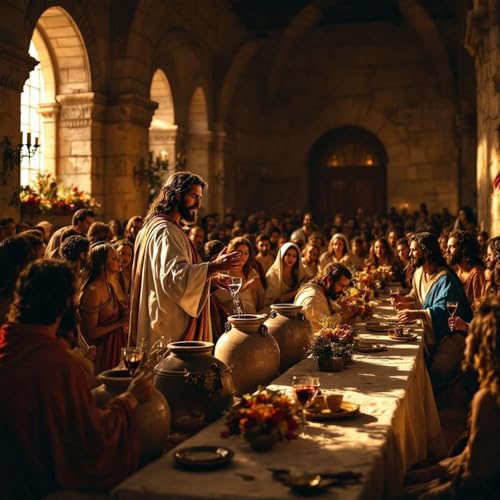
    On the Second Sunday after Epiphany, the Church contemplates the first public miracle of Christ at the Wedding of Cana, where He manifests His divine glory by transforming water into wine, revealing His power to sanctify marriage, elevate human life by grace, and restore joy where it has failed; through the quiet yet powerful intercession of the Blessed Virgin Mary—who teaches perfect trust and obedience in her words, “Whatsoever He shall say to you, do ye”—Christ acts not from necessity but from love, showing that grace does not merely repair nature but perfects it, while Saint Paul’s Epistle calls the faithful to live this transformation daily through humility, charity, patience, and unity within the Mystical Body, reminding both clergy and laity that true Christian life flows from obedient faith, Marian trust, and a willingness to be inwardly changed by Christ rather than conformed to the spirit of the world.

    Mehr anzeigen Weniger anzeigen
    8 Min.
  • Feast of the Holy Family : January 11, 2026
    Jan 11 2026
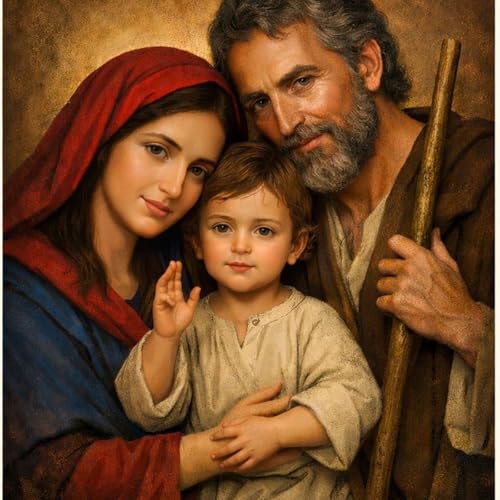
    The Feast of the Holy Family sets before the faithful the divine order of Christian life as revealed in Nazareth: obedience, charity, humility, and sacrificial love. Drawing from the Epistle to the Colossians and the Gospel of Saint Luke, the homily emphasizes that the family is a divine institution, not a human invention. Christ Himself sanctified family life by freely submitting to Mary and Joseph, teaching that peace in the home—and in society—flows from obedience to God’s design. Pre-1958 papal teaching is invoked to affirm that the family is the foundation of both Church and civilization, and that when this order is attacked or ignored, social and spiritual collapse follows.


    From the Vatican in Exile perspective, the Holy Family becomes the model for faithful Catholics living in a time of confusion and marginalization. Like Nazareth, the true Church often lives hidden, poor in worldly power yet rich in grace, preserved by fidelity rather than recognition. Families who cling to Tradition become domestic churches—places of prayer, reverence, and moral formation—through which the Faith endures. The homily concludes by calling fathers, mothers, and children to mirror Saint Joseph, Our Lady, and the Child Jesus, restoring prayer and order in the home so that Christ may continue to grow there in wisdom, age, and grace.


    Mehr anzeigen Weniger anzeigen
    5 Min.
  • Holy Name of Jesus Season: Christmastide
    Jan 3 2026

    The Feast of the Holy Name of Jesus proclaims the central mystery of our salvation: that the Eternal Word, humbled in obedience and shedding His first Blood at His Circumcision, was given the Name Jesus—“God saves.” As Saint Paul teaches in Philippians 2:8–11, this Name is exalted above every other precisely because it is inseparable from the Cross. The Gospel (Luke 2:21) reveals that salvation begins not with glory but with sacrifice, law fulfilled, and suffering accepted. The Church has always taught that the Holy Name is not a mere title but a living confession of faith, a prayer, and a weapon against evil, before which every knee must bow.

    From the Vatican in Exile perspective, devotion to the Holy Name stands as a safeguard of doctrinal clarity in an age that seeks to dilute Christ’s unique sovereignty. The Name of Jesus cannot be reduced to sentiment or symbolism; it proclaims His exclusive role as Savior and King. Faithful Catholics are therefore called to restore reverence for the Holy Name in prayer, speech, and life, invoking it in temptation, suffering, and hope, and defending it against irreverence or denial. In honoring the Holy Name, the Church remains faithful to her mission: to confess Christ crucified, risen, and reigning, now and forever.

    Mehr anzeigen Weniger anzeigen
    7 Min.