

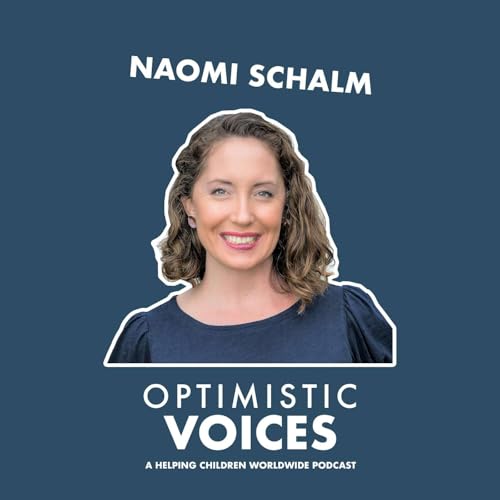
Trust for Africa - Rethinking Aid, Ownership, and Partnership for Child Welfare
Artikel konnten nicht hinzugefügt werden
Der Titel konnte nicht zum Warenkorb hinzugefügt werden.
Der Titel konnte nicht zum Merkzettel hinzugefügt werden.
„Von Wunschzettel entfernen“ fehlgeschlagen.
„Podcast folgen“ fehlgeschlagen
„Podcast nicht mehr folgen“ fehlgeschlagen

Trust for Africa - Rethinking Aid, Ownership, and Partnership for Child Welfare
-
Gesprochen von:
-
Von:
Über diesen Titel
Send a text
Trust isn’t a slogan when children’s safety is on the line—it’s a discipline. We sit down with Naomi Schalm, Executive Director of Trust for Africa in Lesotho, to unpack what radical trust really requires in cross-cultural child welfare: honest power-sharing, rigorous accountability, and local decision rights that outlast any single grant. Lesotho is moving toward family-based care and codifying foster pathways, even as economic shocks and reduced aid strain communities. That tension reveals a core mistake many outsiders make: confusing “orphan” with “child with nobody.” Research and experience point another way—prevention, kinship care, and reintegration anchored in the real context families live in.
Naomi explains why good intentions aren’t a system. Clear policies, safeguarding, and transparent financial practices protect children, caregivers, and staff while making collaboration possible. We get practical about the difference between accountability and control: control is one-sided; accountability shares standards and outcomes. We also push into the hard part—money. When the Global North holds the purse, it often holds the steering wheel. Shifting proposal design and decision rights locally, diversifying income, and refusing “donor-as-owner” governance are non-negotiables if we want integrity and impact.
Inside organizations, trust grows through rupture-and-repair, not perfection. That means making room for dissent, modeling apology, and building collaborative leadership that can challenge assumptions. On the ground with families, hope is a first intervention: trauma-informed support, consistent structures, and practical tools help parents who’ve been dismissed for years believe in their capacity again. The pay-off is safer children and stronger communities, measured over time rather than headlines. If you’re a funder, practitioner, or curious listener ready to rethink how aid, ownership, and outcomes connect, this conversation offers a candid, field-tested guide.
If this resonated, follow the show, share it with a colleague, and leave a rating or review to help more listeners find these stories.
____
Firmly Rooted - A new documentary on orphanage response - the right way!
To view the released trailer and sizzle reel, go to https://firmlyrootedfilm.com/
or to https://www.helpingchildrenworldwide.org
__________
____
Organize a Rooted in Reality mission experience for your service club, church group, worship team, young adult or adult study. No travel required. Step into the shoes of people in extreme poverty in Sierra Leone, West Africa, Helping Children Worldwide takes you into a world where families are facing impossible choices every day.
Contact support@helpingchildrenworldwide.org to discuss how.
___________
Family Empowerment Advocates support the work of family empowerment experts at the Child Reintegration Centre, Sierra Leone. Your small monthly donation, prayers, attention & caring is essential. You advocate for their work to help families bring themselves out of poverty, changing the course of children's lives and lifting up communities. join
Support the show
Helpingchildrenworldwide.org