• German Angst? Parfum als Biografie: Daniel Matousek von ART BRÜT über experimentelle Duftkunst.
    Jun 19 2026
    ART BRÜT versteht Parfum nicht als dekoratives Accessoire, sondern als künstlerisches Medium: als Erinnerungsträger, als Atmosphäre, als kleine Bühne auf der Haut. Die Düfte bewegen sich zwischen Berliner Nacht, Melancholie, Übermut, Sehnsucht, Körper, Biografie und Gegenwart. Sie tragen Namen wie German Angst, Disko Disko, Weltschmerz, Chasing Ghosts oder Je ne regrette rien – und wirken wie olfaktorische Kapitel eines Lebens, das sich nicht glätten lassen will. Mit Daniel sprechen wir über seinen Weg zwischen Unternehmertum und Kreativität: über die Frage, wie man eine Marke aufbaut, ohne sie dem Markt vollständig auszuliefern. Für Daniel funktioniert ART BRÜT fast wie eine Galerie. Jeder Duft ist ein Werk, jede Komposition eine Setzung, jede Veröffentlichung ein weiterer Raum innerhalb eines größeren künstlerischen Kosmos. Besonders faszinierend ist seine radikale Treue zur eigenen Intuition. Keine Markttests, kein Anpassungsreflex, kein vorsichtiges Abgleichen mit erwartbaren Zielgruppenwünschen. Daniel vertraut seinem Geschmack, seinem Bauch, seinem Blick auf die Welt. Was ihn interessiert, wird Material. Was ihn bewegt, wird Duft. Wir sprechen darüber, wie er mit seinen Parfums die letzten zwanzig Jahre Berlin rekapituliert: Nächte, Exzesse, Verluste, Freundschaften, Szenen, Übergänge, Stimmungen. ART BRÜT wird dabei zu einer autobiografischen Kartografie – nicht chronologisch, sondern sinnlich. Ein Archiv aus Geruch, Erinnerung und Haltung. Es geht um Parfum als Bühne, um das Verhältnis von Marke und Kunst, um die produktive Spannung zwischen Kontrolle und Kontrollverlust, um Unternehmersein ohne Selbstverrat – und um die seltene Kraft, den eigenen Instinkten mehr zu glauben als jeder vermeintlichen Marktlogik.
    Mehr anzeigen Weniger anzeigen
    52 Min.
  • Death as Muse: Joanna Ebenstein on Morbid Anatomy, Memento Mori and the Life-Affirming Dark
    May 22 2026
    In this episode of The Transmute Tapes, we speak with Joanna Ebenstein, founder and creative director of Morbid Anatomy, about death as a creative force, memento mori, mourning, anatomy, fairy tales, ritual, beauty and the life-affirming power of looking into the dark. Joanna’s work explores the strange and fascinating spaces where art, death, medicine, mourning and culture meet. Her books include The Anatomical Venus, Memento Mori, Death: A Graveside Companion and The Morbid Anatomy Anthology. For us, this conversation is about the morbid as a form of attention: a way of looking closely at the body, memory, grief, devotion and the fragile intensity of being alive. We speak about curatorial instinct, devotional impulses, hidden histories, fairy tales, transformation — and why facing mortality can become an act of reverence, imagination and gratitude.
    Mehr anzeigen Weniger anzeigen
    1 Std. und 25 Min.
  • The Mystery of the Siberian Ice Maiden: Kim Trainor on Poetry, Death, and Memory
    Apr 10 2026
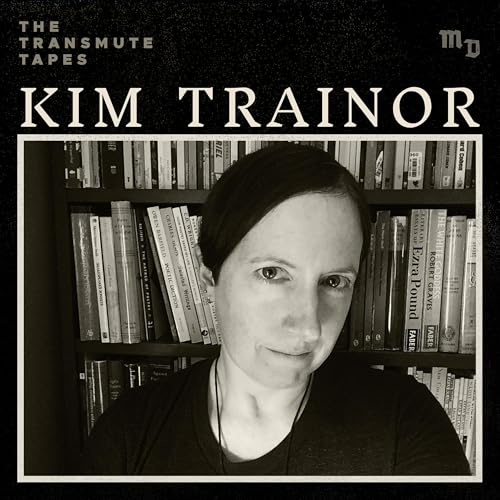
    For this episode of The Transmute Tapes, we speak with Kim Trainor — a Canadian poet, teacher, and author based in Vancouver, whose work moves between poetry, ecology, memory, grief, and the ethics of attention. We first connected with Kim through a shared fascination with the Siberian Ice Maiden — the tattooed Iron Age woman unearthed from the frozen Pazyryk burial grounds in Siberia. In Kim Trainor’s book "Ledi", this discovery becomes a poetic investigation shaped by archaeology, intimacy, memory, grief, and the strange persistence with which the dead continue to address the living. For Maison Douce, the Siberian Ice Maiden became the starting point for a different artistic gesture: the flag "Talking to Ghosts", conceived as a portal and trigger — an artwork that invites confession, projection, and the release of buried knowledge. In this conversation, we explore where these approaches meet: how one ancient figure can move across time and enter the present through radically different artistic forms, awakening both poetic language and visual ritual. In this episode, we talk about what it means to be seized by a presence from the distant past, and what allows an unearthed body, image, or fragment of story to still act upon us across centuries. We discuss the ethics of unearthing the past, the responsibilities that come with working artistically with the dead, and the fragile line between revelation and appropriation. Kim also reflects on her writing process, poetry as a form of listening, and her deep connection to the natural world. We touch on her most recent book, Blue thinks itself within me: Lyric poetry, ecology, and lichenous form, and on the way ecology, weather, plant life, and environmental crisis enter her work. This is a conversation about artistic kinship, ancient remains, poetic form, ritual, and the mysterious ways certain figures keep calling to us. **Content note: This episode includes references to death and suicide. Please skip this episode if you prefer not to engage with these themes.**
    Mehr anzeigen Weniger anzeigen
    1 Std. und 13 Min.
  • Art Is Magick: Pam Grossman Interview
    Feb 6 2026
    In this episode of The Transmute Tapes, we speak with Pam Grossman — writer, curator, and host of the podcast The Witch Wave — about witchcraft, art, ritual, and the quiet forces shaping creative life today. Our conversation begins with fairy tales, winter thresholds, and first encounters with witches, and moves into questions of how magic is learned, practiced, inherited, and performed. We talk about everyday, quiet forms of witchcraft and moments when magic must become visible: staged, shared, or even confrontational. From German folk traditions around Frau Holle and Perchta to contemporary ritual performance, we explore the thin line between theatre and belief, care and danger, nourishment and threat. We speak about ancestral memory, historical violence, and the long shadow of the witch trials, including personal journeys into family history and sites of persecution. With Pam, we discuss creativity as a sacred practice: rituals that sustain artistic work, the role of intuition and discipline, and the ways artists across history have worked with unseen influences. We reflect on what makes an artwork feel alive, whether magic is embedded in the object or activated through encounter, and if art has ever truly been separate from ritual or spiritual practice. This episode is not about nostalgia or aesthetics, but about presence, responsibility, and attention, about what happens when art, magic, and culture meet without clear boundaries. A conversation about witches, creativity, ancestry, and the forces we carry – knowingly or not.
    Mehr anzeigen Weniger anzeigen
    1 Std. und 23 Min.
  • Frank Berzbach (Author) Interview – GER
    Jan 9 2026
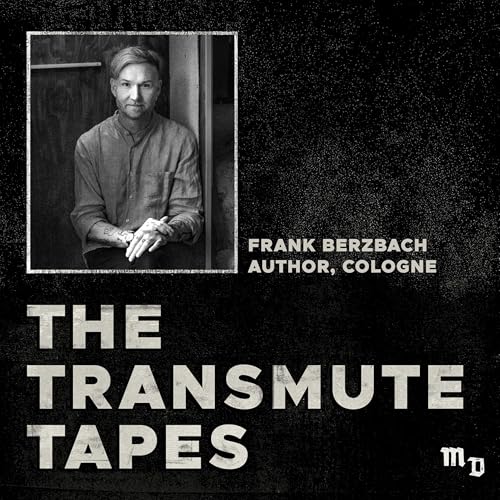
    This episode is in German. Willkommen bei den Transmute Tapes von Maison Douce – unserem Podcast für Gedanken zur zeitgenössischen Kunst, Auszüge aus Performances und Gespräche mit Künstler*innen und Kreativen. In einem rund anderthalbstündigen Gespräch mit Frank Berzbach berühren wir unter anderem das Feine im Archaischen, das Gebet im Jazz, Fluxus, Handwerk versus Beseeltheit, zeitgeistige und zeitlose Dimensionen von Kunstwerken, Erwachsensein und Transzendenz, Sinnfragen in der Kunst – und den Satz: „KI wird die Ölmalerei retten.“ Ein Gedanke aus dem Gespräch bleibt besonders haften: „Wir sehen nur, was wir wissen.“ Diese Episode lädt dazu ein, mehr zu sehen. -- This episode marks a new beginning: Transmute Tapes is available in German for the first time. Future episodes will be published in German and English—language as a space for resonance, not a barrier. In a conversation with Frank Berzbach, lasting around an hour and a half, we touch on, among other things, the subtlety of the archaic, prayer in jazz, Fluxus, craftsmanship versus soulfulness, the zeitgeisty and timeless dimensions of artworks, adulthood and transcendence, questions of meaning in art – and the sentence: “AI will save oil painting.” One thought from the conversation sticks in particular: “We only see what we know.” This episode invites us to see more.
    Mehr anzeigen Weniger anzeigen
    1 Std. und 35 Min.
  • The Liturgy of Saint Inbetween
    Dec 6 2025
    This liturgy opens a new body of work by Maison Douce — a format not born from religious tradition but from the certainty that art carries its own authority.
The Liturgy of Saint Inbetween introduces the first saint to emerge from our artistic cosmology: a figure shaped through story, performance, and ritual practice. In this audio recording, hagiography and spoken voice intertwine for the first time to reveal the origin of the Threshold Saint — a wanderer between worlds, marked by trial and transformation.
This work forms part of a living mythology that continues to unfold through our performances, objects, and artistic practice. Learn more on: www.maison-douce.com
    Mehr anzeigen Weniger anzeigen
    13 Min.
  • Die Liturgie der Saint Inbetween
    Dec 6 2025
    Diese Liturgie eröffnet eine neue Werkreihe von Maison Douce — ein Format, das nicht aus religiöser Überlieferung stammt, sondern aus der Gewissheit, dass Kunst ihre eigene Autorität hervorbringt.
The Liturgy of Saint Inbetween stellt die erste Heilige vor, die aus unserer künstlerischen Kosmologie hervortritt: eine Gestalt, geformt durch Geschichten, Performance und rituelle Praxis. In dieser Audioaufnahme verweben sich erstmals Hagiographie und erzählende Stimme zur Ursprungsgeschichte der Schwellenheiligen — einer Wanderin zwischen den Welten, gezeichnet von Prüfung und Verwandlung.
Dieses Werk ist Teil einer lebendigen Mythologie, die sich durch unsere Performances, Objekte und unser künstlerisches Schaffen weiter entfaltet. www.maison-douce.com
    Mehr anzeigen Weniger anzeigen
    12 Min.
  • Elena Unger (Artist) Interview
    Sep 26 2025
    Elena Unger calls herself a painter of the apocalypse—not as spectacle, but as a lens for truth. A painter and installation artist, she works across sculpture, sound, film, and site-specific formats, building what she calls “extra-liturgical” spaces where her apocalyptic imagery can breathe. In our conversation we explore why collapse and revelation keep returning in her practice, how images arrive fully formed like waking dreams, and what it means for art to act as witness, archivist, and ritual all at once. We talk about the moment an image lands and the small rituals she uses to catch it before it fades; why “the end” isn’t an aesthetic but a way to sharpen attention, ethics, and even a stubborn kind of hope; and how Paul Klee’s painting Angelus Novus, refracted through Walter Benjamin’s Angel of History, becomes a working philosophy in her studio—testimony to the fragments progress leaves behind. We move through historic craft and sacred sujets made urgent in the present tense, then trace the braid of her training at Central Saint Martins, Goldsmiths, and in Philosophical Theology at Cambridge, and how those languages meet in practice. From there, the conversation turns to art and the sacred: when an exhibition becomes ritual, how communal attention might be rebuilt in a culture designed to splinter it, and why devotion sometimes looks like miniature painting—editing the infinite, deciding what not to render, drawing the line between revelation and noise. Find Transmute Tapes on your podcast app of choice. If the episode resonates, please follow, rate, and share—it helps new listeners discover the show.
    Mehr anzeigen Weniger anzeigen
    1 Std. und 22 Min.