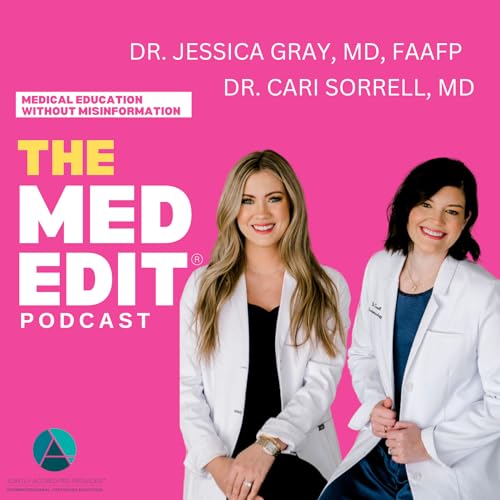
The Med Edit Podcast Titelbild

The Med Edit Podcast

The Med Edit Podcast

Von: Dr. Jessica Gray and Dr. Cari Sorrell - 2 Doctors Fighting TikTok Trends
Jetzt kostenlos hören, ohne Abo

Nur 0,99 € pro Monat für die ersten 3 Monate

Danach 9.95 € pro Monat. Bedingungen gelten.

Über diesen Titel

If you’re looking for current, evidence-based medical information, searching the internet can lead to more worry and confusion.Get real advice from real doctors as you join Dr. Jessica Gray and Dr. Cari Sorrell, two board-certified doctors, who are anything but ordinary. Let them be your virtual wellness warriors as they share real facts about health and wellness. Whether you’re navigating birth control options, deciphering heart attack warning signs, or simply want answers to your embarrassing questions, they’ve got your back. So say goodbye to online searching, and hello to The Med Edit Podcast!Copyright © 2023 The Med Edit Podcast Hygiene & gesundes Leben
  • When Periods Pause: Understanding Hypothalamic Amenorrhea with The Period Nutritionist Cynthia Donovan (Ep. 52)
    Dec 18 2025

    In this episode of The Med Edit Podcast, Dr. Jessica Gray and Dr. Cari Sorrell shine a light on a condition that affects countless women — but is often misunderstood, misdiagnosed, or dismissed entirely: Hypothalamic Amenorrhea (HA).

    HA occurs when the brain senses that the body isn’t in a safe or nourished enough state to sustain a menstrual cycle. It accounts for nearly 30% of secondary amenorrhea in reproductive-age women, yet many don’t realize their missing period is a medical red flag, not an inconvenience.

    To break it all down, we’re joined by Cynthia Donovan, a Registered Dietitian Nutritionist, Certified Health Coach, founder of Recipe for a Period, and host of The Period Recovery Podcast. Known online as The Period Nutritionist, Cynthia specializes in helping women restore their periods through nutrition, mindset, and sustainable lifestyle changes.

    In This Episode, You’ll Learn:
    1️⃣ What Hypothalamic Amenorrhea Is
    How the hypothalamus controls reproduction
    Why periods stop when the brain perceives stress or energy deficiency
    Common misconceptions (no — this isn’t an “ovary problem”)
    2️⃣ What Causes HA
    Low energy availability (undereating, overtraining, or both)
    Psychological stress, burnout, chronic pressure
    Perfectionism and “wellness culture” influences
    Why body size alone does not determine who gets HA
    3️⃣ HA vs. PCOS — What’s the Difference?
    Why missing periods should never be ignored
    How to distinguish between two commonly confused conditions
    Why identifying the root cause is essential for long-term health
    4️⃣ Health Consequences of HA
    Missing your period affects far more than fertility. Cynthia highlights risks like:

    Bone loss and osteoporosis
    Low hormone levels
    Metabolic changes
    Thyroid disruption
    Mood and energy impacts
    5️⃣ The Path to Recovery
    Increasing energy intake
    Reducing high-intensity exercise
    Rest and nervous system regulation
    Breaking perfectionistic or restrictive habits
    How to “redefine health” outside of diet culture

    6️⃣ What Period Recovery Looks Like
    Cynthia shares:

    Nutrition strategies for restoring a healthy cycle
    Day-to-day adjustments clients make
    What realistic timelines look like
    How her programs support women through the process

    7️⃣ Fact or Mis(information)
    Rapid-fire myth-busting on:

    “Losing your period is normal if you’re fit.”
    “Only underweight women get HA.”
    “Your period returns immediately once you eat more.”
    “HA only impacts reproductive health.”

    Resources Mentioned
    • Endocrine Society Clinical Practice Guideline on HA
    • Cleveland Clinic: Hypothalamic Amenorrhea Guide
    • PMC Articles on HA & metabolic impacts
    • @period.nutritionist on Instagram or through this link: https://www.instagram.com/period.nutritionist?igsh=MXJsNGlkZXh0OXJxaA%3D%3D&utm_source=qr
    • The Period Recovery Podcast

    Continuing Medical Education (CME)
    Clinicians — claim your CME credit for listening!

    https://cmetracker.net/TTUHSC/Publisher?page=pubOpen&nc=7120399723#/myPortal

    Connect with us!
    https://themededitpodcast.com/

    Instagram: @TheMedEditPodcast: https://www.instagram.com/themededitpodcast/

    Facebook: The Med Edit Podcast: https://www.facebook.com/themededitpodcast/

    LinkedIn: The Med Edit Podcast: https://www.linkedin.com/company/themededitpodcast/

    LinkedIn: Dr. Jessica Gray: https://www.linkedin.com/in/Jessica-gray-md/

    LinkedIn: Dr. Cari Sorrell: https://www.linkedin.com/in/cari-sorrell-42545a7b/

    Mehr anzeigen Weniger anzeigen
    38 Min.
  • Heart Smart: Cardio Myths, Prevention & Metabolic Health with Dr. Kelly Ratheal (Ep. 51)
    Dec 11 2025

    Cardiovascular disease is the #1 cause of death in the U.S., responsible for 1 in 5 deaths — yet heart health remains one of the most misunderstood topics in modern medicine. In this episode of The Med Edit Podcast, Dr. Jessica Gray and Dr. Cari Sorrell sit down with board-certified cardiologist Dr. Kelly Ratheal to bust viral cardio myths, decode prevention strategies, and explain what your social media feed gets wrong about heart disease.

    From red wine rumors to “artery detoxes” and supplement scams, this episode separates real cardiovascular science from noisy wellness trends — while giving you practical, evidence-based ways to protect your heart today.

    Meet Our Guest: Dr. Kelly Ratheal

    (Board-Certified Cardiologist • Preventive Cardiology • Cardio-Metabolic Medicine)

    Dr. Ratheal specializes in early identification and prevention of cardiovascular disease through lifestyle optimization, advanced lipid testing, genetics, and metabolic health. She brings a holistic but firmly evidence-based approach to preventing the #1 killer of men and women.

    In This Episode, We Cover: 1️⃣ Understanding the Modern Heart
    • What preventive cardiology is — and why it matters
    • Why heart disease kills more women than all cancers combined
    • When young adults should start caring about their risk
    • What “cardio-metabolic health” actually means
    2️⃣ Viral Heart Health Claims: Fact or MIS?

    Dr. Ratheal tackles the biggest myths circulating online:

    • “You can detox your arteries.”
    • “Red wine is good for your heart.”
    • “Supplements can reverse plaque.”
    • “Women don’t need to worry until menopause.”
    • “Cholesterol doesn’t matter anymore.”
    • “Too much cardio is bad for your heart.”

    (Spoiler: the internet is wild.)

    3️⃣ The Heart–Metabolism Connection
    • Insulin resistance and inflammation as silent drivers of heart disease
    • Why only 6.8% of U.S. adults meet all five markers of optimal metabolic health
    • The role of sleep, stress, hormones, and visceral fat
    • Why “normal” labs don’t always equal healthy
    4️⃣ What Actually Prevents Heart Disease
    • Lifestyle changes proven to reduce cardiovascular mortality
    • How even 5–10% weight loss improves lipids and insulin sensitivity
    • When medications like statins or GLP-1s are appropriate
    • Why women’s symptoms are often missed or misdiagnosed
    • How social media can be used for good in heart health education
    Key References

    (Provided in the episode research)

    • CDC Heart Disease Facts, 2024
    • American Heart Association: 2024 Heart Disease & Stroke Update
    • JAMA: Metabolic Health in U.S. Adults (2019–2022)
    • NIH: Women & Heart Disease
    Continuing Medical Education (CME)

    Clinicians — claim your CME credit for listening!

    https://cmetracker.net/TTUHSC/Publisher?page=pubOpen&nc=7120399723#/myPortal

    Connect with us!

    https://themededitpodcast.com/

    Instagram: @TheMedEditPodcast: https://www.instagram.com/themededitpodcast/

    Facebook: The Med Edit Podcast: https://www.facebook.com/themededitpodcast/

    LinkedIn: The Med Edit Podcast: https://www.linkedin.com/company/themededitpodcast/

    LinkedIn: Dr. Jessica Gray: https://www.linkedin.com/in/Jessica-gray-md/

    LinkedIn: Dr. Cari Sorrell: https://www.linkedin.com/in/cari-sorrell-42545a7b/

    Listen Now

    Available on Apple Podcasts, Spotify, YouTube, and all major podcast platforms.

    CME available — see show notes for details.

    Mehr anzeigen Weniger anzeigen
    40 Min.
  • Tiny Beginnings: How Medicine Saves the Tiniest Lives (Ep.50)
    Nov 20 2025

    Premature birth is one of the toughest starts a newborn can face — and one of the greatest success stories in modern medicine. In honor of Prematurity Awareness Month, Dr. Jessica Gray and Dr. Cari Sorrell explore the science, survival, and humanity behind preterm birth with expert neonatologist Dr. Jennifer Palarczyk, faculty member at UT Health San Antonio.

    With 1 in 10 babies worldwide born too early, this episode sheds light on the causes, risks, groundbreaking advancements, and the incredible resilience of these tiny fighters.

    What Prematurity Really Means
    • The medical definition of preterm birth (before 37 weeks)
    • Categories: late preterm, very preterm, and extremely preterm
    • Why every week in the womb matters for lung, brain, and temperature regulation development
    • Rising prematurity rates and what’s driving the increase
    Why Babies Come Early
    • Known medical causes: infections, high blood pressure, preeclampsia, multiples
    • Nearly 50% of cases have no clear cause (“spontaneous preterm labor”)
    • Maternal health factors, prenatal care access, chronic stress, and systemic inequities
    • Why Black women face disproportionately higher preterm birth rates
    Inside the NICU

    A behind-the-scenes look into the Neonatal Intensive Care Unit — where micro-preemies weighing barely a pound fight for survival.

    Dr. Palarczyk breaks down:

    • Surfactant therapy and why it changed neonatal survival forever
    • How incubators mimic the womb
    • Kangaroo care and the emotional side of NICU parenting
    • The stunning statistic: Babies born at 26 weeks now survive at 86% in the U.S.
    Breakthroughs in Neonatal Medicine
    • Synthetic surfactant therapy and lung development
    • Incubator evolution (including their bizarre beginnings at Coney Island sideshows!)
    • The promise of artificial wombs
    • The crucial role of human donor milk
    After the NICU: What Life Looks Like

    Short-term risks discussed:

    • RDS, apnea, hypoglycemia, NEC, IVH, infection risk, jaundice

    Long-term considerations:

    • Motor and language delays
    • Cerebral palsy
    • Chronic lung disease
    • Sensory impairments
    • Higher adulthood risk of hypertension, diabetes, & heart disease

    Yet — the majority of premature infants go on to live healthy, normal lives.

    Why This Episode Matters

    Premature birth is emotional. Complex. Full of fear and hope. This episode honors families, NICU staff, and the incredible resilience of premature babies — while highlighting the science that saves lives every day.

    Resources Mentioned
    • WHO: Preterm Birth
    • Cleveland Clinic: Premature Birth Overview
    • Columbia Surgery: History of Incubators
    • American Pregnancy Association: Complications
    • March of Dimes – Prematurity Awareness
    Continuing Medical Education (CME)

    Clinicians — claim your CME credit for listening!

    https://cmetracker.net/TTUHSC/Publisher?page=pubOpen&nc=7120399723#/myPortal

    Connect with us!

    https://themededitpodcast.com/

    Instagram: @TheMedEditPodcast: https://www.instagram.com/themededitpodcast/

    Facebook: The Med Edit Podcast: https://www.facebook.com/themededitpodcast/

    LinkedIn: The Med Edit Podcast: https://www.linkedin.com/company/themededitpodcast/

    LinkedIn: Dr. Jessica Gray: https://www.linkedin.com/in/Jessica-gray-md/

    LinkedIn: Dr. Cari Sorrell: https://www.linkedin.com/in/cari-sorrell-42545a7b/

    Mehr anzeigen Weniger anzeigen
    28 Min.
Noch keine Rezensionen vorhanden