Folgen

  • Episode 7: Stop Writing "Tough" Detectives | A Masterclass in Creating Real Presence
    Feb 20 2026

    Stop writing "Tough" Detectives. If your lead makes the world cleaner, you’re writing comfort fiction, not a thriller. Learn how to fix the 3 most common craft failures in crime writing.

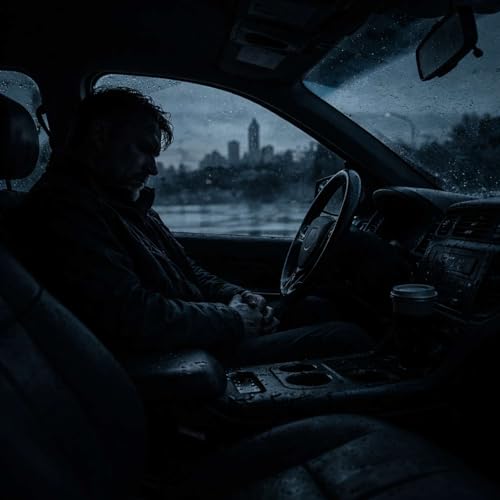
    “The modern detective isn’t hard. He’s tired.”

    In the seventh episode of The Ink Stays Dark, Adrian Klein deconstructs the greatest obstacle to high-stakes tension: the "Invincible Detective." This is a craft-first masterclass for writers of thrillers, crime, and suspense who want to move past clichés and create characters with genuine psychological gravity.

    Inside the Masterclass:

    • The "Noise" Trap: Why aggression is a sign of weakness on the page, and how to build "Presence" instead.
    • Trauma that Works: Stop using monologues. Learn to show a detective’s damage through ritual, habit, and the "procedure" of survival.
    • The System as the Villain: Why your detective needs to be "friction" against the institution they serve, not a tool that fixes it.

    Common Failures We Solve:

    • The Solution Myth: Why your detective shouldn't clean the world, but reveal its contamination.
    • The Omniscience Error: How to give your lead "earned blind spots" to keep the reader on the edge of their seat.
    • Presence vs. Performance: Creating a detective who doesn't need to announce their strength because everyone in the room can already feel it.

    “The modern detective stays because leaving would be easier. And he does not trust what he becomes when life gets easy.”

    Support the show

    About the Show

    The Ink Stays Dark is a deep dive into European psychological noir and the quiet forces that shape people, history, and cities. Hosted by writer Adrian Klein, we explore the places where the shadows have a shape and silence has a weight.

    Connect with the Dark:

    • Website: inkstaysdark.com
    • TikTok: @inkstaysdark
    • Instagram: @inkstaysdark
    Mehr anzeigen Weniger anzeigen
    25 Min.
  • Episode 6: Paperwork and Graves | How Systems Kill Quietly
    Feb 5 2026

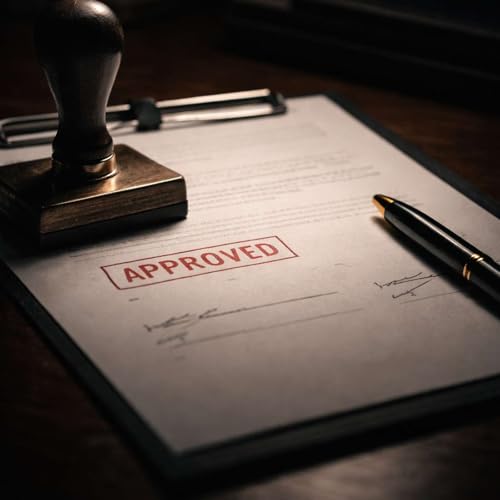
    “In noir, the villain rarely lifts a hand. The system does it for him.”

    In the sixth episode of The Ink Stays Dark, Adrian Klein strips away the melodrama to examine the most efficient killer in the genre: The Institution. This isn't about rogue agents or "bad apples"—it is about the architecture of the barrel itself.

    We move into the hallways of the police, the courts, and the bureaucracy to see how corruption is a matter of design, not action. When the hallway only leads in one direction, nobody has to push you; you walk there yourself.

    Inside this episode:

    • Friction as a Weapon: How systems defeat the truth not through force, but through delays, "closed" windows, and the slow exhaustion of the human spirit.
    • Corruption as Architecture: A study of why real power doesn't shout. Analyzing the "polite" gatekeepers, where every action is defensible on paper.
    • The Literature of the Desk: From the tired, paperwork-heavy precincts of Henning Mankell and Sjöwall/Wahlöö to the existential administrative horror of Franz Kafka.
    • The Process of Erasure: How institutions transform a human life into a "case," a case into a "statistic," and a statistic into a "closed file."

    We discuss:

    • The Inevitability of the Machine: Why the most frightening antagonist isn't a man with a gun, but a printer that never stops humming.
    • Normalization: How cities like Jean-Claude Izzo’s Marseille absorb tragedy into routine until injustice becomes as unremarkable as the weather.
    • The Vanishing Point: Why "following procedure" is the perfect mask for state-sanctioned disappearance.
    • Object Anchoring: Why a pair of small red shoes in a stairwell is louder than any political manifesto.

    Support the show

    About the Show

    The Ink Stays Dark is a deep dive into European psychological noir and the quiet forces that shape people, history, and cities. Hosted by writer Adrian Klein, we explore the places where the shadows have a shape and silence has a weight.

    Connect with the Dark:

    • Website: inkstaysdark.com
    • TikTok: @inkstaysdark
    • Instagram: @inkstaysdark
    Mehr anzeigen Weniger anzeigen
    18 Min.
  • Episode 5: Children in the Dark | Innocence vs. Systemic Rot
    Jan 22 2026

    “Children don’t lie in noir. Adults just refuse the truth.”

    In the fifth episode of The Ink Stays Dark, Adrian Klein explores why children are the most dangerous witnesses in Noir. They don't speculate, and they don't moralize—they report sequence. And in a world built on "interpretive buffers" and institutional calm, that precision is lethal.

    We move away from sentimentality to examine how darkness reorganizes itself around children who have seen too much. From the brutal evidence of Stieg Larsson to the moral indictments of Graham Greene, we look at why witnesshood is more dangerous than innocence.

    Inside this episode:

    • The Accuracy of Shock: Why what adults misread as "withdrawal" is actually a child calibrating which truths are survivable.
    • Sequence vs. Interpretation: How children like Aurora destabilize systems simply by remembering the order of events.
    • The Red Shoes Cycle: A deep dive into Klein’s Children Who Leave No Sound—tracing how institutions in Florence, Vienna, and Manchester manage loss through paperwork instead of reckoning.
    • The Death of Sentimentality: Why "softening" a child in fiction is a failure of craft and an act of self-preservation for the reader.

    We discuss:

    • Why adults need the child to be wrong to protect their own continuity.
    • The difference between innocence (passive) and witnesshood (active).
    • Writer’s Workshop: How to write child POV using "Object Anchoring" and "Exit Logic" instead of adult metaphors.
    • Why silence is a rational survival strategy, not a collapse of language.

    Support the show

    About the Show

    The Ink Stays Dark is a deep dive into European psychological noir and the quiet forces that shape people, history, and cities. Hosted by writer Adrian Klein, we explore the places where the shadows have a shape and silence has a weight.

    Connect with the Dark:

    • Website: inkstaysdark.com
    • TikTok: @inkstaysdark
    • Instagram: @inkstaysdark
    Mehr anzeigen Weniger anzeigen
    35 Min.
  • Episode 4: The Moral Spine | Why Ethics Bend and Good People Drift
    Jan 8 2026

    “Every noir protagonist has a point they refuse to cross. Most will cross it anyway.”

    In the fourth episode of The Ink Stays Dark, Adrian Klein examines the Moral Spine: the private code each character believes will hold, and the slow, almost invisible way that line begins to bend under pressure.

    Noir is not nihilism; it is a study of ethical cost. We explore how conscience erodes through small, reasonable decisions—how good people drift, one careful degree at a time, into choices they once believed belonged to someone else.

    Inside this episode:

    • Moral Erosion vs. Collapse: Why a character’s code rarely snaps, but instead thins through habit and justification.
    • The Anatomy of the Grey: Analyzing how Henning Mankell, Patricia Highsmith, and Friedrich Dürrenmatt create characters who fight for the last intact corner of their conscience.
    • Ethics Under Pressure: A look at how logic, love, and anger fracture the spine differently across Florence, Zagreb, and modern Europe.
    • The Moment of Recognition: The quiet, internal realization when a character understands that the old code cannot survive the current pressure.

    Support the show

    About the Show

    The Ink Stays Dark is a deep dive into European psychological noir and the quiet forces that shape people, history, and cities. Hosted by writer Adrian Klein, we explore the places where the shadows have a shape and silence has a weight.

    Connect with the Dark:

    • Website: inkstaysdark.com
    • TikTok: @inkstaysdark
    • Instagram: @inkstaysdark
    Mehr anzeigen Weniger anzeigen
    27 Min.
  • Episode 3: The Weight of Silence | Mastering Subtext and the Loaded Quiet
    Dec 23 2025

    “In noir, the quiet isn’t empty. It’s loaded.”

    In the third episode of The Ink Stays Dark, Adrian Klein explores silence not as an absence of sound, but as a presence of consequence. We move beyond atmosphere to examine how silence reveals truth, delivers threats, and becomes a plot engine of its own.

    From the communal denial of Nordic Noir to the bureaucratic erasure of 1930s Vienna, we trace how rooms change temperature when the words stop and why restraint is often the loudest thing on the page.

    Inside this episode:

    • Forensic Silence: How Henning Mankell uses the quiet after violence to expose the conscience of a society.
    • The Threat of Politeness: Why the most dangerous lines in Noir are the ones that never name the threat (Graham Greene and Simenon).
    • Institutional Erasure: The chilling "Machine Noir" of Vienna, where silence is used as a systematic tool of disappearance.
    • The Echo Beneath Dawn: How a child’s withheld truth in Zagreb shapes a modern mystery.
    • The Red Children's Shoes: A look at silence as a movement—accusations that arrive without language.


    Support the show

    About the Show

    The Ink Stays Dark is a deep dive into European psychological noir and the quiet forces that shape people, history, and cities. Hosted by writer Adrian Klein, we explore the places where the shadows have a shape and silence has a weight.

    Connect with the Dark:

    • Website: inkstaysdark.com
    • TikTok: @inkstaysdark
    • Instagram: @inkstaysdark
    Mehr anzeigen Weniger anzeigen
    28 Min.
  • Episode 2: The City Watches Back | Why Noir Cities Never Forget
    Dec 16 2025

    “In noir, the city always knows what you did.”

    In the second episode of The Ink Stays Dark, Adrian Klein explores the city not as a backdrop, but as a silent witness. A judge that sees everything, remembers everything, and rarely intervenes.

    Moving through Florence, Vienna, Zagreb, and the sun-drenched lies of Classic Los Angeles, we examine how environments become accomplices. We look at how streets, buildings, and infrastructure shape moral pressure—deciding which crimes feel possible and which silences are rewarded.

    Inside this episode:

    • Infrastructure as Accomplice: Why cities in noir behave more like systems than settings.
    • The Three Flavors of Silence: How Florence (the city that leans in), Vienna (the city that steps aside), and Zagreb (the city that looks away) judge their inhabitants differently.
    • Nordic Noir vs. Classic Noir: A comparison of landscape as psychological pressure versus the weaponized optimism of Raymond Chandler's L.A.
    • The Writer’s Craft: Why restraint and repetition are the sharpest tools for making a setting feel alive—and dangerous—on the page.

    We discuss:

    • How a city "trains" you to carry your own secrets.
    • Why the pavement becomes a "private trap" in modern urban noir.
    • The transition from description to perspective: Letting the city bend around a character's fear.
    • Exclusive insights from upcoming novels The Echo Beneath Dawn and The Last Scribe.

    “A city does not need to despise you to endanger you. It only needs to step aside.”

    Support the show

    About the Show

    The Ink Stays Dark is a deep dive into European psychological noir and the quiet forces that shape people, history, and cities. Hosted by writer Adrian Klein, we explore the places where the shadows have a shape and silence has a weight.

    Connect with the Dark:

    • Website: inkstaysdark.com
    • TikTok: @inkstaysdark
    • Instagram: @inkstaysdark
    Mehr anzeigen Weniger anzeigen
    21 Min.
  • Episode 1: The Shape of the Dark | Analyzing Umberto Eco, Camus, and Tana French
    Dec 9 2025

    “Noir is what happens when good people realize the world doesn’t care.”

    In the premiere episode of The Ink Stays Dark, Adrian Klein strips away the neon lights and trench coats to uncover the true soul of Noir: The Moral Pressure of Silence.

    We explore why the most terrifying moments in fiction aren't the gunshots, but the "resignation"—the slow collapse of moral altitude. From the philosophy of Albert Camus to the modern tension of Tana French, we find the places where the shadows have a definite shape.

    Inside this episode:

    • The Architecture of Fear: Why cities like Florence, Zagreb, and Vienna aren't just settings, but characters that watch, judge, and press inward.
    • Literary Deep Dives: How Umberto Eco’s The Name of the Rose and Camus’ The Stranger define the Noir condition.
    • Real-World Noir: A chilling look at a European police corruption case where the crime was less shocking than the officers' indifference.
    • The Last Scribe: An exclusive look into the quiet dread of Klein’s upcoming historical Noir set in Renaissance Florence.

    We discuss:

    • What defines Psychological Noir in the modern age.
    • Why silence is often more dangerous than violence.
    • How institutional rot creates the perfect "Noir" environment.
    • A personal reflection on fear, quiet, and the "Shape of the Dark."

    Listen now to step into a quiet place for shadow and weight. Welcome to the dark.

    Support the show

    About the Show

    The Ink Stays Dark is a deep dive into European psychological noir and the quiet forces that shape people, history, and cities. Hosted by writer Adrian Klein, we explore the places where the shadows have a shape and silence has a weight.

    Connect with the Dark:

    • Website: inkstaysdark.com
    • TikTok: @inkstaysdark
    • Instagram: @inkstaysdark
    Mehr anzeigen Weniger anzeigen
    15 Min.