Folgen

  • Ep41: Punks on air with Johnny Nolan
    Feb 16 2026

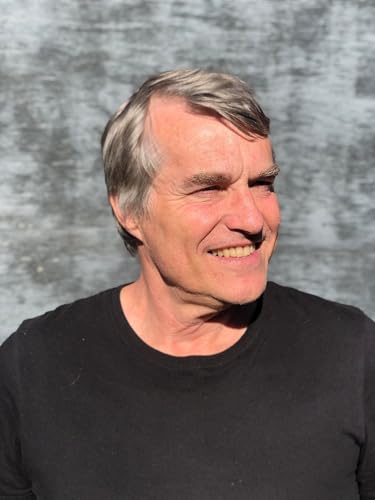
    Grab a kettle of tea and dive into the isolated, vibrant, and "too radical" world of the St. John’s punk scene. In this episode, Dups and old-time punk musician Johnny Nolan reunite to spin tracks and tell stories from a time when you couldn’t throw a stone in downtown St. John’s without hitting a live gig.

    Inside the Episode
    1. Island Isolation: How being stuck on a rock in the Atlantic forced a tight-knit community to pick up instruments and create their own "cultural smorgasbord".
    2. The Venues: A look back at the all-ages shows at the LSPU Hall and the legendary Peace A-chord festival—which was eventually shut down for being a bit too loud for municipal politics.
    3. CHMR Roots: Dups and Johnny reminisce about their days behind the mic at St. John's alternative campus radio station.

    Featured Tracklist
    1. "Newfie Rastaman" by Da Slyme A "fabulous" track from the band that started it all and released Canada's first double punk album.
    2. "No Protest" by Hardliner A "peace punk" anti-military anthem about a young Newfoundlander with no alternatives.
    3. "Evil Drunks" by Dog Meat BBQ A fun song that serves as the ultimate reminder of university drinking days.

    All songs played by permission of the artist.

    You can reach Johnny @ https://substack.com/@johnnydafink

    Mehr anzeigen Weniger anzeigen
    26 Min.
  • Ep40: The Sin of "I" - A Conversation with Erwin Warkentin
    Feb 9 2026

    In this episode, Duleepa Wijayawardhana turns the tables on his former professor, Dr. Erwin Warkentin. What starts as a literary critique of a "raw" first-draft short story evolves into a profound conversation about memory, aging, and the terror of the first-person perspective.

    Erwin shares a story about a teenage boy, a school dance in -30°C Winnipeg weather, and a memorial scholarship that triggers a realization that his world is shrinking. But the central tension of the episode isn't the plot—it's the pronoun. Why did Erwin write a deeply personal story in the third person? They discuss the "Sin of I," the Mennonite concept of Hochmut (pride), and whether hiding behind "He" protects the writer or cheats the reader

    Note: The short story discussed in this episode is not included in the text or audio. As discussed, the idea of the story—and how narrative voice changes it—is more important than the draft itself.

    Key Topics Discussed:

    1. The "Sin" of Autobiography: How Erwin’s Mennonite upbringing and the concept of Hochmut make writing "I" feel like an act of arrogance.
    2. The Shrinking World: Exploring the theme of aging, where the cast of characters in one's life slowly disappears, leaving only memories behind.
    3. The "Sauerkraut" Method: Erwin’s unique way of explaining burying a draft "in the ground" for months to let it ferment before revisiting it.
    4. Literary Forms: A look at the epistolary novel (letter form) and the influence of Goethe’s The Sorrows of Young Werther on personal correspondence.
    5. Winnipeg Nostalgia: A trip down memory lane featuring CKRC radio, "Hunky Bill’s" pierogi makers, and the mystery of dating girls hidden under layers of nylon and fur.

    Memorable Quotes:

    "You can build me a rocket to take me to Mars or anywhere else in this universe, but without literature, would I want to make the trip?" — Dr. Erwin Warkentin (quoting a former student)"I realized that of the people that I was close to growing up, I am literally the only one left.

    Mentioned in this Episode:

    1. Die Leiden des jungen Werthers (The Sorrows of Young Werther) by Johann Wolfgang von Goethe
    2. "If" by Bread (Song)
    3. Hunky Bill (Winnipeg Icon)

    About the Guest:

    Dr. Erwin Warkentin is a former professor of German and Communication Studies at Memorial University, currently living in Berlin. He is a writer, a scholar of German literature, and—for this episode—a brave soul willing to have his first draft critiqued on air.

    Mehr anzeigen Weniger anzeigen
    25 Min.
  • Ep39: Making concrete green with Kurre Stålberg
    Feb 2 2026

    Every day we wake up and go about our business. Life changes—mostly imperceptibly, incrementally, crawling season after season. We accept new streets, new buses, and new buildings as normal. What once was a field of flowers is now a parking lot, to paraphrase the famous song by Joni Mitchell, and before long, you might never know a field existed.

    However, something happens when you visit a place over a very long period—like dots on a slow-moving ticker tape, you see the change as flashes. A decades-long timelapse. This is the case for me with my visits to the country of my birth, Sri Lanka. Every few years for 45 years, I have experienced the inexorable change wrought by globalization, industrialization, and urbanization. I can stand on a road in a metropolis and remember the field. I can saunter down my parents’ once-sleepy 1970s suburban laneway to bask in the shadow of a 20-story high-rise.

    In Canada, I visited the Athabasca Glacier for the first time in July 2002. The glacier reaches the Icefields Parkway in Jasper National Park, one of the tongues of the Columbia Icefield. My last visit was 20 years later, in July 2022; the glacier had retreated so far that you had to walk 20 minutes from where I had seen it in 2002.

    When it comes to our environment, in my lifetime I have observed three truths.

    Firstly, humans change their environment. We are a species of terraformers. We have been doing this since we gathered in groups however many epochs ago. To ask us not to explore, to socialize, to make our environment better for our own survival is akin to asking us as a species to concede defeat.

    Secondly, our environment has changed at our hands so massively, how can we not expect the knock-on effects to have an impact—like that butterfly causing a hurricane?

    Thirdly, nature is far more resilient than the would-be terraformers. In 2019, I stood at the center of Chernobyl: nature had grown back; trees were exulting in the lack of humans. It is not the world we should be frightened for; it is ourselves. We make it sound as if by becoming a green society we are doing it for the planet. The truth is always: we are doing it to save our children, nature will survive and come back as weird and even more wonderful without us.

    Unfortunately, the first truth has shown me that if we are to address the second and third truths, the biggest movers need to be our governments and industry. We can all do our part, for sure, but the biggest gains lie in more sustainable ways to change how we build out our environment, produce energy, and of course, travel, so that we can indeed circle the globe and be one human family.

    The human story is one of technological advance, from the wheel to flight. We’ve made our world smaller, our minds bigger, and our hearts wider.

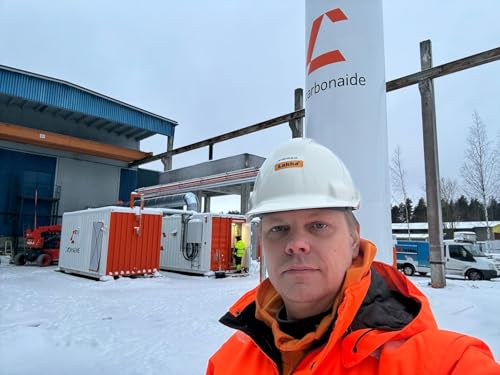
    It is with that optimism that I know we can, and must, solve our challenges. It is why I am very happy when I see startups like the one my friend and former Supermetrics colleague, Kurre Stålberg, is a part of: Carbonaide.

    In This Episode

    In this conversation, Kurre takes us inside the industrial world of concrete curing—a sector...

    Mehr anzeigen Weniger anzeigen
    20 Min.
  • Ep38: Cultural code switching - A conversation with Sylvia and Erwin Warkentin
    Jan 26 2026

    Have you noticed that you sometimes sound different or use different words when you talk to your parents? Or maybe you slip into specific expressions with people from the town you left behind so long ago? When I was in Newfoundland a few months ago, Sylvia Warkentin introduced me to the term “Cultural code-switching.” This was a term I hadn’t heard before, but it turns out it’s something I’ve been doing my whole life.

    The definition of cultural code-switching is the act of consciously or unconsciously adjusting behaviour, language, and mannerisms to align with the norms of a different cultural context. To me, this makes sense. I’ve often described myself as a chameleon but I had never put a name to the mechanism.

    In this episode, we go beyond the definition. We explore whether we code-switch to survive, to take advantage, or simply to show respect. Do we change because we want to, or because we have to?

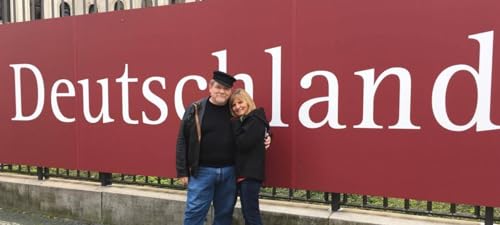
    Coincidentally, Sylvia and her husband Erwin were about to depart Newfoundland, where they had been living for decades, to return to Germany. And even more coincidentally, I would be seeing them there shortly after. So, this conversation takes place across two distinct sides of the Atlantic Ocean.

    Part 1 starts in Torbay, Newfoundland, on the eastern edge of Canada. While watching a winter storm roll in over the craggy coastline, we discuss the theory of the “Third Culture” and the complicated relationship we have with the concept of “home”.

    Part 2 picks up a month later in Berlin, Germany. After an unseasonably cold winter day, we sat down to see if the theory held up against reality. We discuss how the switches flipped the moment Sylvia landed—from the silence of a German grocery line to the “fighting dirty” required to navigate a new culture.

    Join us as we explore how we are all, in the end, just an amalgam of everything we experience.


    This is a public episode. If you would like to discuss this with other subscribers or get access to bonus episodes, visit tales.dups.ca
    Mehr anzeigen Weniger anzeigen
    23 Min.
  • Ep37: Forbidden Lands and Svavelvinter with Erik Granström
    Jan 19 2026

    On this episode, I feature the works of Erik Granström, a Swedish author and roleplaying game writer. We delve into fantasy, fantasy writing and the worlds he has created and their relation to our reality.

    Also featured is music by Svavelvinter which features the vocals of Christian Älvestam. You can listen to the music on Apple Music and Spotify:

    The roleplaying games we chat about include

    * Dragonbane

    * The Forbidden Lands

    * Svavelvinter

    You can find lyrics to Vanderland, the song featured in the podcast at Erik’s blog.

    You can find out more about Erik at Erik’s blog as well.

    Thank you for listening! Subscribe for more roleplaying, fiction, and stories!

    Related episodes


    This is a public episode. If you would like to discuss this with other subscribers or get access to bonus episodes, visit tales.dups.ca
    Mehr anzeigen Weniger anzeigen
    26 Min.
  • 36. On humanity's greatest art form with Seamus Heffernan
    Jan 12 2026

    Sometimes the process of stringing words together starts to click and you find that you have written a story: Dragons fly off the pages burning hobbits, characters say the darndest things, and you wonder why you accidentally killed the lead. Sometimes, when it clicks really well, like it did for my friend and author, Seamus Heffernan, you end up with a novel. In his case, it resulted in the crime novel Napalm Hearts and its sequel Ten Grand. So today, I’m delighted to have Seamus with me to talk about writing and the creative process.

    Here is what I wrote about his first novel:

    In Napalm Hearts, a bored, recently divorced detective, Thaddeus Grayle, takes on the case of the missing wife of London socialite and political hopeful Andrew Claymore. Since I want to make sure I don’t give away anything of the story, I want to focus on Seamus’ ability to bring alive a wide cast of characters set in modern-day London. Jumping from a name on paper to your imagination, this cast comes alive with very simple swishes and flicks of written strokes, a style reminiscent of a gleeful swashbuckler.

    There’s Charlie, Thaddeus’ temp and secretary, the photographer and associate Ruddick, the bartenders, the bad dudes, the daughter, the ex-wife, the affair, the clientele. Clocking in at 158 pages, that’s frankly a rather tall order for character exposition. The style is accessible, modern, using conversation as the storytelling medium. It is fast, quick, but dangerous if you cannot give each character a voice that resonates in your head as being the individual from which it originates. It’s an ability that I admire in authors like Nick Hornby and it’s an important part of bringing the characters of Napalm Hearts alive; not to mention some very slick and well-imagined prose to sink your teeth into.

    As a screenwriter, Seamus’ work has earned him entry to the 2022 Stowe Story Lab and the 2022 Willamette Writers FilmLabTV. His short fiction has appeared in The Raspberry and Louden Singletree, and his story “With Special Guests” was a 2018 Screencraft semi-finalist.


    This is a public episode. If you would like to discuss this with other subscribers or get access to bonus episodes, visit tales.dups.ca
    Mehr anzeigen Weniger anzeigen
    31 Min.
  • 35. The Couch Murder on Long's Hill
    Dec 31 2025

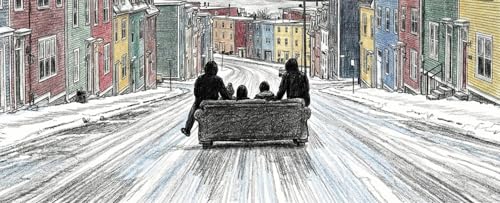
    There’s been a mystery I’ve been trying to solve for thirty years. What happened on New Year’s Eve 1994 at the house on Long’s Hill? Did a couch actually catch fire and hit a house? Were the police called? Did the story make it onto Canadian national radio, and what happened to that couch anyway?

    Over the years, the story of the Long’s Hill couch slide has become legend amongst my friends and even amongst those who don’t know us. It’s a story that has grown and changed in the telling. So, I went to some of the original people, including people who had heard the story from others at the time.

    Thank you very much to Marc Dyke, Aaron McKim, Andrew Smith, and Mike Mannion. I hope no one is doing literal couch surfing this New Year and that you all have a brilliant year ahead.

    I will be back on January 12 on a regular Monday schedule with the podcast. It’s been fun doing a couple of offbeat episodes. In the coming year, I’m looking forward to treating you to some amazing interviews, some great new stories—both fiction and non-fiction—and to delving deeper into the stories that make us human. Until then, be safe and give your pets a cuddle. If you enjoyed this or any other episode, please help me grow my listenership by subscribing or sharing.The image was generated by Gemini.


    This is a public episode. If you would like to discuss this with other subscribers or get access to bonus episodes, visit tales.dups.ca
    Mehr anzeigen Weniger anzeigen
    13 Min.
  • 34. Holiday Traditions from Canada to Finland
    Dec 22 2025
    Whether you are hiding frozen cherries in couch cushions or singing at the top of your lungs there’s so many ways we make ourselves comfortable. I love this time of year even if it means long nights and cold temperatures here in the northern latitudes. Regardless of how religious you are I love the idea that there’s a season where we acknowledge the value of the people in our life with gifts and food. Give the gift that keeps on giving and share this episode. It would mean a lot to me!On today’s episode we have the following folks:Friends from St. John’s, Newfoundland: Marc and Angie, Andrew Smith, Andrew Draskoy, Aaron, Rohith, and ColetteFriends from HeyOrca: Jesse, Steph, JP, Steve, Peter, Joe, and FarhanFriends from OpenOcean: Tony, Toby, Raoul, Ralf, Patrik, and MirvaThis entire episode is the brainchild of my fabulous partner Suvi. To all my friends and family: I wish you a very Merry Christmas/Happy Holidays, no matter where you are and what you celebrate. Thank you for being with me on 34 episodes of Tales under the cat tree. I didn’t think I would make it all the way to a special Christmas episode. I hope you have enjoyed the episodes I have done. If you have, please take the time to subscribe, or better yet, please share the episode so I can grow my listenership. I will return with a special New Year’s day episode and will be back to whatever is “normal” for this podcast on January 12.Today’s episode featured the following pieces of music either in the public domain or under the Creative Commons license. No changes have been made to the compositions or performances beyond mixing in the podcast.* "Christmas Prelude" performed by the Concert Band of the United States Air Force Band of Mid-America — License: Public Domain* "It Came Upon the Midnight Clear" (for jazz piano) performed by the Diplomats of the United States Air Force Band — License: Public Domain* El Noi de la Mare, a Catalan folk song on guitar. — License: Creative Commons* Heinrich Lichner: Fantasia of Silent Night, Holy Night —
    Mehr anzeigen Weniger anzeigen
    25 Min.