Folgen

  • Cancer Treatment and the Skin Barrier with Dr. Barbara Paldus of Codex Labs
    Oct 12 2026
    Send us Fan MailDr. Barbara Paldus of Codex Labs joins Skin Anarchy to explain how cancer treatments affect the skin barrier and what gentle supportive care can look like. This episode is educational only, not medical advice, and everything here should be run by your oncology team first.What is the skin barrier?Not one wall, but a living defense system. Dr. Paldus describes five interconnected barriers: physical, chemical, microbial, immunological, and neurosensory. "We go from the physical to the chemical to the microbial to the immunological and to the neurosensory." Each one, she notes, affects the others.Why do cancer treatments affect the skin?Because treatments target rapidly dividing cells, and skin renews constantly. Chemotherapy, targeted therapy, immunotherapy, hormonal therapy, and radiation each hit renewing tissue differently. "Any tissue in your body that is continuously renewing itself, like your skin or your gut, will be affected," Paldus explains, which can slow repair, reduce oil, and disrupt the microbiome.What is radiation dermatitis?The skin reacting within the area exposed to radiation, from mild redness and dryness to burning, peeling, tenderness, or breakdown, usually building gradually over sessions. "It may not happen during your first treatment, but it can happen maybe on the second or the third one," Paldus says, stressing the radiation team must monitor it.What is hand foot syndrome?Redness, swelling, tingling, and pain on the palms and soles during certain treatments. Because hands and feet face the most friction, heat, and pressure, symptoms can disrupt everyday life. "They can interfere with walking, putting on your shoes, exercising, cooking," Paldus notes, advising patients to report it early.What skin symptoms during cancer treatment need urgent attentionSeveral warrant immediate care. Paldus lists rapidly spreading rashes, extensive blistering or peeling, severe pain, open or draining wounds, honey colored crusts, and fever or chills with a skin problem. "Any kind of swelling, especially facial swelling or lip and tongue swelling," plus trouble breathing, means emergency care.What does a gentle skincare routine look like during cancer treatment?As simple as possible: lukewarm water, brief showers, fragrance free cleansers that never leave skin tight, patting dry, and moisturizing within three minutes. "When you start cancer treatment, that is usually not the ideal time to experiment with multiple potent active ingredients." The keyword is monitor.Is "natural" skincare safe during cancer treatment?No, not by default. Paldus is direct that a natural label guarantees nothing, and that formulation matters more than any single word on a label. "Natural ingredients can irritate the skin, cause allergies, or interact with the treatment just as much as synthetic materials." She urges fragrance free products, patch testing on intact skin, and clearing any routine with the team.How should you manage itching during cancer treatment?Gently, and with a threshold for escalation. Mild dryness and itch can ease with moisturization, soft clothing, cool compresses, and short fingernails to limit scratching. "If it's persistent or intense, that can also be a reaction to medication," or a sign of deeper issues, Paldus cautions, meaning it needs medical evaluation.What is the one thing to remember about skin care during cancer treatment?That the skin is a system to support, not a surface to treat alone. Paldus frames supportive care as improving comfort and quality of life while staying coordinated with the oncology team. "The skin is a protective system, not a passive covering," and any worsening symptom should be assessed, never self treated.Listen to the full episode with Dr. Barbara Paldus on Skin Anarchy, available wherever you get your podcasts.Shop CODEX*This episode is educational and does not provide individual medical advice. Always consult a qualified healthcare professional regarding symptoms, skincare, diet, supplements, and treatment decisions.Don’t forget to subscribe to Skin Anarchy on Apple Podcasts, Spotify, or your preferred platform.Reach out to us through email with any questions.Sign up for our newsletter!Shop all our episodes and products mentioned through our ShopMy Shelf!*This is a sponsored collaborationSupport the show
    Mehr anzeigen Weniger anzeigen
    35 Min.
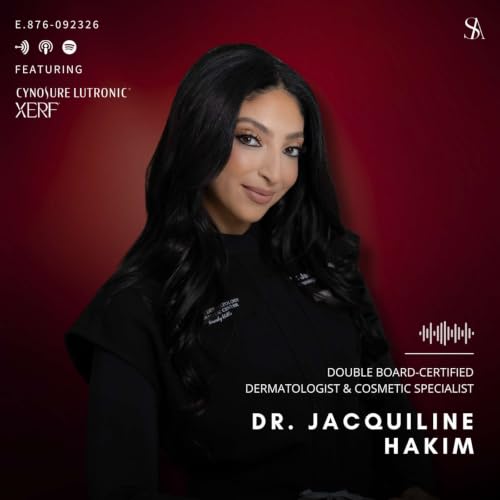
  • Precision Skin Tightening: Understanding XERF with Dr. Jacquiline Hakim
    Sep 23 2026

    Send us Fan Mail

    Double board-certified dermatologist and cosmetic specialist, Dr. Jacquiline Hakim, joins Skin Anarchy to explain what actually drives facial aging: bone loss, collagen decline, and the science of radiofrequency skin tightening, including why results take time and who to trust.

    Who is Dr. Jacquiline Hakim?

    A double board certified dermatologist and cosmetic specialist who leads Divina Dermatology in Beverly Hills. She frames aesthetics as a medical discipline first, not a trend. "It's still medicine. And I think that's such an important factor to hone in on," a lens that shapes her whole approach.

    Where does facial aging actually start?

    Deeper than the skin, at the bone. Aging happens across multiple tissue planes, with bone loss, the scaffolding, beginning in the 30s, followed by fat pads, connective tissue, and finally skin. "Aging starts all the way down to the bone." Collagen declines about 1 percent a year from the mid 20s.

    Why does your face change so suddenly in your 40s?

    Because of a sharp estrogen drop in perimenopause. Estrogen receptors in the skin help maintain collagen, so when estrogen falls, collagen does too, sometimes overnight. "I woke up one day and all of a sudden I saw this, and it can be that drastic," Hakim says, noting women can lose 30 to 40 percent of their collagen in this phase.

    How does radiofrequency work for the skin?

    By using heat and your own tissue to trigger repair. Radiofrequency delivers controlled heat that the tissue resists, setting off a collagen and elastin cascade plus some contraction for tightening. "You're creating a cascade that stimulates collagen and elastin," and modern devices heat precise layers rather than bulk heating the whole area.

    Is radiofrequency safe for skin of color?

    Yes, in trained hands and with modern cooling. The risk with melanin is post inflammatory hyperpigmentation if the wrong layer is overheated, but newer devices cool the surface as they work. "We say it's even like a colorblind treatment. It's safe for everyone," she says, crediting built in cooling for the leap in safety.

    What is XERF and what can you expect from it?

    A monopolar radiofrequency tightening device Hakim was among the first in the US to offer. It reaches multiple tissue depths at once and cools the skin with every pulse, making it safer and comfortable enough that patients fall asleep. "It's one of the safest that's currently on the market... doing multiple depths at the same time.

    How long until you see results from skin tightening?

    About two months, after an early preview. Any collagen stimulation, from energy or injectables, takes roughly two months to fully show. "It takes a true two months to see your actual endpoint," Hakim says, describing a honeymoon glow that fades before real results build. She starts most patients with two sessions.

    Why do the neck and hands age faster, and how should you treat them

    Because they have far fewer oil glands than the face, and people neglect them. Signs of aging often appear first on the neck and hands, yet most routines stop at the jaw. "Everything you do for your face you can do for your neck," she advises, extending skincare, sun protection, and treatments to both.

    When should you start aesthetic treatments, and who should you trust?

    Around the mid 20s, when collagen loss begins, and only with a qualified expert. Hakim stresses that good work is invisible and that dermatologists train for years specifically in noninvasive aesthetics. "You have to really have someone that you can trust that's going to be honest with you," including telling patients no when a trend will not age well.

    Listen to the full episode with Dr. Jacquiline Hakim on Skin Anarchy, available wherever you get your podcasts.

    Learn more about Cynosure Lutronic and XERF

    Don’t forget to subscribe to Skin Anarchy on Apple Podcasts, Spotify, or your preferred platform.

    Reach out to us through email with any questions.

    Sign up for our newsletter!

    Shop all our episodes and products mentioned through our ShopMy Shelf!

    *This is a sponsored collaboration

    Support the show

    Mehr anzeigen Weniger anzeigen
    39 Min.
  • Understanding Barrier Repair with Dr. Carl Thornfeldt of Epionce
    Sep 17 2026

    Send us Fan Mail

    Dermatologist Dr. Carl Thornfeldt, founder of Epionce and holder of 22 patents, joins Skin Anarchy to explain the science of barrier repair before it was a trend: the discovery of the skin barrier ratio, why ceramides alone fall short, and why high dose actives can do more harm than good.

    Who is Dr. Carl Thornfeldt?

    A dermatologist whose childhood eczema drove a lifelong quest to understand skin. As the only full time dermatologist across 30,000 square miles of rural Oregon, he saw skin pushed to extremes and realized most treatments failed. "I wanted to completely get clear and stay clear and not have recurrence," which set him on a nine year study of how the epidermis regulates itself.

    Why is the skin barrier so important?

    Because the stratum corneum is a regulatory tissue, not just dead cells. Thornfeldt's team found that disrupting the barrier triggers repair signaling within minutes. "When the skin was injured for any cause... that would trigger synthesis of cholesterol, a number of the ceramides, and certain free fatty acids." A damaged barrier, he showed, is the root trigger of the chronic inflammation now called inflammaging.

    What is the 3 to 1 to 1 barrier repair ratio?

    The gold standard for rebuilding skin. Thornfeldt found that a specific ratio of cholesterol, ceramides, and free fatty acids, with half the fatty acids as linoleic acid, dramatically accelerates repair. "The three to one to one ratio triggered a dramatic epidermal proliferation," producing a new barrier in about three days instead of 28. A two to one to one ratio is 40 percent less effective.

    Why does linoleic acid matter for skin?

    Because the barrier cannot form properly without it. Replacing linoleic acid with other fatty acids left the barrier incomplete, partly because it is needed to build the right ceramides. "Linoleic acid was necessary for the optimum barrier function." It also calms inflammation and aids delivery, yet rarely appears on ingredient lists now.

    Are ceramides alone enough to repair the barrier?

    No, and this is the ceramide hero product fallacy. Used individually, each lipid actually disrupted the barrier more; only all three together enabled repair. "It wasn't until we had all three there that we could start seeing some benefit." Ceramides also work best at a pH of 4.5, low enough to sting many people.

    What is the difference between moisturizing and barrier repair?

    They are not the same. Hydration raises water holding capacity; barrier repair rebuilds the wall, and speed matters because an open barrier lets damage in. Thornfeldt's ratio achieved 89 percent barrier closure in 45 minutes, while petrolatum reached only 65 percent at eight hours. "You want to slam the barrier shut."

    Is high dose vitamin C actually good for your skin?

    Not necessarily, and it can irritate. Vitamin C needs iron and zinc to actually build collagen, so high concentrations alone often just cause inflammation that temporarily plumps skin. "No place in the body where a single antioxidant works." Several trials of high dose single antioxidants were halted early for increased disease.

    Do retinoids work as well as they are marketed?

    Only partly. Tretinoin acts on three of the skin's many pathways and is photosensitizing, and Thornfeldt watched it raise precancer rates in his own patients. "You've got 13 pathways that need to be modulated, and it works on three of them." That risk, he says, is why maintenance dosing exists.

    Does bakuchiol actually work?

    The evidence says no. Thornfeldt points to a Cochrane review of 15 trials that found no benefit. "Bakuchiol doesn't work," he says, calling it a marketing story built on poor quality studies.

    Listen to the full episode with Dr. Carl Thornfeldt of Epionce on Skin Anarchy, available wherever you get your podcasts.

    Shop Epionce

    Don’t forget to subscribe to Skin Anarchy on Apple Podcasts, Spotify, or your preferred platform.

    Reach out to us through email with any questions.

    Sign up for our newsletter!

    Shop all our episodes and products mentioned through our ShopMy Shelf!

    *This is a paid collaboration

    Support the show

    Mehr anzeigen Weniger anzeigen
    59 Min.
  • The Secretome: The Next Frontier in Regenerative Medicine with Dr. Drew Taylor of Acorn Biolabs
    Sep 15 2026

    Send us Fan Mail

    Dr. Drew Taylor, biomedical engineer and CEO of Acorn, joins Skin Anarchy to demystify regenerative aesthetics: what a secretome actually is, why exosome counts can mislead, whether older cells still work, and why banking your own cells early may matter.

    Who is Dr. Drew Taylor?

    A biomedical engineer who took a winding path through pro baseball. He played in the Blue Jays and Phillies organizations while earning a PhD at the University of Toronto, studying how a patient's own stem cells regenerate connective tissue. "I really do feel like I'm doing what I'm supposed to be doing."

    What is a secretome?

    The full set of molecules cells release to signal and repair. Taylor stresses the root word is secretion, not secret. "That entire secreted population of things is the secretome." It includes exosomes plus free growth factors, matrix molecules like hyaluronic acid and collagen, binding proteins, cytokines, and PDRN, an orchestra rather than one instrument.

    What is the difference between a secretome and exosomes?

    Exosomes are the delivery vehicle; the secretome is everything being delivered. Taylor compares exosomes to Amazon packages that unbox themselves inside your cells. "The exosome itself is not the signal, it's the contents of the exosome." The secretome captures those contents plus the free molecules that travel outside exosomes.

    Do older cells still work for regenerative treatments?

    Yes, with the right process. Older cells produce the same molecules at lower efficiency, so collecting their output over time builds potent volumes. "You're able to actually offset about 85% of the loss over a 30 year period of age difference," Taylor says, noting patients as old as 87 have seen results from their own secretome.

    What is the problem with donor exosomes?

    Expansion ages them fast. To treat many patients from one donor, cells are multiplied repeatedly, a photocopy of a photocopy. "We're basically taking decades worth of aging in the human body and fast forwarding through that in a matter of weeks." He cites work showing donor cells from young children can end up performing like ones decades older.

    Does the number of exosomes in a product matter?

    Far less than the contents. Taylor points to research showing that after the fourth passage, exosomes lose regenerative power even though their count stays the same. "Advertising on a number of exosomes means very little." One product boasting a trillion exosomes, he notes, held a fraction of the protein his secretome does.

    Can regenerative treatments really reduce wrinkles?

    Yes, but by stimulating tissue, not filling it. In clinical work Taylor reports reversal of fine lines and even shallowing of deeper folds. "We're actually stimulating your tissues to perform at a higher level." He is clear this is not filler and not instant. "Regenerative medicine is a long game."

    Why bank your cells early?

    Because there is only one of you, and cells age with every division. Acorn captures cells noninvasively by plucking scalp follicles rather than harvesting bone marrow. Taylor frames it as "your biologic health insurance policy," preserving your youngest biology before time and demand degrade it.

    Where is regenerative medicine headed?

    Toward rapid acceleration. Taylor compares the field to early flight: decades to become useful, then supersonic and lunar within years. "Right now in the world of regenerative medicine, we're crossing the Atlantic," with trials in hair, skin, orthopedics, and fertility.

    Listen to the full episode with Dr. Drew Taylor of Acorn on Skin Anarchy, available wherever you get your podcasts.

    Learn more about Acorn Biolabs

    Don’t forget to subscribe to Skin Anarchy on Apple Podcasts, Spotify, or your preferred platform.

    Reach out to us through email with any questions.

    Sign up for our newsletter!

    Shop all our episodes and products mentioned through our ShopMy Shelf!

    Support the show

    Mehr anzeigen Weniger anzeigen
    43 Min.
  • Joanna Vargas on the Science and Art of Great Skin
    Sep 10 2026

    Send us Fan Mail

    Celebrity esthetician and skincare founder Joanna Vargas joins Skin Anarchy to share what three decades of hands on work taught her: why LED and microcurrent changed her practice, what clients actually want, how she vets ingredients, and why the basics still win over hype.

    How did Joanna Vargas get into skincare?

    By a winding road. She moved to New York hoping to be a fashion photographer, found she was too shy for it, and enrolled in aesthetic school, then fell in love with the one on one work. "I felt like I could be the big sister in that situation and really help guide people." That was nearly 30 years ago.

    Why did LED change her practice?

    Because it works across every skin type and tone. Early in her career, most spas offered one kind of facial, and she saw that nothing worked for everyone. LED did. "Whether you have oily skin, acneic skin, super dry skin... LED is something that can help." She believes she was the first esthetician in Manhattan to offer it.

    What made microcurrent a game changer?

    Its evolution from painful to instant. Early microcurrent stung and reddened the skin, but a later device delivered a visible lift with no discomfort. "You could actually feel like one side of the face was lifted and the other side wasn't." It arrived as clients sought noninvasive alternatives to filler and Botox.

    What do clients actually want from their skin?

    Not what the industry assumes. Vargas expected her first hundred clients to ask for anti aging; instead every single one wrote the same three words. "They wanted clean, clear, glowing skin," regardless of age. It shaped her mission to help people feel better without feeding their self criticism.

    Is exfoliation good or bad for your skin?

    Good, when done properly. Vargas pushes back on exfoliation's bad reputation, stressing the method should match your skin. "Your keyword that you just used is proper," she says, noting pollution, oil, and mature skin all make gentle exfoliation essential for products to penetrate.

    How should you balance dermatologist advice with esthetician care?

    Treat both as trusted advisors, and keep your own voice. Vargas respects derms and urges everyone to get skin cancer checks, but warns against appointments that leave you feeling worse. "Not everybody has your best interest all the time if they're making you feel bad." Whether to get filler, she notes, is an opinion, not medical advice.

    Why does she stick to tried and true ingredients over hype?

    Because efficacy outlasts trends, and she trusts primary research and her own testing over hype. Vargas reads the actual studies, cross checks with experts, and tests on herself before adopting anything. "There's nothing that replaces being able to try something on myself." She has watched vitamin C, stem cells, and niacinamide cycle in and out repeatedly. "I don't think that at this point in skincare we need to constantly be reinventing the wheel."

    What is the simplest routine that actually works?

    Four steps, done consistently. Vargas tells clients to wash daily, use one or two targeted serums, and finish with a moisturizer, night and day is fine. "If we could just get you to do that as the baseline." From there she adds weekly exfoliation and a sheet mask as a ritual of self care.

    What is her advice for someone who feels stuck with their skin?

    Stop throwing money at it and pare down. Beautiful skin is possible with the right steps, not more products. She reframes cleansing as the most important step, done for a full minute with intention. "Think of something that you love about yourself," she says, because how you talk to yourself matters as much as the routine.

    Listen to the full episode with Joanna Vargas on Skin Anarchy, available wherever you get your podcasts.

    Shop Joanna Vargas Skincare

    Don’t forget to subscribe to Skin Anarchy on Apple Podcasts, Spotify, or your preferred platform.

    Reach out to us through email with any questions.

    Sign up for our newsletter!

    Shop all our episodes and products mentioned through our ShopMy Shelf!

    Support the show

    Mehr anzeigen Weniger anzeigen
    47 Min.
  • What Separates Medical Aesthetics from Retail Aesthetics with Dominic Mazzone of VOS Collection
    Sep 8 2026

    Send us Fan Mail

    Dominic Mazzone, CEO of VOS Collection, joins Skin Anarchy to pull back the curtain on medical aesthetic platforms: how his model differs from private equity, the split between medical and retail aesthetics, how clinics and skincare brands earn their place, and how to find a provider who delivers real results.

    What is VOS Collection?

    A medical aesthetics platform built by an entrepreneur rather than a private equity firm. A self described serial entrepreneur who has started 19 businesses, Mazzone acquires top clinics whose physicians become equity partners. "I'm not a private equity guy. I'm an entrepreneur... acquiring other entrepreneurs."

    How is VOS Collection different from private equity?

    By respecting clinical freedom instead of imposing quotas. Mazzone takes over the parts physicians dislike, bookkeeping, HR, procurement, and leaves the treatment room alone. "When it comes to that patient showing up inside that room with the clinician, hands off." His north star is remarkable outcomes, and good results turn out to be good business.

    What is the difference between medical and retail aesthetics?

    Depth of training and approach. Medical aesthetics uses highly trained providers offering a comprehensive plan; retail aesthetics handles the basics well. "Retail aesthetics are more lightly trained providers that are doing the basics." Both have a place, but patients deserve to know which they are choosing, especially as clinics doubled from 6,600 in 2019 to over 13,000.

    How does VOS Collection vet the clinics it partners with?

    Rigorously, starting with how a patient is treated at the door. Mazzone has walked out of clinics over a cold greeting, and screens partners for ethics and culture as much as skill. "We really vet our partners like mad to make sure that we don't hurt the culture that we've worked so hard to build."

    Why does raising the bar help the whole industry?

    Because a bad outcome anywhere hurts everyone. VOS is large enough that Mazzone sees industry wide reputation as his concern, not just his own clinics. "Bad outcomes in this industry is completely bad for everybody." Lifting standards keeps patients satisfied and keeps them in medical aesthetics.

    What does it take for a skincare brand to get into a practice?

    A real go to market plan, not just a good product. Mazzone likens his clinics to Whole Foods: he provides the shelf, but the brand must create demand. "Creating a great product isn't even 50% of it. It's probably 30%." And a founder's endorsement means nothing if the staff, front desk included, are not believers. He credits ZO for pairing product with real sales enablement.

    How do you scale a medical aesthetics practice?

    By getting treatments out of one person's hands. Many practices look big but do not scale because everything runs through the founder. The fix is more injectors and technicians. "You need to use other people's hands to do that," he says, pointing to a partner who made herself less essential and built a thriving business.

    Why does mentorship matter in aesthetics?

    Because it accelerates providers faster than anything else. VOS runs a mentorship program pairing young associates with masters across the platform. Mazzone describes a provider whose practice transformed within two months of mentoring. "There is no end if you can continue to care enough to continue to learn."

    How can patients find a quality provider?

    Through VOS Collection's site, built like a magazine rather than a corporate landing page. Each article pairs written guidance with provider videos, and patients can connect directly with clinics. Mazzone frames it as a source of truth in a market full of misinformation.

    Listen to the full episode with Dominic Mazzone of VOS Collection on Skin Anarchy, available wherever you get your podcasts.

    Learn more about VOS Collection

    Don’t forget to subscribe to Skin Anarchy on Apple Podcasts, Spotify, or your preferred platform.

    Reach out to us through email with any questions.

    Sign up for our newsletter!

    Shop all our episodes and products mentioned through our ShopMy Shelf!

    Support the show

    Mehr anzeigen Weniger anzeigen
    40 Min.
  • Beyond the Wellness Hype with Durana Elmi of Cymbiotika
    Sep 3 2026

    Send us Fan Mail

    Durana Elmi, cofounder of Cymbiotika, joins Skin Anarchy to talk about building a transparency first supplement brand: the loss that inspired it, why absorption matters more than dose, how the pouch format drives consistency, and the gaps in women's health.

    What inspired Durana Elmi to start Cymbiotika?

    Loss. After she and her husband lost family members they could not help despite having resources, they set out to change how health is accessed. "The inspiration came from losing family members who we couldn't help." They saw an industry short on transparency and education, and built to fix it.

    Why does supplement absorption matter more than dose?

    Because most of what you swallow never reaches your cells. Elmi recalls her uncle, a doctor in Geneva, questioning her bag of pregnancy pills. "The delivery and the absorption... is so low." Cymbiotika's liposomal format, she says, delivers far more than a pill, which is why people feel a difference.

    Why did Cymbiotika choose pouch supplements?

    For consistency, which is the only thing that produces results. Elmi wanted something she would actually use daily rather than leave in a cabinet. "I need something to throw in my pocket that can go with me... that's the only way that I can be consistent." The format also lets customers share it easily.

    How do you scale a wellness brand without compromising?

    By never chasing trends and never cutting efficacy. Elmi says the company stays anchored to its liposomal delivery and to solving real problems. "We just don't take shortcuts in the efficacy and how we source our raw ingredients." She adds: "I don't believe that companies fail. I believe that founders give up."

    Why does women's health get overlooked?

    Because the research and the empathy have not been there. Elmi speaks candidly about perimenopause and thyroid struggles the culture treats as unspeakable. "What we experience and endure as a woman, no one talks about." She argues products built for women should be informed by women's actual experience.

    Why is transparency so important in supplements?

    Because it is the foundation of everything else. Rejecting proprietary blends, Cymbiotika publishes what goes into its products and how they are made. "Transparency creates trust and trust creates community." That community, she says, is what makes the brand durable rather than fear of competitors copying formulas.

    How does Cymbiotika market without heavy influencer ads?

    Through experience rather than hard selling. Elmi is skeptical of influencer pushes and invests instead in customer experience and cultural moments. "The real marketing today is how are consumers experiencing your brand?" The goal is an emotional connection that turns a product into a ritual.

    How should you actually approach longevity?

    Start with the basics before optimizing. Elmi points to sleep, movement, nutrition, stress management, community, and supplementation as the foundation. "It starts with the basics," she says, describing how wearables taught her that even a nightly glass of wine was quietly wrecking her sleep.

    How do you compete with integrity?

    By perfecting your own craft instead of tearing others down. "When you put other people down... you're really showcasing your own insecurities." Elmi ties it to company culture, from sourcing to monthly beach cleanups, arguing the brand's integrity reflects who the founders are.

    What does uplifting other people really mean?

    For Elmi, it is a superpower measured by how others feel in your company. "How do you make them feel, that is your ultimate superpower." She teaches her daughters the same, and mentors newer founders freely. "I don't feel like I compete with anybody. I want you to learn from my mistakes."

    Listen to the full episode with Durana Elmi of Cymbiotika on Skin Anarchy, available wherever you get your podcasts.

    Shop Cymbiotika

    Don’t forget to subscribe to Skin Anarchy on Apple Podcasts, Spotify, or your preferred platform.

    Reach out to us through email with any questions.

    Sign up for our newsletter!

    Shop all our episodes and products mentioned through our ShopMy Shelf!

    Support the show

    Mehr anzeigen Weniger anzeigen
    55 Min.
  • Beauty, Identity, and Raising Conscious Children with Dr. Shefali
    Aug 31 2026

    Send us Fan Mail

    Clinical psychologist and New York Times bestselling author Dr. Shefali joins Skin Anarchy to talk about conscious parenting: why emotional regulation starts with the parent, how mothers pass down beauty standards, and the blueprints for raising sons and daughters.

    Who is Dr. Shefali?

    A clinical psychologist and bestselling author who pioneered conscious parenting 16 years ago with her 2010 book The Conscious Parent, blending Western psychology with Eastern philosophy. "Children are undergoing the most acute mental health crisis of modern times, and parents are unknowingly messing it up."

    Why does emotional regulation start with the parent?

    Because the trigger is internal, not external. Dr. Shefali says children surface the exact feelings a parent was never allowed to feel in their own childhood. "It's not her who's unhinging me. I am unhinged." Real regulation means building an inner stability a delayed flight or a defiant toddler cannot knock off its axis.

    What kind of self awareness actually creates change?

    The kind that admits something must change. Knowing your favorite color is surface level; the harder work is accepting your own imperfection. "Most people don't want to change at that level... they want the other person in their life to change."

    How do mothers pass down beauty standards to daughters?

    Often unknowingly, by absorbing a narrow ideal themselves. Dr. Shefali traces it to what she calls "a white, skinny, rich female standard," which mothers internalize and hand down. Daughters absorb it whether or not a parent intends to, which is why she urges mothers to change the script first.

    How do you prepare a child for racism or comparison?

    By arming them early, before culture does the damage. She recommends teaching a child directly that people may judge their eyes, skin, or hair, then dismantling it with simple logic. "You begin to arm her... with an awareness that people are going to tell her, you don't look like the standard." She shares her own decades long work to undo an inherited belief that being Indian meant inferior.

    How should you raise a son?

    By honoring how boys are wired. Dr. Shefali describes boys as physical creatures who process through action, not words, and who need to feel purposeful. "If you want him to be regulated, let him move... give him a purpose." Unspent energy, she warns, can later erupt as aggression.

    What are the pillars of raising a conscious son?

    Seven, anchored by a few essentials: boys express physically, feel as deeply as girls, need purpose, need a male tribe, need guidance into healthy sexuality, and must be held accountable. "If boys learn to be accountable, they will grow up to be accountable men."

    Why do some cultures prefer sons?

    Partly biology, partly the lower cost placed on boys. Dr. Shefali notes the pressure many women face, especially in Indian culture, to produce a son. Wanting a boy to the exclusion of a girl, she says, is "a very rigid... primitive way of looking at life," since every seed still needs a female body to nurture it.

    How do you raise a daughter beyond her looks?

    By refusing to make appearance her identity. Dr. Shefali coupled her own identity to her looks after years of validation, and deliberately taught her daughter otherwise. "How you look is the least interesting part of you," she tells parents, pointing instead toward kindness, integrity, and hard work.

    Should we raise boys and girls exactly the same?

    She favors equity over identical treatment. Boys and girls are profoundly different in wiring, and denying that helps no one. "We should not want to ever be like a man. We should only want to be treated humanly." Equal in humanity, she argues, without pretending the differences do not exist.

    Listen to the full episode with Dr. Shefali on Skin Anarchy, available wherever you get your podcasts.

    Visit Dr. Shefali’s website and pre-order her new books!

    Don’t forget to subscribe to Skin Anarchy on Apple Podcasts, Spotify, or your preferred platform.

    Reach out to us through email with any questions.

    Sign up for our newsletter!

    Shop all our episodes and products mentioned through our ShopMy Shelf!

    Support the show

    Mehr anzeigen Weniger anzeigen
    42 Min.