Folgen

  • The quest for Leonardo da Vinci’s DNA
    Jan 23 2026
    In this episode of Science Quickly, host Kendra Pierre-Louis speaks with forensic scientist Rhonda Roby about an ambitious effort to uncover traces of Leonardo da Vinci’s DNA using modern forensic techniques. Roby and her colleagues are carefully sampling centuries‑old artworks, working with extremely small amounts of biological material, to learn more about Leonardo himself and the history of his art while also advancing methods that could one day help authenticate artworks. The episode explores how forensic approaches typically used in criminal investigations are being applied to a 500‑year‑old historical puzzle. Recommended Reading: The Race to Find Leonardo da Vinci’s DNA Just Took a Major Twist “The real da Vinci code,” by Richard Stone, in Science, Vol. 391; January 8, 2026 E-mail us at sciencequickly@sciam.com if you have any questions, comments or ideas for stories we should cover! Discover something new everyday: subscribe to Scientific American and sign up for our daily newsletter. Science Quickly is produced by Kendra Pierre-Louis, Fonda Mwangi, Sushmita Pathak and Jeff DelViscio. This episode was edited by Alex Sugiura, with fact-checking by Shayna Posses and Aaron Shattuck. Our theme music was composed by Dominic Smith. Learn more about your ad choices. Visit megaphone.fm/adchoices
    Mehr anzeigen Weniger anzeigen
    19 Min.
  • What is consciousness, really?
    Jan 21 2026
    In this episode, we explore what consciousness is, how the brain creates it and what current science says about dreams, anesthesia, animals and even artificial intelligence. Scientific American’s associate editor Allison Parshall breaks down what the leading theories are and why understanding our own awareness remains one of science’s toughest challenges. Recommended Reading: Why consciousness is the hardest problem in science Is Consciousness the Hallmark of Life? How to Detect Consciousness in People, Animals and Maybe Even AI When does consciousness emerge in babies? E-mail us at sciencequickly@sciam.com if you have any questions, comments or ideas for stories we should cover! Discover something new everyday: subscribe to Scientific American and sign up for our daily newsletter. Science Quickly is produced by Kendra Pierre-Louis, Fonda Mwangi, Sushmita Pathak and Jeff DelViscio. This episode was edited by Alex Sugiura, with fact-checking by Shayna Posses and Aaron Shattuck. Our theme music was composed by Dominic Smith. Learn more about your ad choices. Visit megaphone.fm/adchoices
    Mehr anzeigen Weniger anzeigen
    16 Min.
  • EPA weakens air pollution rules, cancer survival soars, and NASA evacuates astronauts
    Jan 19 2026
    In this episode of Science Quickly, we unpack the Environmental Protection Agency’s controversial decision to change how it calculates health benefits from regulating certain air pollutants, a move that experts warn could lead to dirtier air and worse health outcomes. And we’ve achieved a major milestone in cancer care, with five-year survival rates hitting a record high, but looming policy threats could stall progress. Plus, NASA’s first-ever medical evacuation from the International Space Station could offer lessons for future missions. Recommended Reading: America’s Air Is about to Get Dirtier—And More Dangerous 70 Percent of Cancer Patients Now Survive at Least Five Years, Study Finds Astronauts Evacuate the ISS after Medical Incident New Study Probes How Same-Sex Behaviors Evolved in Nonhuman Primates E-mail us at sciencequickly@sciam.com if you have any questions, comments or ideas for stories we should cover! Discover something new everyday: subscribe to Scientific American and sign up for our daily newsletter. Science Quickly is produced by Kendra Pierre-Louis, Fonda Mwangi, Sushmita Pathak and Jeff DelViscio. This episode was edited by Alex Sugiura, with fact-checking by Shayna Posses and Aaron Shattuck. Our theme music was composed by Dominic Smith. Learn more about your ad choices. Visit megaphone.fm/adchoices
    Mehr anzeigen Weniger anzeigen
    11 Min.
  • How Venezuela’s Heavy Crude Shapes Climate Risks
    Jan 16 2026
    In this episode, we dive into the climate stakes behind Venezuela’s vast but troubled oil reserves and the country’s mounting tensions with neighboring Guyana. Climate reporter Amy Westervelt breaks down why the region’s heavy crude oil, aging infrastructure and escalating border dispute are colliding with the reality of a rapidly warming planet—and what rising seas, oil expansion and fragile ecosystems mean for millions of people across the Caribbean. Recommended Reading: “The U.S.-Venezuela-Guyana Oil Triangle,” by Amy Westervelt, in Drilled. Published online January 4, 2026 Why Does Venezuela Have So Much Oil? Geology E-mail us at sciencequickly@sciam.com if you have any questions, comments or ideas for stories we should cover! Discover something new everyday: subscribe to Scientific American and sign up for our daily newsletter. Science Quickly is produced by Kendra Pierre-Louis, Fonda Mwangi, Sushmita Pathak and Jeff DelViscio. This episode was edited by Alex Sugiura, with fact-checking by Shayna Posses and Aaron Shattuck. Our theme music was composed by Dominic Smith. Learn more about your ad choices. Visit megaphone.fm/adchoices
    Mehr anzeigen Weniger anzeigen
    19 Min.
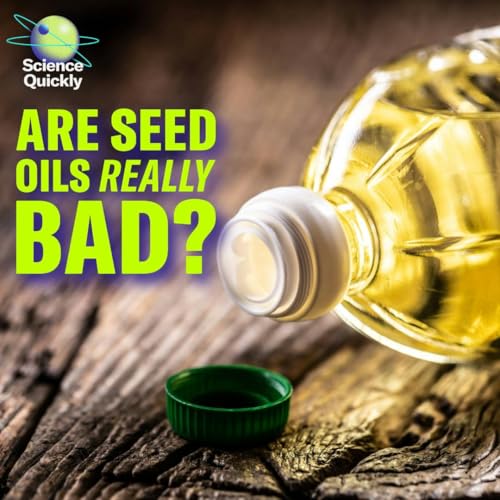
  • The Great Seed Oil Panic
    Jan 14 2026
    Seed oils have become a target of wellness influencers and high-profile public officials. They say that these widely used and relatively inexpensive oils, which include canola, soybean and sunflower oil, are toxic. But do we really need to panic? Host Kendra Pierre-Louis speaks with food science expert Eric Decker to unpack what seed oils actually are, how their fats compare with those from other sources and whether claims about their toxicity hold up to scientific scrutiny. Recommended Reading: RFK, Jr., Upsets Food Pyramid, Urging Americans to Eat More Meat E-mail us at sciencequickly@sciam.com if you have any questions, comments or ideas for stories we should cover! Discover something new everyday: subscribe to Scientific American and sign up for our daily newsletter. Science Quickly is produced by Kendra Pierre-Louis, Fonda Mwangi, Sushmita Pathak and Jeff DelViscio. This episode was edited by Alex Sugiura, with fact-checking by Shayna Posses and Aaron Shattuck. Our theme music was composed by Dominic Smith. Learn more about your ad choices. Visit megaphone.fm/adchoices
    Mehr anzeigen Weniger anzeigen
    17 Min.
  • Woodpeckers Rock the Lab, AI Steps Out of the Chat Box, and Flu Hits Hard
    Jan 12 2026
    Have you ever wondered how woodpeckers pound away without breaking their neck? We’ve got the answer—plus, why this flu season has broken a record, how AI is learning to predict disease from your sleep, and what CES 2026 showed about the biggest tech trends, including “physical AI” in the form of robots and other devices. Recommended Reading: This Year’s Flu Season Just Surpassed a Grim New Record Harsh Flu Season May Be Driven by New Variant K How Woodpeckers Turn Their Entire Bodies into Pecking Machines At CES 2026, AI Leaves the Screen and Enters the Real World ​​Stevie Wonder’s Rule for AI at CES: ‘Make Life Better for the Living’ E-mail us at sciencequickly@sciam.com if you have any questions, comments or ideas for stories we should cover! Discover something new everyday: subscribe to Scientific American and sign up for our daily newsletter. Science Quickly is produced by Kendra Pierre-Louis, Fonda Mwangi, Sushmita Pathak and Jeff DelViscio. This episode was edited by Alex Sugiura, with fact-checking by Jennifer Hackett, Shayna Posses and Aaron Shattuck. Our theme music was composed by Dominic Smith. Learn more about your ad choices. Visit megaphone.fm/adchoices
    Mehr anzeigen Weniger anzeigen
    11 Min.
  • Weighing the Good and Bad of Weight-Loss Drugs
    Jan 9 2026
    Drugs known as glucagon-like peptide-1 receptor agonists, colloquially called GLP-1 medications, have gone from relatively obscure diabetes treatments to blockbuster weight-loss medications. But is the hype backed up by science? In this episode, freelance science journalist Bethany Brookshire joins host Kendra Pierre-Louis to talk about how these drugs mimic natural hormones, why they’re so effective and what the latest research about their broader health effects says. Plus, we discuss what a recently rolled-out GLP-1 pill, the first of its kind approved for obesity, could mean for the future of weight loss. Recommended Reading: Wegovy Weight-Loss Pills Are Now Available in the U.S.—Here’s What That Means“Doctors Are Worried about Prescribing GLP-1s to Certain Patients,” by Bethany Brookshire, in National Geographic. Published online November 20, 2025 “The Unexpected Ways Ozempic-like Drugs Might Fight Dementia,” by Bethany Brookshire, in National Geographic. Published online June 17, 2025 “Is There Really an Ozempic Baby Boom? The Unexpected Ways GLP-1s Could Influence Fertility,” by Bethany Brookshire, in National Geographic. Published online November 4, 2025 E-mail us at sciencequickly@sciam.com if you have any questions, comments or ideas for stories we should cover! Discover something new everyday: subscribe to Scientific American and sign up for our daily newsletter. Science Quickly is produced by Kendra Pierre-Louis, Fonda Mwangi, Sushmita Pathak and Jeff DelViscio. This episode was edited by Alex Sugiura, with fact-checking by Shayna Posses and Aaron Shattuck. Our theme music was composed by Dominic Smith. Learn more about your ad choices. Visit megaphone.fm/adchoices
    Mehr anzeigen Weniger anzeigen
    22 Min.
  • America’s Children Face a New Era of Health Risk
    Jan 7 2026
    Recent federal public health changes could affect children’s health, from vaccine access to essential medical care. In this episode, senior editor Dan Vergano breaks down what shifting national guidelines may mean for kids, why pediatric care is especially vulnerable and how states and medical experts are responding to protect families. Learn how these evolving health policies could shape long‑term outcomes for children and what’s at stake for public health in the U.S. Recommended Reading: U.S. Axes Number of Recommended Childhood Vaccines in Blow to Public Health Trump Administration Moves to Severely Curtail Access to Gender-Affirming Care for Minors U.S. Plan to Drop Some Childhood Vaccines to Align with Denmark Will Endanger Children, Experts Say E-mail us at sciencequickly@sciam.com if you have any questions, comments or ideas for stories we should cover! Discover something new everyday: subscribe to Scientific American and sign up for our daily newsletter. Science Quickly is produced by Kendra Pierre-Louis, Fonda Mwangi, Sushmita Pathak and Jeff DelViscio. This episode was edited by Alex Sugiura, with fact-checking by Shayna Posses and Aaron Shattuck. Our theme music was composed by Dominic Smith. Learn more about your ad choices. Visit megaphone.fm/adchoices
    Mehr anzeigen Weniger anzeigen
    15 Min.